


Semi Circular Mahogany Table
A semi circular mahogany table delivers elegant curved lines and space-saving charm, making it a versatile choice for any hallway or reception room.
Semi Circular Mahogany Table
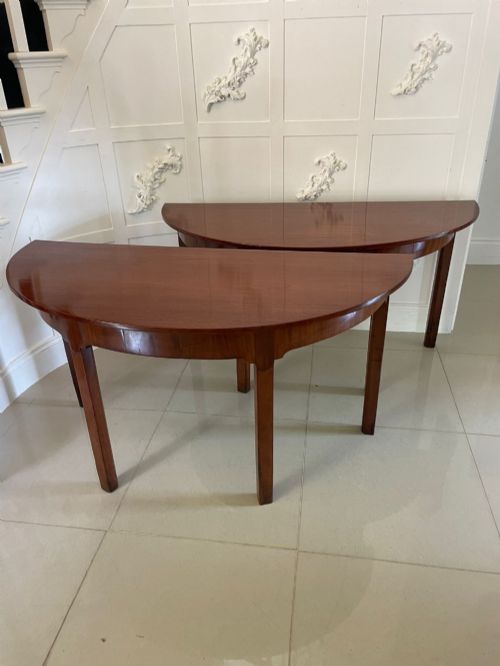
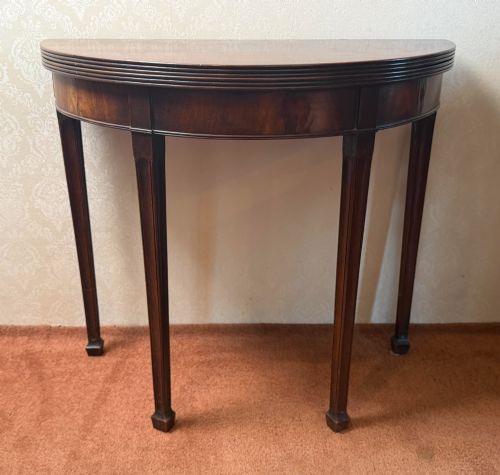
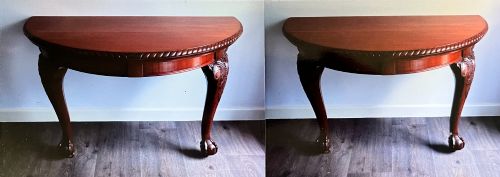
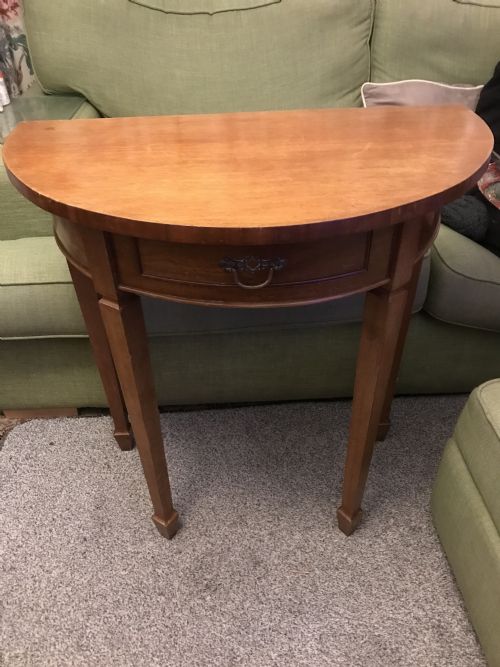
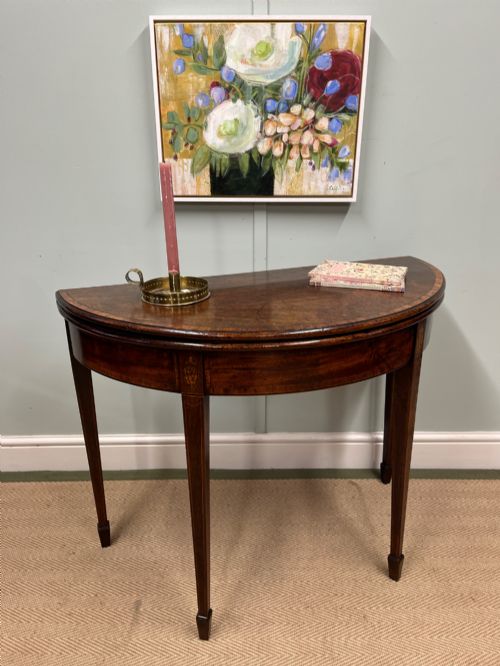
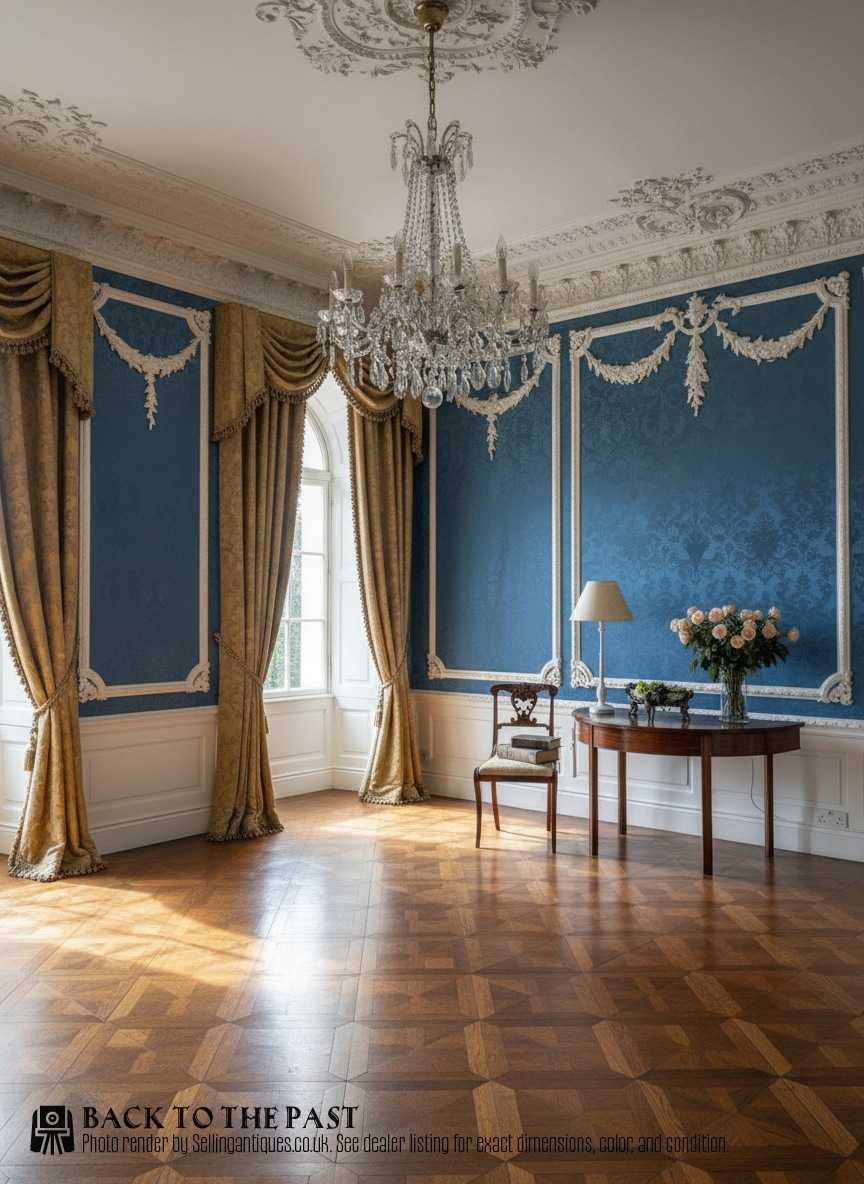
A semi circular mahogany table is designed to sit flush against a wall while offering a graceful curved front. You encounter these primarily as console tables, card tables, and tea tables originating from the Georgian, Victorian, and Edwardian periods.
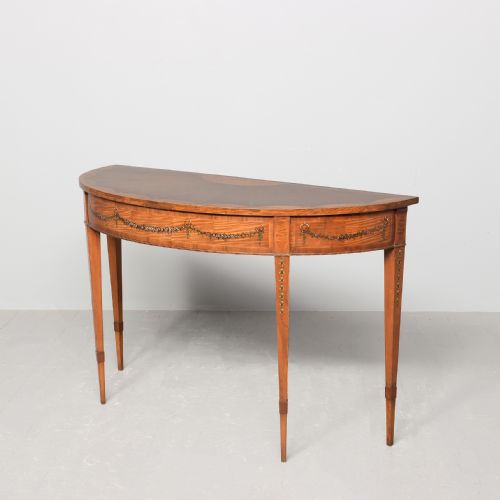
The selection ranges from simple 18th-century tea tables with fold-over tops to elaborate Sheraton and Hepplewhite pieces featuring detailed stringing and marquetry. Many examples from the George III era demonstrate the balanced proportions and refined silhouettes characteristic of the period.
Makers adapted this half-moon footprint for diverse domestic uses, including serving, playing cards, or displaying lamps. This variety means you can find pieces suited for both grand entrance halls and compact living spaces.
Materials and construction methods
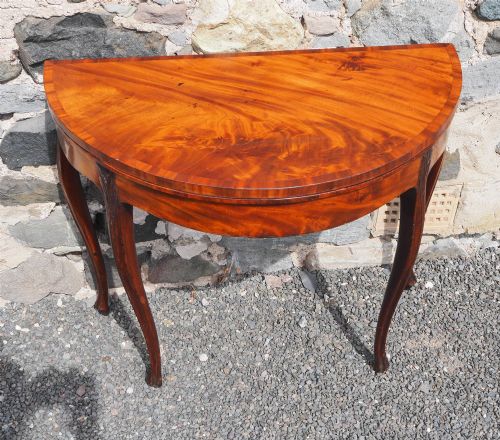
Makers relied heavily on solid mahogany and flame mahogany veneer, often selecting cuts with rich grain patterns to accentuate the curved tops. These surfaces frequently incorporate contrasting boxwood inlay, satinwood banding, and marquetry details.
Structural elements commonly include tapering legs, such as spade feet on Edwardian variations, and occasionally brass framing or brass-framed components. Fold-over mechanisms on card and tea tables required precise joinery to ensure the hinged top rested level when opened.
Object forms span console tables, card tables, tea tables, and sideboards.
Distinguishing quality across the range
The calibre of a semi circular mahogany table rests upon the choice of timber and the precision of its decorative inlay. Pieces utilising highly figured flame mahogany veneers or delicate boxwood and satinwood stringing demonstrate superior craftsmanship.
Proportion and the handling of the curved apron dictate the overall elegance of the form. Finer examples maintain crisp carving and balanced lines, whereas simpler pieces rely on plain timber surfaces without marquetry.
The Semi Circular Mahogany Table Glossary
- Demi-lune
- A half-moon shape used to describe tables with a curved front and a flat back. This profile allows the piece to fit neatly against a wall.
- Card table
- A folding table designed specifically for indoor games. Many semi circular versions feature a swivel top that reveals a baize-lined playing surface.
- Flame mahogany
- A veneer cut from the fork of the mahogany tree where the branch meets the trunk. It produces a distinctive flickering flame-like pattern.
- Marquetry
- Decorative patterns created by fitting different woods and materials into a veneer ground. This technique often appears on Sheraton and Edwardian pieces.
- Stringing
- Thin lines of contrasting wood inlay used to outline borders and edges. It provides a subtle geometric frame to mahogany surfaces.
Semi Circular Mahogany Table: Frequently Asked Questions
How were semi circular tables used historically?
These tables served multiple domestic functions depending on their top construction. Fold-over versions accommodated card games or tea service in the evening.
Other formats functioned as sideboards, console tables, or hall tables for displaying lamps and decorative objects against a wall.
Where should I place a semi circular table?
The flat back allows the furniture to stand securely against a wall without protruding too far into a room. This makes them practical for narrow hallways, landings, or tight spaces.
They also work effectively as pier tables between windows or beneath large mirrors in reception rooms.
What is the difference between a demi-lune and a D-end table?
A demi-lune table forms a single half-circle shape designed to stand independently against a wall. The flat edge sits flush against the plaster.
D-end tables are typically made as pairs with semicircular ends that can join together with a central leaf to form a large dining table.