




Edwardian Demi Lune Table
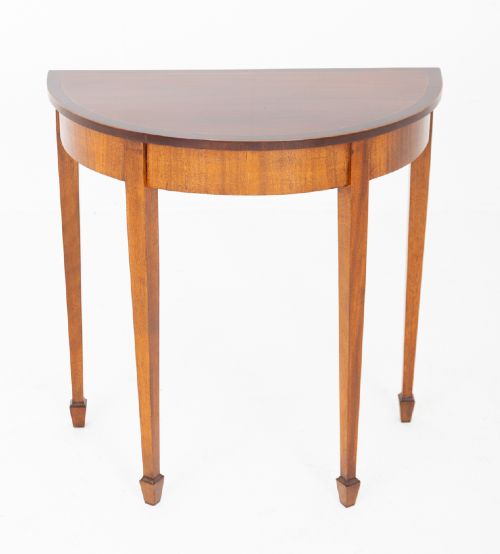
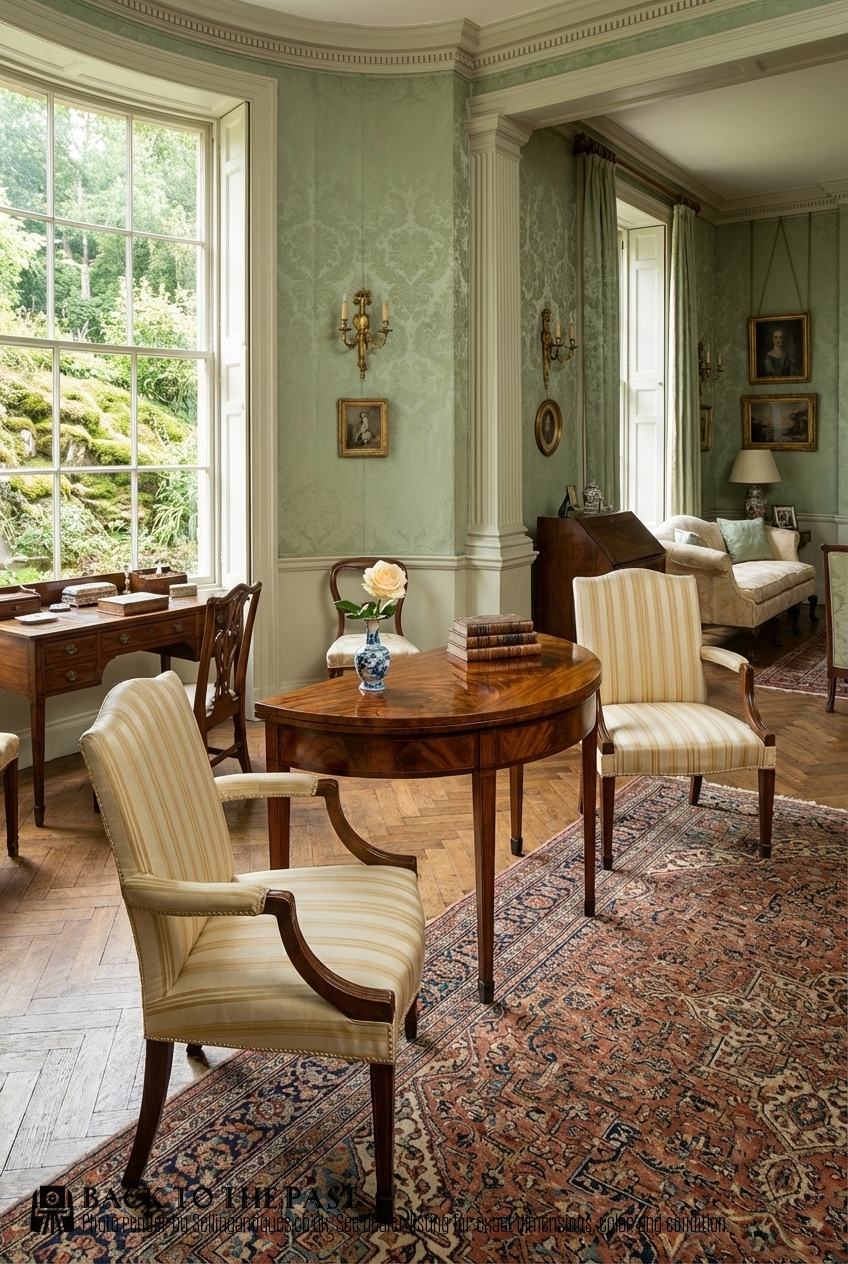
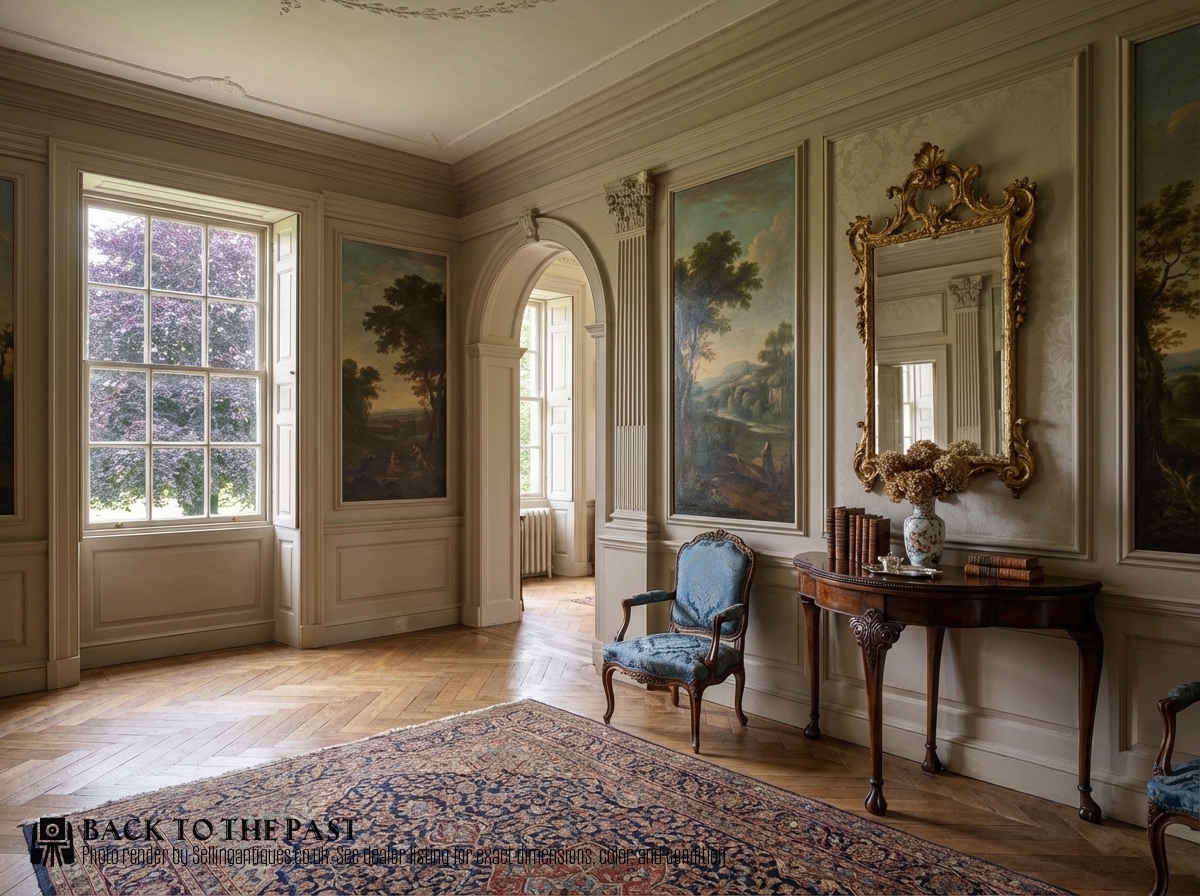
An Edwardian demi lune table brings graceful half-moon proportions and refined surface inlay to an entrance hall or drawing room.
Forms and periods
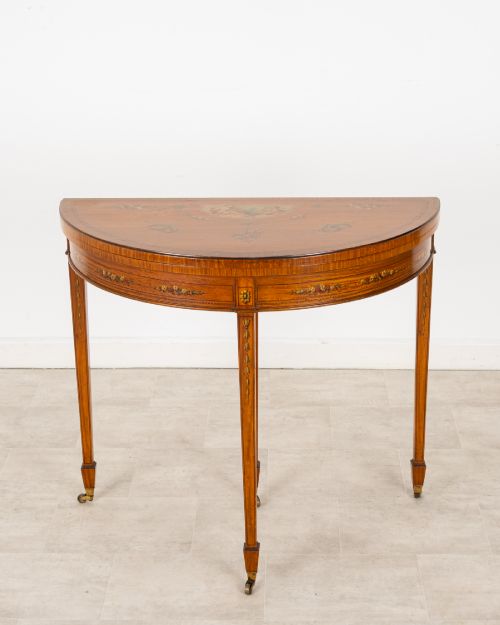
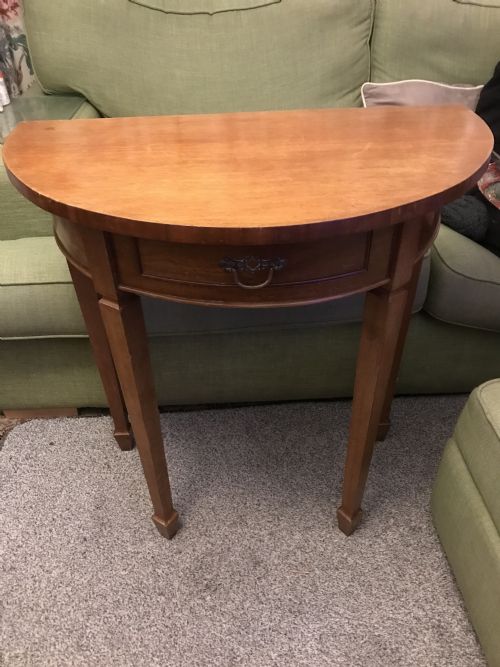
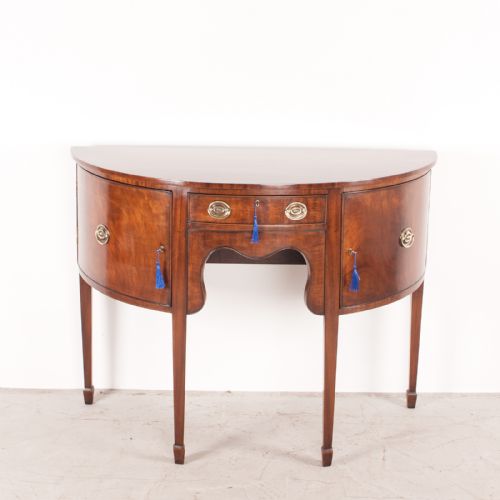
The edwardian demi lune table typically appears in mahogany, satinwood, and oak, reflecting the revival of eighteenth-century Sheraton and George III tastes during the Edwardian period and the early twentieth century.
Most examples function as side or console tables, though many survive as fold-over card, tea, or games tables with hinged tops supported on swinging rear legs.
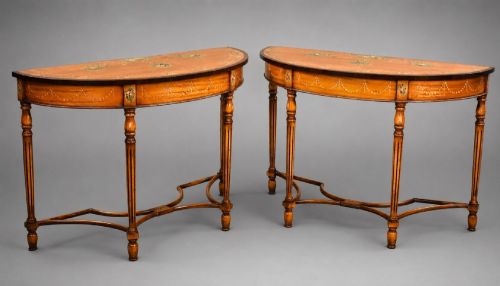
Makers also produced pairs of these semicircular pieces, designed to stand flat against a wall or to join together into a full circular dining table.
Materials and construction
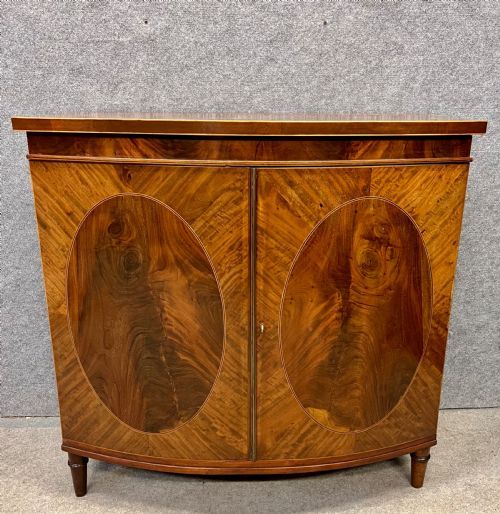
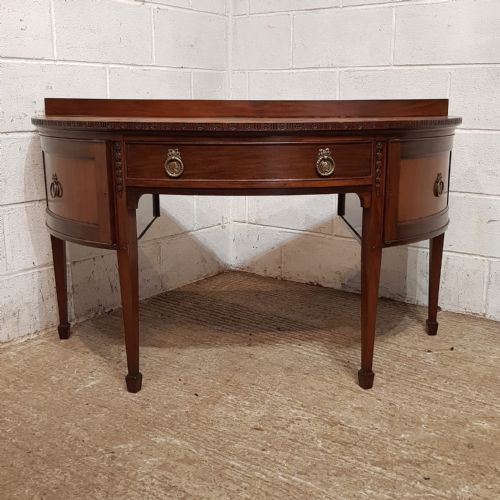
Cabinet makers constructed the curved carcase using timber veneers such as flame mahogany, burr yew, and satinwood laid over a solid wood secondary base.
Surfaces frequently display marquetry inlay, stringing, and contrasting lighter woods to trace the semi-circular edge and taper the legs toward spade feet.
Retail Price Guide 2026
Typical UK retail prices for edwardian demi lune table, calculated from the Sellingantiques database of over a million retail prices indexed since 2003. This retail price guide relies exclusively on Sellingantiques data; no external sources or auction records are used, so the figures do not describe the wider market.
Some card tables conceal hidden wells beneath their folding tops designed to hold counters and playing cards.
Judging quality
Quality rests upon the crispness of the marquetry and the choice of timber figure, where richly grained flame mahogany or figured satinwood elevates the piece.
The precision of the fold-over mechanism and the alignment of the grain when the top is open separate standard workshop output from finer cabinet work.
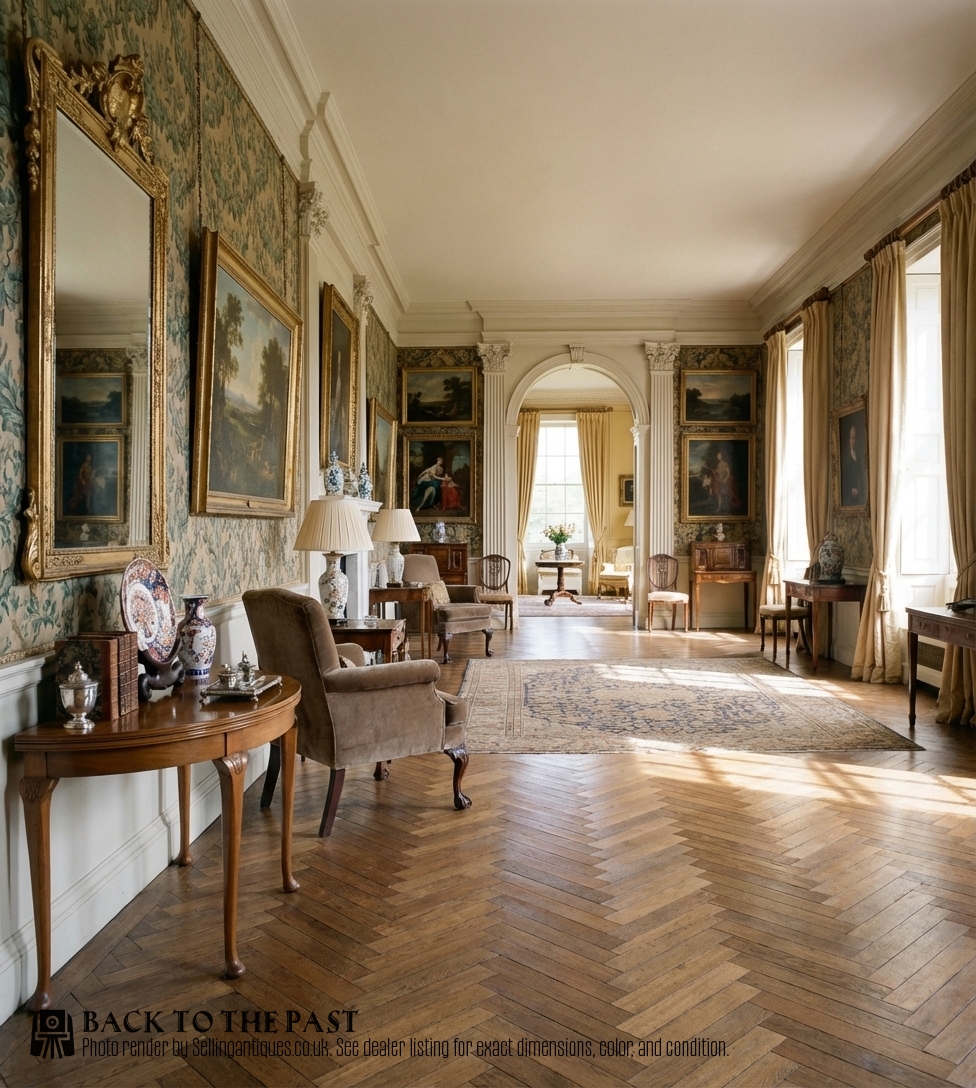
The Edwardian Demi Lune Table Glossary
- Demi-lune
- Half-moon shape. This architectural profile allows the furniture to sit flat against a wall while projecting minimally into the room.
- Marquetry inlay
- Decorative patterns formed by fitting contrasting veneers into a prepared wooden surface. Cabinet makers used this technique to create delicate swags, urns, and floral motifs.
- Fold over
- A hinged top design that doubles the surface area when opened. It turns a slim console into a functional card or tea table.
- Spade foot
- A rectangular foot that tapers slightly toward the bottom. It appears frequently on furniture influenced by Sheraton designs.
- Flame mahogany veneer
- A sliced layer of wood displaying a distinctive flickering flame pattern. It was selected for prominent table tops to catch the light.
Frequently Asked Questions
What is an edwardian demi lune table used for?
These pieces serve primarily as decorative side or console tables in hallways and drawing rooms. Many versions feature fold-over tops that open up for card games or tea.
Their shallow semicircular depth makes them practical for narrow spaces where a full circular table would block foot traffic.
How do you tell a card table from a side table?
A card table has a double top that hinges open to reveal a baize-lined playing surface supported by a pivoting rear leg. Side and console tables feature fixed tops attached permanently to the frame.
Examining the underside or the hinges reveals whether the top was built to move.
What woods were used for these tables?
Mahogany forms the foundation of most surviving pieces, often paired with satinwood borders and marquetry details. Cabinet makers also utilised oak, walnut, and burr yew wood for specific regional or stylistic variations.
Stringing lines in contrasting light and dark woods define the curved edges of the top.
Can two demi lune tables make a round table?
Pairs of these tables were often manufactured with matching dimensions so they could be pushed together to form a full circle. When separated, each half stands independently against a wall.
Matching pairs are frequently found together in the archive records.