
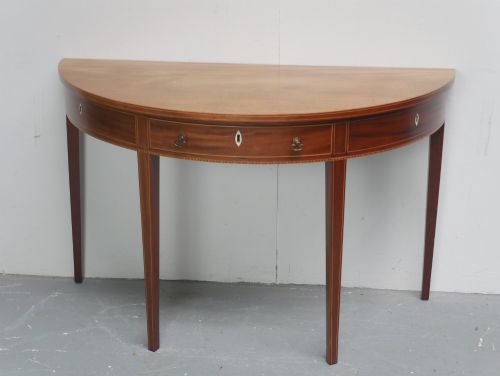
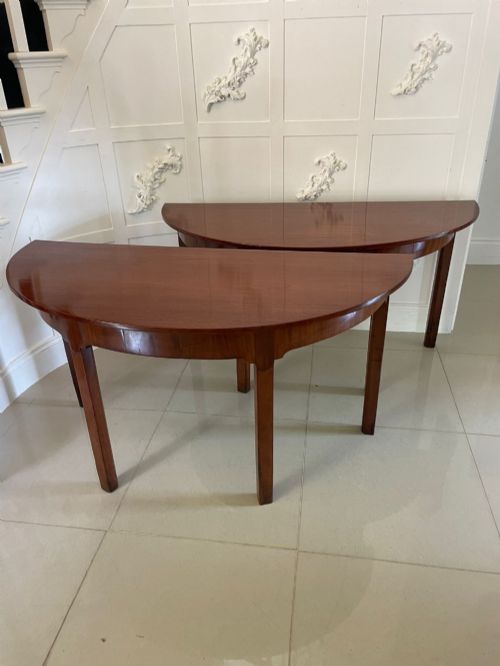
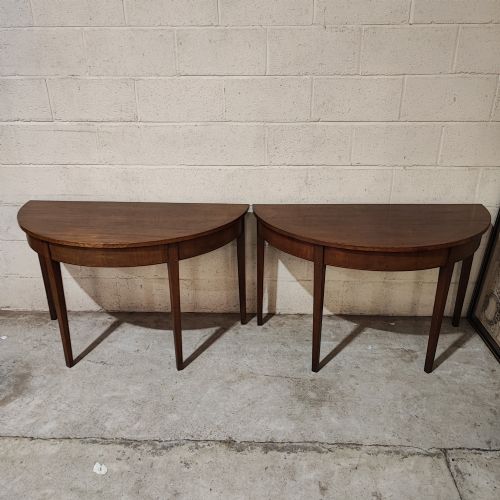
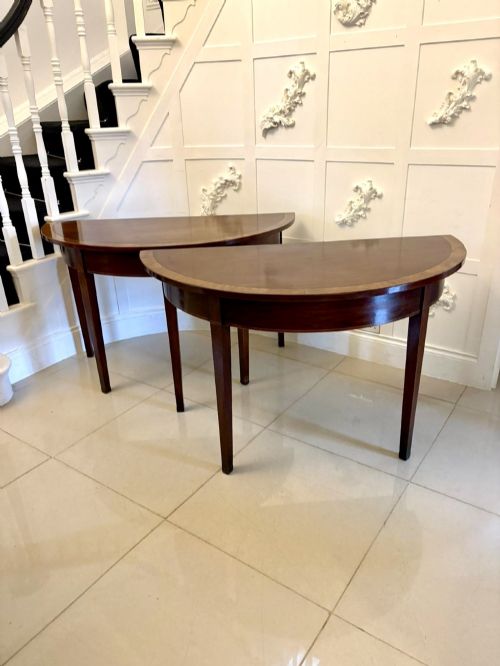
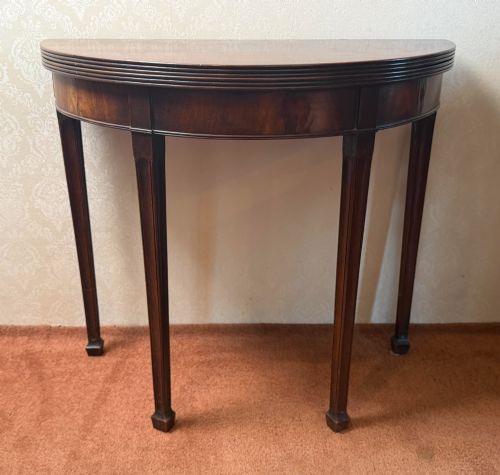
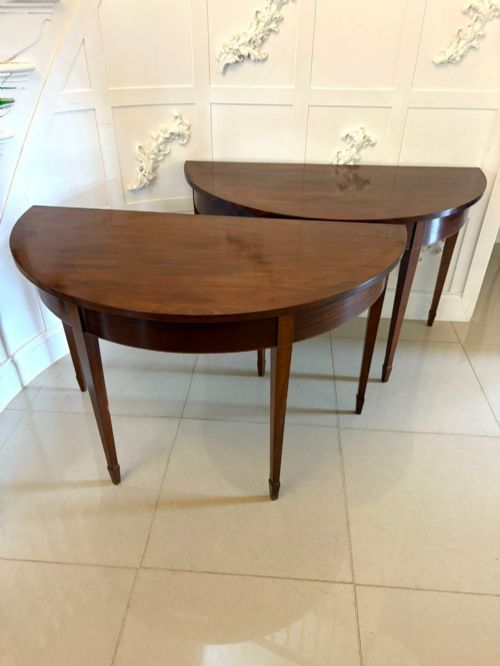
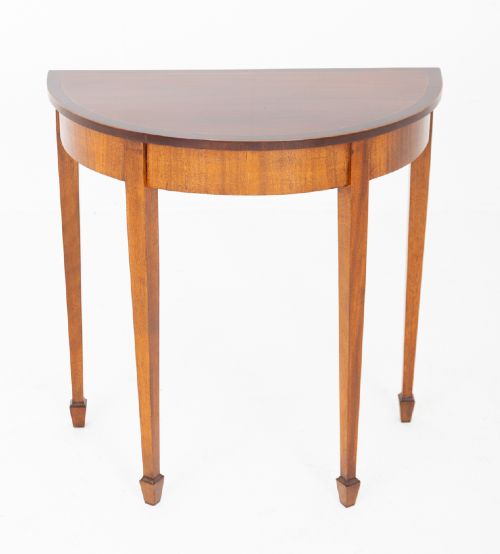
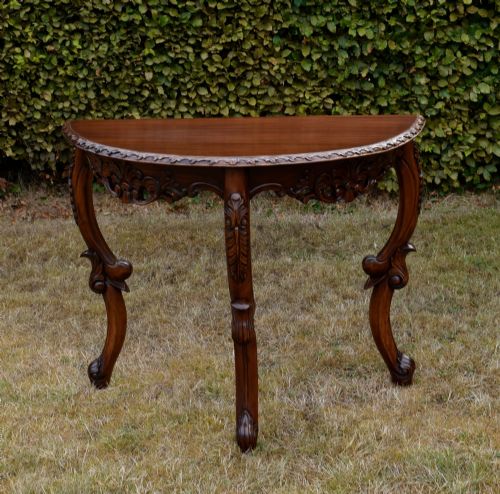
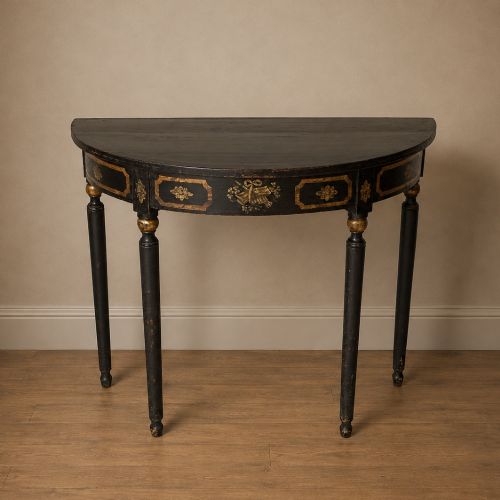
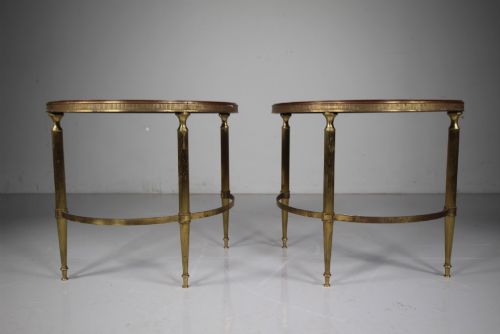
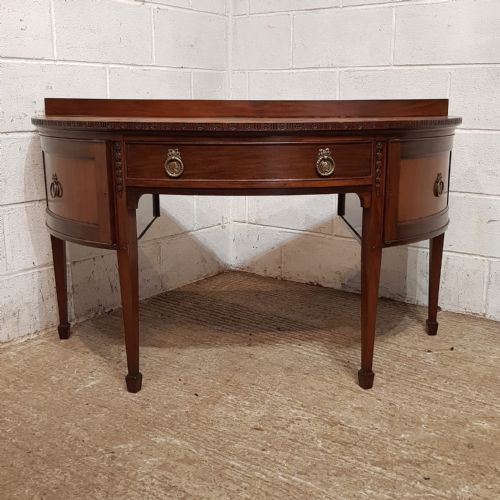

Demi Lune Side Table
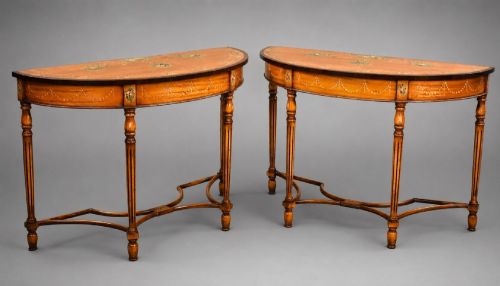
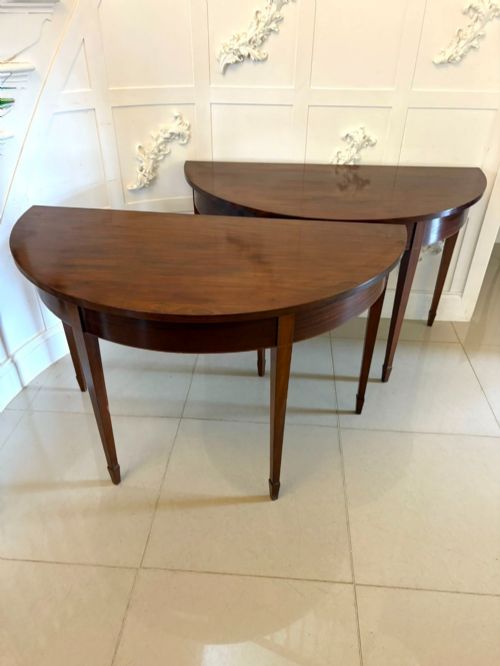
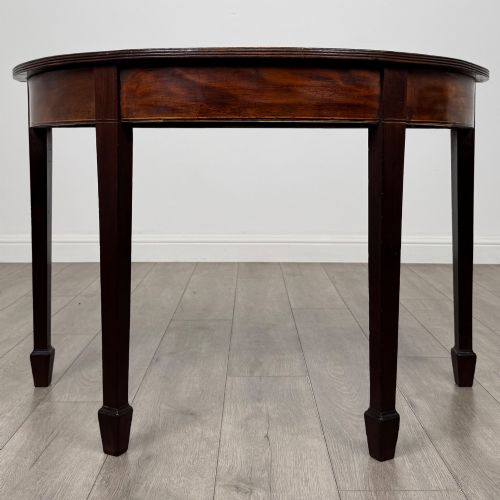
The demi lune side table offers a distinct half-moon silhouette designed to hug a wall while adding classical elegance to any hall or parlour.
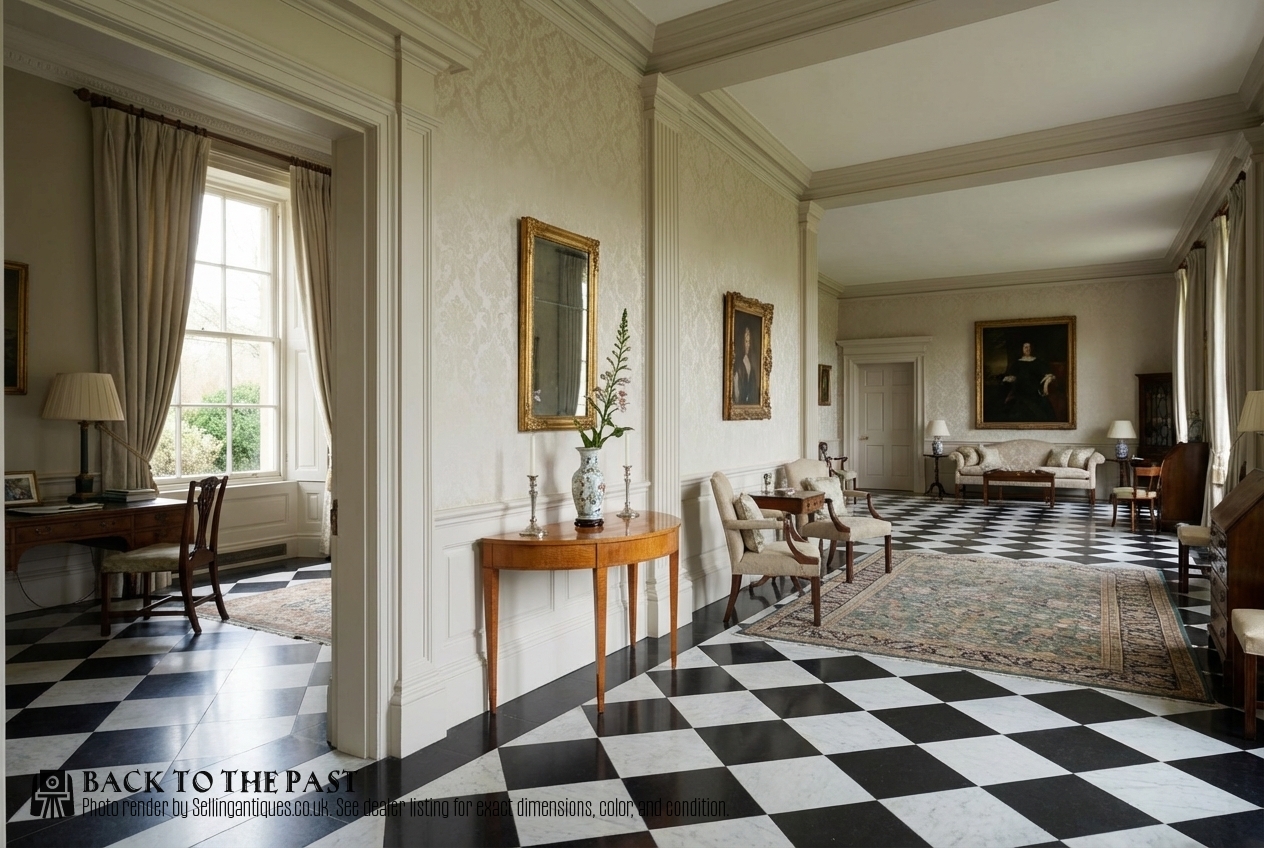
Demi Lune Side Table
A demi lune side table functions as a console, card, or tea table, utilising a semi-circular top that sits flat against a wall to save space. These pieces frequently appear from the 18th Century and 19th Century, encompassing Georgian, Regency, and Victorian periods.
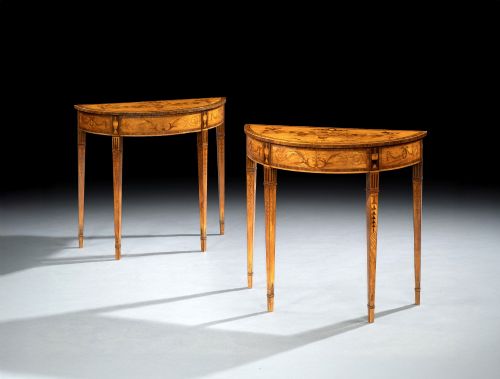
Makers often constructed these half-moon forms as pairs to flank a fireplace or entranceway, or adapted them with fold-over tops to serve dual purposes as games tables. Common formats range from simple oak or mahogany side tables to elaborate painted satinwood console tables and French marble-top cabinets.
Materials and Technique
Cabinetmakers built these tables using timbers such as mahogany, walnut, satinwood, oak, and yew, often selecting figured veneers for the top surface. Marquetry, crossbanding, and inlay work frequently decorate the frieze and legs.
Painted wood surfaces, black paint with parcel gilt, and carved detailing appear across French, Swedish, and English examples. Certain pieces incorporate brass mounts, spade feet, and concealed storage compartments within the frame.
Some tables hide compartments beneath their fold-over tops, keeping forgotten card hands safely out of sight.
Assessing Quality
Quality rests upon the selection of timber and the precision of the cabinetwork, particularly in the alignment of figured veneers and inlaid marquetry. Finer examples display crisp carving, balanced proportions, and well-fitted fold-over mechanisms that operate smoothly without sagging.
The sophistication of the secondary woods used in the interior framing and the originality of the painted or gilded decoration further separate standard utility pieces from high-status console tables.
The Demi Lune Side Table Glossary
- Demi-lune
- A half-moon shape used for tables designed to stand flat against a wall. This profile defines the entire category of console and side furniture listed here.
- Console table
- A table supported by wall brackets or front legs, intended to stand against a vertical surface. They often feature decorative carving or painting on the frieze.
- Crossbanding
- A strip of veneer running perpendicular to the grain of the main surface, often framing the top of a table. This technique highlights the edge of the semi-circular top.
- Marquetry
- Decorative patterns created by fitting different woods or materials into a veneer background. It appears on finer satinwood and mahogany tops.
- Fold-over table
- A table with a hinged top that opens to double its surface area, commonly utilised for card games or tea. These variants often conceal storage compartments inside.
Demi Lune Side Table: Frequently Asked Questions
What is a demi lune table used for?
These tables traditionally served as decorative console pieces in hallways, drawing rooms, or dining spaces where a full-circle table would obstruct movement. Many versions include fold-over tops to function as impromptu card or tea tables when guests arrived.
Because of their flat back, they occupy minimal floor space while providing a stable surface for lamps, decorative objects, or serving drinks.
How do I date a antique demi lune table?
Dating relies on observing the timber choice, construction methods, and prevailing decorative style of the period. Georgian and Regency pieces often feature solid mahogany with delicate inlay, while Edwardian revivals frequently utilise painted satinwood.
Examining the underside, drawer construction, and secondary woods helps confirm whether a piece originates from the 18th Century, 19th Century, or later revival eras.
Will a demi lune table fit in a small hallway?
The semi-circular footprint allows these tables to sit flush against narrow corridor walls without jutting out into walking paths. Their shallow depth makes them ideal for tight entryways where standard rectangular tables prove too bulky.
Pairing a small console with a wall mirror creates a functional drop zone for keys and post while maintaining an open floor plan.
What is the difference between a console and a side table?
Console tables historically relied on wall fixings or decorative legs for support, designed primarily for visual display beneath a mirror or painting. Side tables generally feature four freestanding legs and lean towards practical utility.
In demi lune pieces, the distinction often blurs, as many half-moon tables function interchangeably in halls, dining rooms, and parlours.