
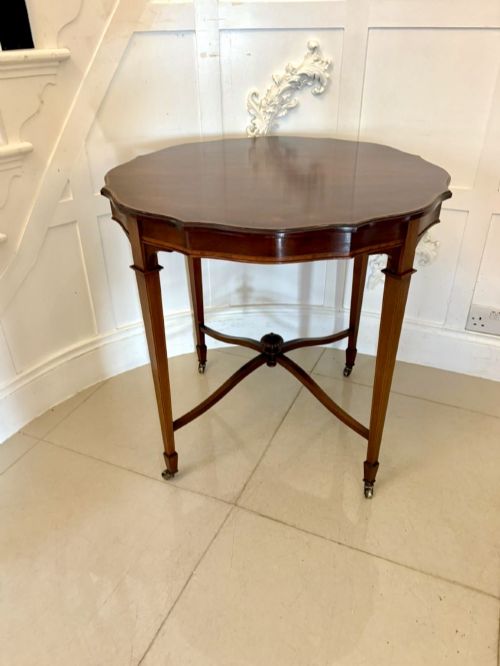
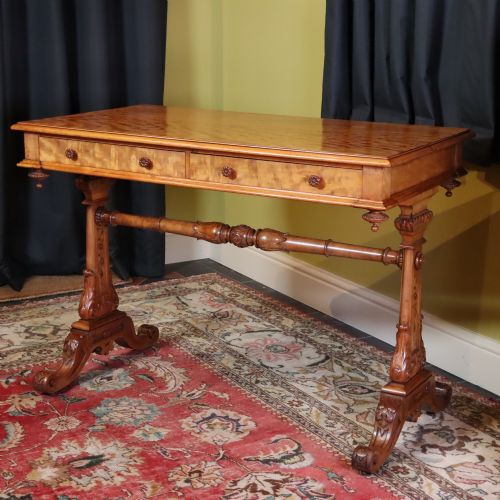
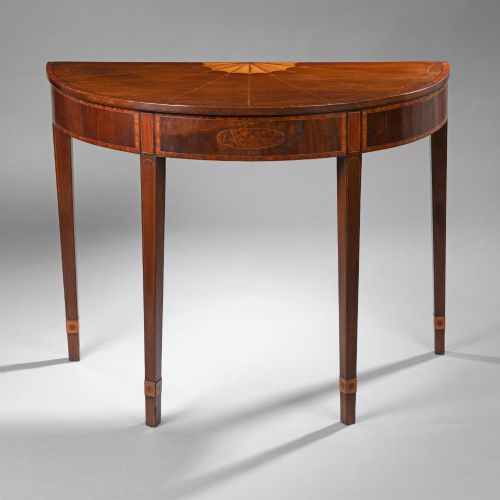
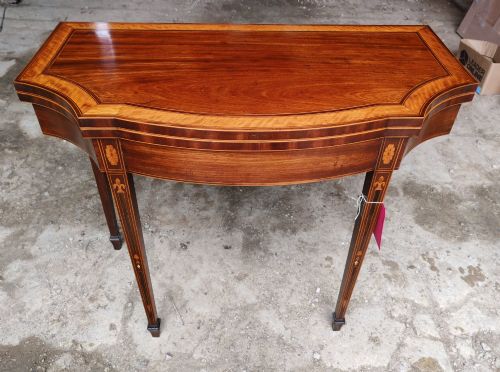

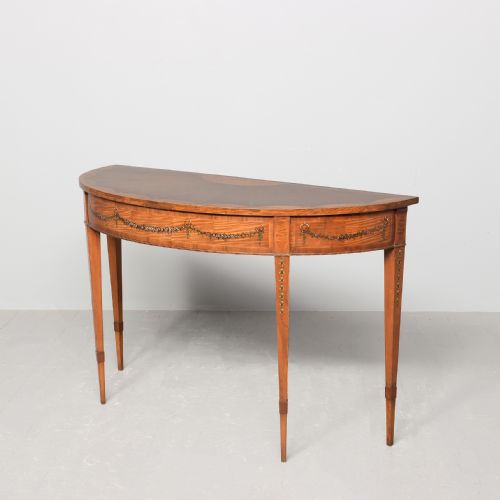


Satinwood Hall Table
A satinwood hall table brings luminous timber and refined marquetry into an entranceway, offering a functional surface with genuine period character.
What these pieces are
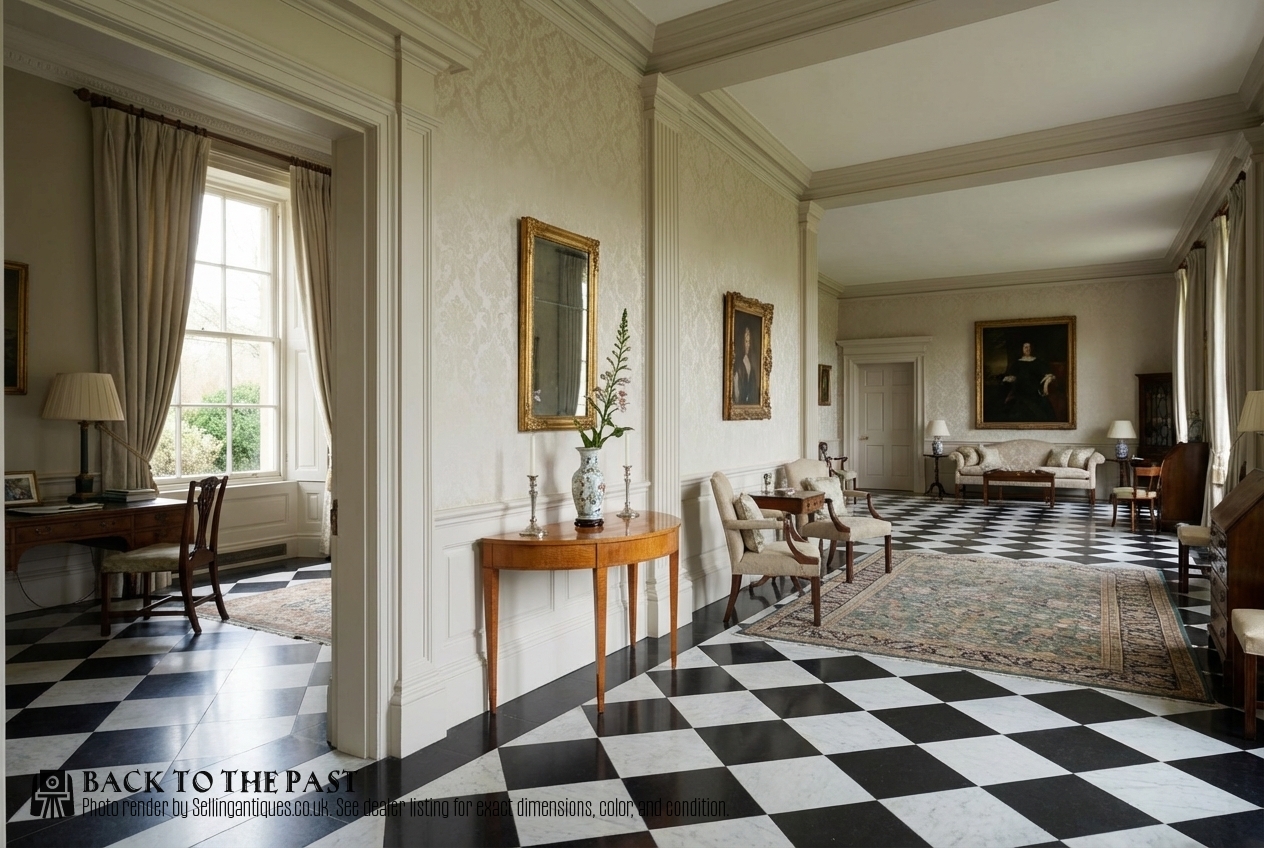
A satinwood hall table serves as a striking focal point in an entryway, combining utility with decorative elegance. These pieces appear in forms such as console tables, occasional tables, and centre tables, designed to fit narrow spaces or grand hallways alike.
Makers and workshops utilised contrasting timbers and intricate stringing to frame the pale, reflective grain of satinwood. Whether structured as a side table or a console, each item reflects the prevailing neoclassical tastes of its era.

How they were made
Craftsmen built these tables using solid or veneered satinwood, frequently complemented by secondary timbers such as mahogany, rosewood, and satin walnut. Surfaces often feature delicate boxwood stringing, parquetry, and marquetry inlay depicting classical motifs or floral details.
Structural elements frequently incorporated crossbanding to frame the primary grain, while brass fittings added functional and decorative accents. Tilt-top mechanisms, turned pedestals, and tapering legs demonstrate the sophisticated cabinet-making techniques of the periods represented.
Retail Price Guide 2026
Typical UK retail prices for satinwood hall table, calculated from the Sellingantiques database of over a million retail prices indexed since 2003. This retail price guide relies exclusively on Sellingantiques data; no external sources or auction records are used, so the figures do not describe the wider market.
Several examples double as card games tables, proving that past generations took their parlour entertainment very seriously indeed.
What varies in quality
The distinction between standard production and exceptional craftsmanship lies in the depth of the timber's figure and the precision of the marquetry inlay. Superior examples display meticulously matched veneers and harmonious secondary woods like rosewood or mahogany.
Proportion and structural integrity define the higher end of the range, where fine boxwood stringing remains intact and crossbanding complements the natural chatoyancy of the satinwood. Lesser pieces show simpler construction with less intricate detailing in the inlay work.
Halliday s of Eton
The Satinwood Hall Table Glossary
- Satinwood
- A dense, lustrous hardwood prized for its pale yellow colour and chatoyant grain. It forms the primary visual surface on these tables.
- Marquetry
- Decorative inlay work using various coloured woods to create pictorial or geometric patterns. It adorns the tops and friezes of finer examples.
- Demi-lune
- Half-moon shaped furniture designed to sit flush against a wall. This silhouette is particularly common among eighteenth-century console tables.
- Crossbanding
- A border of veneer laid around the edge of a table top with the grain running perpendicular to the centre. This technique frames the primary timber.
- Serpentine
- A gently curved furniture front featuring a convex centre flanked by concave ends. It adds dynamic movement to eighteenth and nineteenth-century pieces.
Frequently Asked Questions
What is a satinwood hall table used for?
These tables provide a decorative and practical surface in an entryway, often used for placing keys, lamps, or small display items upon entering a home.
Historically, they also served as side or console tables in grand reception rooms, offering a refined aesthetic against the wall.
How do I identify a Sheraton period table?
Sheraton period pieces typically feature straight tapered legs, delicate boxwood stringing, and symmetrical marquetry inlay. The design emphasises neoclassical restraint and geometric harmony.
Satinwood was heavily favoured during this era for its luminous yellow tone, often contrasted with darker mahogany or rosewood crossbanding.
How do I care for antique satinwood furniture?
Keep satinwood furniture away from direct sunlight and heat sources to prevent the pale timber from darkening or the veneers from drying out. Use a soft, dry cloth for dusting.
Apply a microcrystalline wax occasionally to nourish the polished surface without building up excessive residue or clouding the grain.
What is the difference between a console and a centre table?
A console table is designed with a flat back to stand flush against a wall, frequently supported by brackets or legs at the front. It serves primarily as a decorative surface.
A centre table is finished on all sides and meant to stand free in the middle of a room, often functioning as a breakfast or display table.