


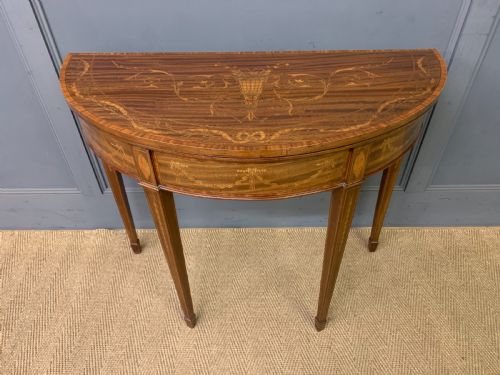

Inlaid Demilune Table
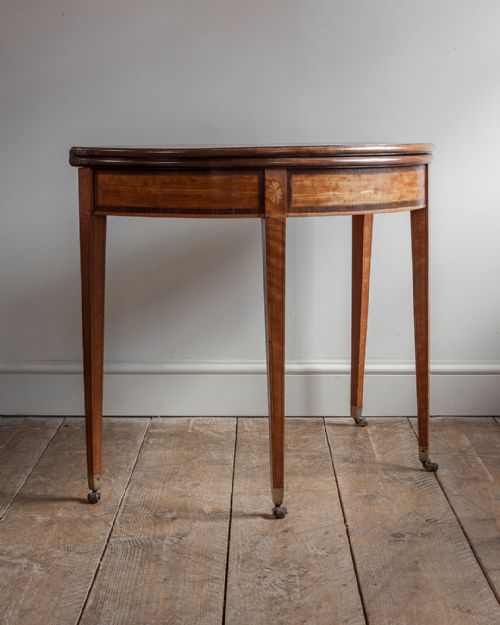
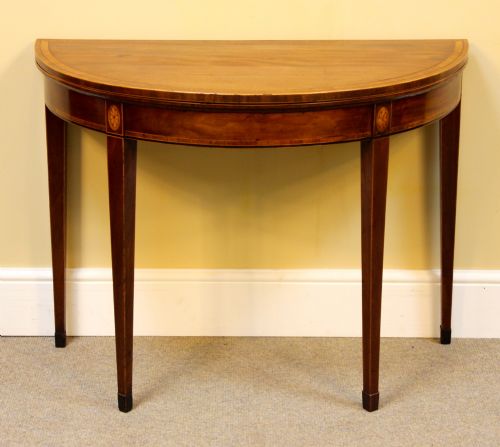
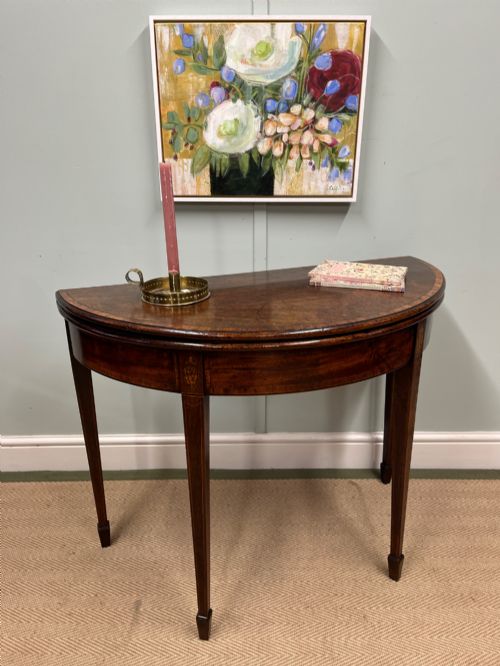
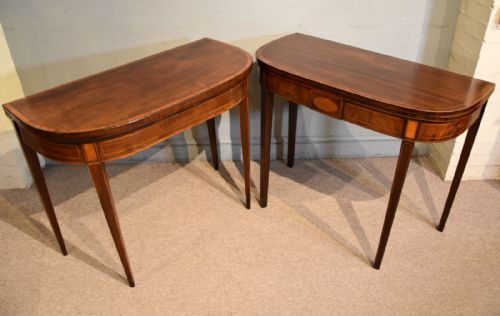
An inlaid demilune table offers a semicircular silhouette and contrasting timber details that anchor a hallway or drawing room.
Inlaid Demilune Table
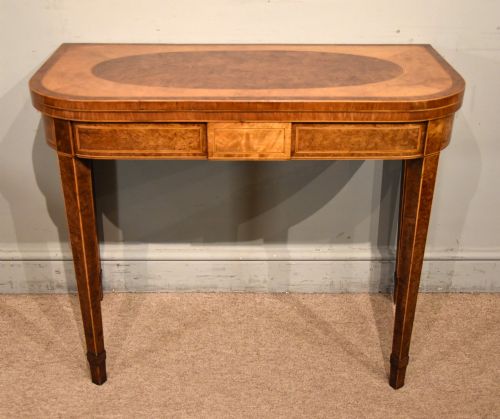
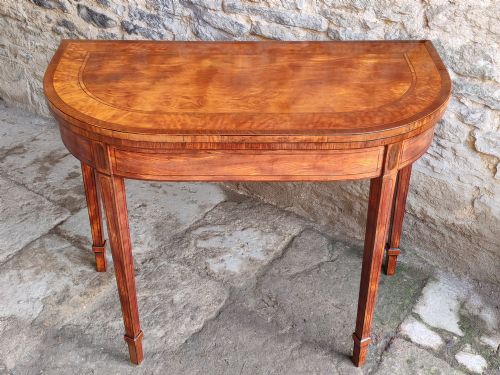
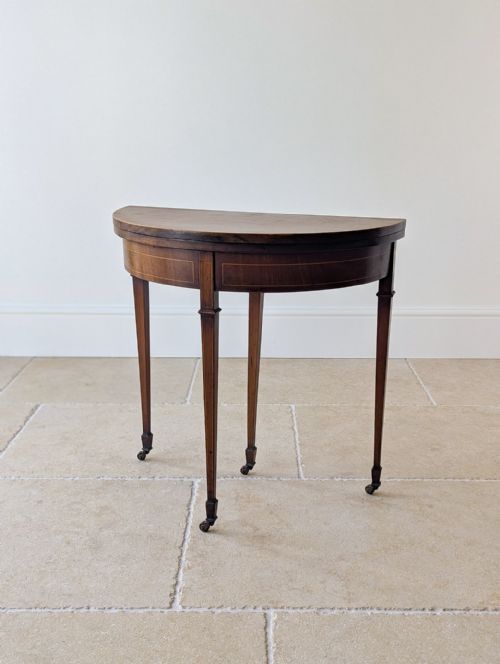
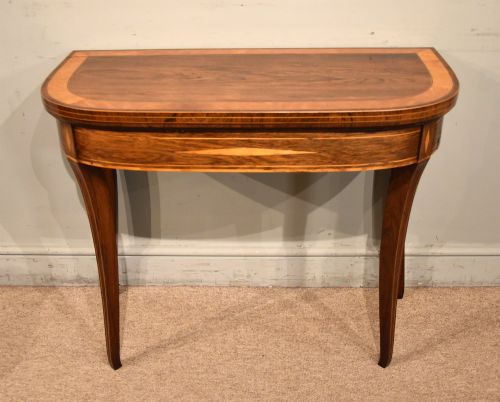
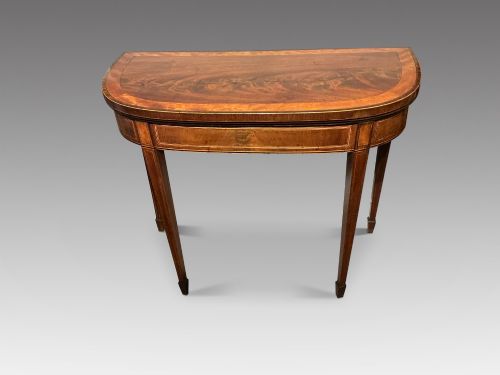
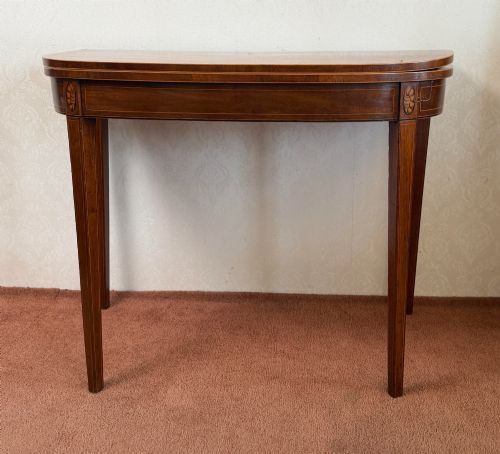
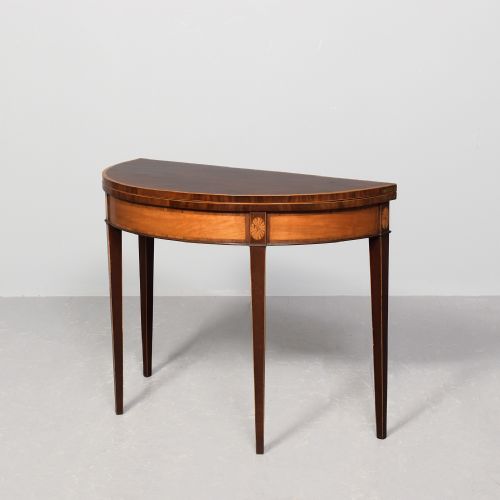
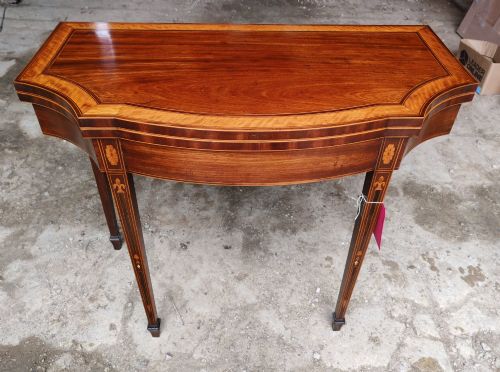
An inlaid demilune table presents a flat back edge to sit against a wall and a curved front, appearing most frequently in forms designed for games, tea, or display. The selection here spans the eighteenth century through the Edwardian period, capturing Georgian, Regency, and Sheraton revival eras.
Card tables and tea tables dominate the available pieces, often featuring fold-over tops or D-shaped configurations. Console tables and sideboards also emerge, executed in mahogany, satinwood, and rosewood with contrasting boxwood and ebony details.
Timbers and Inlay Techniques
Cabinet makers utilised dense primary timbers such as mahogany and satinwood, supported by secondary structural woods. Figured veneers provide visual depth across the semicircular tops.
Boxwood, ebony, and specialised wood inlay create delicate borders, stringing, and marquetry motifs. These contrasting elements define the curved edges and apron panels.
Inlaid Demilune Table Retail Price Guide 2026
Typical asking prices for inlaid demilune table among the pieces listed under this phrase on Sellingantiques today, from the lower quarter to the upper quarter. They describe what is for sale here now, not the wider market.
Periods represented span Georgian and Regency eras through Edwardian revivals.
Assessing Craftsmanship and Proportion
The sophistication of the timber selection dictates the visual impact, where highly figured mahogany or fine satinwood elevates the piece. Precision in the contrasting inlay and the crispness of the boxwood lines distinguish standard cabinet work from exceptional output.
Structural integrity of the folding mechanisms on card tables and the balance of the slender legs determine the daily utility and historical fidelity of the furniture.
Bruce & Burns of Edinburgh·Edward and Roberts
The Inlaid Demilune Table Glossary
- Demilune
- A half-moon or semicircular shape utilised for tables designed to stand flat against a wall.
- Inlay
- A technique where pieces of contrasting timber or brass are inserted into recesses within the primary wood surface.
- Crossbanding
- A border of veneer laid with the grain running perpendicular to the surrounding wood, framing the table top.
- Marquetry
- Elaborate pictorial or geometric designs assembled from various coloured wood veneers.
- Stringing
- Thin lines of contrasting wood inlay used to outline drawers, legs, and tabletops.
Inlaid Demilune Table: Frequently Asked Questions
How were demilune tables used?
These tables served primarily as pier tables against walls, holding decorative objects or lighting in formal rooms. Many examples functioned as card tables or tea tables, opening up on hinges to reveal baize-lined surfaces for evening entertainment.
Their shallow depth allowed them to occupy narrow hallways and drawing rooms without obstructing movement. The flat rear edge positioned securely against the wall while the curved front softened the geometry of the space.
How do I identify a Georgian piece?
Georgian and George III pieces rely on substantial mahogany construction with restrained boxwood stringing and well-figured timber tops. The proportions remain classical, often featuring taper legs or spade feet.
Later Edwardian revivals frequently incorporate lighter satinwood grounds and more elaborate marquetry or neoclassical motifs. Examining the underside and secondary woods clarifies the age of the construction.
Can I use a fold-over card table daily?
These tables accommodate regular use provided the hinges and pivoting rear legs receive gentle handling. The fold-over mechanism was built for entertaining, though antique timbers benefit from protection against moisture and direct heat.
Placing the table away from direct sunlight preserves the satinwood and mahogany colours. Routine dusting keeps the polished surfaces and inlay intact.
What is the difference between Sheraton and Regency styles?
Sheraton style pieces from the late eighteenth century emphasise light satinwood, elegant tapering legs, and balanced neoclassical geometry. The inlay work remains neat and linear.
Regency examples often display bolder rosewood or dark mahogany timbers with brass mounts and heavier proportions. Both styles utilise the semicircular demilune format but achieve distinct visual weight.