


Satinwood Games Table
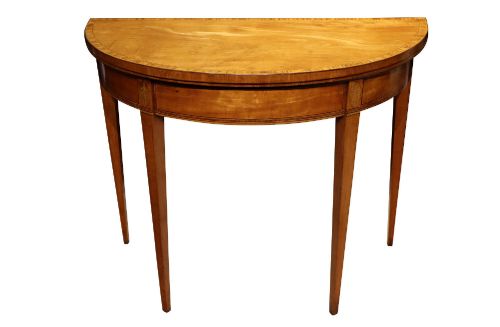
A satinwood games table brings golden timbers and clever folding leaves into a room, serving as a card surface by night and a side table by day.
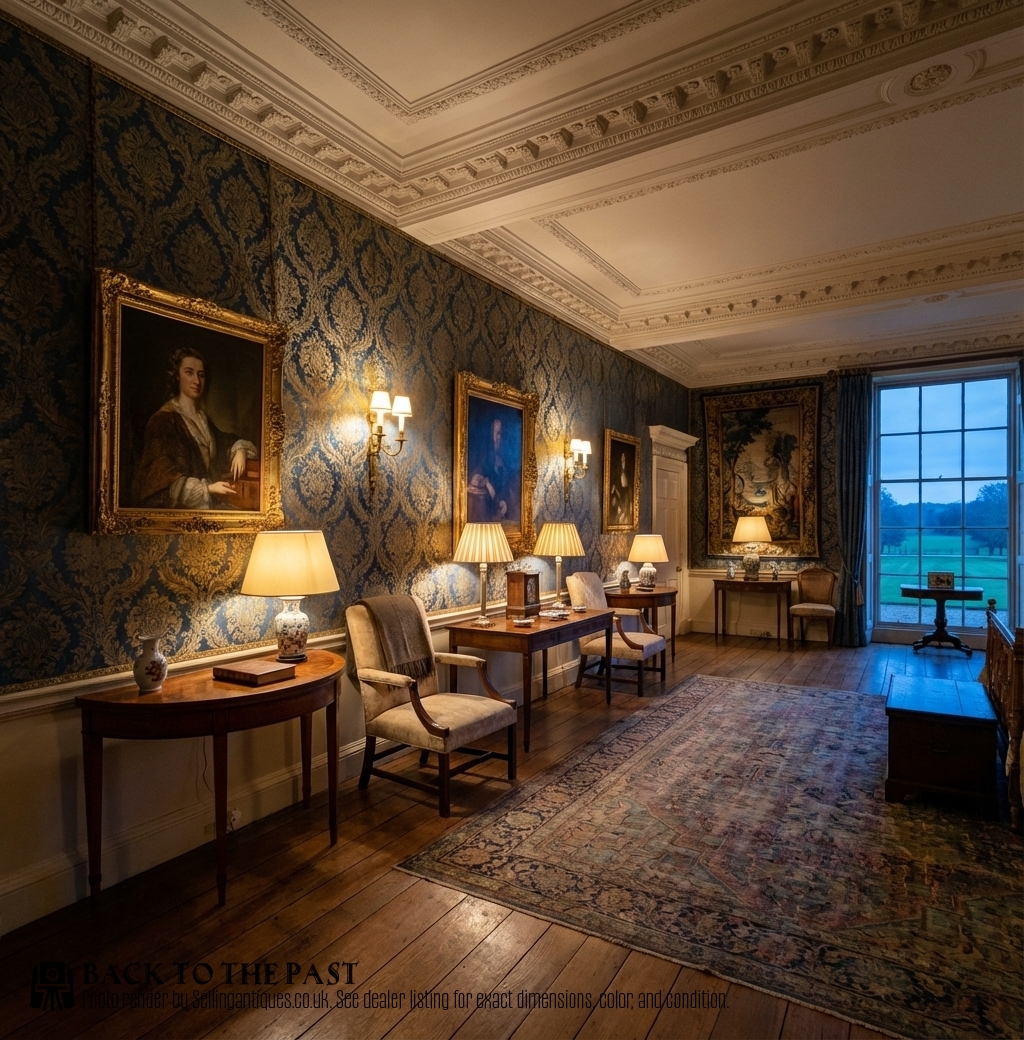
Satinwood Games Table
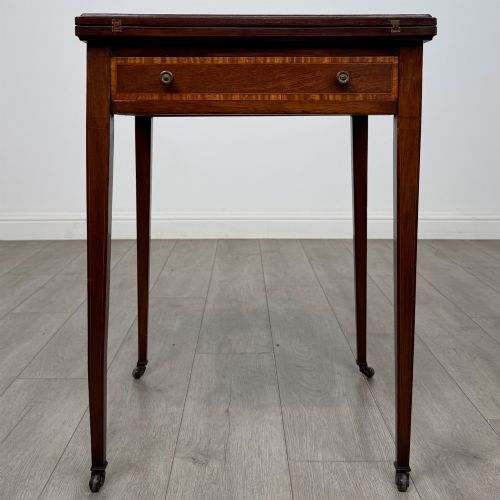
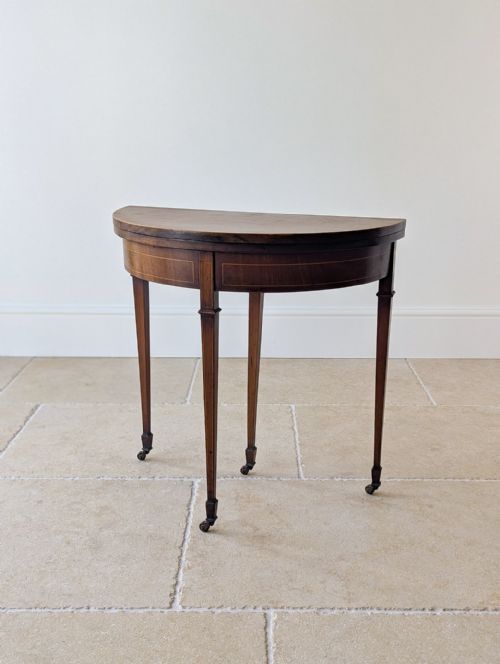
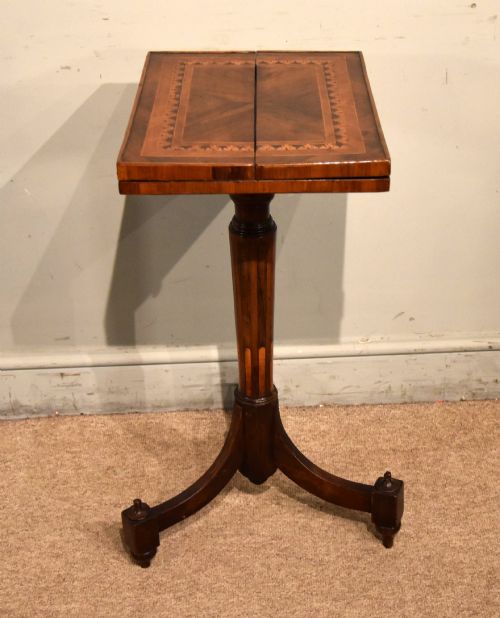
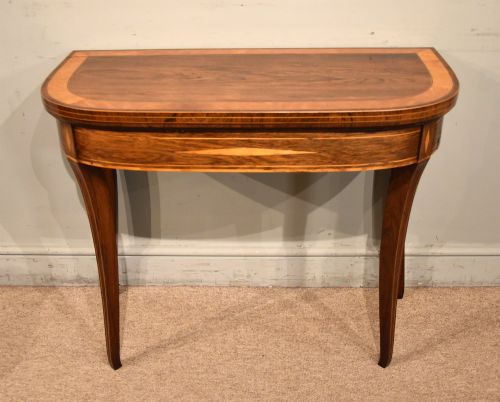
When you search for a satinwood games table, you encounter fold-over card tables and envelope designs from the Georgian, Regency, and Edwardian eras. These pieces typically feature a polished wooden top that swivels and opens to reveal a baize or leather playing surface, often supported on tapering legs or a pillar base.
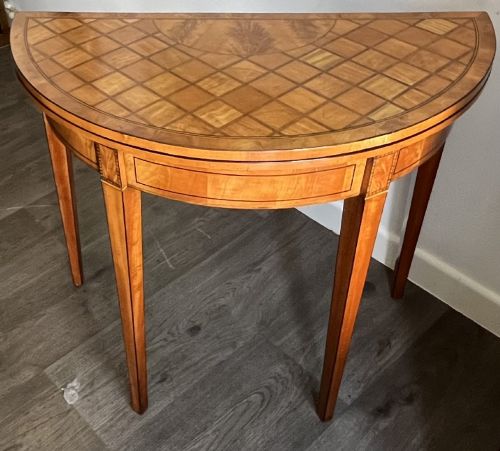
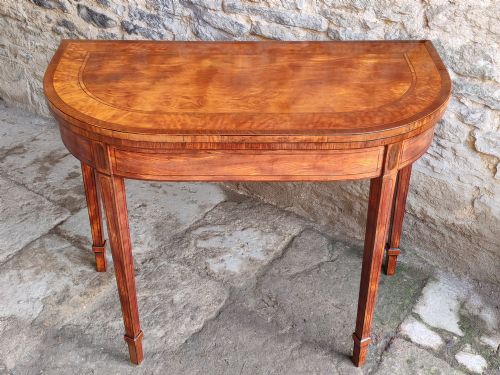
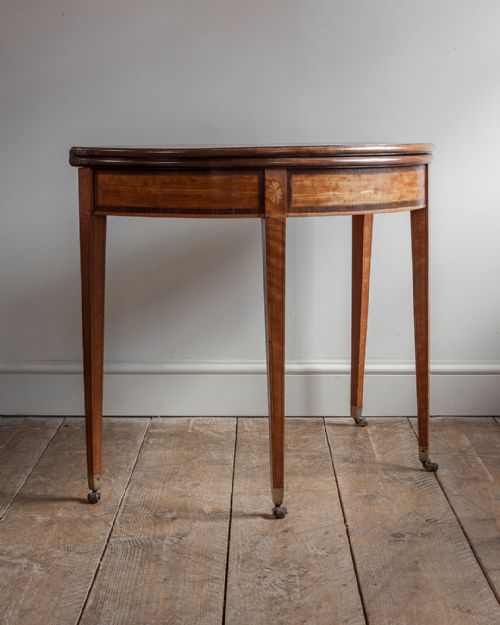
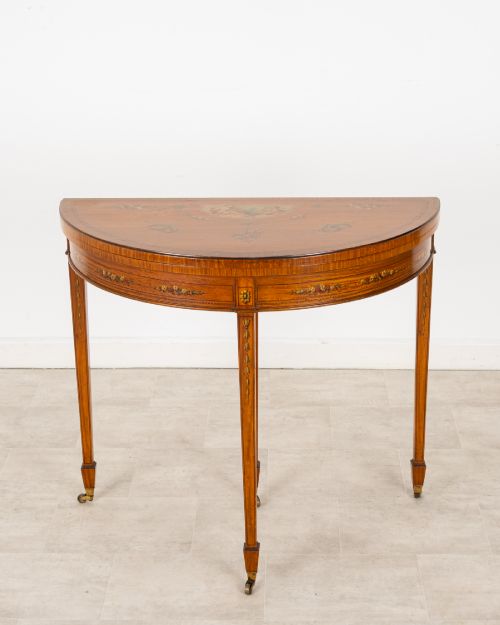
The satinwood games table most commonly met on this page is the demi-lune or semi-circular shape dating from the late eighteenth century or the Edwardian Sheraton Revival period. These versions display delicate painted floral motifs, marquetry, and contrasting crossbanding in rosewood, mahogany, or kingwood.
Makers designed these items to transform quickly from compact consoles against a wall into functional tables for cards, chess, or social gatherings. The evidence shows variations spanning from simple tripod bases to elaborate inlaid folding tops with internal storage wells for counters and cards.
How they were made
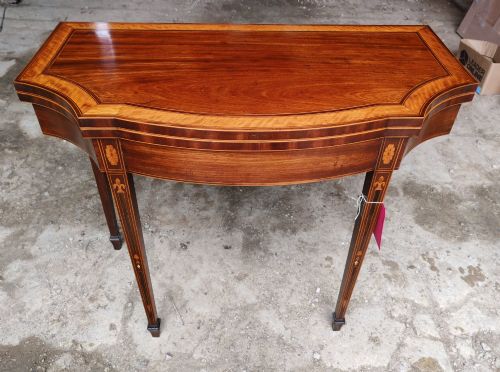
Cabinetmakers constructed these tables using a sturdy carcase of mahogany or pine veneered with light, lustrous West Indian satinwood. They enhanced the golden timber by contrasting it with darker woods such as ebony, rosewood, and kingwood, creating geometric borders and fine stringing lines.
Surface decoration frequently relied on intricate marquetry and hand-painted floral swags applied directly to the wood before French polishing. Craftsmen also incorporated boxwood and ebony inlay to define the edges of folding leaves and games boards.
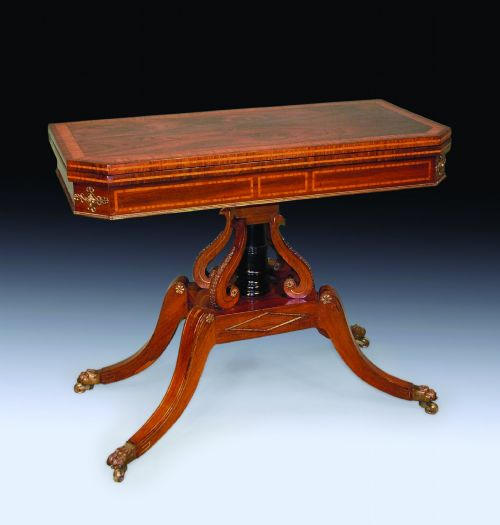
The folding mechanism depended on hinged leaves supported by swing legs or pivoting gate-legs built into the frame. Tables from the Regency period often utilised a central pedestal column resting on splayed legs fitted with brass claw feet and castors.
Satinwood Games Table Retail Price Guide 2026
Typical asking prices for satinwood games table among the pieces listed under this phrase on Sellingantiques today, from the lower quarter to the upper quarter. They describe what is for sale here now, not the wider market.
Some Edwardian tables hide secret wells beneath the rotating leaves, designed to catch runaway dice and errant shillings.
What varies in quality
The tier of a satinwood games table depends heavily on the precision of the timber matching and the subtlety of the inlay. Superior examples display symmetrical book-matched veneers and crisp crossbanding that follows the curves of the top without warping.
Painted decoration on the better pieces exhibits a fine hand and confident brushwork, whereas lesser versions rely on heavier, mechanical application. The execution of the hinge mechanism and the stability of the folding leaf also dictate the overall standard of the piece.
Howard And Sons·Gillows
The Satinwood Games Table Glossary
- Demi-lune
- A half-moon shape popular for console and card tables designed to stand flat against a wall. This format allowed the table to occupy minimal space when closed.
- Crossbanding
- A narrow strip of veneer applied perpendicularly to the grain of the main surface to form a decorative border. It frequently frames the satinwood top in rosewood or kingwood.
- Envelope table
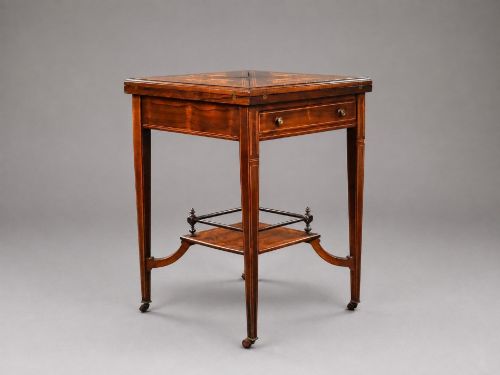
- A square card table with four triangular flaps that rotate and fold open together to resemble an envelope. This clever mechanism became especially popular during the Edwardian period.
- Marquetry
- The art of forming decorative patterns using thin pieces of wood veneer of different colours and grains. Artisans used this technique to create elaborate floral urns and ribbons.
- Baize
- A coarse woollen fabric, typically green, used to line the playing surfaces of card tables. It provides a soft, non-slip texture for dealing cards and placing counters.
Satinwood Games Table: Frequently Asked Questions
What is an envelope games table?
An envelope games table is a square folding table featuring four triangular leaves that swivel open in sequence. When closed, the folded flaps form an envelope shape over the green-lined playing surface.
These pieces were widely produced during the Edwardian era and offered a compact footprint for drawing rooms. They often include a small central drawer beneath the top for storing cards and mother-of-pearl counters.
How do you tell Georgian from Edwardian satinwood?
Georgian satinwood pieces rely on natural timber grains, subtle stringing, and hand-cut veneers for their visual impact. The construction feels dense and heavy, reflecting eighteenth-century cabinet-making standards.
Edwardian items often revive these earlier styles with painted neoclassical motifs, brighter polishes, and lighter internal framing. Examining the secondary woods inside the drawer linings helps confirm the manufacturing period.
What were these tables used for originally?
Georgian and Regency households used these tables primarily for evening card games such as whist, quadrille, or hazard. The fold-over top provided a firm surface covered in baize or leather to protect the polished wood.
During the daytime, the tables remained folded against the wall as decorative side consoles or lamp tables. Some specialised versions also incorporated wells for writing or sewing.
How do you care for satinwood furniture?
Satinwood requires protection from direct sunlight to prevent the golden yellow timber from fading or darkening unevenly. Regular dusting with a soft, dry cloth preserves the aged French polish without building up residue.
Keeping the room at a stable humidity level stops the fine veneers from lifting or splitting along the crossbanded borders. Applying mild wax polish sparingly helps maintain the natural lustre of the wood.