
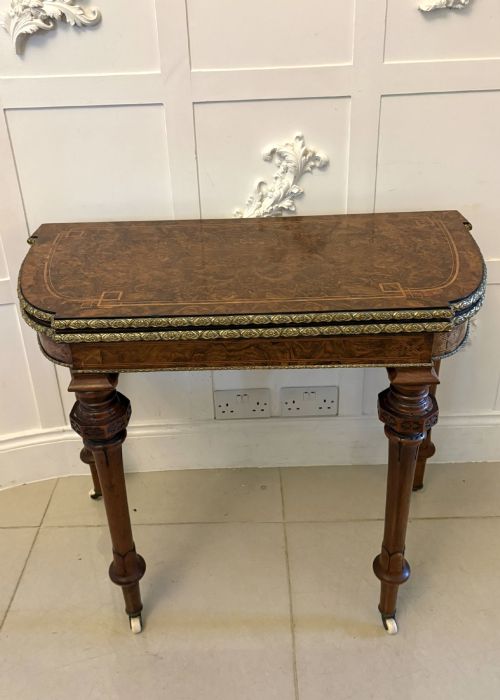
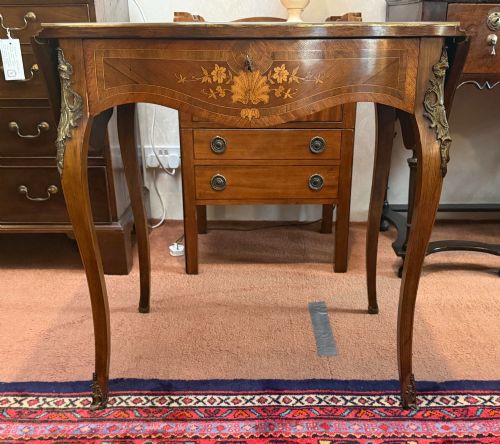
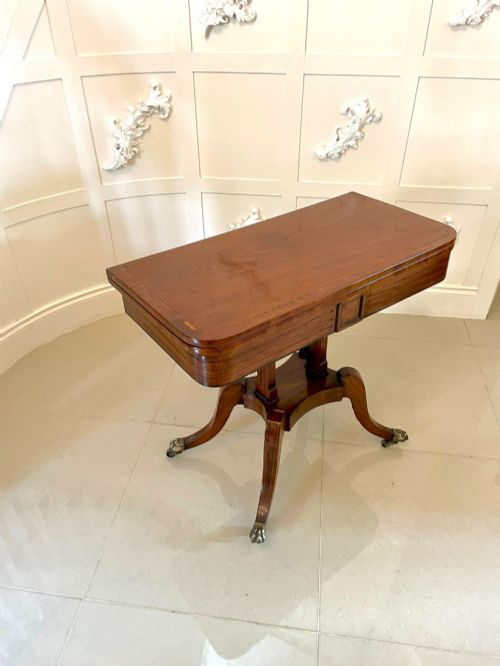
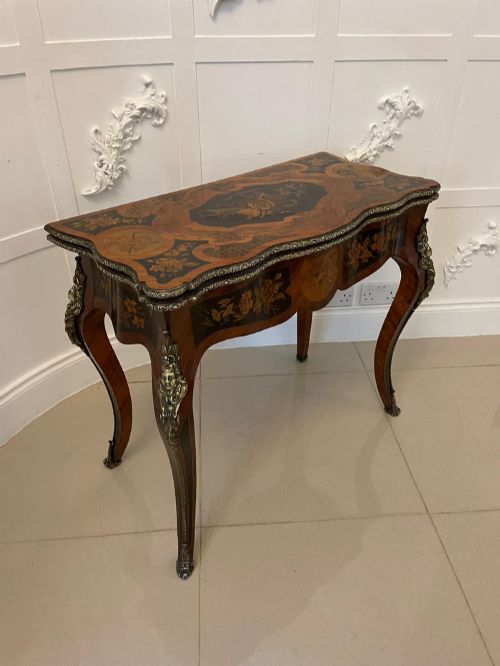


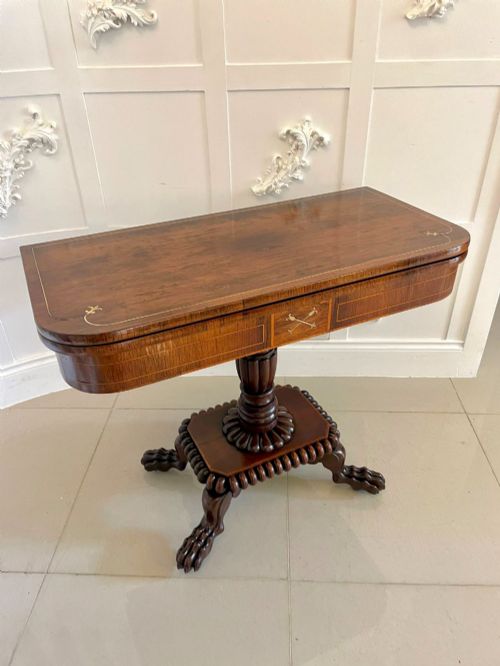
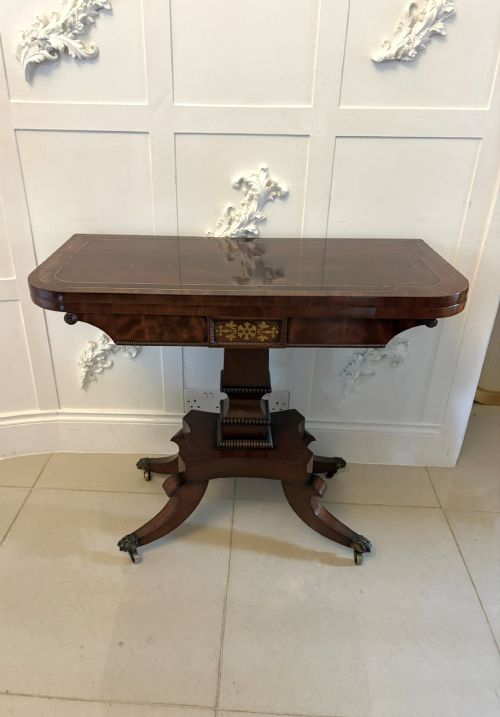
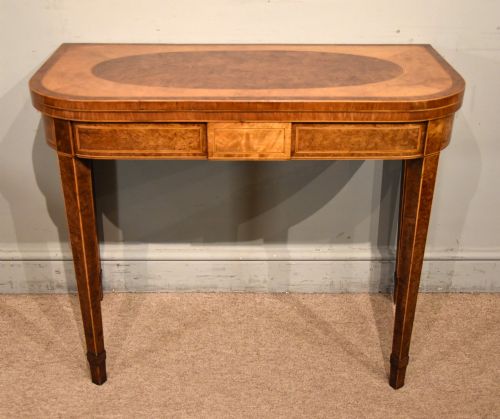
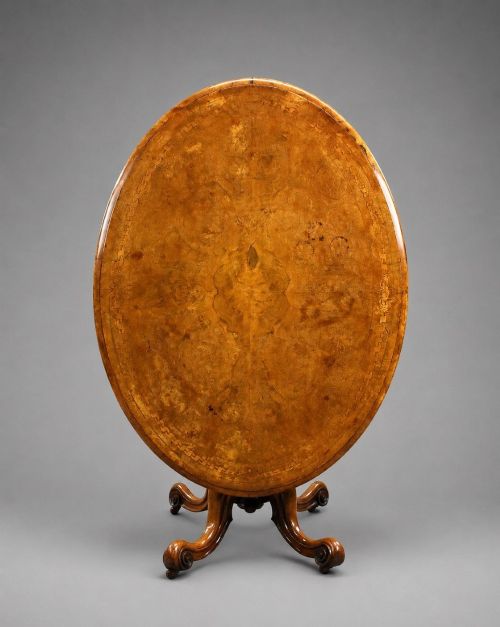
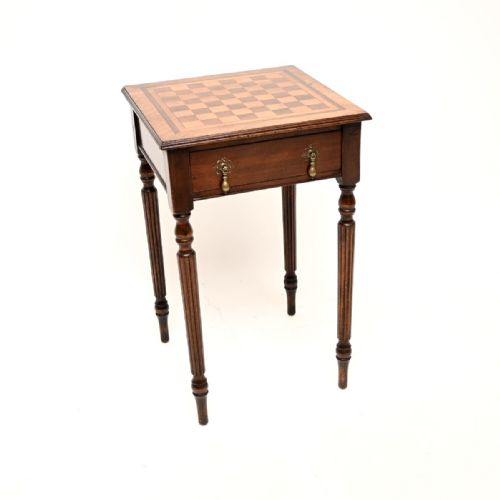
Inlaid Card Table
When you search for an inlaid card table, you look for a folding top piece made to hold everything from whist to chess.
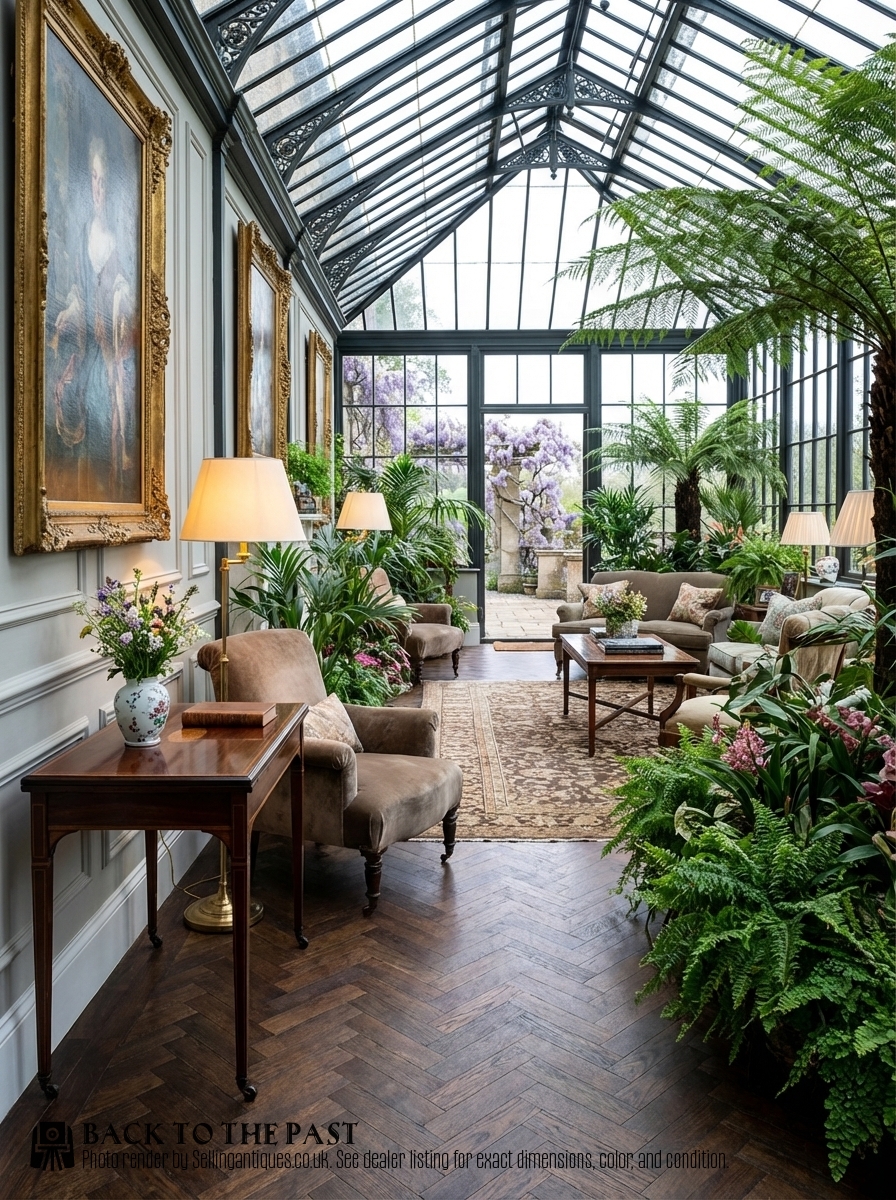
Inlaid Card Table
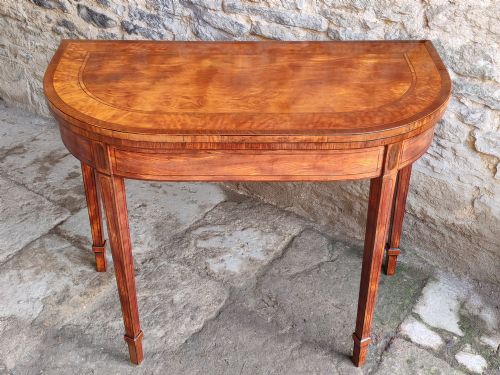
An inlaid card table is a multi-functional item of furniture designed to adapt from a console or side table into a playing surface. These pieces span the eighteenth, nineteenth, and early twentieth centuries, covering Georgian, Regency, Victorian, and Edwardian periods.
How They Were Made
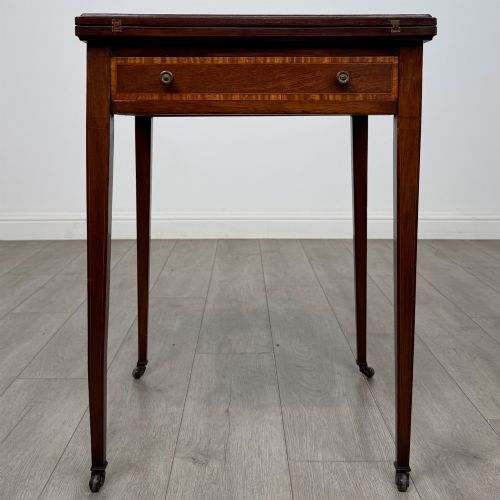
Cabinet makers utilised dense hardwoods such as mahogany, rosewood, and walnut as structural bases, often applying intricate veneers and contrasting wood inlay in satinwood, boxwood, and kingswood. Brass inlay and ormolu mounts appear on formal Regency and Victorian models to highlight structural lines.
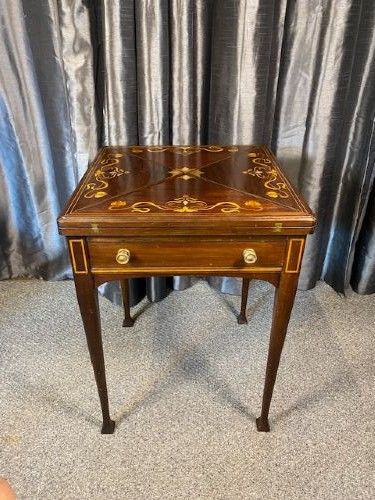
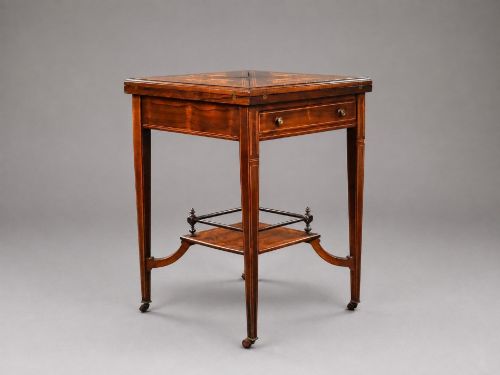
Surface decoration relies on precise marquetry and wood inlay techniques to form geometric patterns, floral motifs, and banding around the edges of the folding tops. Swivel mechanisms, fold-over hinges, and envelope leaf actions allow the tables to convert smoothly between closed consoles and open playing areas.
Inlaid Card Table Retail Price Guide 2026
Typical asking prices for inlaid card table among the pieces listed under this phrase on Sellingantiques today, from the lower quarter to the upper quarter. They describe what is for sale here now, not the wider market.
Listings feature woods like mahogany, rosewood, satinwood, and walnut across Georgian, Regency, Victorian, and Edwardian periods.
What Varies In Quality
The standard of a piece depends heavily on the crispness of the cabinet work, the integration of the folding mechanisms, and the selection of timber veneers. Superior examples display tightly figured grains, balanced marquetry, and substantial brass mounts that fit flush into the wood.
Simpler workshop output relies on basic mahogany framing with minimal string inlay, whereas high-end pieces incorporate multi-wood borders, elaborate brass boullework, or specialised turning on the pedestal bases and legs.
George Bullock·Edwards & Roberts·Bruce & Burns·Holmes Baldock
The Inlaid Card Table Glossary
- Demilune
- Half-moon shape common in console and card table design, allowing the closed piece to sit flat against a wall.
- Envelope top
- A four-leaf folding mechanism that rotates and opens outward to resemble an envelope, revealing a baize-lined interior.
- Marquetry
- Decorative patterns formed by fitting together contrasting veneer pieces onto a structural carcase.
- Ormolu
- Gilt-bronze mounts applied to the corners, friezes, and legs of formal nineteenth-century tables.
- Stringing
- Thin lines of contrasting wood inlay used to outline borders and geometric panels on table tops.
Inlaid Card Table: Frequently Asked Questions
How do these folding mechanisms work?
Most tables use a fold-over leaf supported by a swinging rear leg, a rotating swivel top, or a pivoting envelope action.
These designs shift the console from a narrow wall table into a stable square or circular playing surface.
What games were played on them?
Interiors frequently feature lined playing surfaces for whist, quadrille, or generic card games.
Some multi-purpose versions include inlaid boards for chess and backgammon alongside storage wells for counters.
Where were they placed in a home?
They stood against parlour or drawing room walls as decorative console tables when not in use for entertaining.
Owners moved them into the centre of the room only when guests gathered for evening gaming sessions.
How do I identify a Georgian piece?
Look for straight tapered legs, satinwood banding, and substantial mahogany timber without excessive machine carving.
Eighteenth-century examples often favour simple demi-lune shapes and understated brass hinges.