


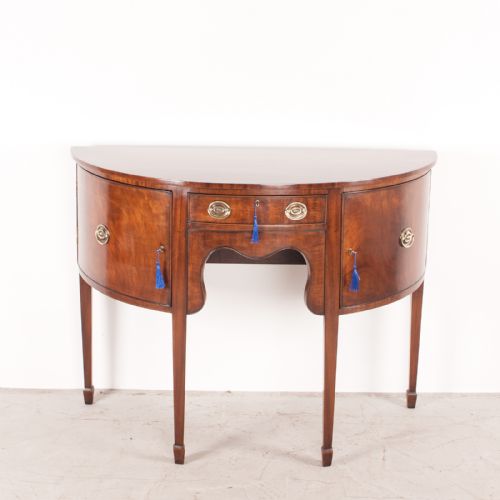

Vintage Half Moon Table
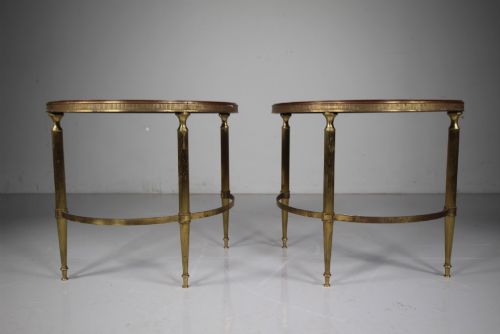
These vintage half moon table pieces offer practical semi-circular surfaces designed to sit flush against a wall.
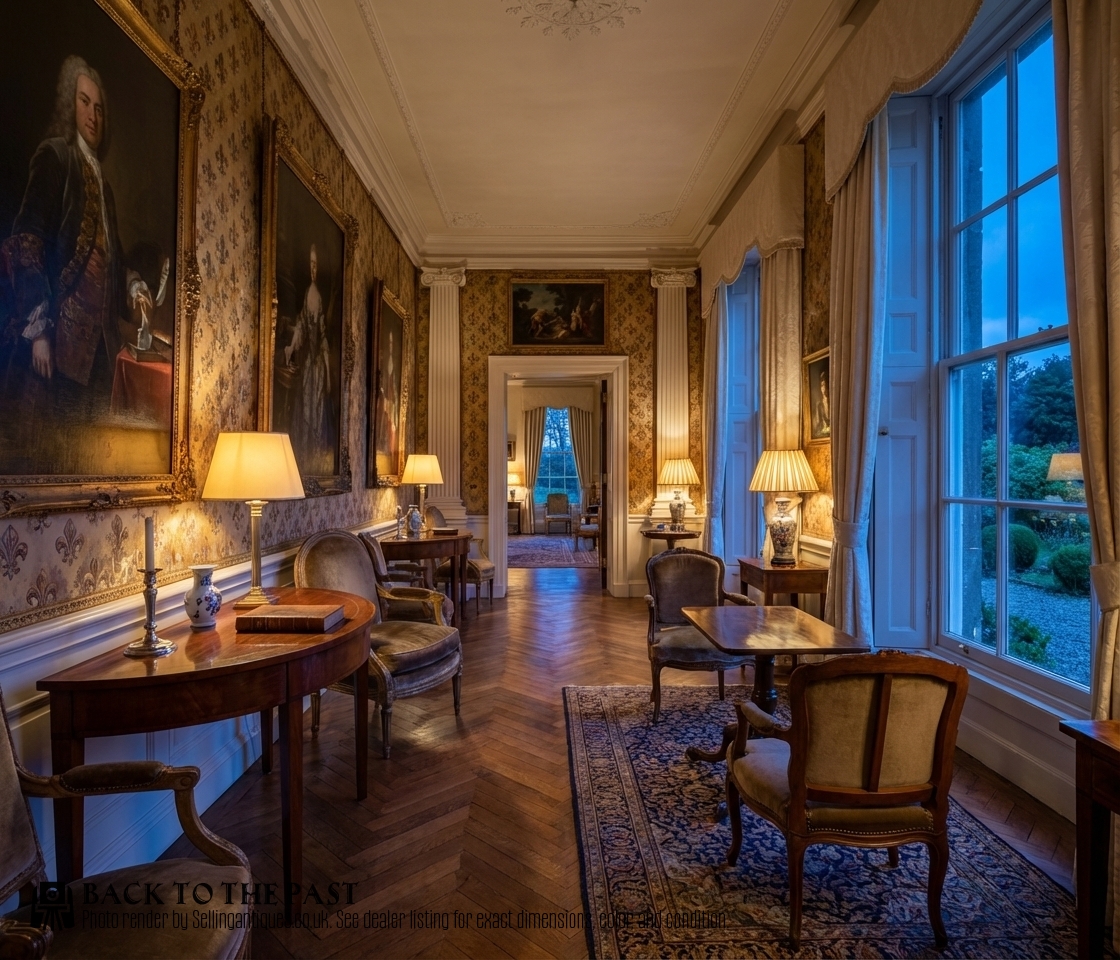
Vintage Half Moon Table
A vintage half moon table comprises semi-circular pieces often referred to as demi-lune furniture, designed to occupy minimal floor space in hallways and reception rooms. The pieces span periods from the nineteenth century through the 1930s, encompassing Edwardian, Victorian, and Georgian revivals.
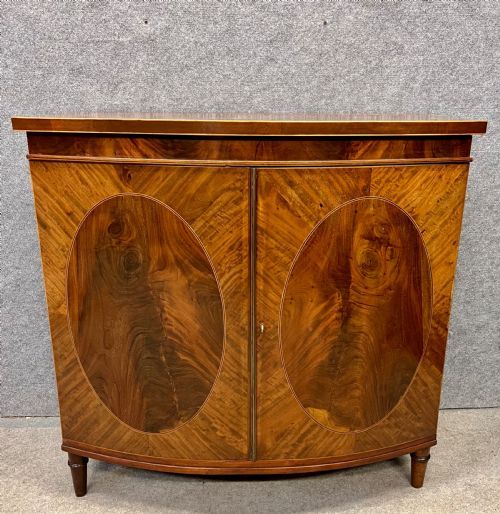
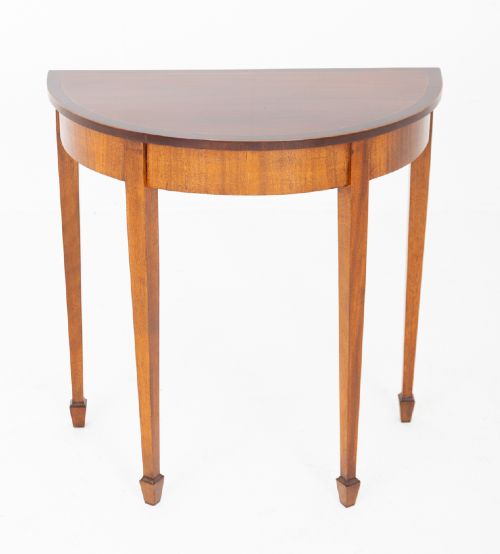
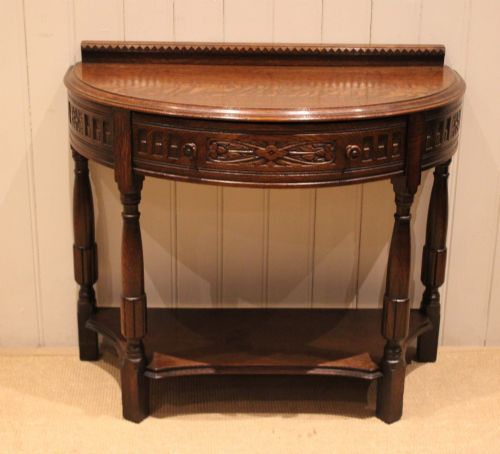
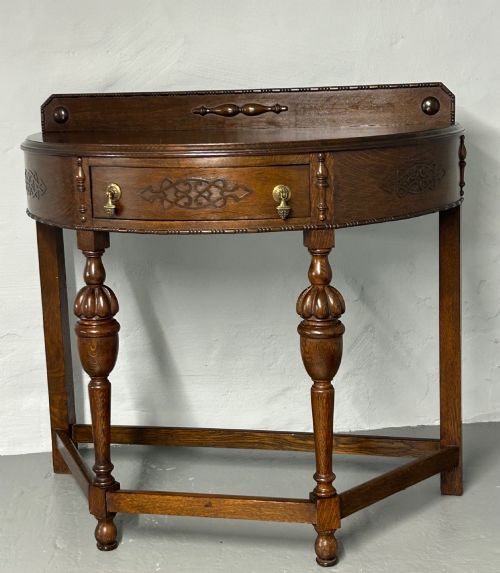
Buyers encounter console tables, card tables, side cabinets, and side tables shaped with flat backs and curved fronts. Mahogany, walnut, and painted wood dominate the selection, frequently paired with marble tops or decorative inlay work.
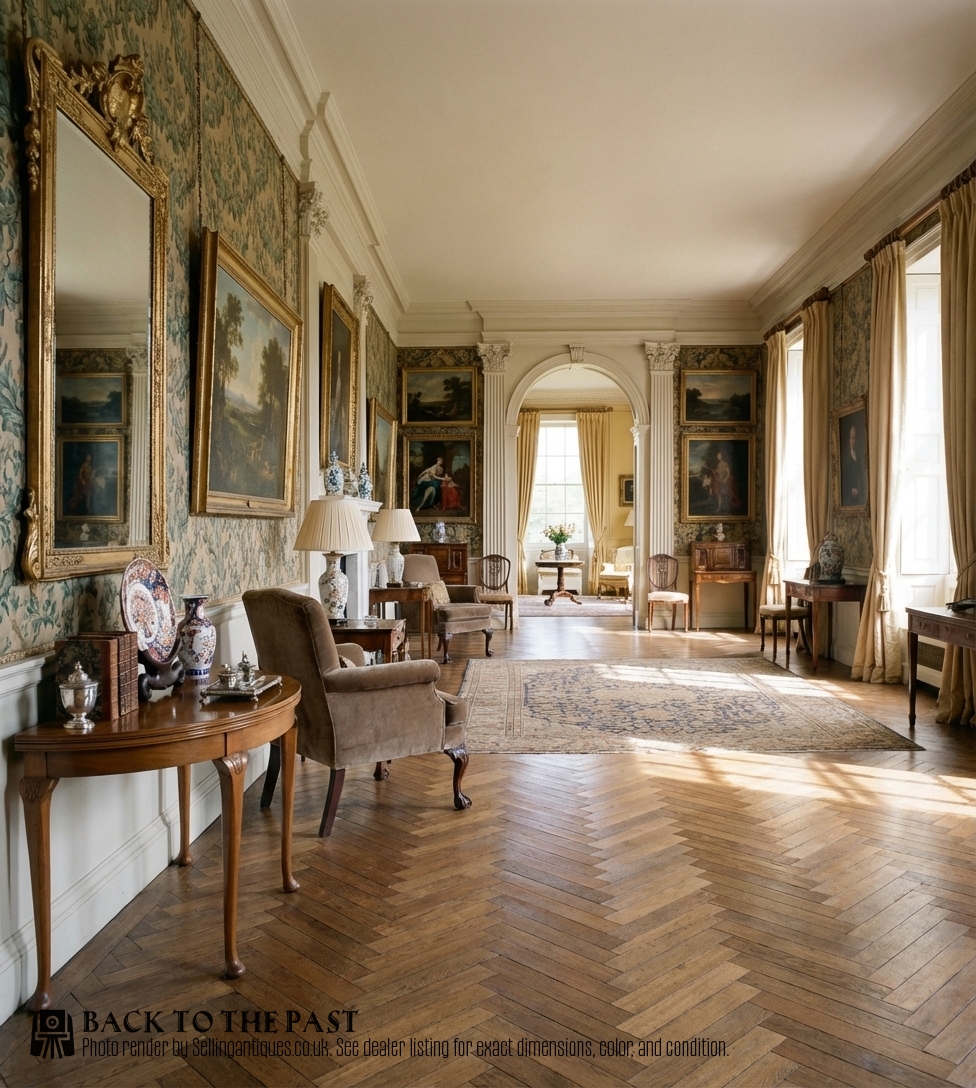
Construction and materials
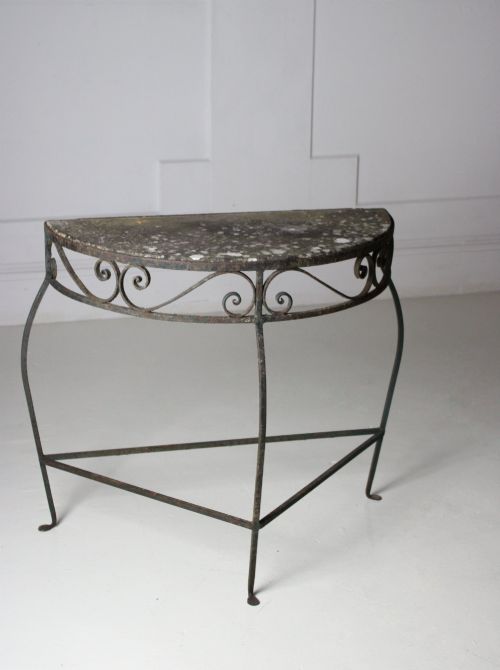
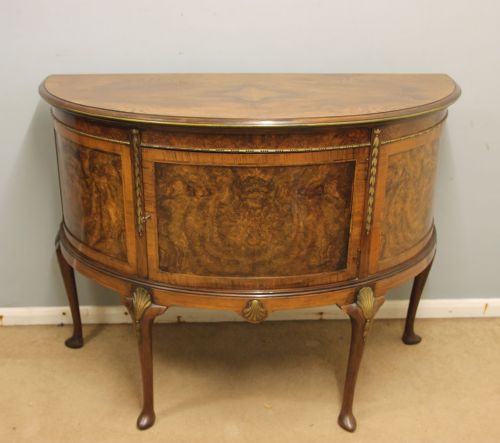
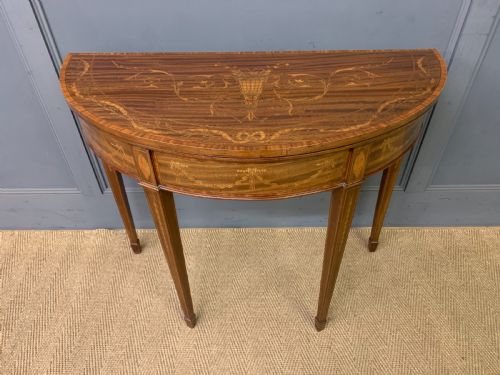
Cabinet makers utilised solid timbers and veneers such as mahogany, walnut, burr walnut, and satinwood, often applying intricate inlay patterns along the edges of the semi-circular top. Structural support relies on sturdy timber frames, occasionally reinforced with wrought iron or brass mounts.
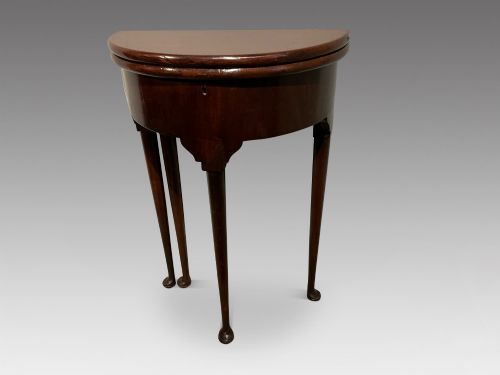
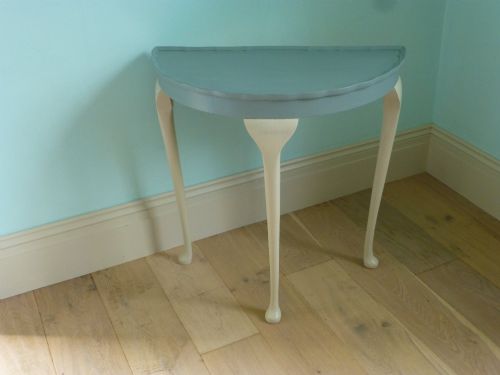
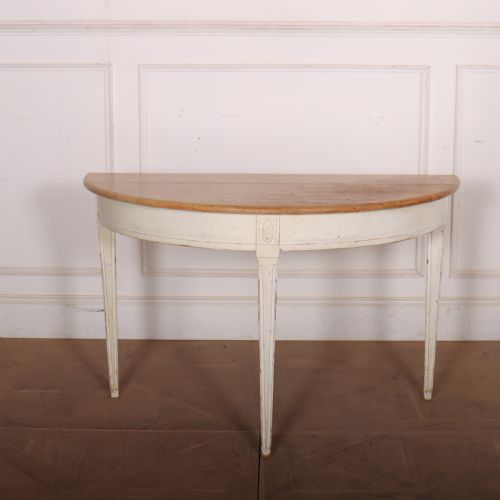
Many examples incorporate folding mechanisms for card and tea tables, allowing the flat surface to open up on hinges. Surface finishes range from polished wood grains to painted treatments seen in French and Swedish pieces.
Vintage Half Moon Table Retail Price Guide 2026
Typical asking prices for vintage half moon table among the pieces listed under this phrase on Sellingantiques today, from the lower quarter to the upper quarter. They describe what is for sale here now, not the wider market.
Card tables manage to hide entire folding legs inside their aprons like polite wooden origami.
Judging the quality
Quality rests upon the selection of timber figures, such as burr walnut or figured mahogany, and the precision of contrasting wood inlay. Superior pieces exhibit crisp carving on the legs and solid construction in the folding hinges of card tables.
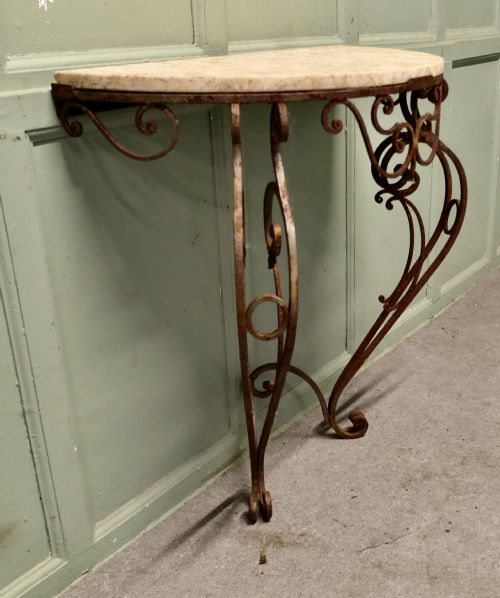
The integration of materials like marble tops or brass mounts distinguishes finer examples from simpler painted pine or oak utility pieces. Proportions and the crispness of the curved apron define the visual balance of each console.
The Vintage Half Moon Table Glossary
- Demi-lune
- A French term meaning half-moon, describing furniture with a semicircular shape.
- Console table
- A table designed to be fixed against a wall, often supported by decorative brackets or legs.
- Card table
- A folding table specifically built for playing games, featuring a hinged top that opens to a baize-lined surface.
- Inlay
- A technique where pieces of contrasting timber or brass are inserted into the wood surface to form decorative patterns.
- Washstand
- A piece of furniture holding a basin and jugs, frequently topped with marble in Victorian examples.
Vintage Half Moon Table: Frequently Asked Questions
Where should I place a half moon table?
These tables suit narrow hallways, landings, and entrance spaces because their flat backs allow them to sit flush against a wall without obstructing walkways.
They also function effectively as sideboards in dining rooms or as decorative console surfaces beneath mirrors.
How do I use a folding card table?
The top leaf unfolds on hinges to reveal a larger surface, originally intended for card games and social gatherings.
When closed, the table resumes its compact half-moon footprint against the wall.
What is the difference between a console and a side table?
Console tables traditionally anchor against walls and often feature decorative legs or brackets tailored for display.
Side tables offer more independent placement options while retaining the characteristic semi-circular shape.
How do I identify Edwardian pieces?
Edwardian examples often feature Sheraton or satinwood inlay reflecting a revival of eighteenth-century design aesthetics.
Lighter mahogany timbers and refined stringing details typically characterise this early twentieth-century period.