


Semi Circular Table
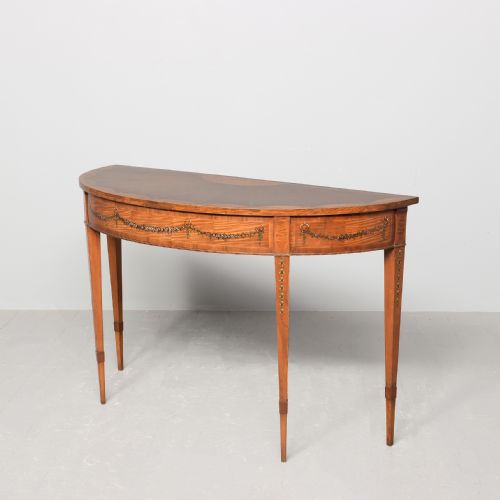
A semi circular table brings elegance to an awkward corner, offering a flat wall edge and a curved front.
What a semi circular table is
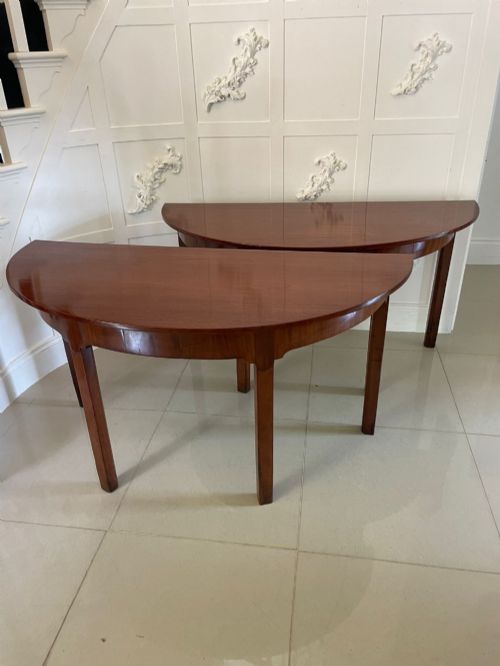
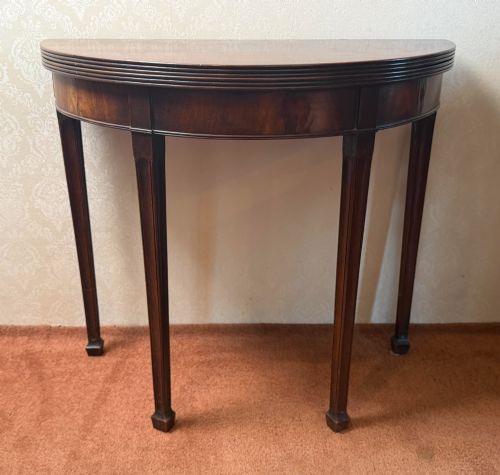
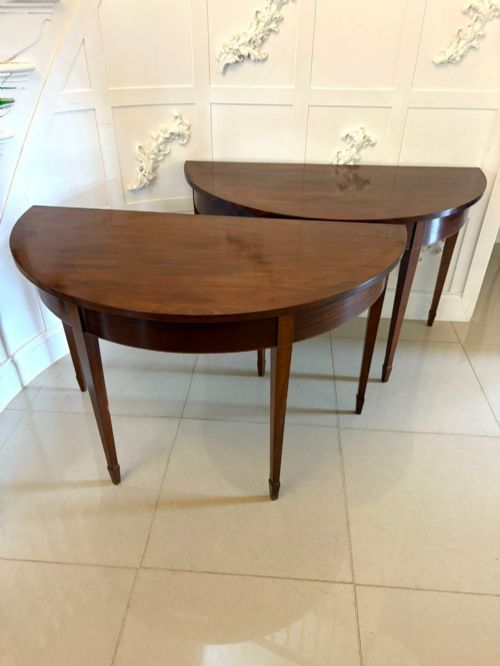
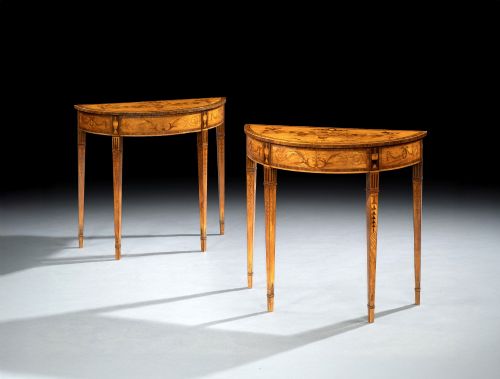
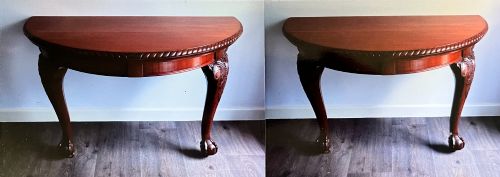
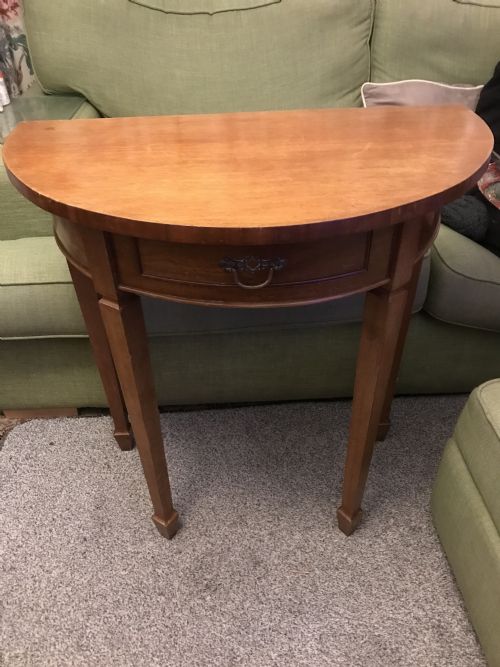
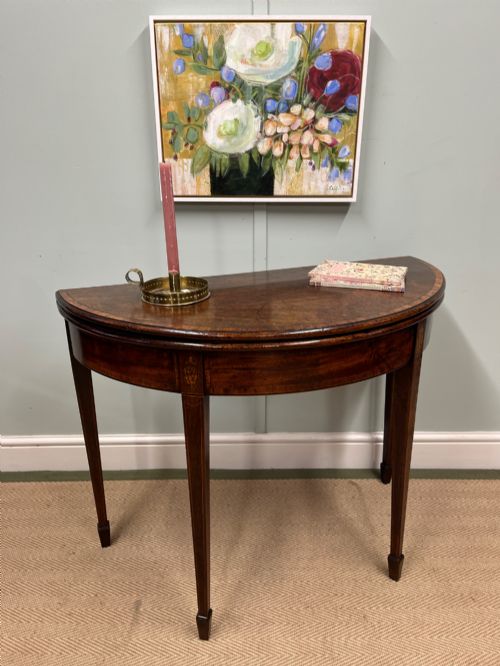
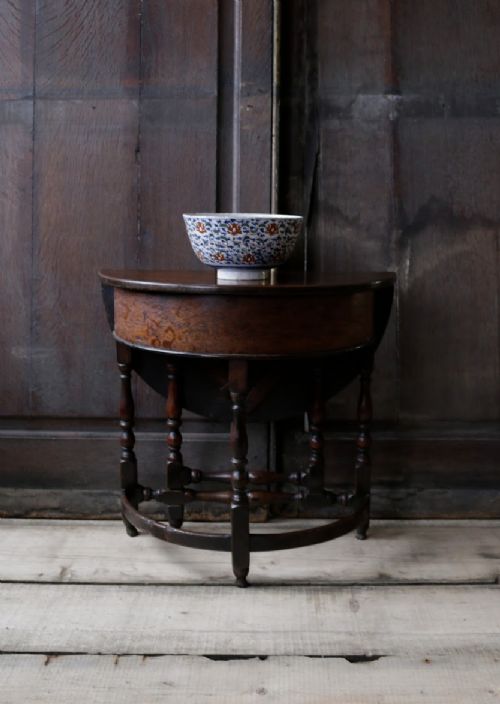
A semi circular table stands flat against a wall while projecting a graceful curve into the room. These pieces appear in forms such as console tables, card tables, and tea tables, serving both decorative and practical purposes in traditional interiors.
The pieces on this page span the Georgian period, the eighteenth century, and the early twentieth century, alongside items from nineteen thirty. Walnut, mahogany, satinwood, and wrought iron form the primary structures of these tables.
Makers designed these items to function as pier tables, side tables, or occasional furniture. The demi-lune format dominates the selection, reflecting classic eighteenth-century proportions and later revivals.
How they were made
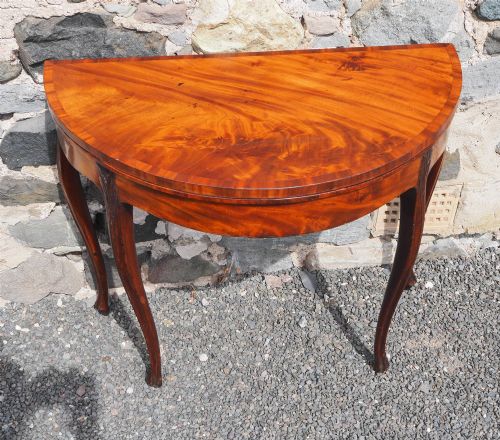
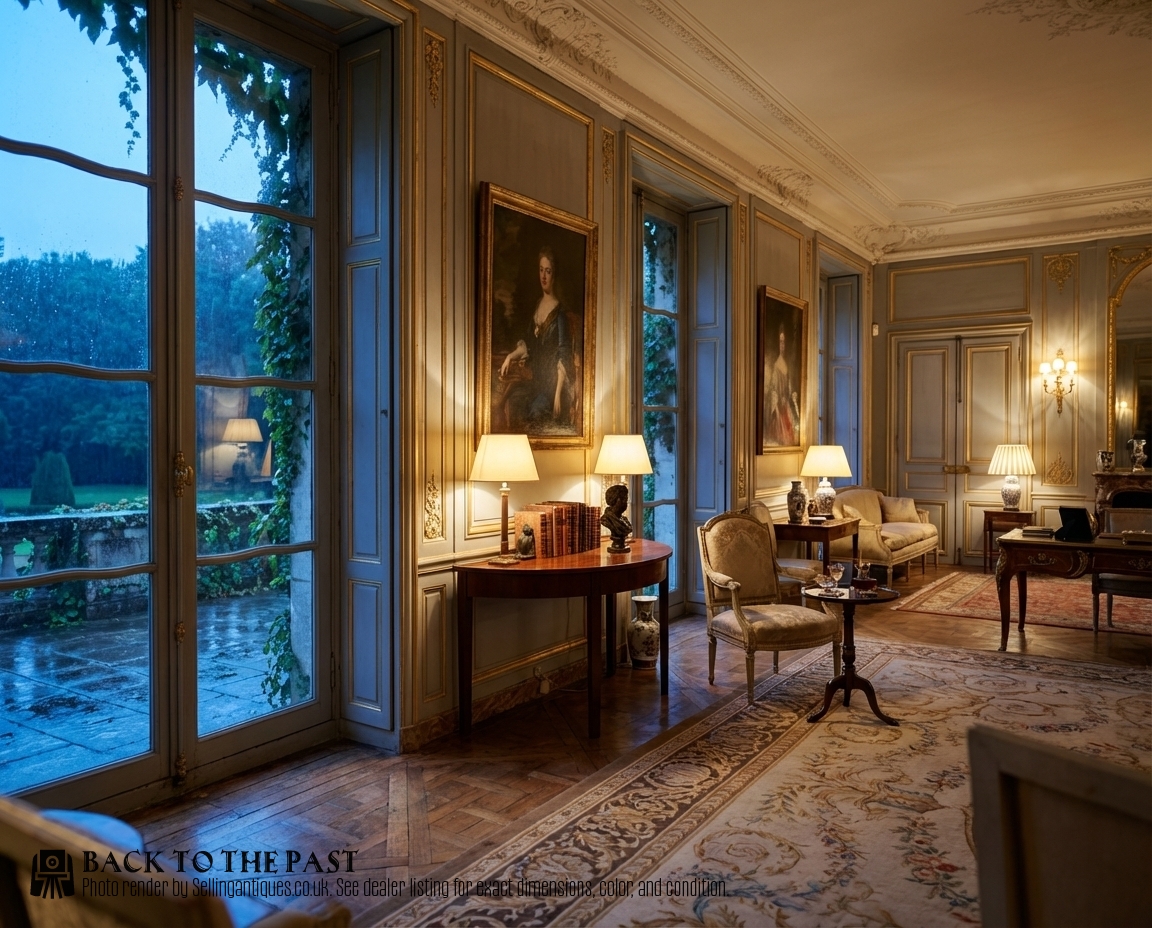
Cabinet makers utilised solid timbers and fine veneers, applying boxwood inlay, marquetry, and rosewood details to decorate the surfaces. Tables often feature quarter-veneered mahogany tops supported by brass frames or carved wooden legs.
Construction methods rely on traditional joinery suited to curved frames. Workshops shaped timber to create smooth demi-lune profiles, integrating hinged leaves for tea and card tables or fixed tops for console and pier displays.
Retail Price Guide 2026
Typical UK retail prices for semi circular table, calculated from the Sellingantiques database of over a million retail prices indexed since 2003. This retail price guide relies exclusively on Sellingantiques data; no external sources or auction records are used, so the figures do not describe the wider market.
Listings feature mahogany, walnut, satinwood, and wrought iron across Georgian, eighteenth-century, and twentieth-century examples.
What varies in quality
Quality rests in the precision of the marquetry and the choice of timber figure. Master craftsmen selected quarter-veneered mahogany and contrasting satinwood with care, ensuring the grain patterns flow naturally across the curved surface.
The refinement of the carved details and the integration of inlay set superior examples apart. Finer pieces demonstrate meticulous attention to the edge banding and the structural harmony of the legs and aprons.
The Semi Circular Table Glossary
- Demi-lune
- A half-moon shape used to describe tables with a flat back and a curved front. This profile defines many console and card tables from the Georgian era.
- Console table
- A table designed to be fixed against a wall, often supported by brackets or legs at the front. These pieces frequently serve as pier tables in hallways and reception rooms.
- Marquetry
- The art of applying pieces of veneer to a structure to form decorative patterns and pictures. Eighteenth-century workshops utilised this technique to adorn table tops with floral or geometric designs.
- Quarter-veneered
- A method where four matched slices of veneer are arranged symmetrically to create a balanced grain pattern. This technique enhances the visual appeal of circular and semi-circular tabletops.
Frequently Asked Questions
Where should I place a semi circular table?
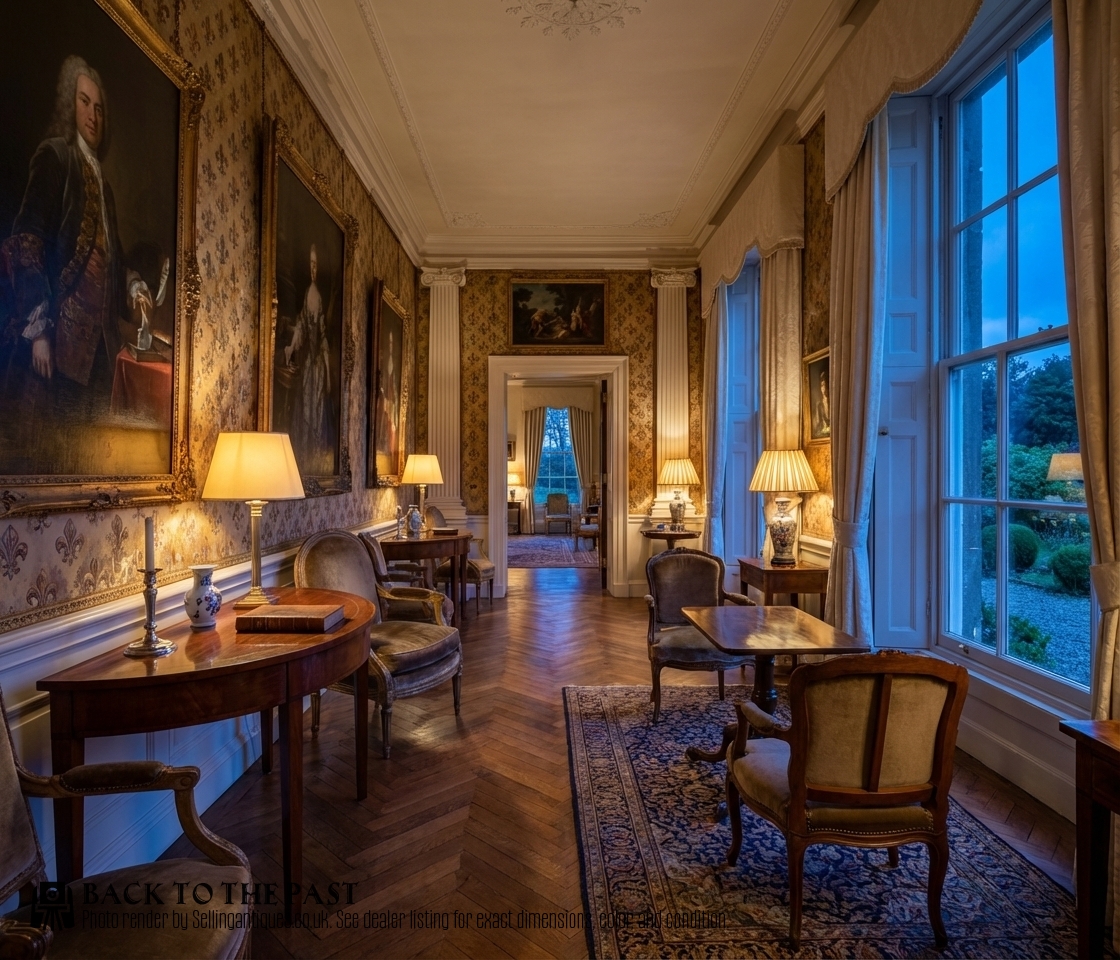
These tables suit narrow hallways, landings, and entrance spaces because their flat back sits flush against the wall while the curved front softens the room's angles.
They also function effectively beneath mirrors or windows as pier tables, holding lamps or decorative objects without blocking movement.
What is the difference between a console and a tea table?
A console table stands permanently against a wall for display purposes, while a tea table typically includes a folding or swing top that originally served hospitality needs.
Tea tables often possess simpler folding mechanisms and smaller proportions suited to afternoon gatherings in the parlour.
How do I identify a Georgian semi circular table?
Georgian pieces rely on timber selection, such as mahogany and satinwood, combined with boxwood inlay and restrained proportions. The construction reflects eighteenth-century joinery standards.
Examining the underside and the cabinet work helps reveal the age and the hand of the maker.