
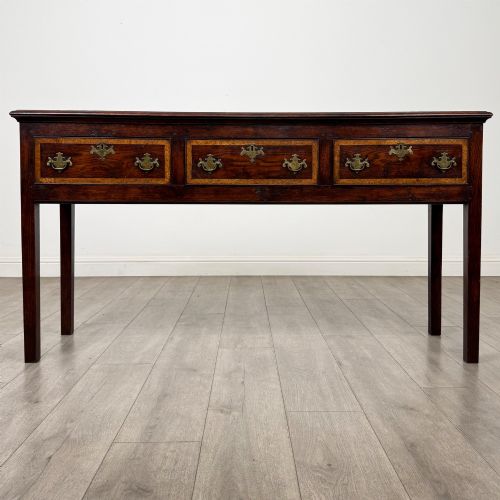
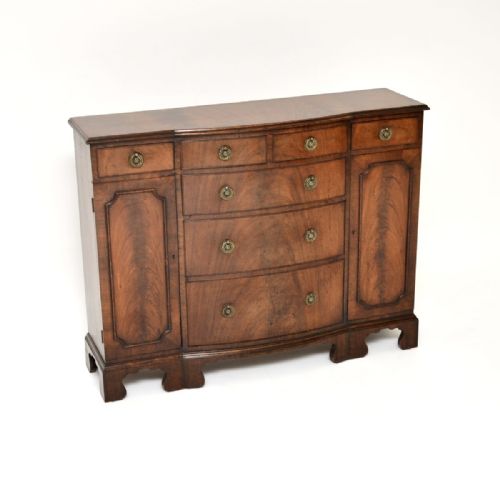
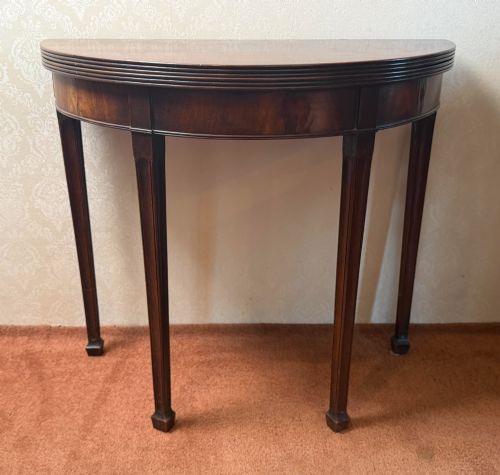
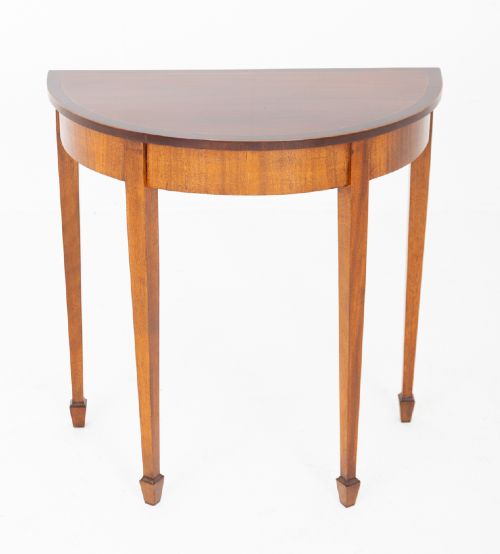
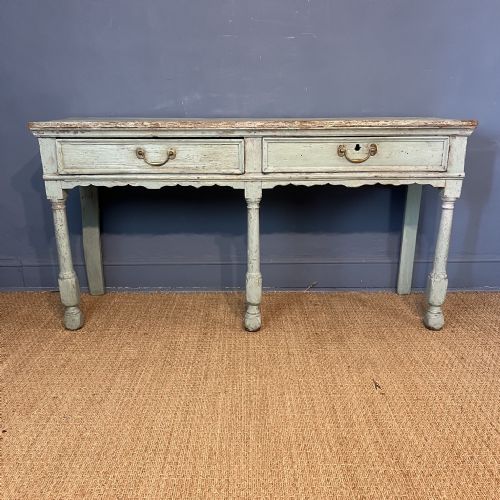
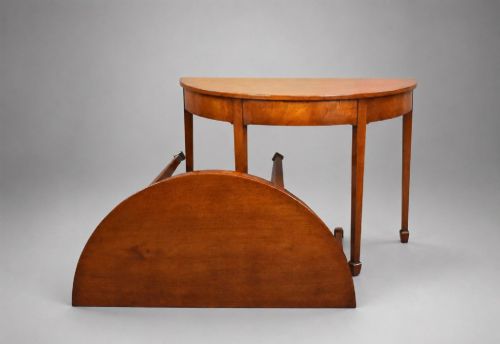
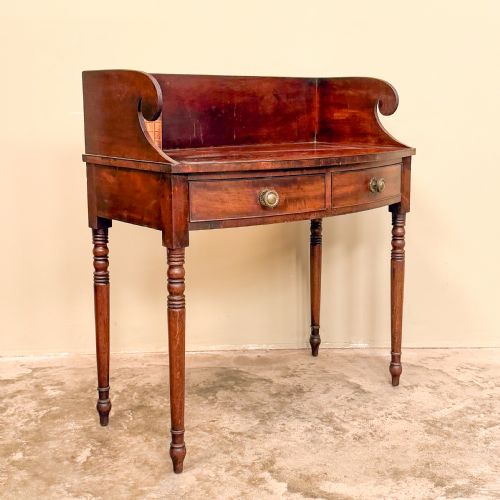
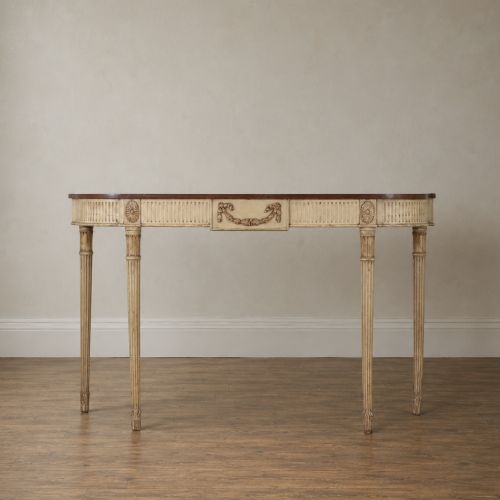
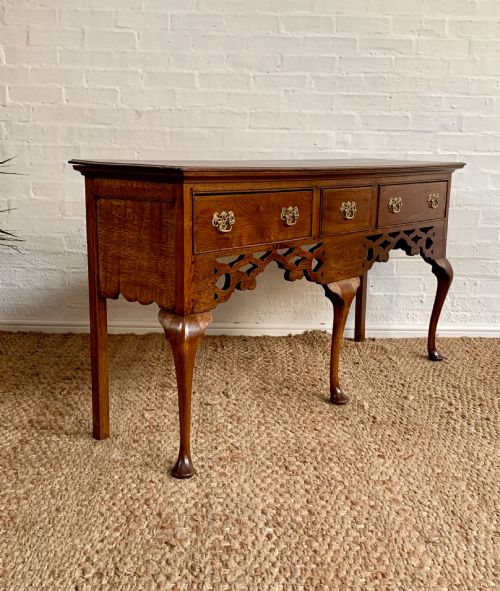

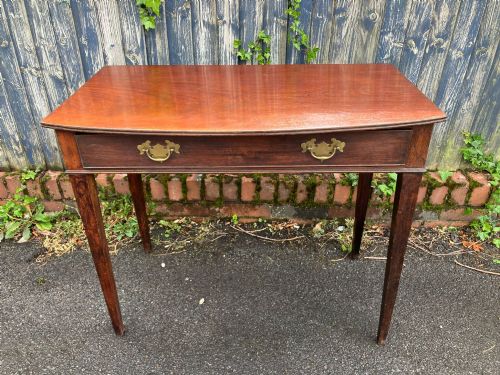
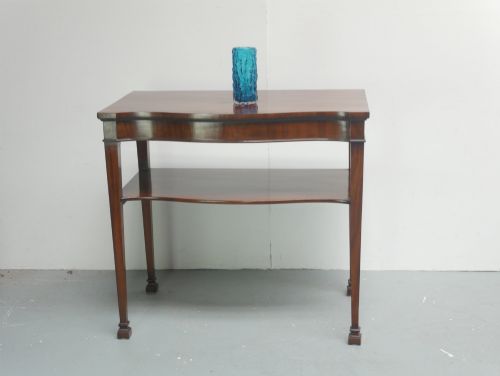
Georgian Hallway Table
A georgian hallway table brings architectural proportion and rich timber grain to an entrance, offering a practical surface for daily use.
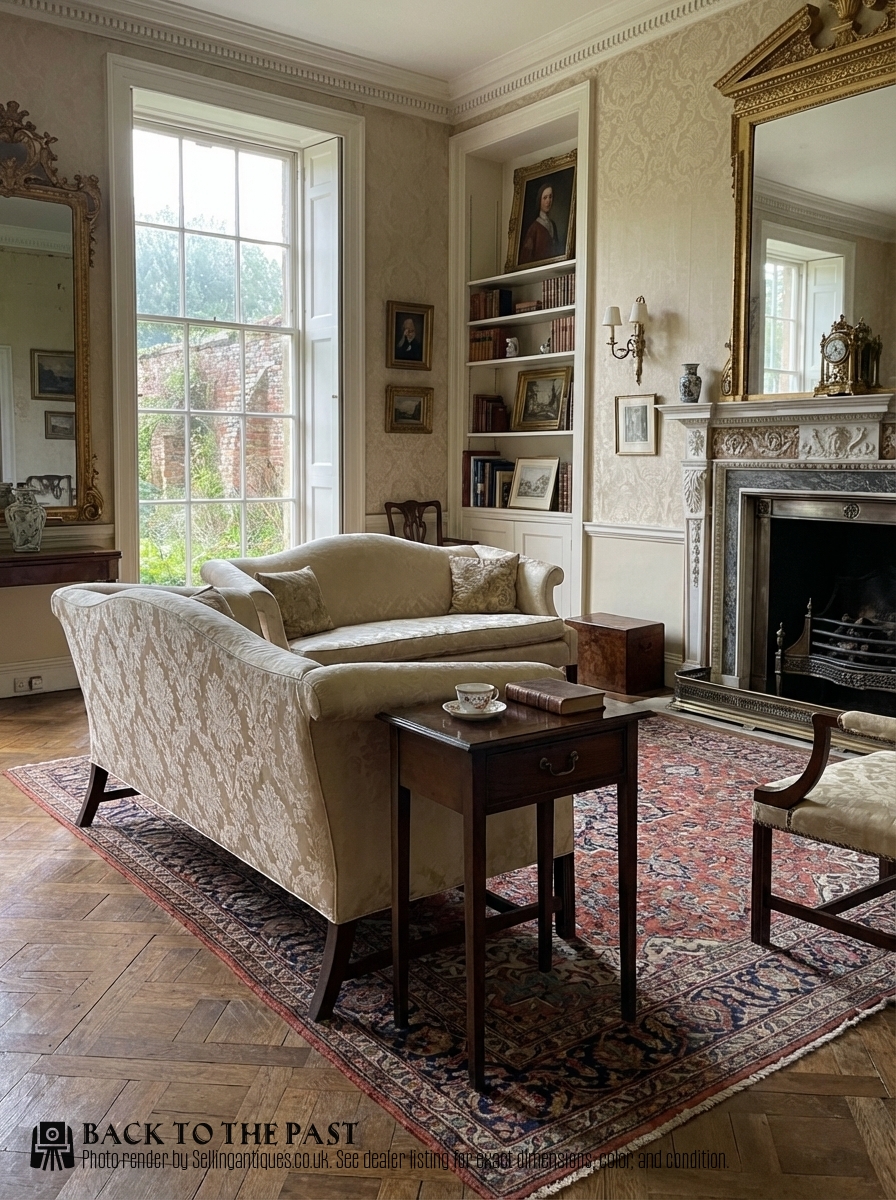
Defining the georgian hallway table
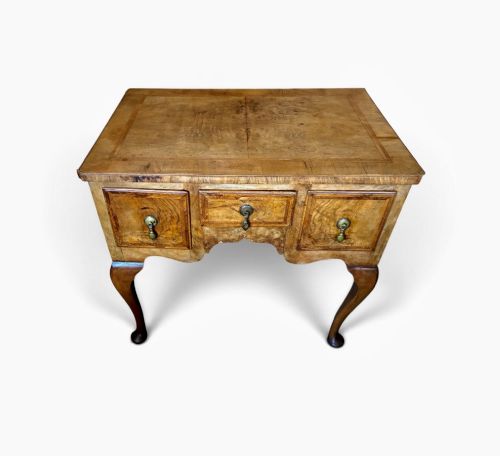
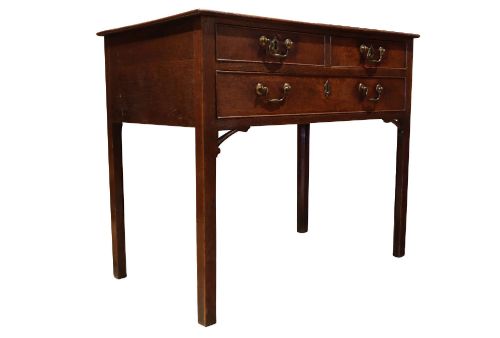
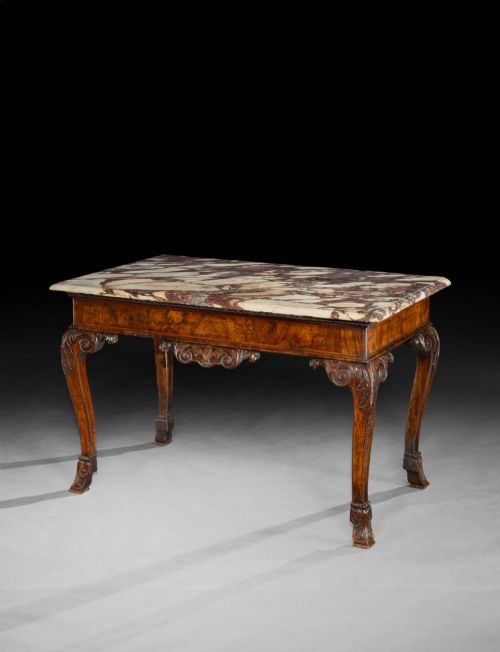
A georgian hallway table is a narrow surface designed for placement in corridors, landings and entrance spaces, taking various forms including side tables, console tables and servers. These pieces span formal console designs and simpler side tables intended to sit flat against a wall without obstructing passage.
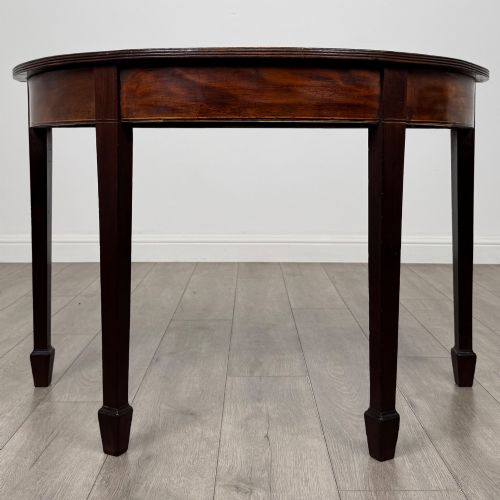
The pieces available on this page include examples from the Georgian period alongside later Victorian interpretations and Georgian Revival pieces. Forms range from demi-lune shapes designed for curved corners to rectangular side tables and servers in varied timbers.
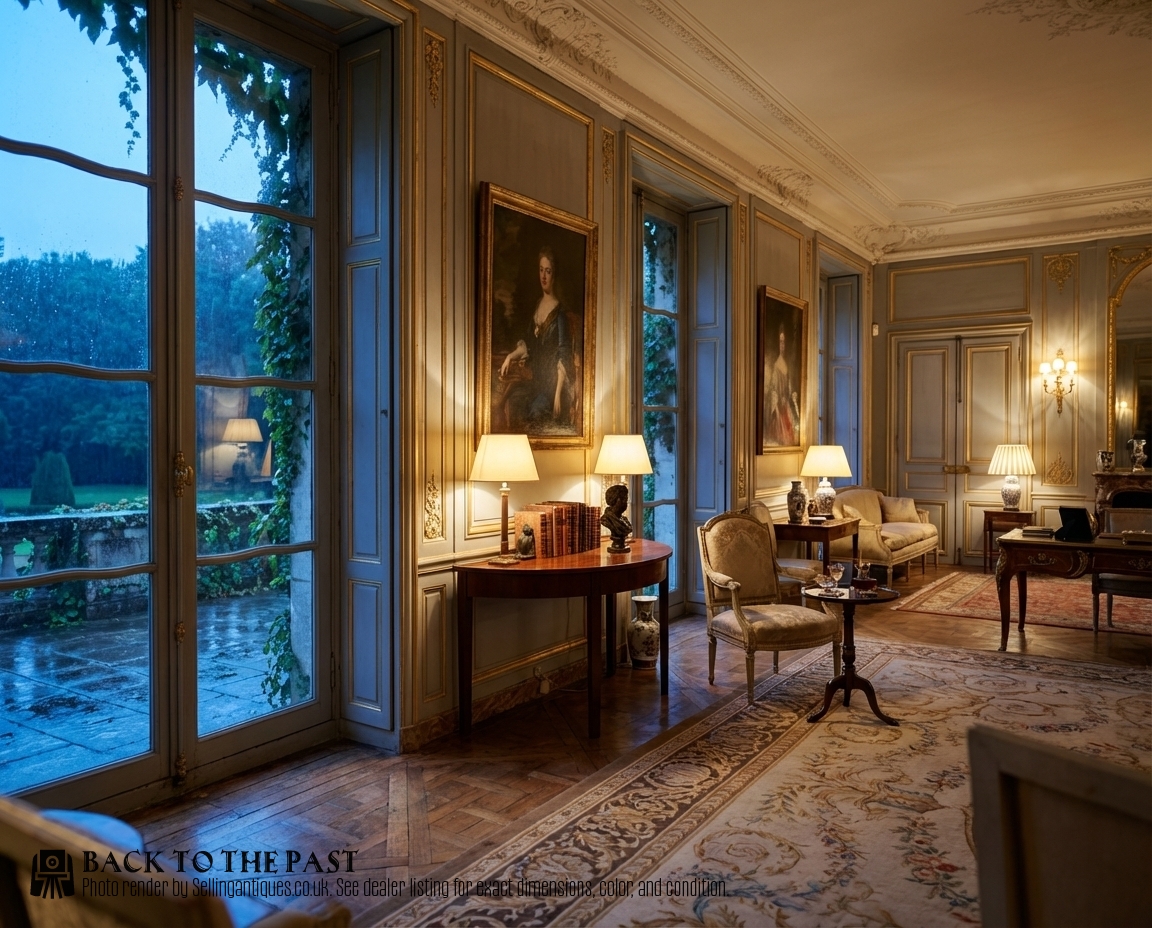
Construction and materials
Cabinetmakers constructed these tables using solid timbers such as mahogany and oak, applying flame mahogany veneer to selected surfaces for decorative effect. The natural grain of the wood determines the visual texture of each piece.
Hardware elements such as brass appear on certain forms, while structural joints rely on traditional woodworking techniques appropriate to the period of manufacture, from the eighteenth century through to the nineteenth century.
Retail Price Guide 2026
Typical UK retail prices for georgian hallway table, calculated from the Sellingantiques database of over a million retail prices indexed since 2003. This retail price guide relies exclusively on Sellingantiques data; no external sources or auction records are used, so the figures do not describe the wider market.
Listings on this site span the eighteenth and nineteenth centuries, featuring mahogany, oak and brass across side tables, console tables and servers.
Assessing quality
Quality in a georgian hallway table rests on the selection of timber, particularly the use of figured grain and flame mahogany veneer versus plain secondary woods. The handling of proportions and the integration of decorative elements define the distinction between standard production and superior craftsmanship.
Age and authenticity also influence the standing of a piece, separating original eighteenth-century examples from later nineteenth-century interpretations and revival pieces. The integrity of the construction and the subtlety of the form separate the finer examples.
The Georgian Hallway Table Glossary
- Demi-lune
- A half-moon shape used for console and side tables designed to fit flat against a wall. This profile allows the table to occupy minimal floor space in narrow circulation areas.
- Server
- A large side table or serving piece often associated with dining and hallway spaces. These surfaces provide generous proportions for display.
- Flame mahogany veneer
- A thin slice of mahogany timber cut from the fork of the tree to create a distinctive flickering flame pattern. Cabinetmakers applied this to prominent surfaces for visual impact.
- Console table
- A table supported by wall brackets or legs, designed to stand against a vertical surface. In hallway contexts, these pieces often feature a half-round or rectangular top.
Frequently Asked Questions
Where does a hallway table fit best?
These tables sit flat against entrance walls, narrow corridors and landings where floor space is limited. Their shallow depth prevents obstruction while providing a functional surface.
They serve well beneath mirrors or artwork, creating an organised focal point upon entering a home.
What is the difference between a console and a side table?
A console table traditionally relies on wall support or specific leg placement for stability against vertical surfaces. Side tables are self-standing items with four legs.
In hallways, both forms function similarly to hold everyday items and display decorative objects.
How do I identify a revival piece?
Revival pieces emulate earlier styles but date from later eras, such as the Victorian period or the later nineteenth century. They incorporate historical design vocabulary using the construction methods of their actual date of manufacture.
Examining the timber preparation, secondary woods and hardware helps clarify the true age of the piece.
How do I care for mahogany surfaces?
Mahogany benefits from dusting with a soft, dry cloth and occasional treatment with appropriate furniture wax to nourish the timber. Avoid placing these tables in direct sunlight or near heat sources to protect the wood and veneer.
Gentle maintenance preserves the rich colour and grain patterns over time.