
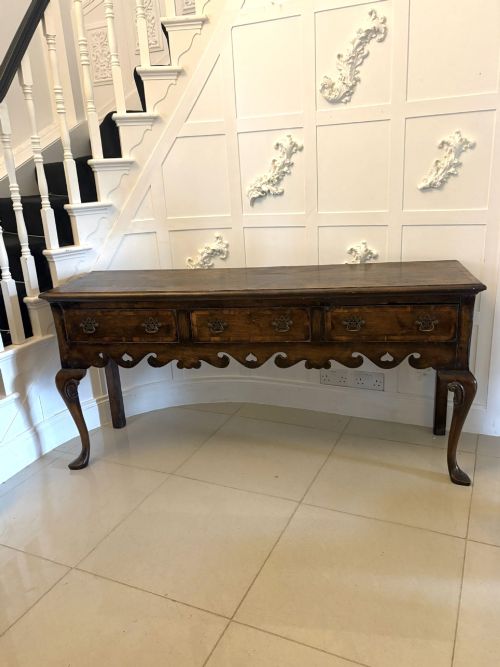
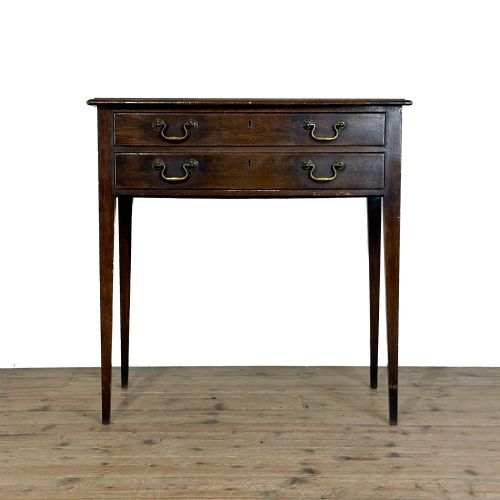
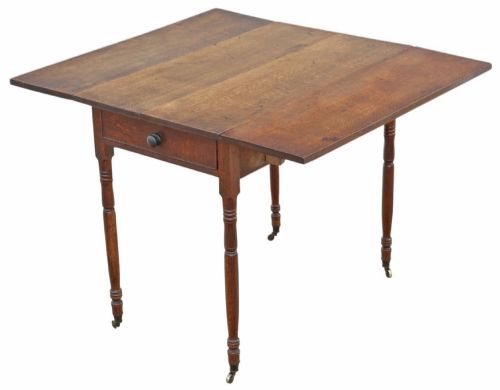
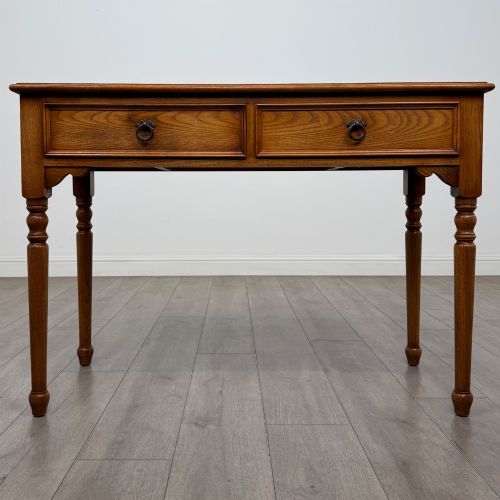


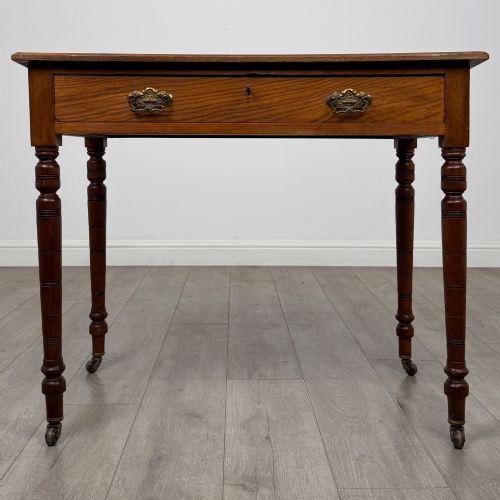
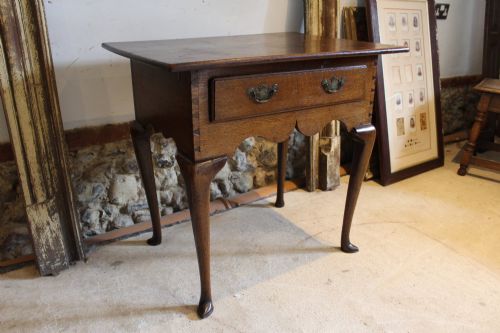
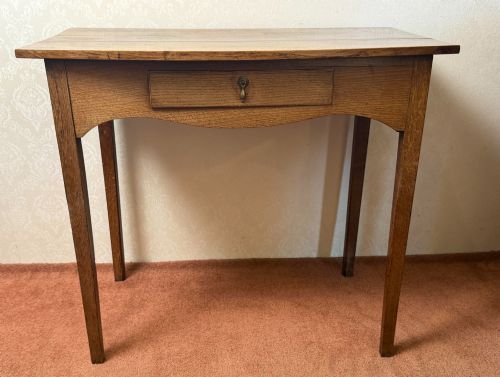
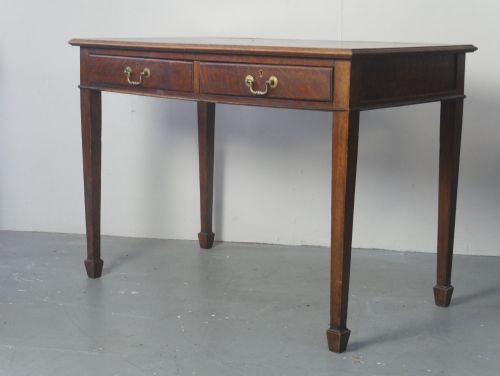
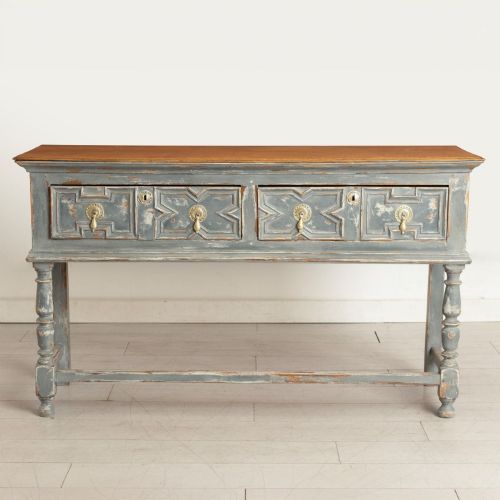
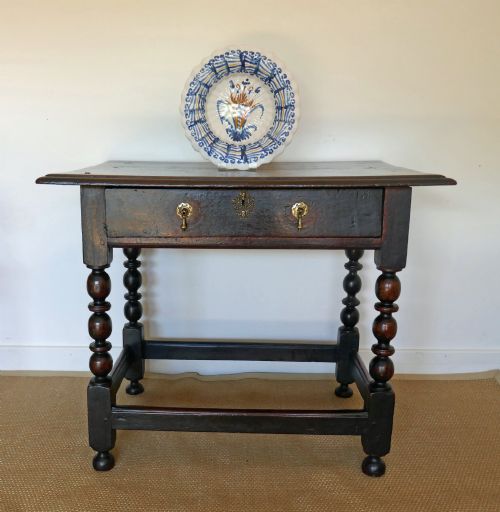
Oak Drawer Side Table
An oak drawer side table brings solid timber grain and useful storage into a room, spanning country vernacular forms and formal Georgian proportions.
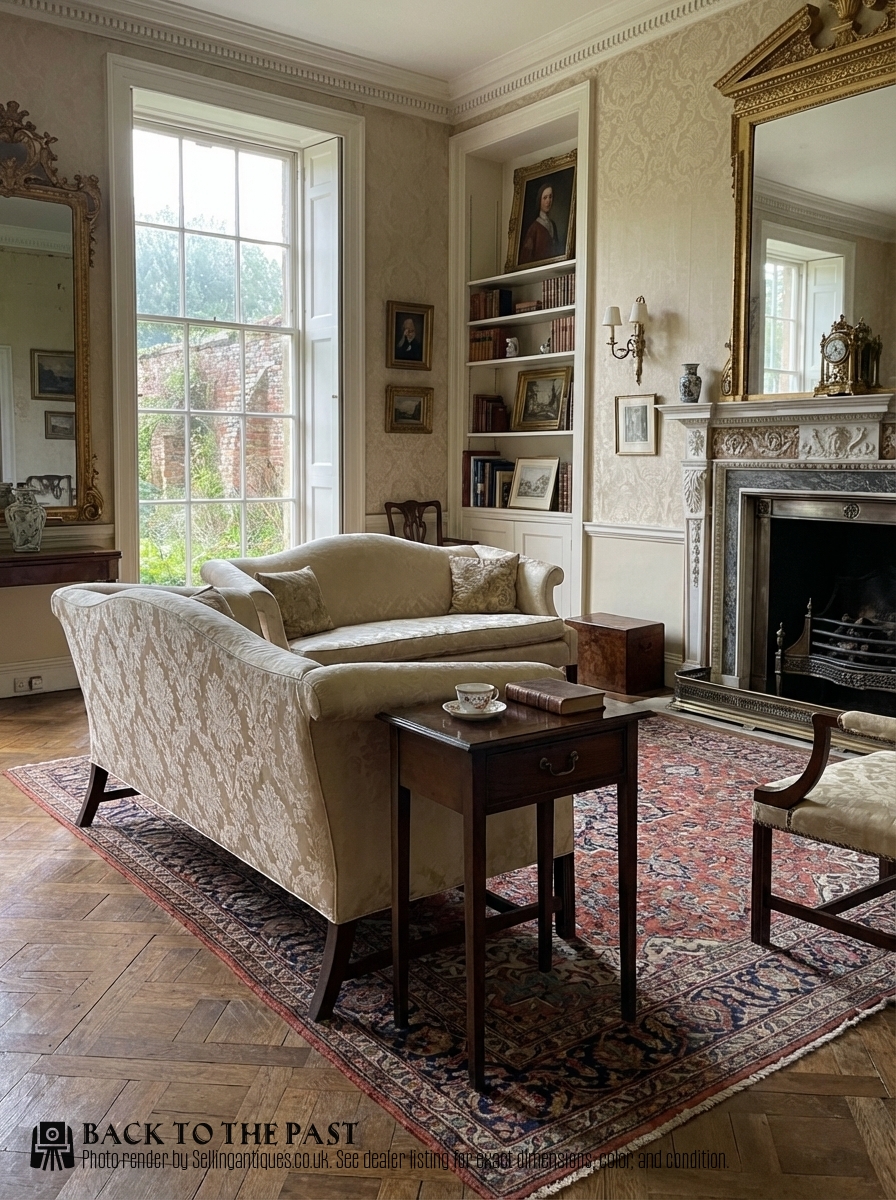
What these pieces are
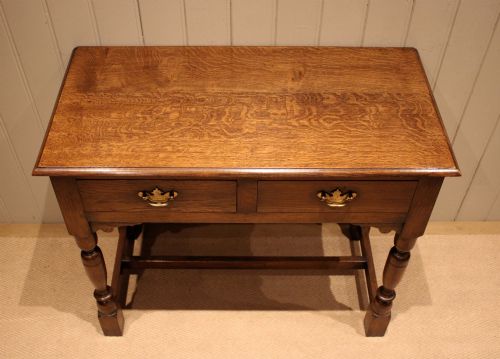
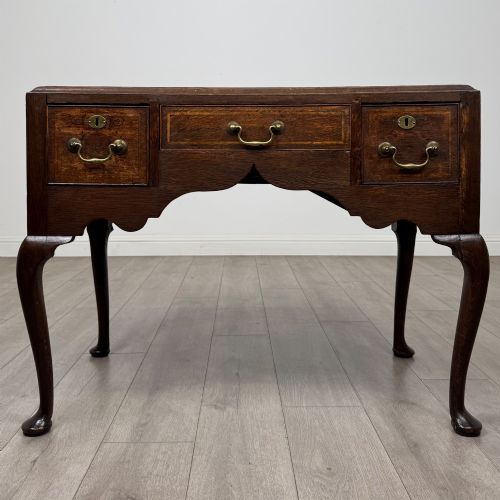
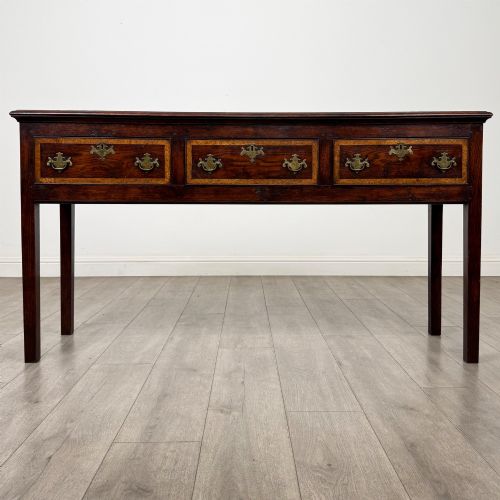
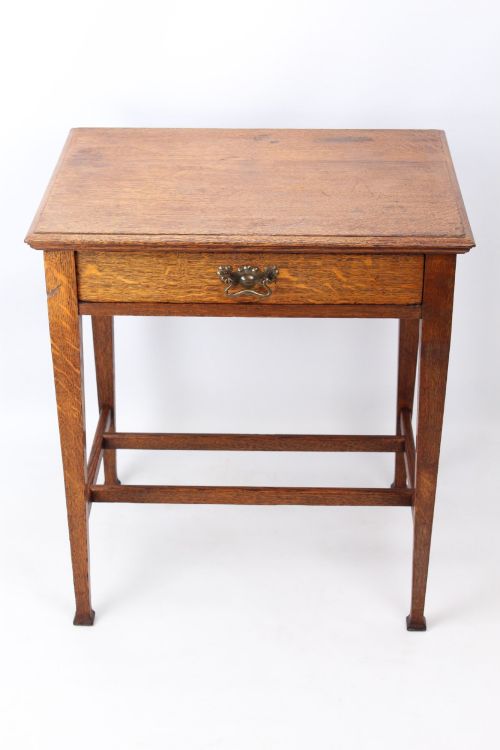
An oak drawer side table serves as a functional surface for lamps, writing or serving, outfitted with one, two or three drawers for compact storage. When exploring an oak drawer side table, you encounter provincial pieces from the seventeenth and eighteenth centuries alongside later revivals from the nineteenth and early twentieth centuries.
The form spans lowboys, country lamp tables, and narrow hall consoles equipped with frieze drawers. Examples range from rustic plank-top tables with simple turned legs to polished Georgian designs and carved Jacobean revival pieces.
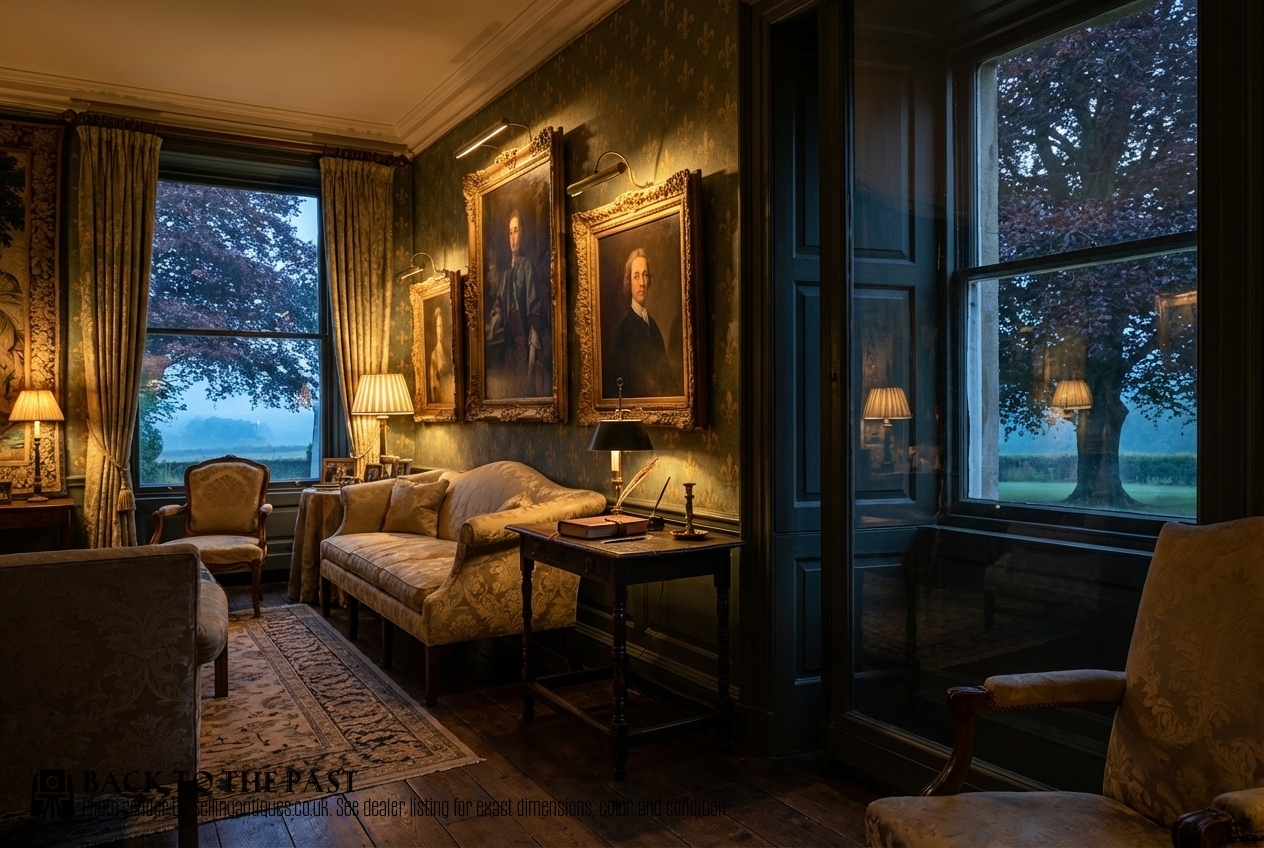
How they were made
Cabinet makers constructed these tables primarily from solid oak, sometimes combining elm or incorporating brass handles and decorative tiles. Surfaces were polished, left dry, or painted with finishes like powdery distressed green.
Joinery methods relied on sturdy pegged construction for frames, while drawers featured hand-cut joints to house contents securely. Carved ornamentation, bobbin legs, and applied mouldings defined the decorative vocabulary across different periods.
Retail Price Guide 2026
Typical UK retail prices for oak drawer side table, calculated from the Sellingantiques database of over a million retail prices indexed since 2003. This retail price guide relies exclusively on Sellingantiques data; no external sources or auction records are used, so the figures do not describe the wider market.
A grinning Greenman carved into the wood stands ready to ward off bad spirits while you store your keys.
What varies in quality
The grade of timber and the crispness of hand-carved details distinguish provincial utility from finer cabinet work. Surface preservation determines character, separating dry, untouched boards from heavily restored timber.
Proportions and leg turning influence visual balance, from simple tapering legs to elaborate bobbin or pad-foot supports. Original hardware and functional locking mechanisms elevate the standing of a piece.
The Oak Drawer Side Table Glossary
- Lowboy
- A small oak table with one or more drawers, traditionally used as a dressing table or side table.
- Frieze drawer
- A drawer integrated directly into the upper framing band beneath the top surface of the table.
- Pad-foot
- A rounded foot resting flat on the floor, frequently seen on cabriole or country table legs.
- Bobbin leg
- A turned leg shaped to resemble a series of wooden reels or spools stacked end to end.
- Jacobean Revival
- A nineteenth or twentieth-century style imitating the heavy carved ornamentation of the early seventeenth century.
Frequently Asked Questions
Where should I put an oak drawer side table?
These tables fit easily beside a sofa, in a hallway for post and keys, or against a bedroom wall as a compact surface. Their shallow depth allows them to occupy narrow circulation spaces without blocking passage.
The drawer provides convenient out-of-sight storage for small daily items, keeping tabletops clear and orderly.
How do I date an antique oak side table?
Examine the timber grain, tool marks inside the drawer construction, and the style of the leg turning. Seventeenth-century examples often display pegged frames and heavier mouldings, while Georgian pieces show refined proportions.
Later revivals from the early twentieth century mimic these older traits but utilise standardised machine-cut elements.
Are these tables suitable for daily use?
Solid oak construction makes these pieces remarkably durable for everyday placement in modern rooms. Their sturdy frames support lamps, books, and decorative objects reliably over decades.
Care should be taken to protect antique polished surfaces from excessive moisture and direct heat sources.
What is the difference between a lowboy and a side table?
A lowboy specifically denotes a low table equipped with one or more rows of drawers, historically used for personal grooming or serving. General side tables encompass a broader range of heights and top formats without that specific functional heritage.
Both forms utilise oak framing and drawer storage in similar room settings.