
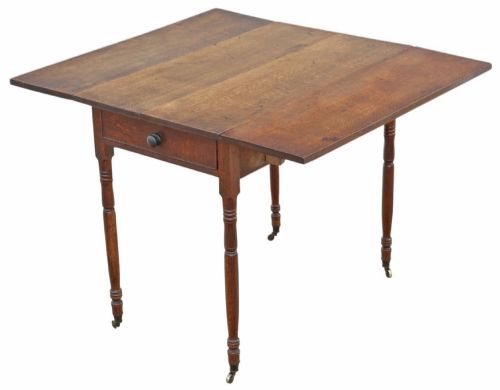
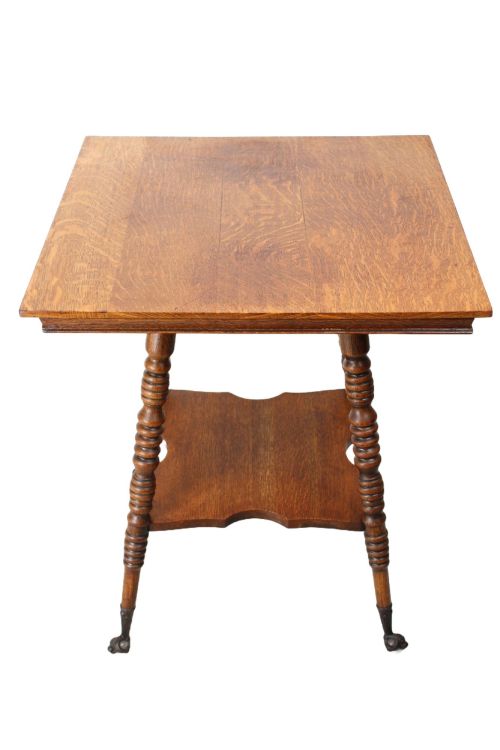
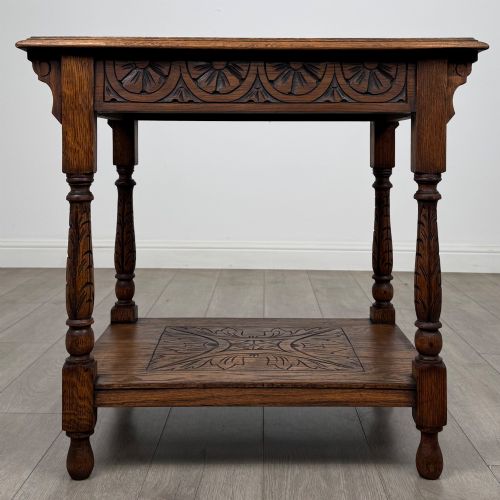
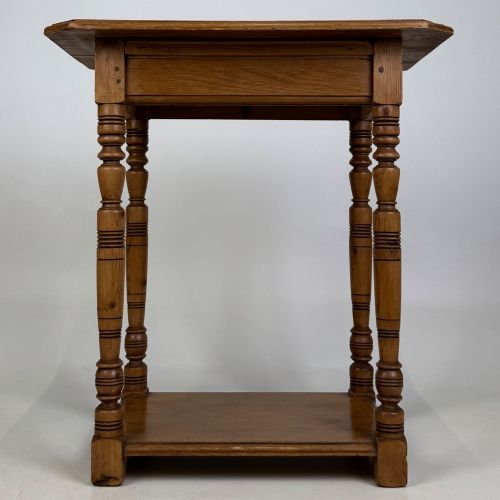
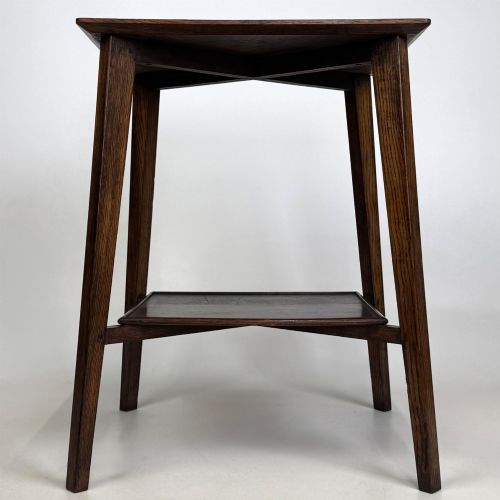
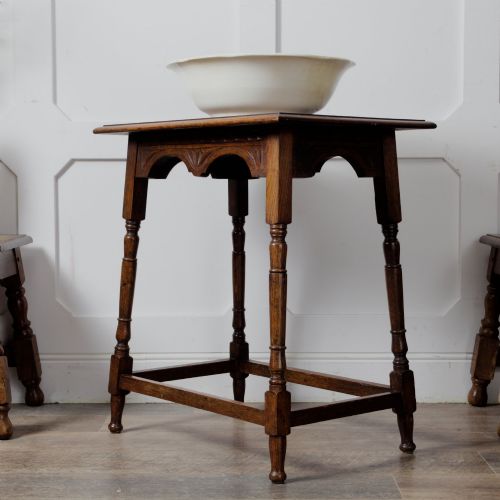
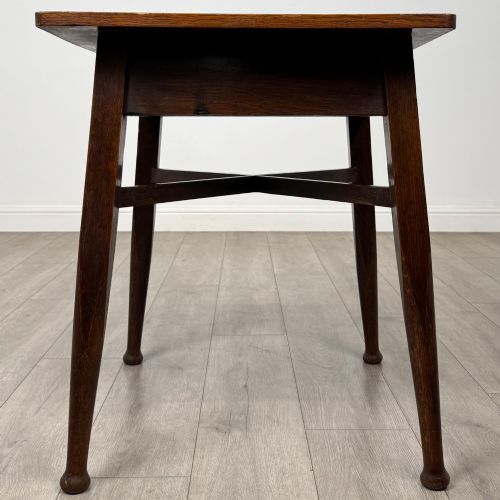
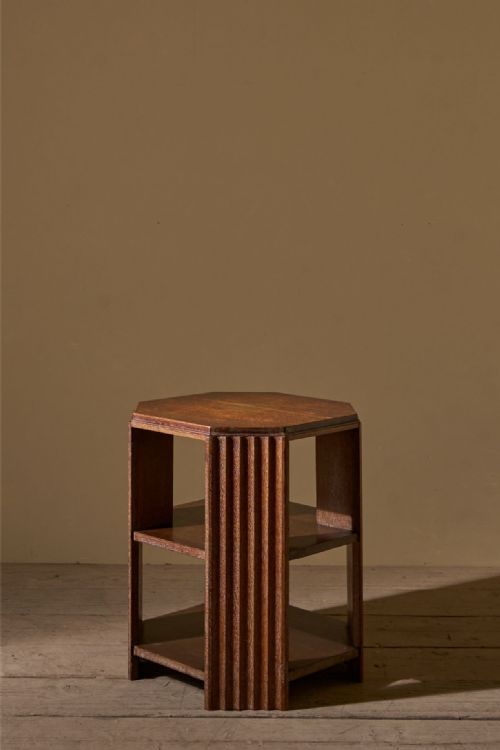
Brown Oak End Table
A brown oak end table brings a rich, deep timber tone and honest grain to a room.
What brown oak end tables are
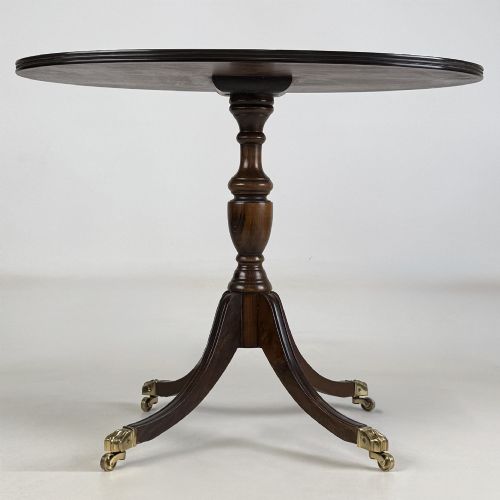
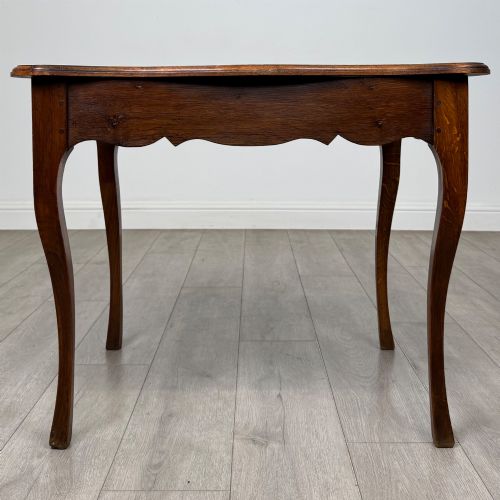
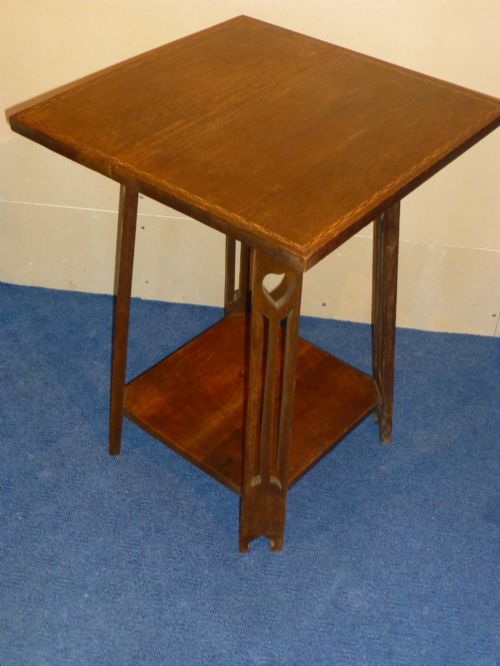
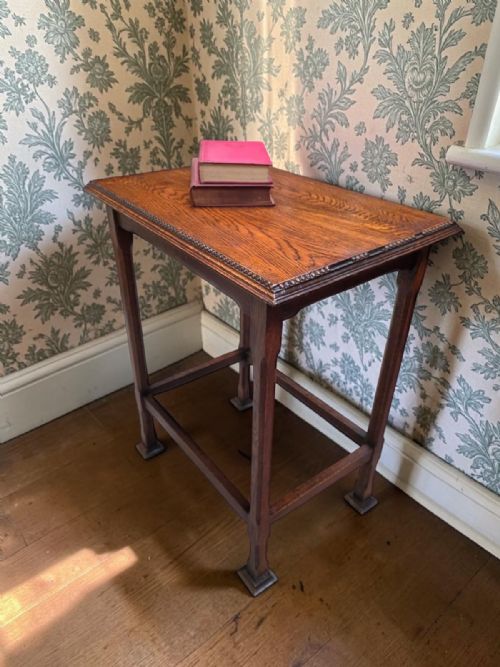
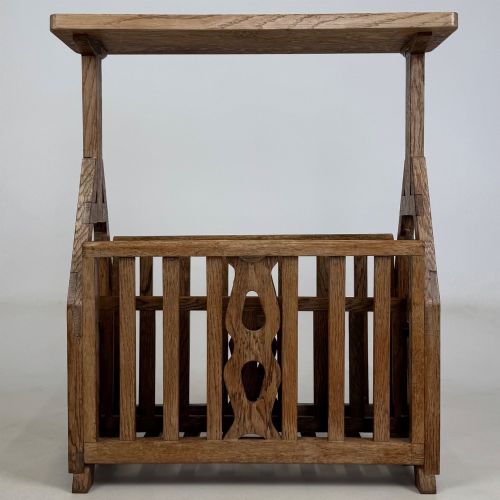
A brown oak end table is a compact surface designed for utility beside a chair or sofa. These pieces appear primarily as side tables or lamp tables across several historical eras.
The selection ranges widely in age, touching the seventeenth, eighteenth, nineteenth, and twentieth centuries. Styles span Georgian, Victorian, Edwardian, traditional country, and seventeenth-century Jacobean influences.
What varies in quality
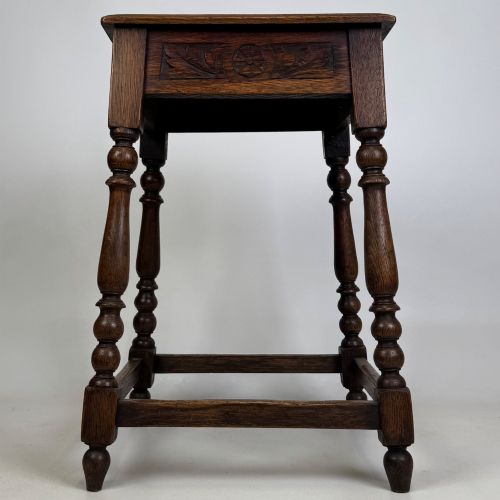
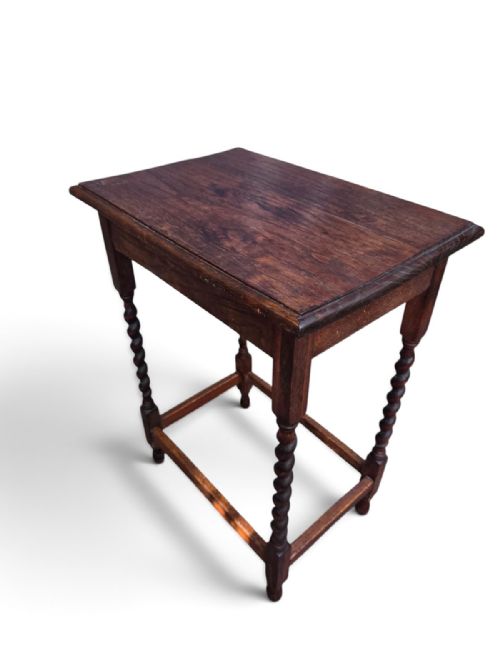
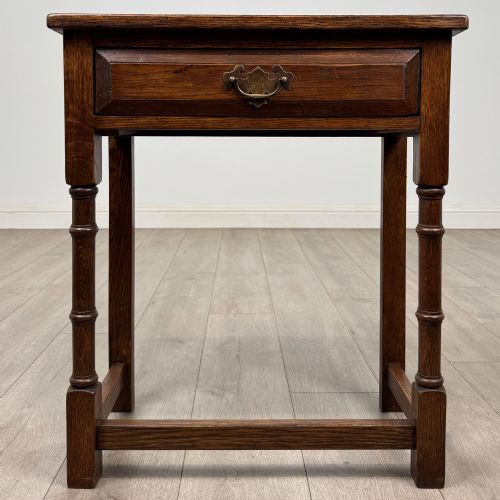
Quality rests in the depth of the polished oak surface and the crispness of turned components like barley twists and bobbin shaping. Early seventeenth-century examples display robust joinery distinct from lighter Edwardian construction.
Carved details show varying degrees of hand skill, separating standard utility furniture from more ornate Victorian or Jacobean interpretations.
Retail Price Guide 2026
Typical UK retail prices for brown oak end table, calculated from the Sellingantiques database of over a million retail prices indexed since 2003. This retail price guide relies exclusively on Sellingantiques data; no external sources or auction records are used, so the figures do not describe the wider market.
Current listings span the seventeenth century through to the Edwardian era and 1920, utilising oak alongside brass and iron.
The Brown Oak End Table Glossary
- Chamfered legs
- Legs with edges pared off at an angle, usually forty-five degrees, lightening the visual weight of the oak.
- Bobbin turned
- A series of rounded wooden spheres or discs carved along the length of a leg or stretcher, typical of seventeenth-century work.
- Barley twist
- A spiral turning resembling a twisted rope, carved into furniture legs during the seventeenth century and later revivals.
- Lamp table
- A small occasional table intended to hold a light source, sharing the footprint of a standard side table.
Frequently Asked Questions
How do I date a brown oak end table?
Dating relies on construction methods, leg turning styles, and overall proportions. Seventeenth-century pieces often feature barley twists, whilst Edwardian examples show lighter frames.
Hardware and surface polish also offer strong clues to the period of manufacture.
Are these tables sturdy enough for daily use?
Oak is a famously durable hardwood designed for practical daily function. Solid timber construction handles everyday items reliably.
Traditional joinery keeps these small tables stable over centuries of service.
What is the difference between a side table and an end table?
In practice, these terms often describe the same compact furniture form used beside seating. Listings for this phrase primarily designate them as side tables or lamp tables.
Their shared function is providing an accessible surface in a living space.
How do I care for polished oak furniture?
Regular dusting with a dry cloth maintains the polished timber surface. Avoid placing oak furniture in direct sunlight or near heat sources to prevent timber movement.
Periodic application of appropriate wax preserves the grain and colour.