

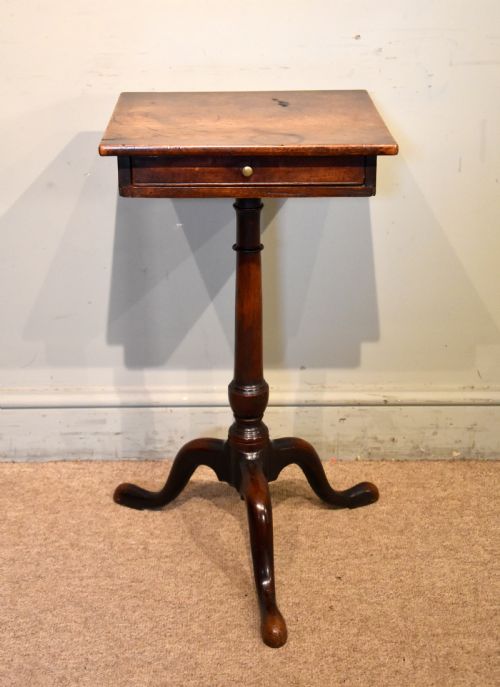
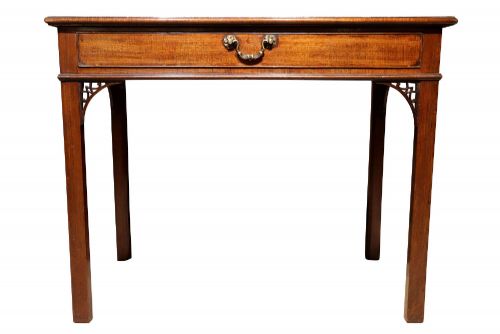
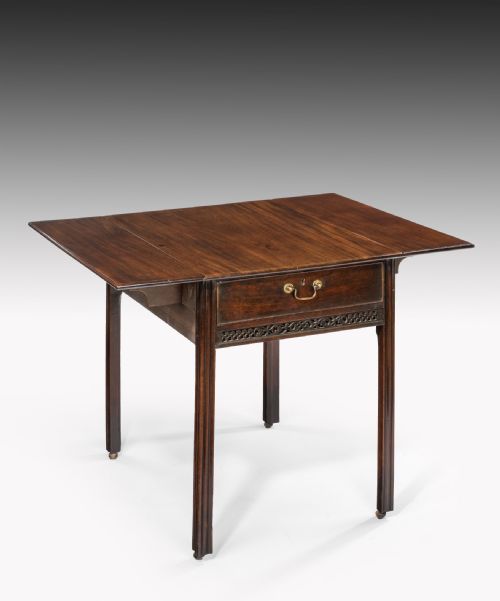
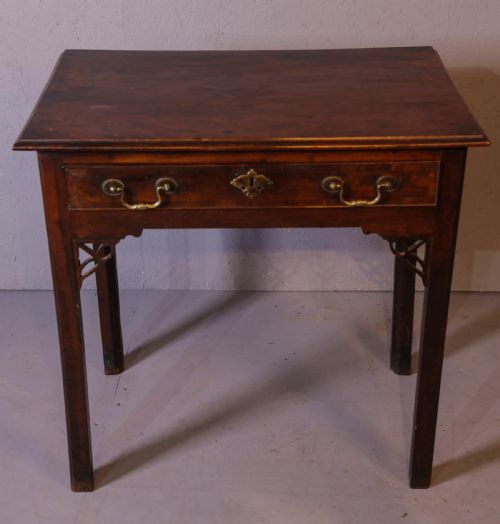

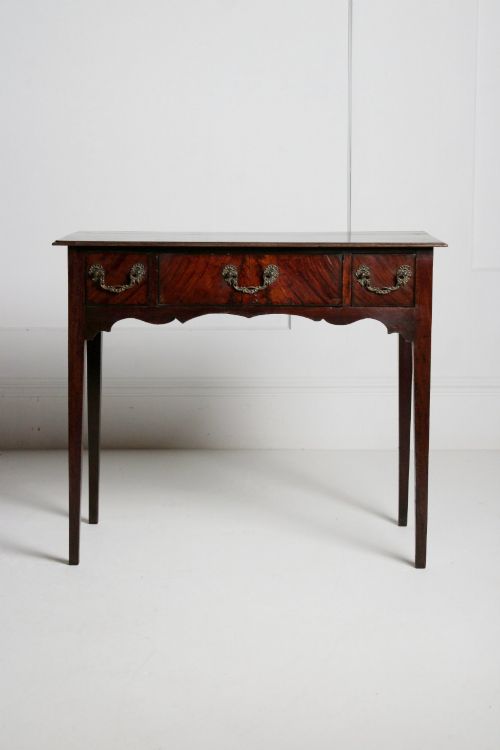


Chippendale Drawer Table
Chippendale drawer table designs combine robust 18th-century proportions with practical storage, offering timber surfaces suited for writing or display.
Chippendale Drawer Table
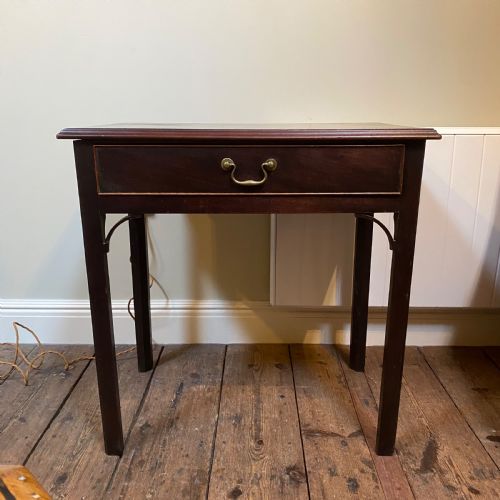
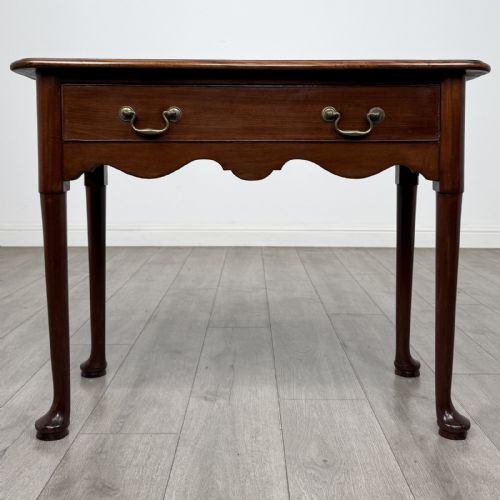
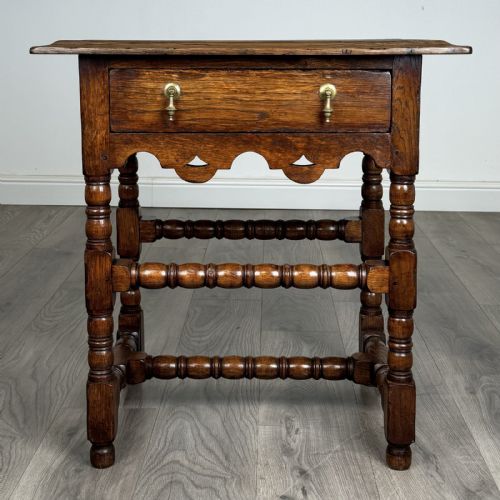
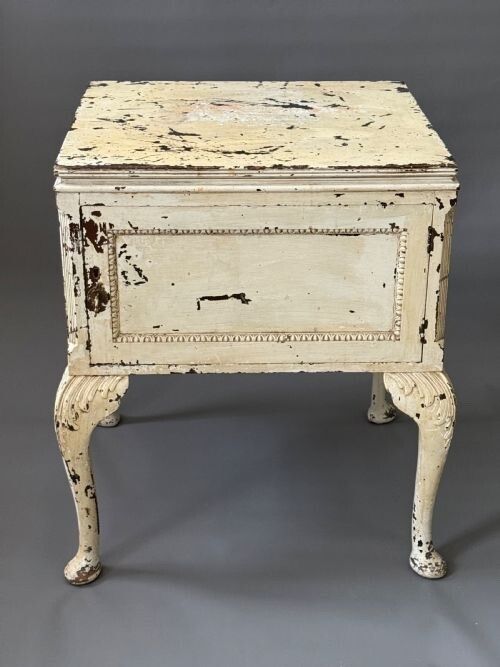
A chippendale drawer table generally manifests as a side table, lowboy, or writing desk originating from Georgian periods or later revival eras. These pieces serve functional roles in halls, bedrooms, and reception rooms by providing surface space alongside concealed storage.
The selections on this page span several centuries, featuring 18th-century originals alongside Edwardian and 1920s revival interpretations. Mahogany remains the dominant timber, often accompanied by oak and yew in specific provincial or revival examples.
Distinguishing quality factors
The calibre of a chippendale drawer table depends heavily on the selection of timber, such as figured mahogany or dense yew wood, and the crispness of carved details like brackets and legs. Superior examples exhibit precise joinery and matching drawer linings that remain intact through generations of use.
Revival pieces from the 20th century differ from 18th-century originals in their tool marks and seasoning of the wood, though skilled craftsmanship appears across both periods. The integration of original brass handles and untampered drawer bases elevates the standing of any given piece.
Chippendale Drawer Table Retail Price Guide 2026
Typical asking prices for chippendale drawer table among the pieces listed under this phrase on Sellingantiques today, from the lower quarter to the upper quarter. They describe what is for sale here now, not the wider market.
Some tables hide their paperwork behind Gothic pierced brackets, as if guarding medieval secrets from the postman.
Muirhead Moffat & Co
The Chippendale Drawer Table Glossary
- Lowboy
- A small table with one or more rows of drawers, commonly used as a dressing table or side table during the Georgian period.
- Dovetail
- A traditional wood joint formed by interlocking wedge-shaped fingers, prized for its tensile strength in drawer construction.
- Serpentine
- A curved furniture front characterised by a convex centre flanked by concave ends, creating a gentle wave motion.
- Bracket
- A structural or decorative support element placed beneath a tabletop or cornice, sometimes pierced with Gothic tracery.
- Yew
- A dense, resilient softwood with a distinctive mottled grain pattern utilised by historical cabinet makers for select occasional tables.
Chippendale Drawer Table: Frequently Asked Questions
What defines a chippendale drawer table?
A chippendale drawer table is a traditional item of furniture featuring integrated storage drawers, built during the 18th century or later revival periods.
These tables typically showcase classic joinery and timber surfaces suited for domestic use in studies or living spaces.
How do I identify a Georgian original?
Identifying an 18th-century piece involves examining the timber shrinkage, hand-cut dovetails, and secondary woods used inside the drawer linings.
Revival pieces from the 20th century often display more uniform machine sawing and different surface wear patterns.
Where should I place a lowboy?
A lowboy functions effectively as a hall table, a bedside cabinet, or a compact writing desk in a reception room.
Its shallow depth and built-in drawers provide practical utility without dominating smaller floor spaces.
Are these tables suitable for daily writing?
Many of these pieces were originally designed for correspondence or administrative tasks, making them well-suited for modern writing use.
Proper care should be taken to protect the polished timber surface with a blotter or leather pad.