


Brown Card Table
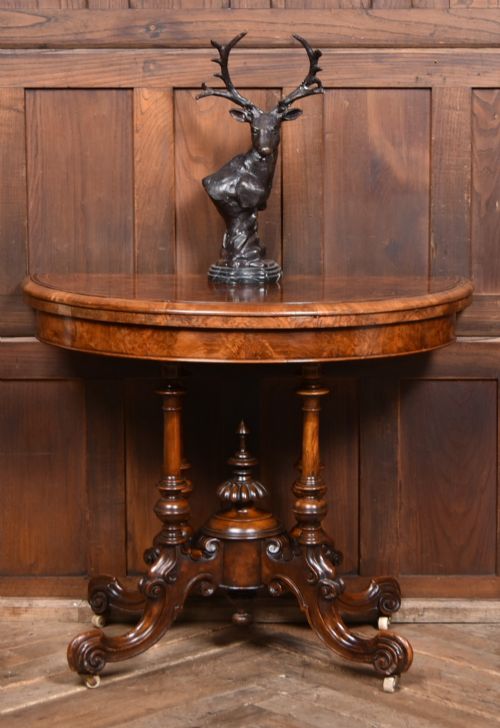
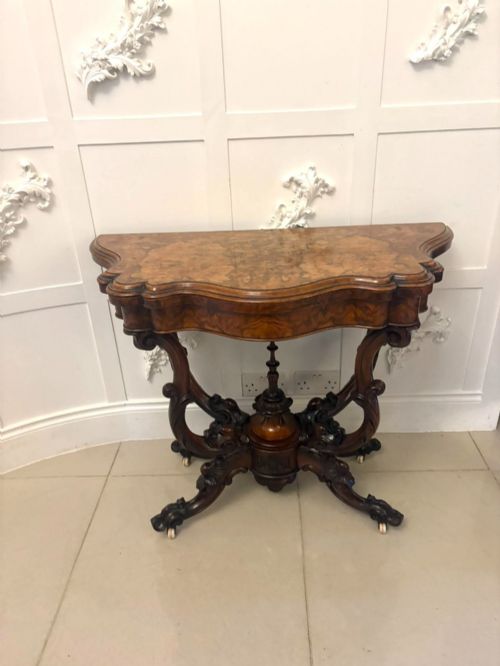
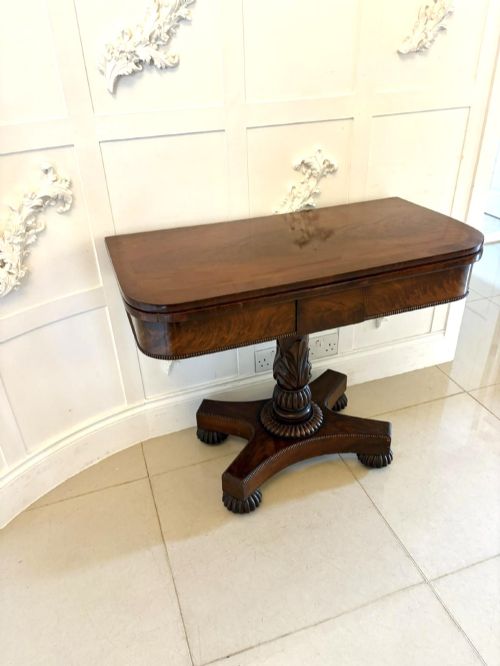
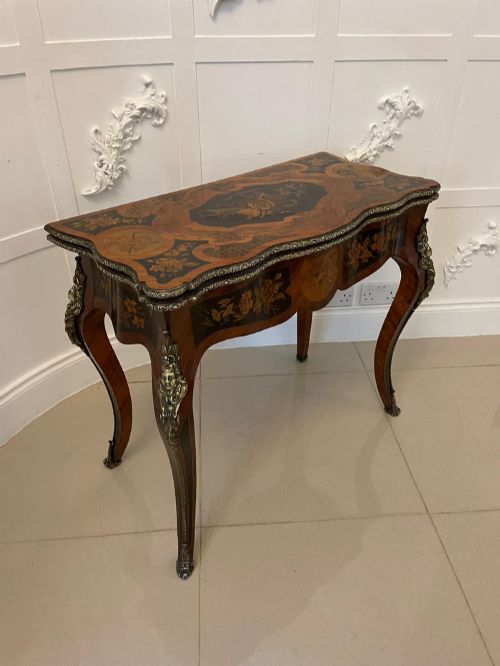
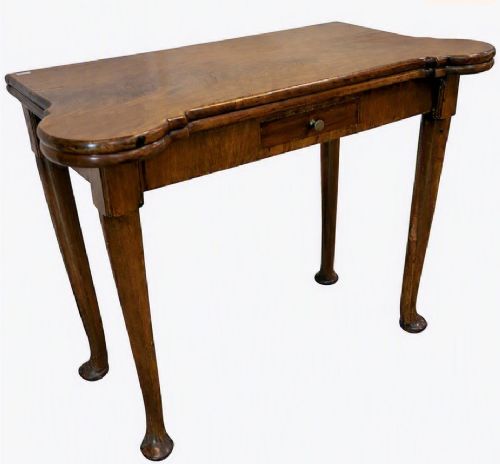
A brown card table provides a folding surface for evening play, spanning periods from the eighteenth century to the twentieth.
Brown Card Table
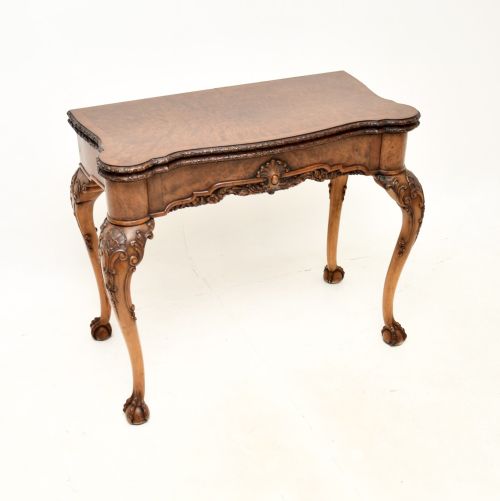
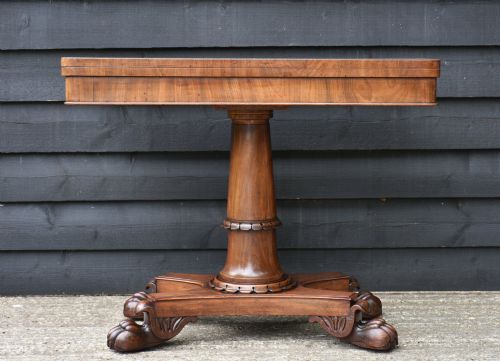
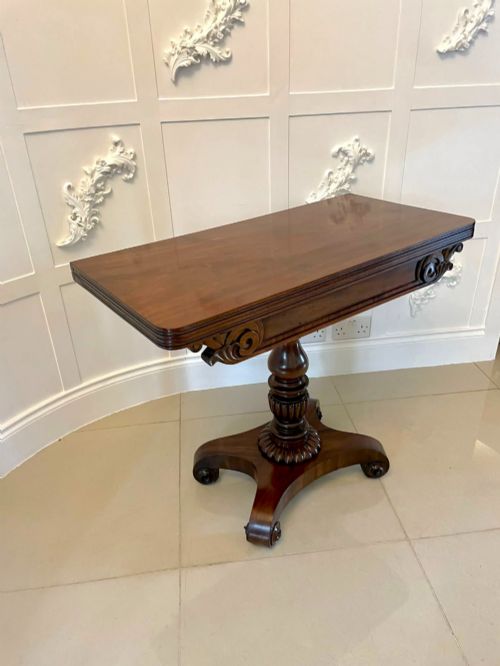
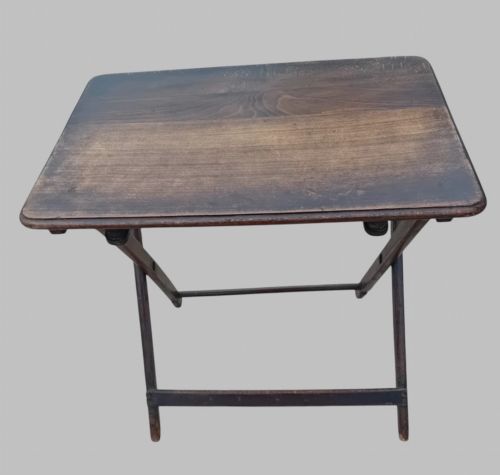
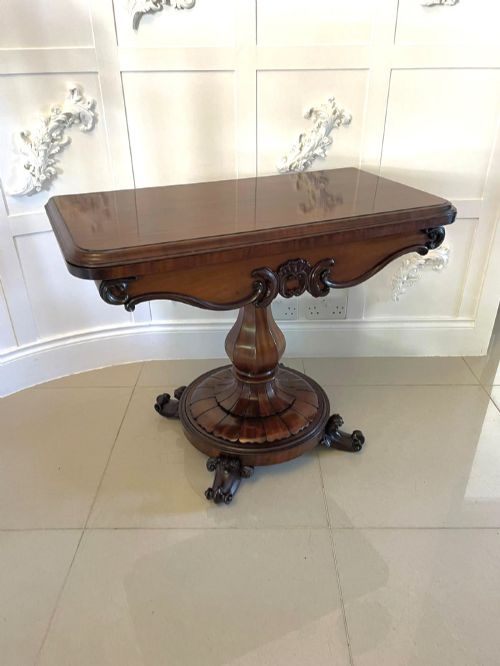
A brown card table is an adaptable item designed primarily for social gaming and domestic display. The listings here present numerous examples fashioned as fold-over consoles, tea tables, and games surfaces from the eighteenth, nineteenth, and early twentieth centuries.
Mahogany remains the dominant wood across these periods, supplemented by burr walnut, rosewood, and satinwood veneers. Makers built these tables to transform from compact wall consoles into stable play surfaces through swivel tops, concertina actions, or folding leaves.
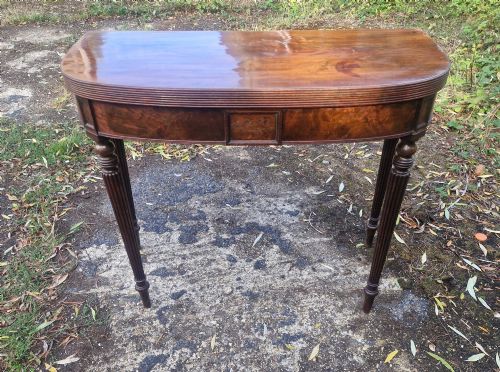
The regional variety spans English Georgian and Regency pieces alongside Victorian interpretations and French revival styles. Buyers encounter forms ranging from simple D-shaped tea tables to elaborate marquetry-inlaid creations with carved basket bases.
Materials and construction
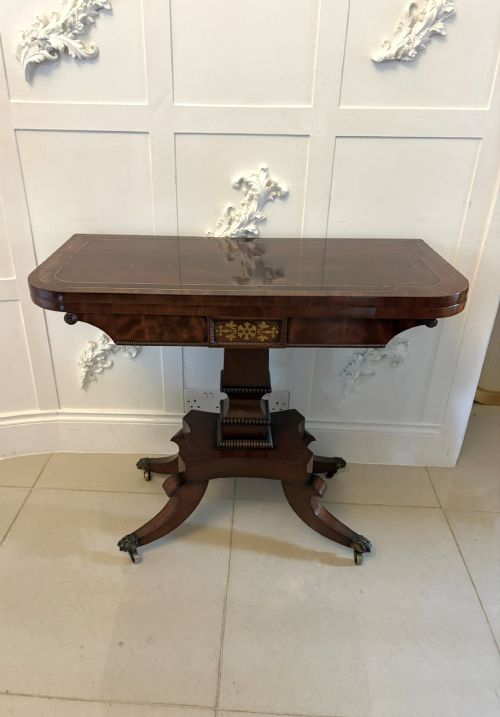
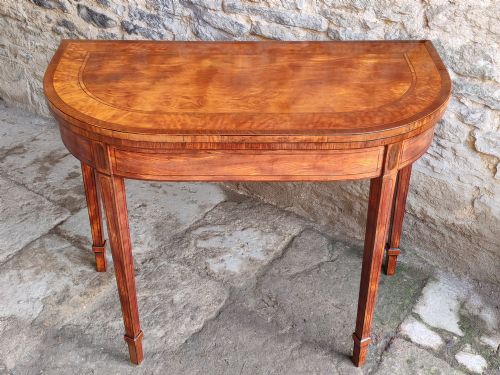
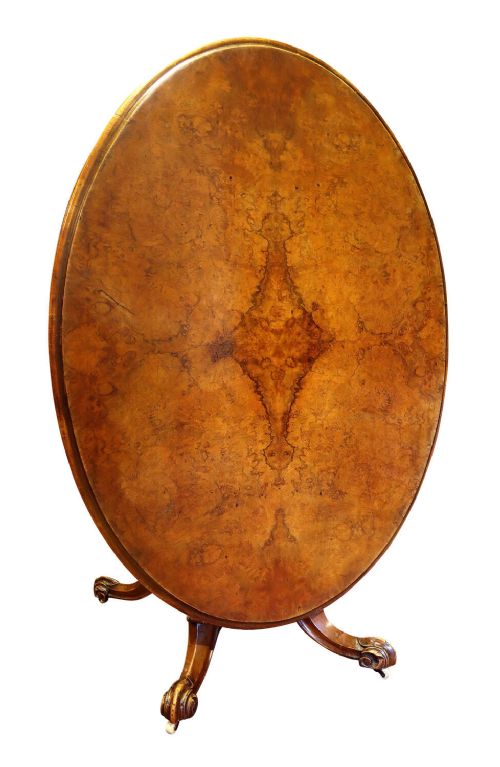
Cabinet makers utilised solid timbers alongside finely figured veneers such as flame mahogany, burr walnut, and satinwood to create patterned top surfaces. Crossbanding in contrasting woods frequently frames the outer edges of the folding leaves.
Brass inlay, ormolu mounts, and delicate wood marquetry decorate the more elaborate nineteenth-century pieces. Structural integrity depends upon specialised hinges, swivel mechanisms, and concertina folding frames that support the open leaf without sagging.
Brown Card Table Retail Price Guide 2026
Typical asking prices for brown card table among the pieces listed under this phrase on Sellingantiques today, from the lower quarter to the upper quarter. They describe what is for sale here now, not the wider market.
The listings show card tables spanning the Georgian, Regency, Victorian, and Edwardian periods, constructed primarily in mahogany and burr walnut.
Assessing the pieces
Quality rests upon the selection of timber figure, the crispness of carved details, and the precision of the fold-over mechanism. Superior examples display symmetrical veneer grain across the top leaf and smooth operation in the concertina action or swivel pivot.
The handling of secondary timbers, dovetailing within internal storage wells, and the preservation of original surface patination distinguish workshop output. Tables retaining crisp brass inlay and intact ormolu mounts demonstrate superior original craftsmanship.
Antoine Lampre·Giles Grendey·Gillows
The Brown Card Table Glossary
- Concertina action
- An expanding frame mechanism that allows a card table to open on an accordion-like framework, providing support on all four corners when unfolded. This engineering solution avoids the need for a swinging rear leg.
- Demi-lune
- A half-moon shape characteristic of tables designed to stand flat against a wall when folded. Upon opening, the top reveals a circular or semi-circular baize-lined surface.
- Crossbanding
- A border strip of veneer laid around the perimeter of a table top with the grain running perpendicular to the central panel. This technique frames the primary timber and adds visual contrast.
- Marquetry
- Decorative patterns formed by fitting together thin slices of various coloured woods and other materials onto a structural surface. It appears on finer revival and continental tables.
- Patina
- The surface sheen and depth of colour developed through age, handling, and waxing over decades. Original patination serves as an indicator of untouched antique condition.
Brown Card Table: Frequently Asked Questions
How do these tables open?
Most brown card tables utilise a fold-over top supported by a swinging rear leg, a swivel mechanism, or an expanding concertina frame. The top leaf lifts and rotates or folds outward to double the available surface area.
Once opened, the internal space often reveals a lined well for storing cards and gaming counters. The hinges and support structures vary depending on the period and the complexity of the workshop design.
What wood types appear most frequently?
Mahogany forms the primary material across the eighteenth and nineteenth-century examples in these listings. Cabinet makers also employed walnut, burr walnut, rosewood, and satinwood veneers.
Inlay work frequently incorporates contrasting timbers, brass lines, and exotic woods to accentuate the borders of the folding tops.
Where were these tables placed?
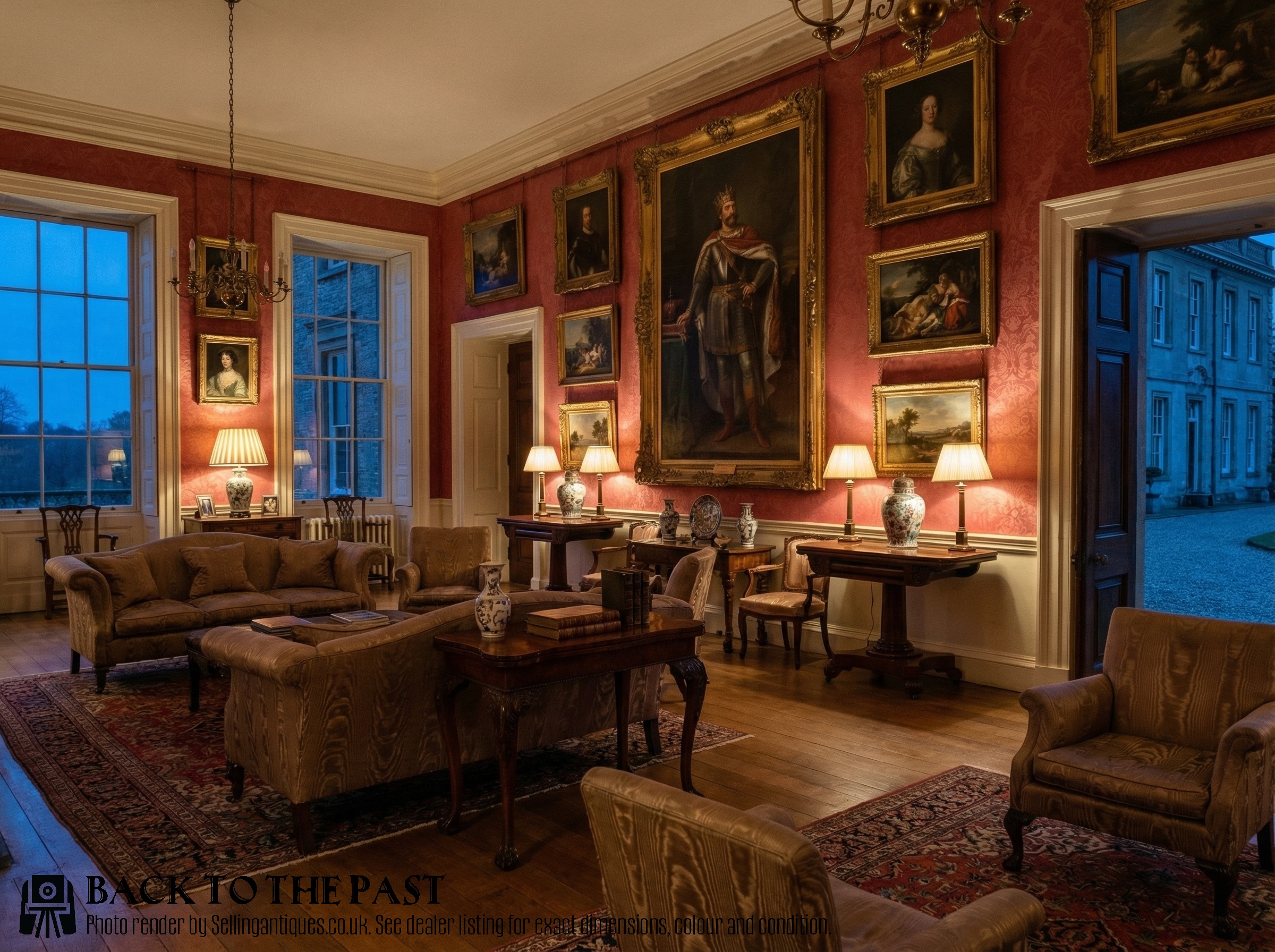
In historic interiors, these tables stood flat against drawing room or parlour walls as console or side tables when not in use. They moved to the centre of the room during evenings for card games, tea, or writing.
Their dual function made them essential furniture for entertaining guests in domestic settings.
How can I distinguish a tea table from a games table?
Tea tables often feature plain wooden tops or dished surfaces designed to hold porcelain without a baize lining. Games tables typically incorporate lined interiors featuring baize, felt, or inlaid chess and backgammon boards.
Some examples bridge both categories, serving multiple domestic functions within the same room.