

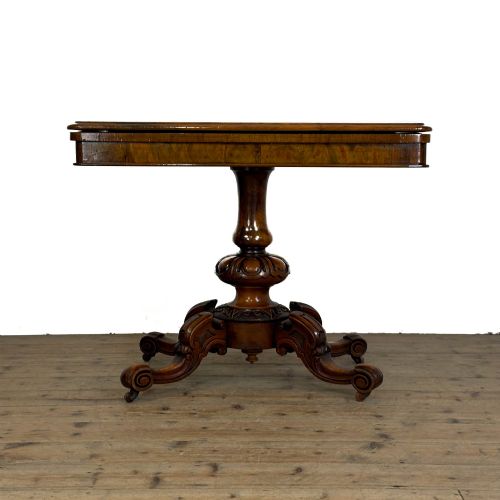
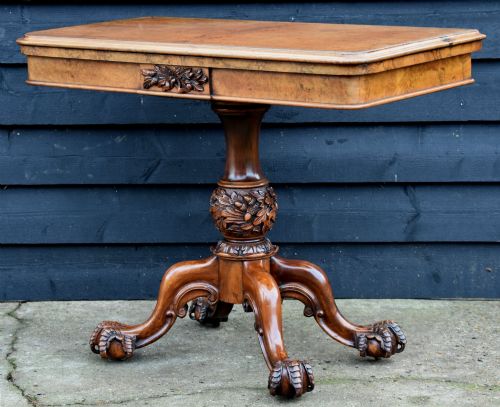
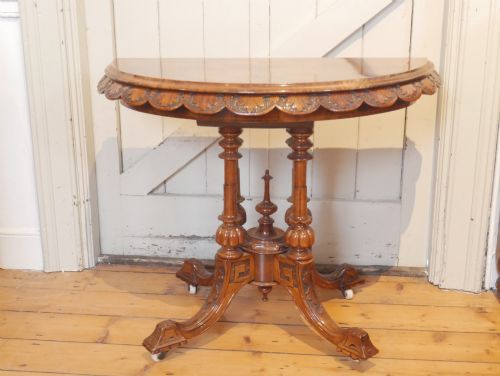
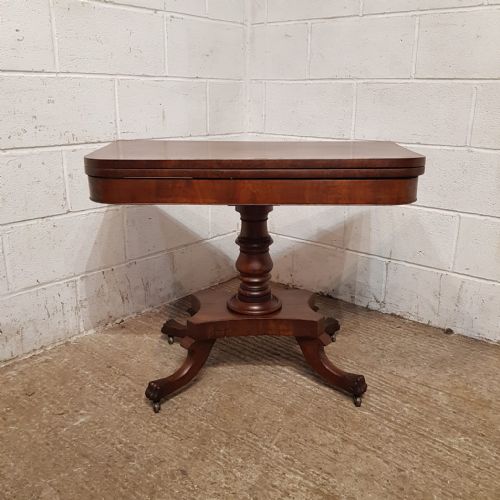
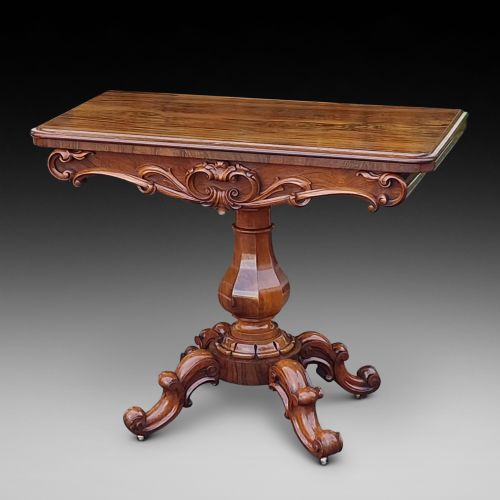
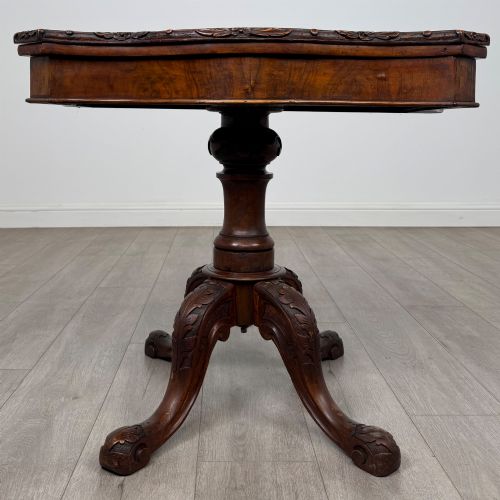
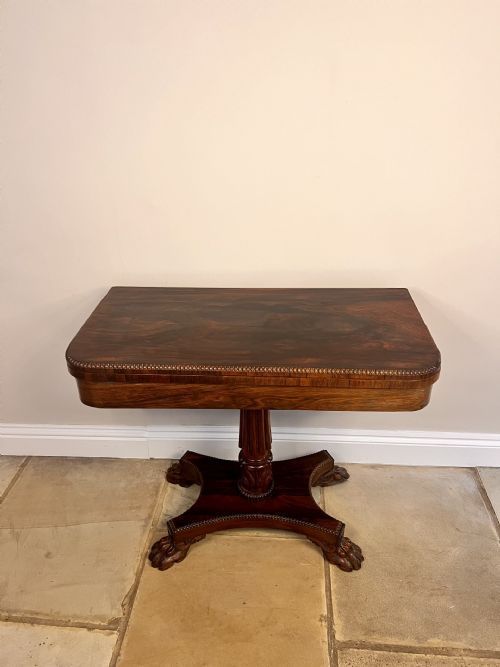
Swivel Top Tea Table
A swivel top tea table pivots to reveal a hidden surface, combining dining and leisure in a single timber form.
Swivel Top Tea Table
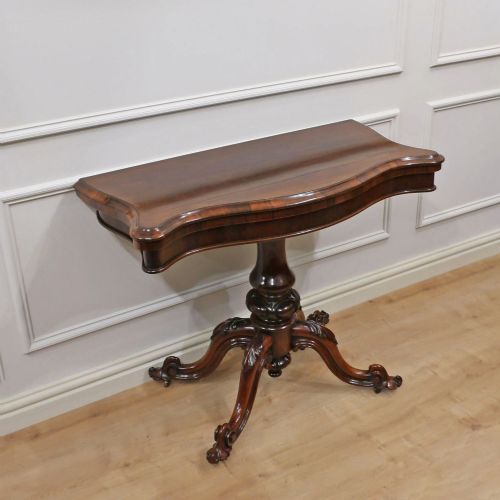
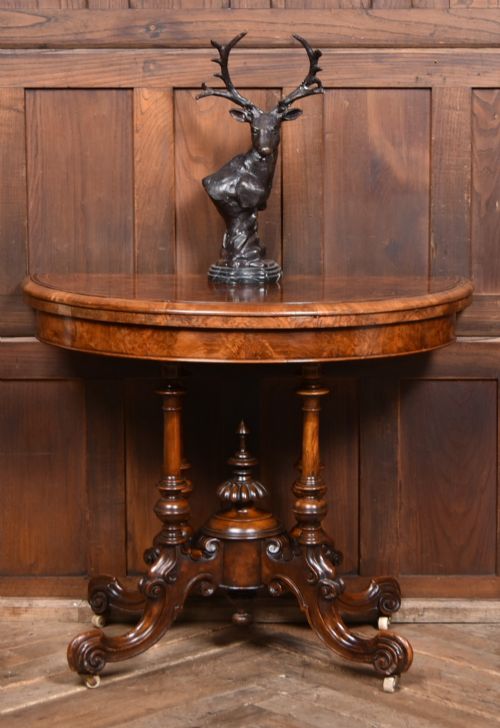
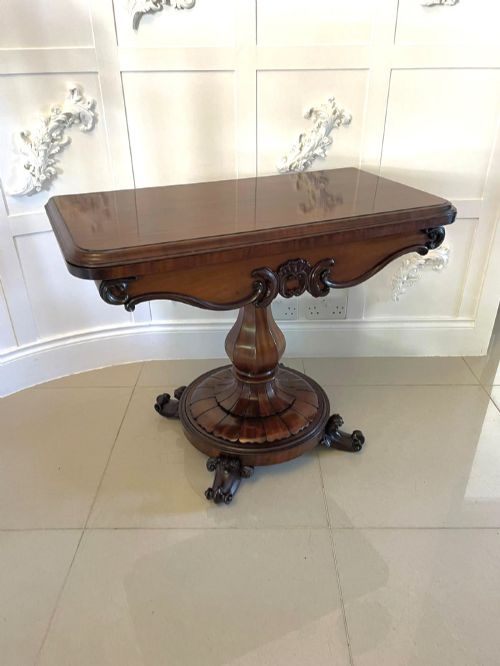
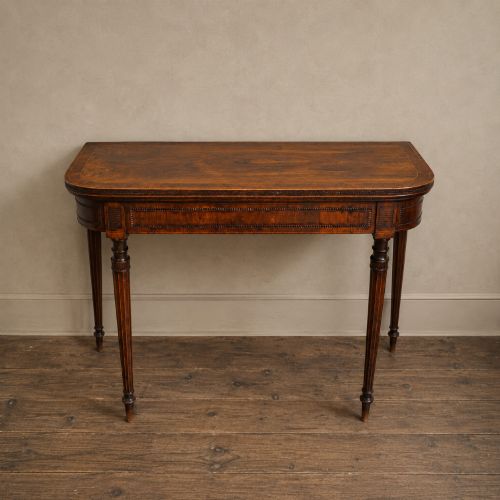
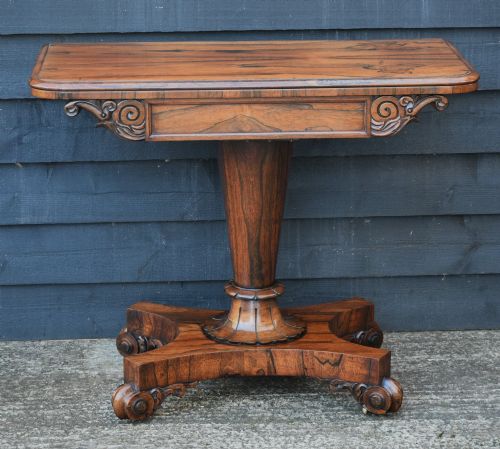
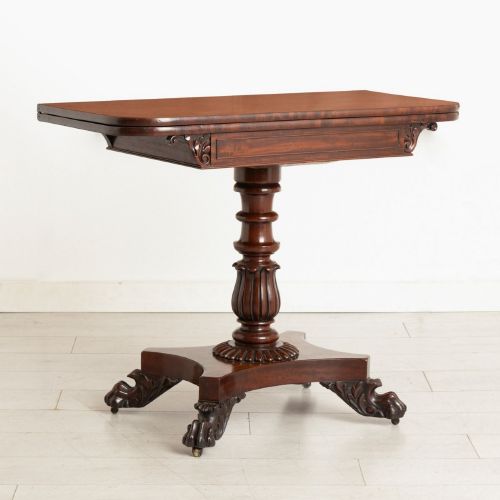
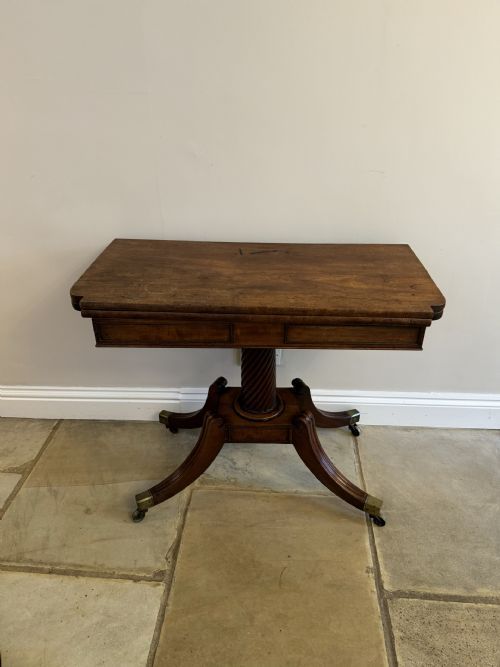
A swivel top tea table is typically encountered as a fold-over or turn-over table originating from the Regency, William IV and Victorian periods. These pieces frequently double as card tables, games tables or side tables, adapting a pivoting top to conceal compartments or polished timber leaves beneath.
The listings span the nineteenth century, taking shapes such as demi-lune, rectangular and "D"-shaped formats. Walnut, mahogany and rosewood dominate, often set on pedestal bases or substantial turned supports characteristic of nineteenth-century cabinet work.
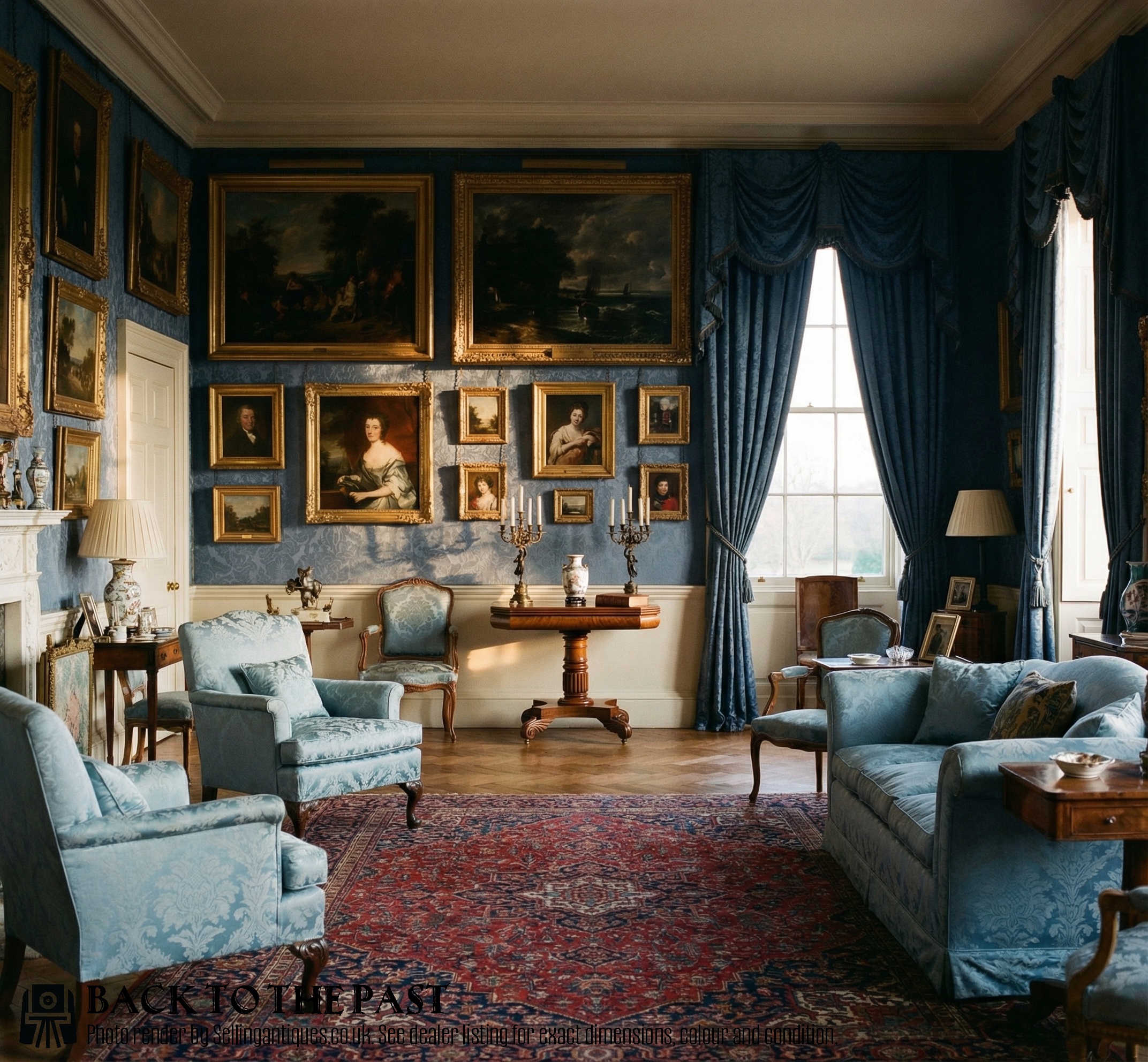
Materials and construction
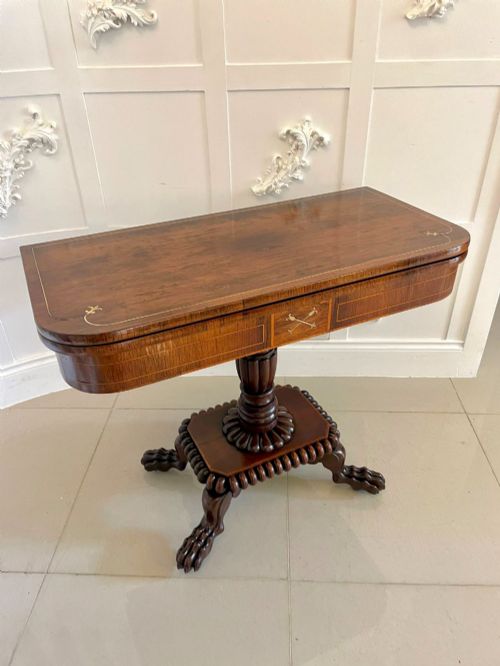
Cabinet makers utilised dense hardwoods like mahogany, rosewood and walnut, frequently enhancing surfaces with burr veneers, boxwood stringing and brass inlay. Crossbanding in burr yew or ebony defines the borders of the pivoting tops, displaying the technical skill of the period.
The mechanism relies on a sturdy swivel joint that allows the top leaf to rotate ninety degrees and unfold to double the surface area. This clever pivot reveals an enclosed well or pocket beneath the top for storing cards and tea accessories.
Swivel Top Tea Table Retail Price Guide 2026
Typical asking prices for swivel top tea table among the pieces listed under this phrase on Sellingantiques today, from the lower quarter to the upper quarter. They describe what is for sale here now, not the wider market.
Many a Victorian card player kept winnings tucked safely inside the secret well beneath the rotating top.
Judging quality
Quality rests in the choice of timber figures, such as highly grained burr walnut or figured mahogany, and the precision of brass inlay and boxwood stringing. Superior examples maintain crisp carving on pedestal bases and tight joints in the pivoting mechanism.
The transition from closed console to open table reveals the standard of interior construction, where secondary timbers and matching veneers indicate higher workshop standards. Pieces showing restraint in carved ornament often rely entirely on the natural grain of the rosewood or walnut.
Edwards & Roberts
The Swivel Top Tea Table Glossary
- Swivel top
- A table top designed to rotate on a central pivot, allowing the hinged surface to open out flat or reveal a hidden compartment underneath.
- Fold over
- A hinged table top that doubles in surface area when opened and laid flat upon the base framework.
- Crossbanding
- A border of veneer laid perpendicular to the grain of the main surface, often seen in contrasting woods such as burr yew.
- Demi-lune
- A half-moon shape characteristic of side and card tables designed to sit flush against a wall when closed.
- Pedestal base
- A central column support rising from a platform or footed base, frequently found on nineteenth-century tables.
Swivel Top Tea Table: Frequently Asked Questions
What is a swivel top tea table?
A swivel top tea table is a dual-purpose piece of furniture featuring a hinged top that rotates and unfolds to provide an expanded surface for tea or card games.
These tables date primarily from the Regency and Victorian eras, combining decorative timber veneers with practical pivoting mechanisms.
How do you open a swivel top table?
The upper leaf lifts slightly and pivots on a central pin or hinge, rotating ninety degrees to rest securely across the base frame.
Once rotated, the hinged leaf unfolds outward to create a stable, full-sized table top, often exposing a hidden compartment beneath.
Where were these tables used?
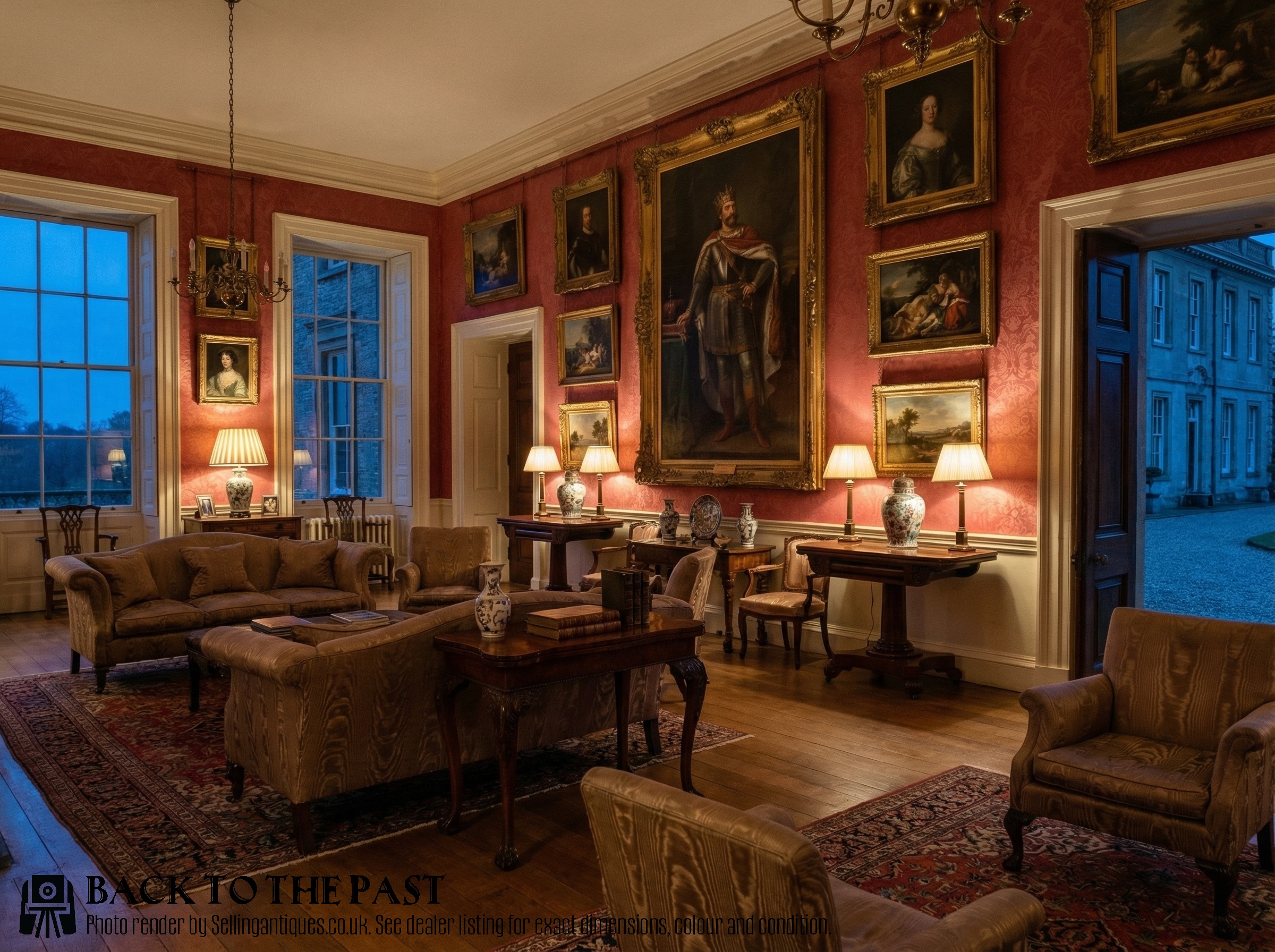
They were placed in drawing rooms and parlours where space-saving furniture was necessary for entertaining guests.
Closed against a wall, they served as side tables or console displays, and opened when tea was served or card games began.
How do I care for rosewood and walnut?
Keep timber surfaces away from direct sunlight and heat sources to prevent the veneers from drying out and cracking.
Regular dusting with a dry cloth and occasional application of appropriate furniture wax preserves the finish and natural grain.