
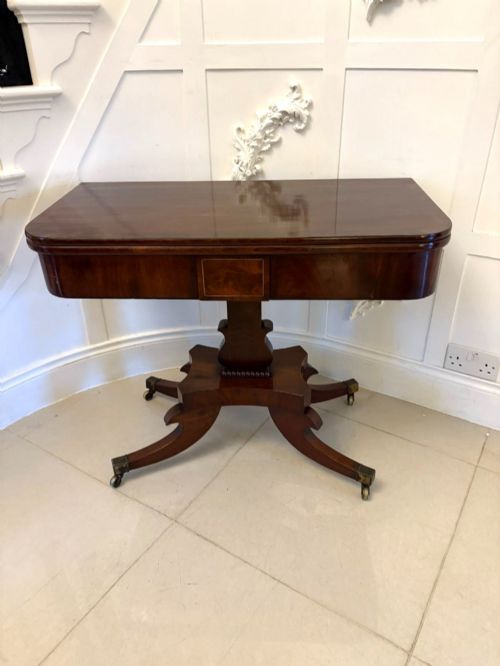
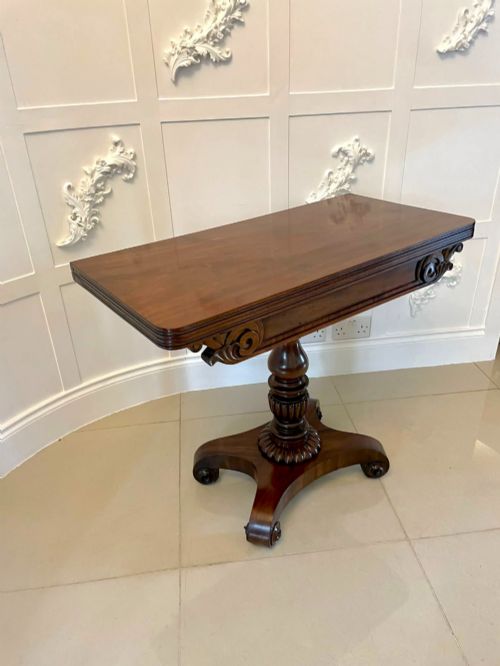
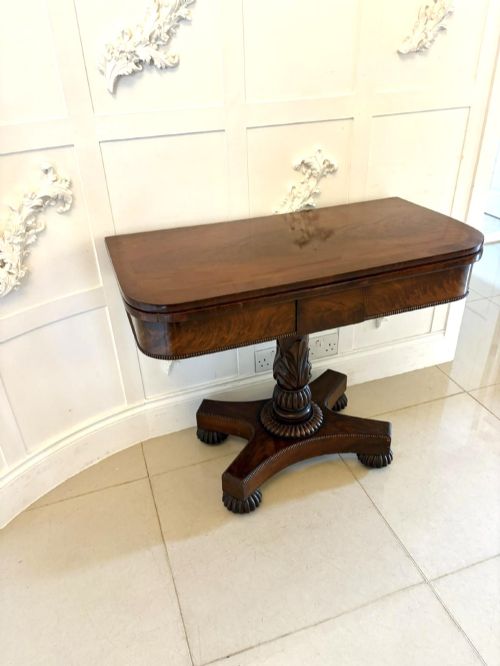
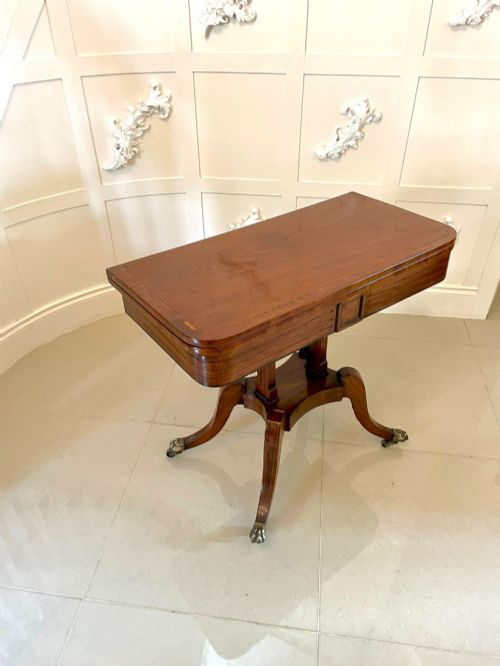

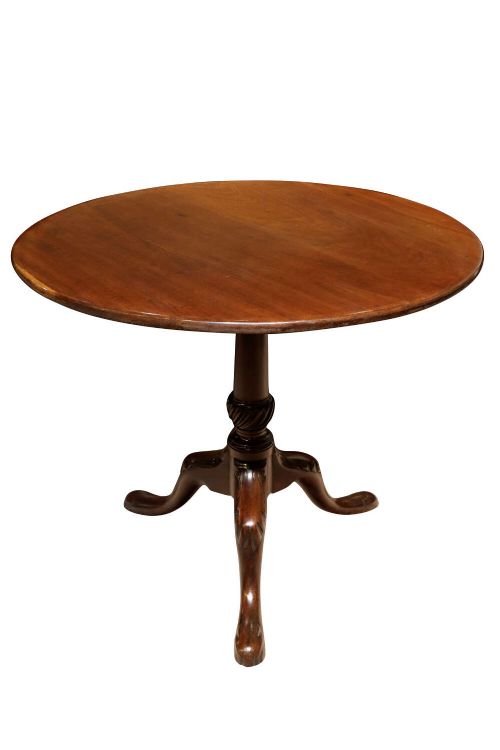
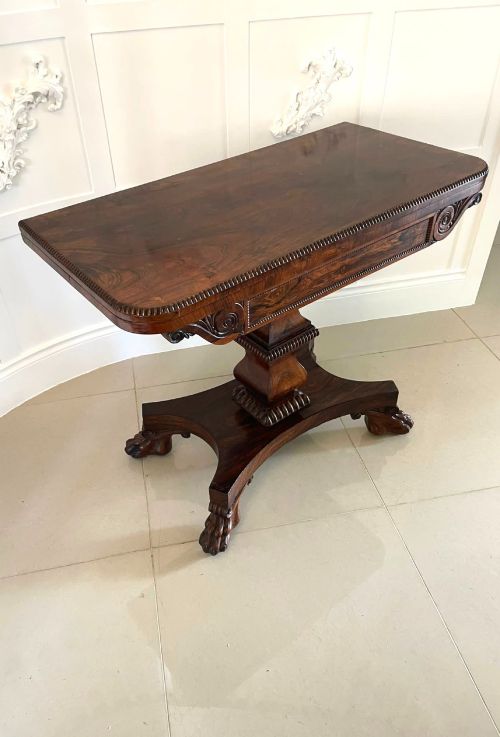
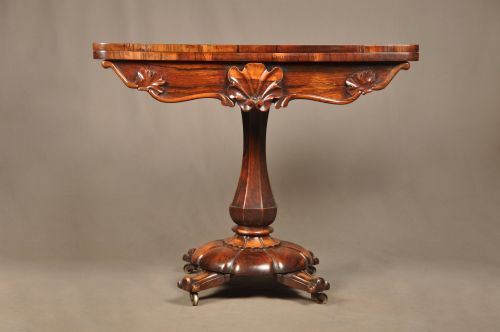
Regency Pedestal Tea Table
A regency pedestal tea table offers a clever folding surface supported by a central column, designed for entertaining in style.
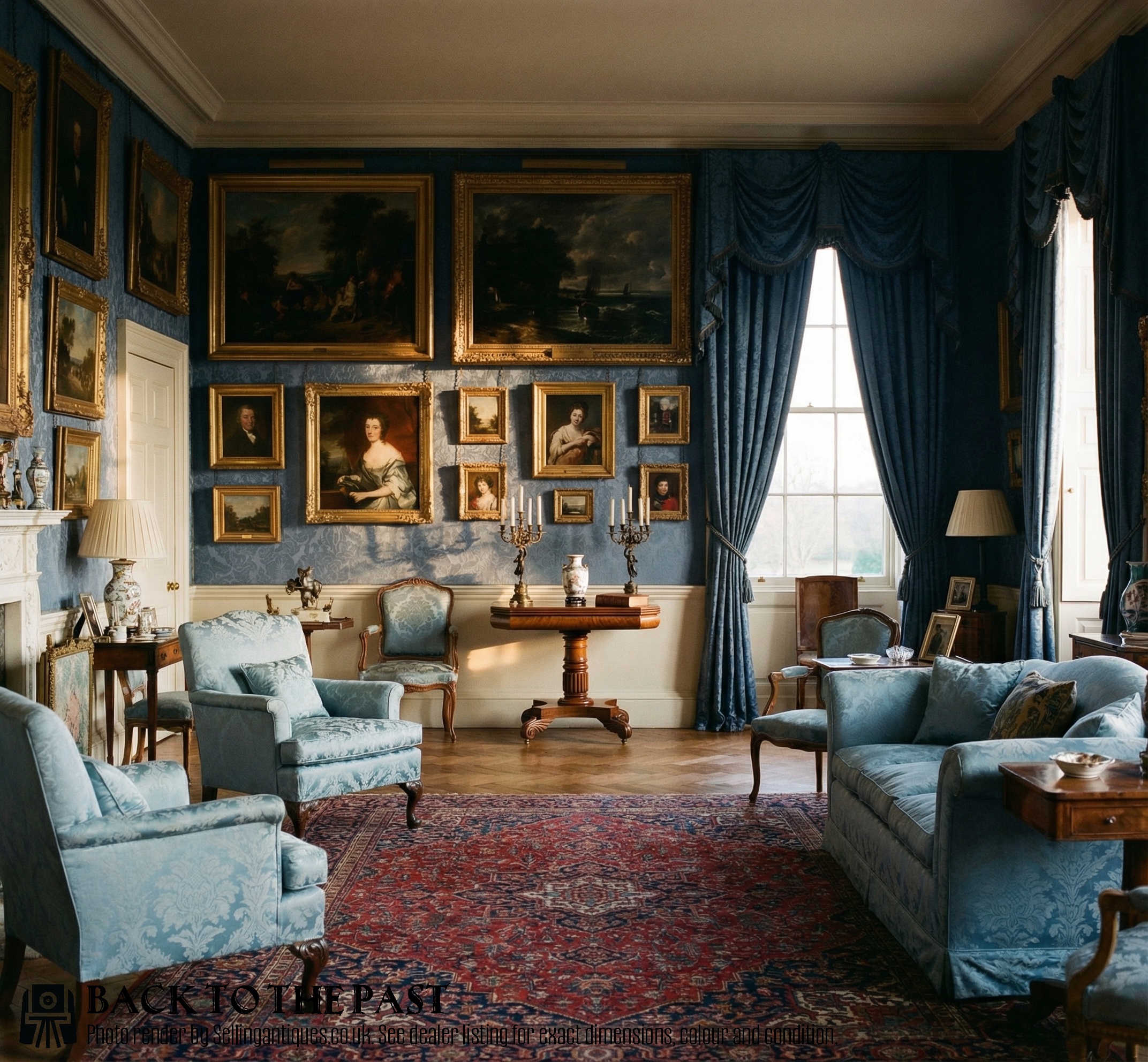
Regency Pedestal Tea Table
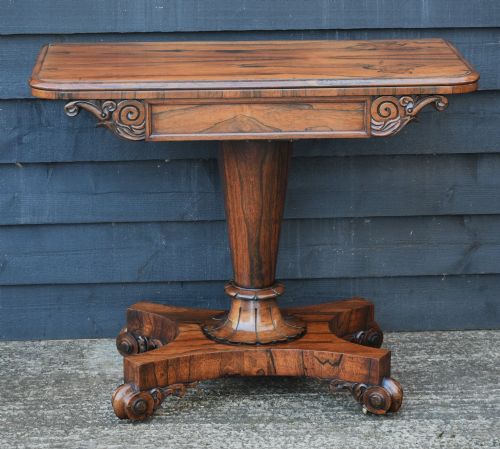
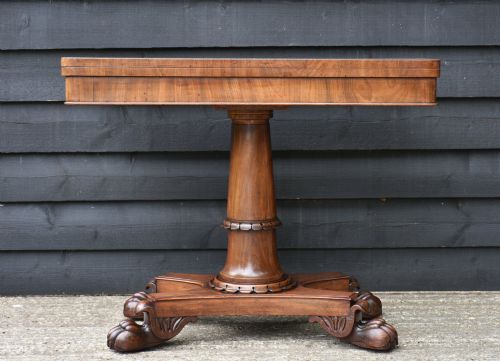
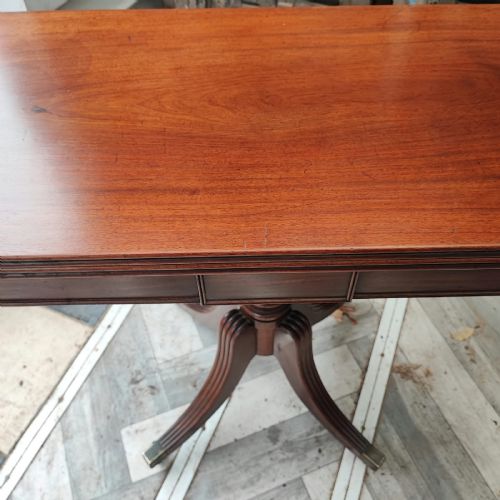
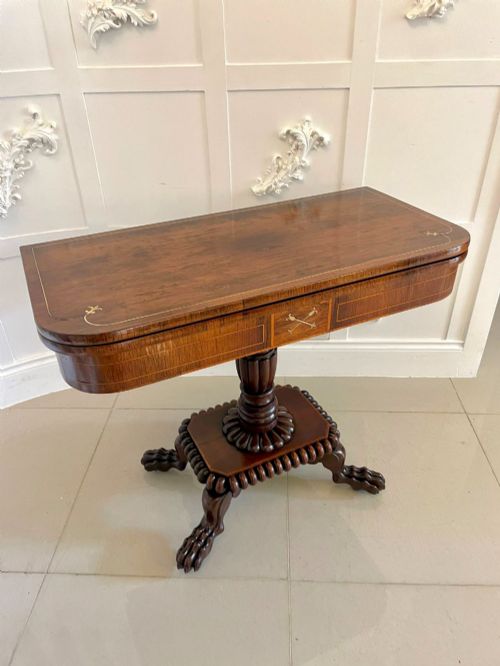
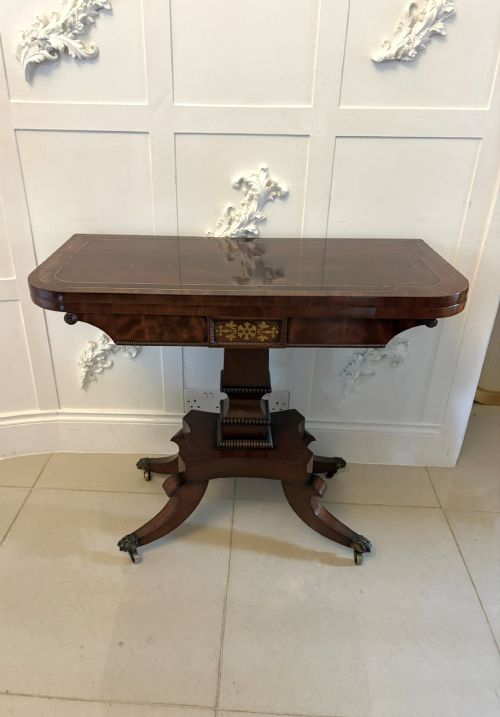
A regency pedestal tea table is primarily designed with a fold-over top, allowing the surface to double in size when opened for evening card games or dining. The pieces seen here span the Georgian, Regency, and William IV periods, alongside later revivals.
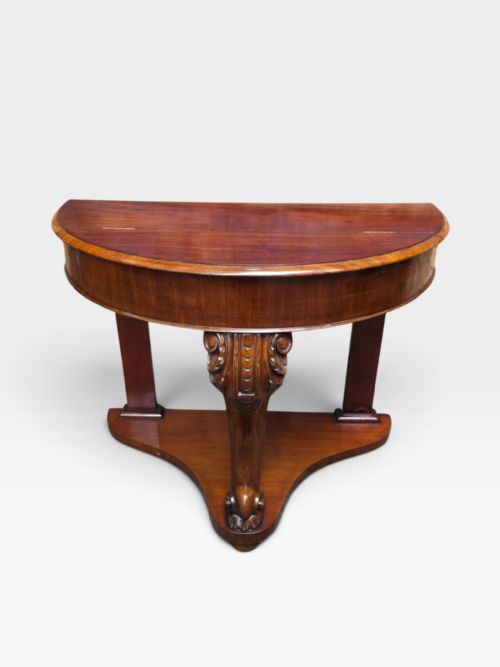
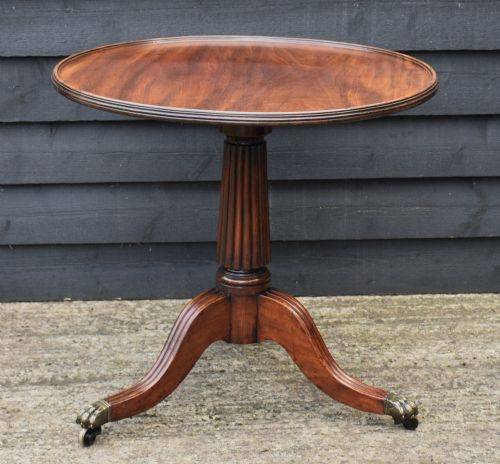
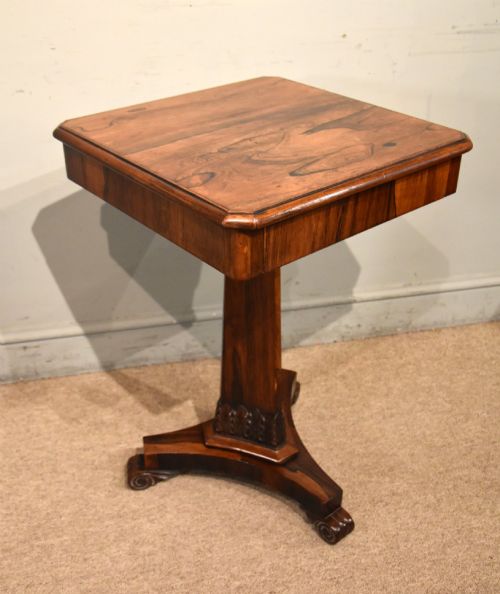
Most examples encountered on this page are constructed in rich timbers like mahogany and rosewood, often featuring a central pedestal base with splayed legs. Alongside standard tea tables, related forms such as card tables, console tables, and teapoys frequently appear under this category.
Materials and construction
Cabinetmakers utilised dense native and imported timbers, notably solid mahogany and rosewood, frequently applying flame mahogany veneer to achieve striking grain patterns on the folding tops. Contrasting details are introduced through satinwood inlay, ebony stringing, and elaborate brass marquetry.
The structural support relies on a robust central pedestal column attached to a platform or splayed legs, sometimes incorporating carved paw feet, scrollwork, or lyre shapes. Ormolu mounts and brass inlay further elevate the construction of finer examples.
Form variations include fold-over card tables, console tables, occasional tables, and sarcophagus-shaped teapoys resting on pedestal bases.
Indicators of quality
Superior examples distinguish themselves through the choice of timber and the precision of the cabinetwork, such as the symmetrical flow of figured mahogany veneer across the fold-over top. Finer pieces incorporate meticulous brass inlays, crisp carved details on the pedestal, and robust mechanisms for the tilt-top or folding action.
Lower-tier items display simpler construction with plain timber surfaces, less refined carving on the pedestal base, and simpler joinery. The presence of secondary decorative elements like ormolu mounts or elaborate satinwood and ebony stringing marks the distinction toward the upper end of the range.
George Bullock·Gillows
The Regency Pedestal Tea Table Glossary
- Teapoy
- A small box or chest mounted on a pedestal stand, originally designed to hold loose tea leaves and sugar. They often feature compartments inside for canisters.
- Console table
- A table designed to stand against a wall, frequently sharing similar proportions and pedestal bases with tea and card tables.
- Ormolu
- Gilded bronze used for decorative mounts and accents on furniture. It provides a bright metallic contrast against dark woods like rosewood and mahogany.
- Satinwood
- A durable, yellowish wood used for contrasting inlay and veneers on Regency furniture. It creates bright geometric borders on tabletops.
- Tilt-top action
- A mechanical hinge system allowing the tabletop to pivot vertically when not in use. This mechanism saves space in smaller rooms.
Regency Pedestal Tea Table: Frequently Asked Questions
How do I use a tea table?
These tables are designed with a fold-over top that swivels and opens to create a larger surface for tea service or card games. When closed, they sit compactly against a wall as a side table.
Position the table in a reception room where the hinged leaf can open fully without obstruction. The interior compartment beneath the fold-over top was historically used for storing playing cards or tea caddies.
What is a tilt-top mechanism?
The tilt-top mechanism allows the central surface to pivot from a horizontal tabletop to a vertical position secured by a brass catch. This allowed the furniture to be pushed against a perimeter wall when not in use.
Test the catch carefully to ensure the table locks securely into place when horizontal. The pivot block beneath the top should operate smoothly without excessive wobble.
Where should I place a pedestal table?
A pedestal table suits hallways, drawing rooms, or studies where its central column allows chairs to be tucked neatly around the base. Ensure the floor is level so the splayed legs distribute weight evenly.
Keep these tables away from direct heat sources and strong sunlight to protect delicate rosewood and mahogany veneers from warping or fading. Regular polishing with beeswax maintains the lustre of the timber.