
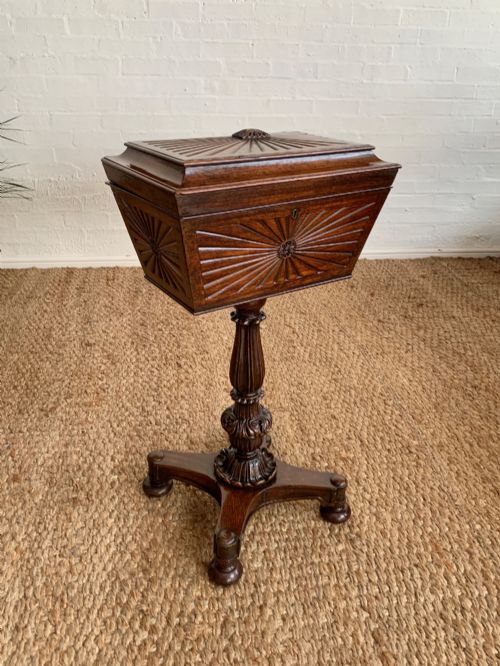


Regency Tea Caddy Pedestal
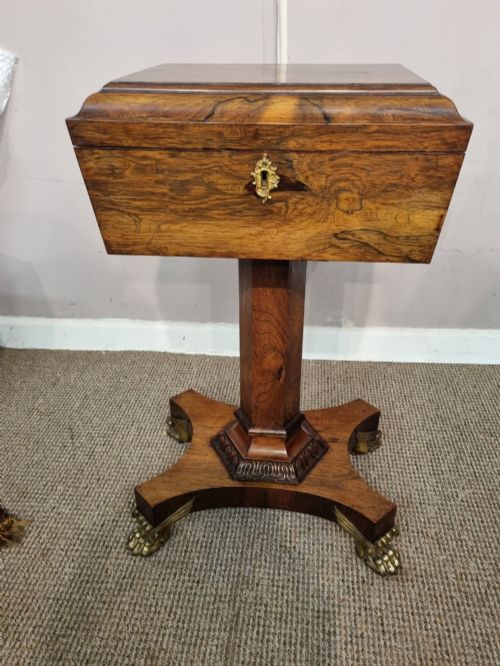
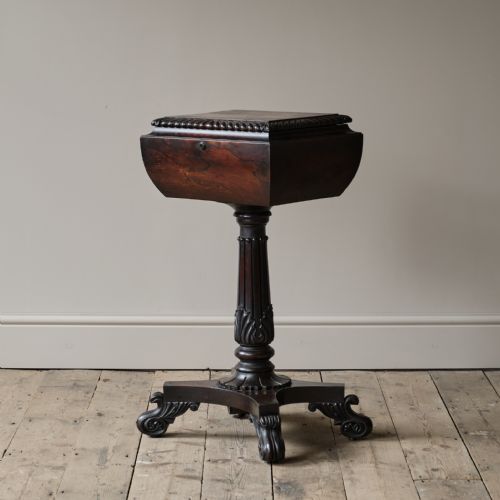
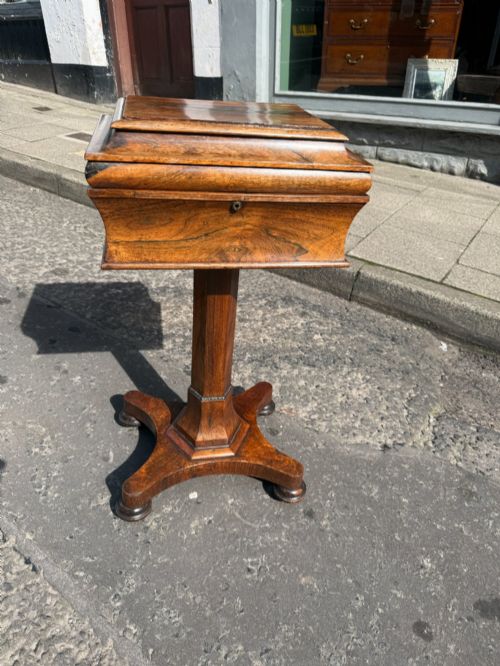
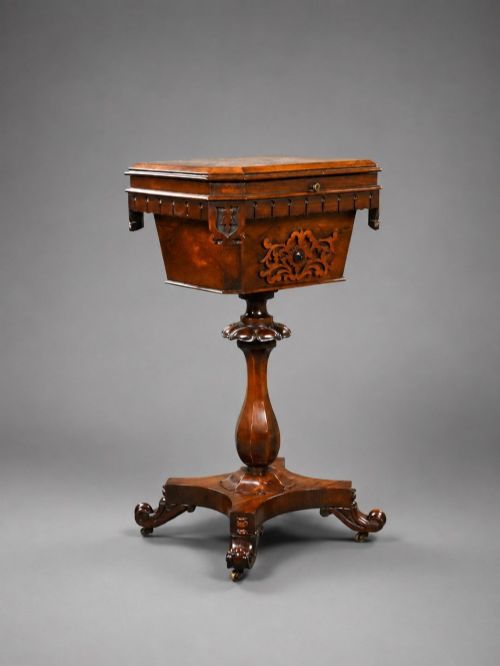
These pieces known as a regency tea caddy pedestal are freestanding tea caddies on stands that bring elegance to a drawing room.
Regency Tea Caddy Pedestal
A regency tea caddy pedestal, commonly designated as a teapoy or tea poy, is a substantial freestanding box mounted on a central pillar or supporting legs designed for the secure storage of tea. Most examples encountered here originate from the Regency, Georgian, and William IV periods, taking the form of sarcophagus-shaped boxes or refined tables.
The objects combine the functions of a tea chest and a small occasional table, frequently featuring internal caddies and mixing bowls alongside work box fittings. Makers shaped these pieces from dense tropical hardwoods, resting them upon robust pillars and carved feet.
How they were made
Cabinet makers utilised choice timbers such as rosewood and flame mahogany, often selecting burr maple and walnut for contrasting decorative veneers. Panels of solid mahogany and hardwood formed the structural carcasses, shaped with meticulous joinery to withstand the weight of heavy hinged lids.
Surface enrichment involved delicate brass inlay, sunburst carvings, and turned pillars. Metal components included cast brass feet and internal handles, while secondary timbers lined the interior compartments.
Listings feature rosewood, mahogany, and burr maple surfaces across pieces dated from the Georgian, Regency, and Victorian periods.
What varies in quality
Distinctions in quality rest upon the selection of timber veneers and the crispness of carved details like the sunburst motifs and pedestal feet. Finer workshops employed symmetrical flame mahogany and intricate brass marquetry that remain tightly adhered to the carcass.
Structural integrity of the central pillar and the alignment of internal compartments distinguish standard cabinet work from superior productions associated with known makers.
Gillows
The Regency Tea Caddy Pedestal Glossary
- Teapoy
- A freestanding pedestal table equipped with a lidded box for storing tea leaves, sugar, and mixing bowls. The form evolved during the Georgian and Regency eras from oriental prototypes.
- Sarcophagus
- A box shape featuring convex sloping sides reminiscent of ancient stone coffins. Cabinet makers adopted this classical outline for the lidded bodies of grand tea chests.
- Jardiniere
- An ornamental stand or container intended for holding plants or flowers. Certain examples in this category served dual purposes as tea containers or heating stoves.
- Sunburst carving
- A decorative radiating motif carved directly into the wood of the lid or pedestal base. This ornamental detail characterises William IV productions.
- Work box
- A fitted interior compartment designed to hold sewing implements, threads, and small personal items. Many teapoys incorporated these storage spaces alongside their primary tea functions.
Regency Tea Caddy Pedestal: Frequently Asked Questions
What is a teapoy?
A teapoy is a freestanding pedestal box used in the nineteenth century to store dry tea leaves safely away from humidity. These pieces combined the utility of a tea chest with the decorative presence of an occasional table.
Inside the lidded compartment, makers fitted removable canisters and glass mixing bowls for preparing different tea blends. The whole assembly rested upon a central pillar and stable feet.
How were they used in period homes?
Mistresses of the house kept valuable tea under lock and key within these pedestal chests in the drawing room. Guests gathered around while the tea was measured and mixed before brewing.
Some examples also served as work tables or spirits stands, holding sewing equipment or glassware for evening hospitality.
How do I tell Regency from William IV examples?
Regency pieces often display refined classical proportions, brass inlay, and rosewood veneers that emphasise clean architectural lines. The decorative vocabulary leans towards restrained elegance and delicate details. Ninteenth-century William IV items introduce heavier proportions, bolder sunburst carvings, and robust carved feet on the pedestal bases. The timber choice frequently shifts towards heavily figured mahogany.
Where should I place one in a modern room?
These pedestal boxes function effectively as standalone accent pieces beside a sofa or armchair in a sitting room. Their compact footprints allow them to stand independently without overwhelming surrounding furniture.
The flat top surface safely accommodates a small lamp or decorative object while preserving the historical character of the piece.