

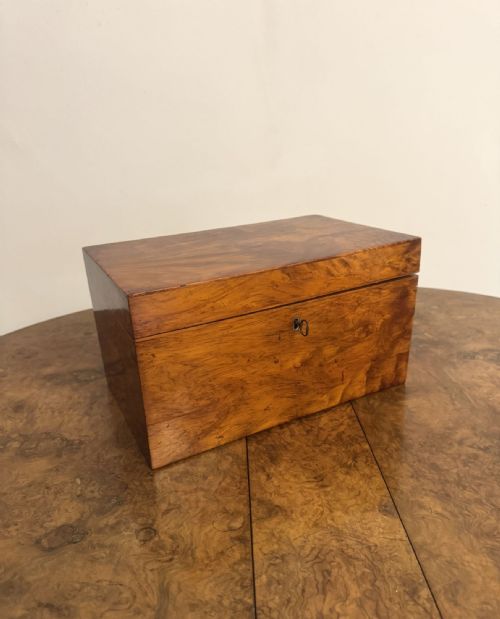


Georgian Tea Storage Chest
A georgian tea storage chest holds dry leaf securely while doubling as a refined table accessory.
Georgian Tea Storage Chest
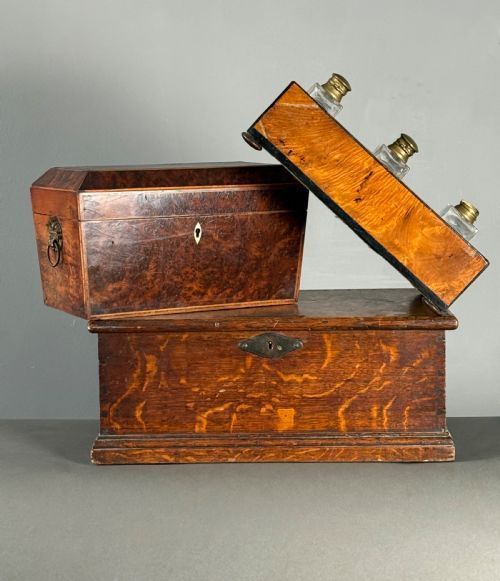
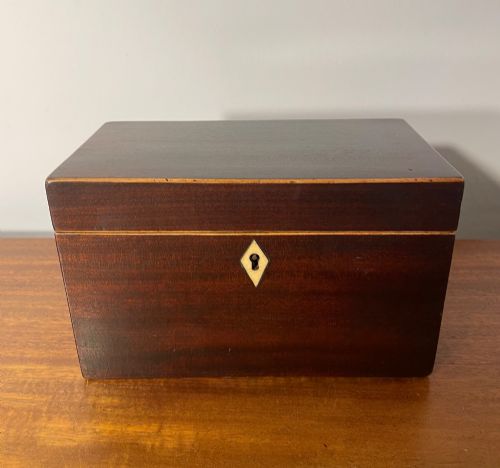
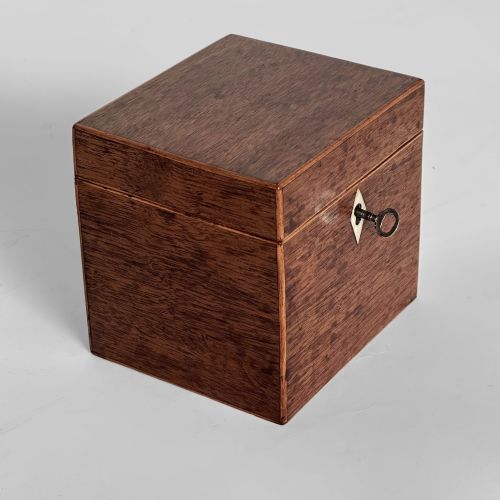
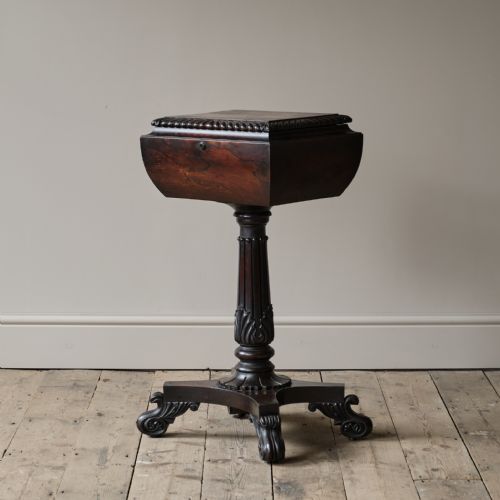
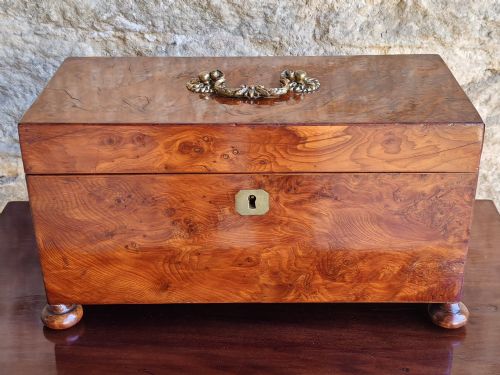
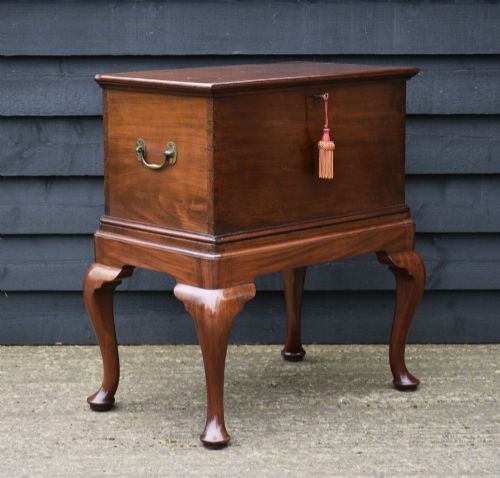
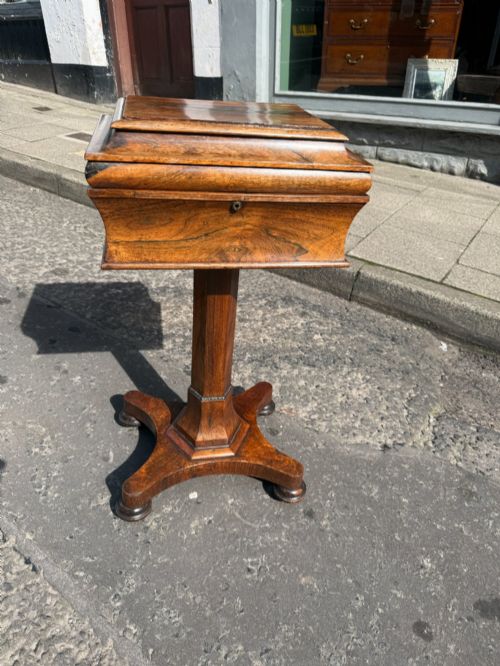
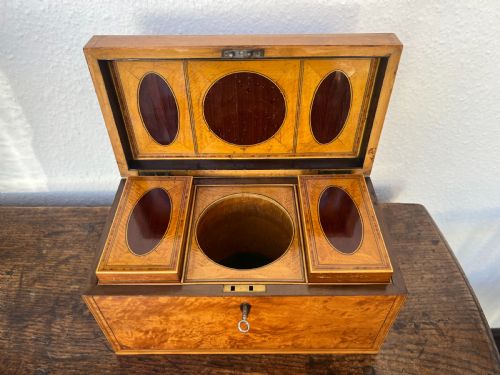
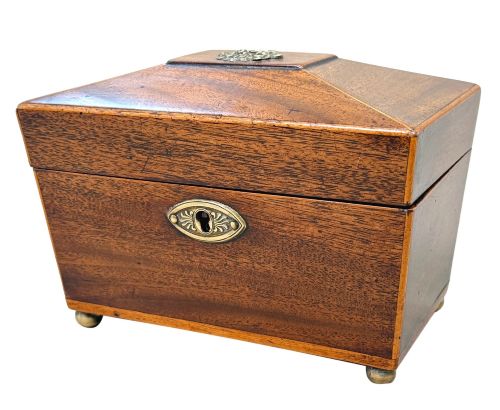
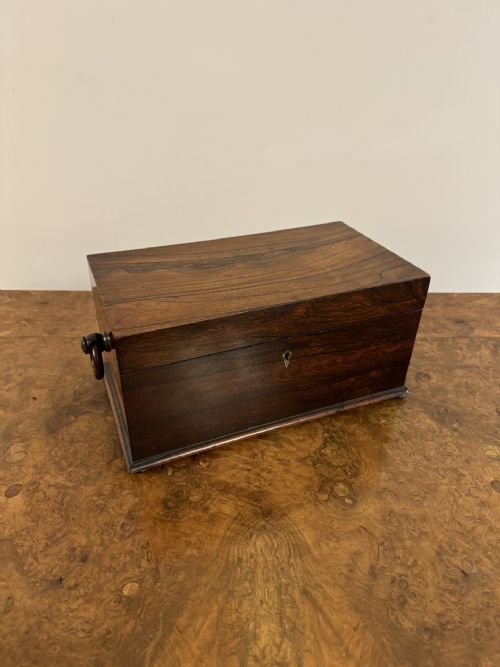
A georgian tea storage chest encompasses tea caddies, teapoys, and decorative wooden boxes originating predominantly from the eighteenth and nineteenth centuries. These pieces appear in rectilinear, oval, cube, and sarcophagus shapes, often designed with internal compartments or fitted with glass mixing bowls.
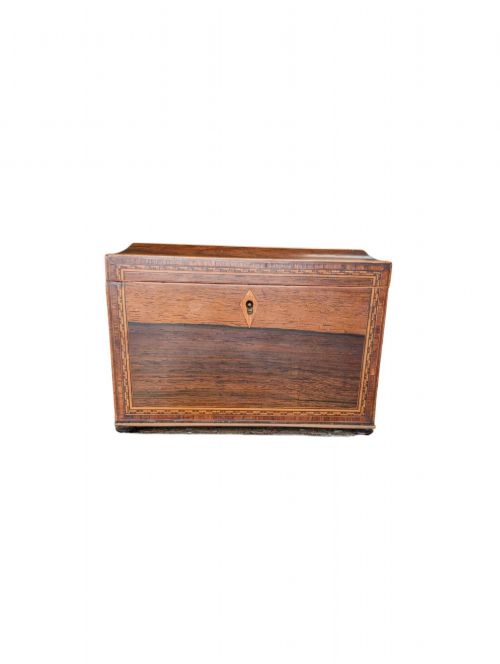
Mahogany, rosewood, and satinwood dominate the construction, accompanied by decorative treatments like star inlay, parquetry, and painted details. Examples range from compact desktop caddies to larger freestanding teapoys mounted upon stands.
Materials and construction methods
Cabinetmakers utilised dense timbers such as mahogany, walnut, and rosewood, frequently veneering them with burr yew, satinwood, amboyna, or coromandel to achieve decorative grain patterns. Bone, mother-of-pearl, tortoise shell, and boxwood provided contrasting stringing, escutcheons, and inlaid motifs.
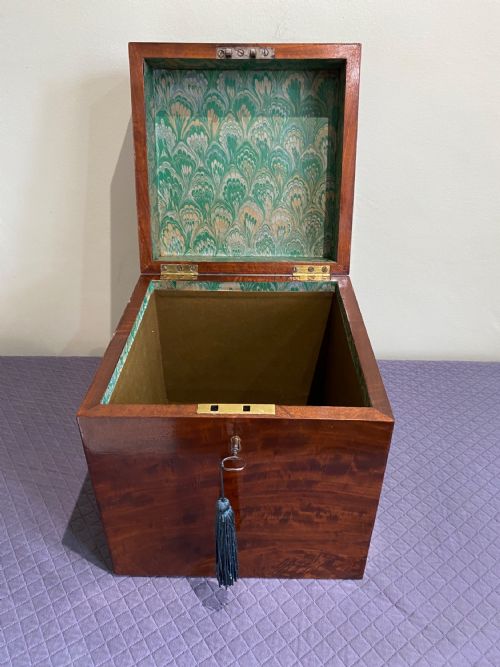
Joinery techniques included tight dovetailing for box carcasses and precise internal partitions designed to keep different tea varieties dry and separate. Metal elements such as brass locks, keyplates, and lion mask handles completed the secure storage units.
Current selections include pieces constructed from mahogany, rosewood, satinwood, burr yew, tortoise shell, and coromandel.
Evaluating standard and craftsmanship
The degree of refinement rests upon the choice of timber veneer, the precision of stringing and marquetry, and the survival of original internal fittings like glass bowls and mixing sticks. Elaborate forms such as sarcophagus shapes with parquetry inlay or burr yew surfaces demonstrate greater joinery skill than plain rectangular boxes.
The presence of functioning locks with matching keys, secret drawers, and undamaged inlay work separates standard utility containers from exceptional decorative examples.
The Georgian Tea Storage Chest Glossary
- Teapoy
- A freestanding piece of furniture featuring a tea storage box mounted on a pillar and base, sometimes incorporating a table top.
- Sarcophagus
- A distinct burial-chest-inspired form with a sloping lid and often resting on paw feet, popular during the Regency period.
- Tunbridge Ware
- Small wooden items decorated with intricate mosaic patterns made from tiny wood blocks of various natural colours.
- Stringing
- Thin lines of contrasting wood inlay used to outline the edges and geometric panels of a box.
- Escutcheon
- A protective metal plate surrounding a keyhole, frequently cast in brass to match the box handles.
Georgian Tea Storage Chest: Frequently Asked Questions
How were these boxes used?
Tea was a costly commodity in the Georgian era, so owners kept their leaves locked away inside these chests to control access and preserve aromas.
The host would unlock the chest in the drawing room to measure out the leaves, sometimes utilising an integrated glass bowl to blend different teas before brewing.
How do I care for a wooden tea caddy?
Keep wooden tea chests away from direct sunlight and fluctuating radiator heat to prevent the delicate veneers and boxwood stringing from drying out and lifting.
Maintain the surface by dusting gently with a dry cloth and occasionally applying a suitable wax to nourish antique timbers like mahogany and rosewood.
How can I tell the period of a caddy?
Dating relies on observing the primary woods, hardware styles, and construction shapes characteristic of the eighteenth and nineteenth centuries. Rectilinear satinwood and mahogany boxes frequently point to earlier Georgian decades, whereas rosewood sarcophagus forms with brass lion mask handles typically indicate the Regency era.