


Mahogany Tea Caddy Table
These mahogany tea caddy tables are compact storage pieces built for entertaining, offering collectors a refined focal point for period drawing rooms.
Mahogany Tea Caddy Table
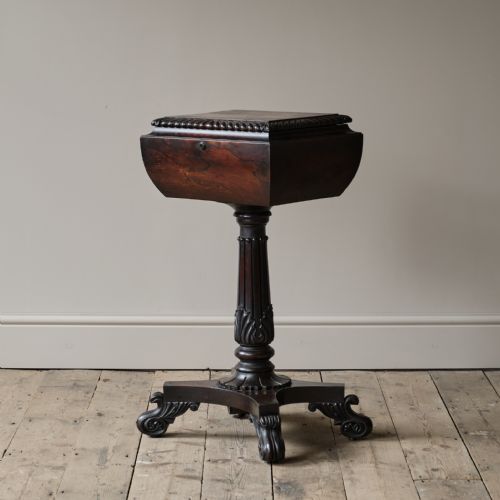
A mahogany tea caddy table is a dedicated piece of furniture designed to house and display expensive dry leaf tea during the Georgian, Regency, and Victorian eras. These containers sit securely upon dedicated stands or pillar bases, frequently taking the form of a sarcophagus box or a tailored teapoy.
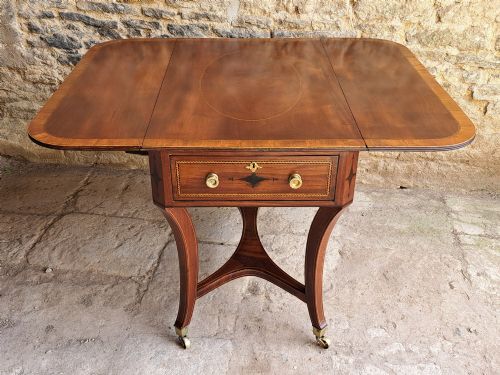
Buyers browsing this selection encounter pieces originating from the 19th century, including George III, Regency, William IV, and Victorian iterations. Formats range from freestanding occasional tables and Pembroke tables to dedicated side tables with integrated internal compartments.
The most common examples on this page are sturdy mahogany teapoys standing on carved feet or central pedestals. Regional variations also appear, including Scottish and Irish workshops.
How they were made
Cabinet makers constructed these tables primarily from solid mahogany and figured flame mahogany, utilising rich timber veneers to create striking visual depth on the lids and panels. Selected examples incorporate contrasting light wood stringing or inlay work such as satinwood.
Structural elements frequently feature brass hardware, including decorative drop handles, lock escutcheons, and caster feet on the pillar bases. Joinery methods of the period ensured the internal tea canisters and mixing bowls remained protected within the lidded top boxes.
Listings span the Georgian, Regency, William IV, and Victorian periods, utilising solid mahogany, flame mahogany, brass, and satinwood.
What varies in quality
The distinction between standard workshop production and high cabinet-making lies in the choice of timber and the crispness of the carved detail. Highly figured flame mahogany and precise joinery elevate a piece beyond basic utility.
Attribution to prominent cabinet makers or documented Dublin and Lancaster workshops adds significant interest for collectors. The integrity of the internal compartments and the originality of the brass mounts also influence the standing of an individual table.
Strahan·Gillows
The Mahogany Tea Caddy Table Glossary
- Teapoy
- A pedestal table featuring a lidded box on top, originally used for storing and dispensing loose tea. This term is frequently used interchangeably with tea caddy table in nineteenth-century cabinet work.
- Sarcophagus
- A monumental box shape with a domed or sloping lid, resembling an ancient stone coffin. Cabinet makers adopted this classical silhouette for grand Regency and Georgian tea containers.
- Pembroke table
- A drop-leaf table with hinged flaps on two opposing sides, designed for versatile placement in polite rooms. Certain examples incorporate tea storage provisions.
- Flame mahogany
- A highly figured timber grain pattern resembling flickering flames, created by cutting across the bough of the tree. Makers reserved this veneer for the most prominent exterior surfaces.
Mahogany Tea Caddy Table: Frequently Asked Questions
What is a mahogany tea caddy table?
A mahogany tea caddy table is a lidded container mounted on a stand, built to store valuable tea leaves safely away from damp air in historic parlours.
These pieces combine furniture and storage, functioning as both a decorative side table and a secure tea chest.
How were teapoys used in period homes?
Hosts kept precious tea leaves locked inside the top box to control consumption and prevent servants from taking the expensive dry goods.
Guests gathered around the drawing room while the host unlocked the caddy to mix different blends using internal canisters and mixing bowls.
How do I date a mahogany teapoy?
Dating relies on observing the overall silhouette, furniture style, and secondary timbers used in the construction of the stand and internal boxes.
George III and Regency examples display classical proportions and pillar bases, while later Victorian pieces often feature heavier carved feet.
Where were these tables made?
Cabinet makers produced these pieces across England, Scotland, and Ireland during the Georgian and Victorian periods.
Regional workshops utilised local preferences for carving and timber selection, occasionally leaving stamps or attribution marks.