
Caddy on Stand
A caddy on stand brings together portable storage and dedicated elevation, offering refined containment for tea, bottles, or desk items.
Caddy on Stand
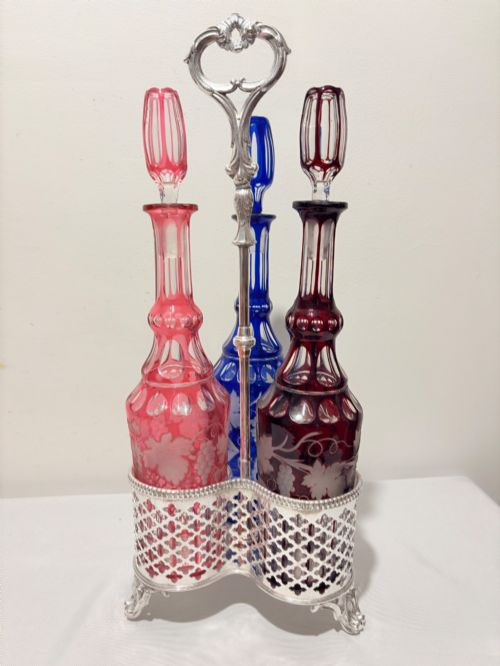
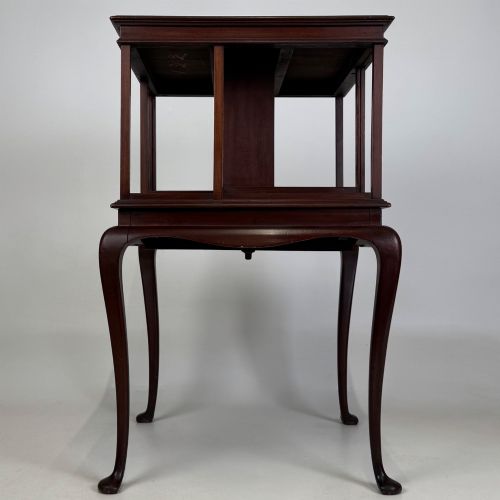
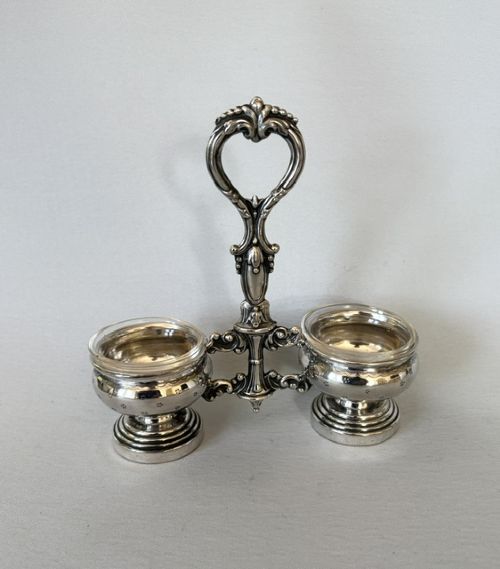
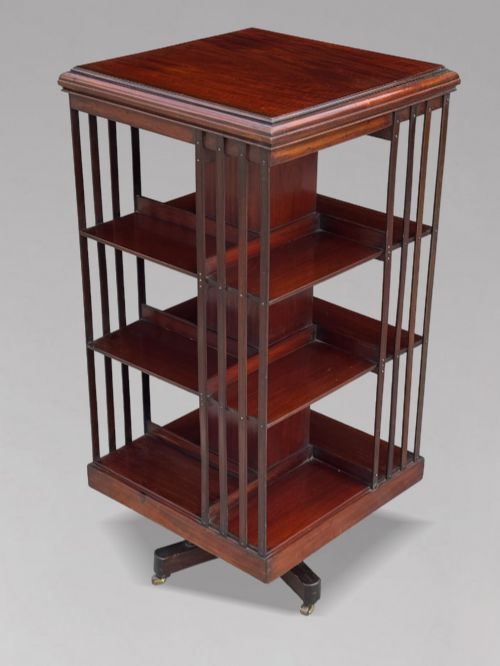
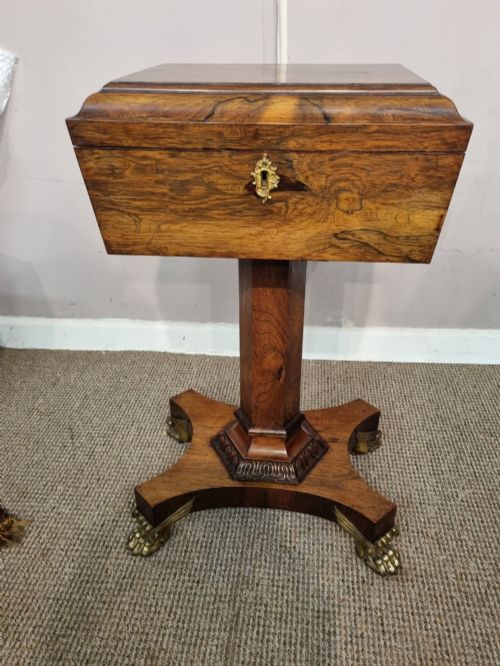
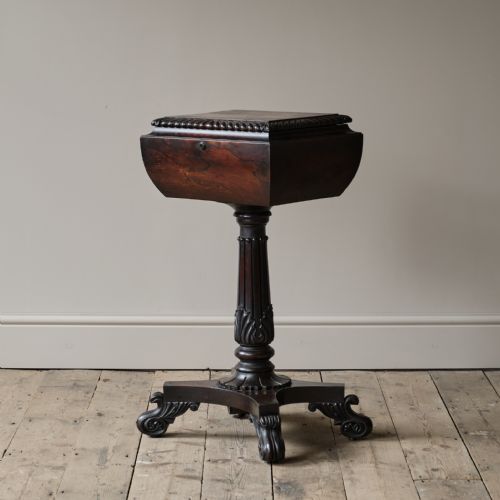
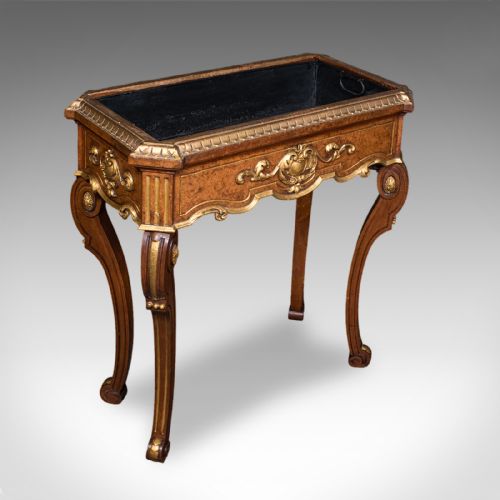
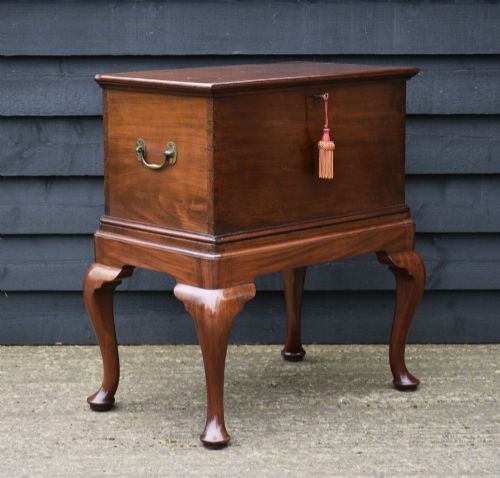
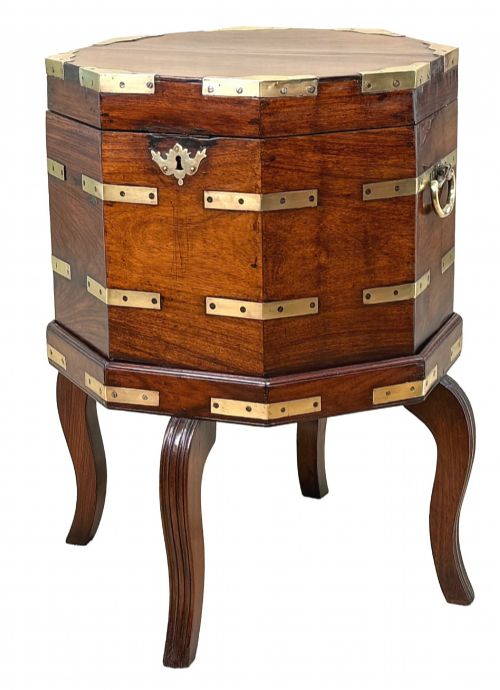
When you search for a caddy on stand, you encounter elevated containers designed to hold tea, wine, or household accessories off the floor or table surface. The selection spans distinct forms, including Regency teapoys in fine rosewood, George III mahogany cellarettes, and table-standing condiment or bottle holders.
The most common examples on this page date from the Georgian, Regency, and Edwardian periods, frequently constructed in mahogany, rosewood, oak, or silver plate with cut glass. These pieces range from substantial cellar-level wine coolers to compact desk stands and tabletop cruet sets.
Originating as practical items for wealthy households, these stands combine fitted interior compartments with robust supporting frames. Whether taking the form of a sarcophagus-shaped box on tapering legs or an oak tantalus fitted with crystal decanters, each piece serves a specific organising purpose.
How they were made
Cabinetmakers utilised dense timbers such as mahogany, padouk, walnut, and rosewood, often applying careful joinery and inlay to accent the grain. Metal elements incorporate cast brass for mounts and handles, alongside silver plating on base frames and bottle rims.
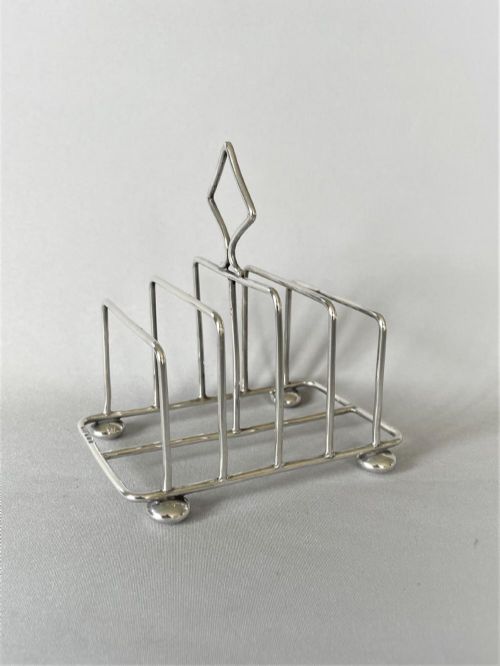
Glass components rely on heavy cut crystal and cranberry flashed glass, shaped into bottles, bowls, and decanters designed to fit snugly into partitioned frames. Silverwork appears in both sterling and plated forms, shaped into toast racks, condiment stands, and caddy spoons.
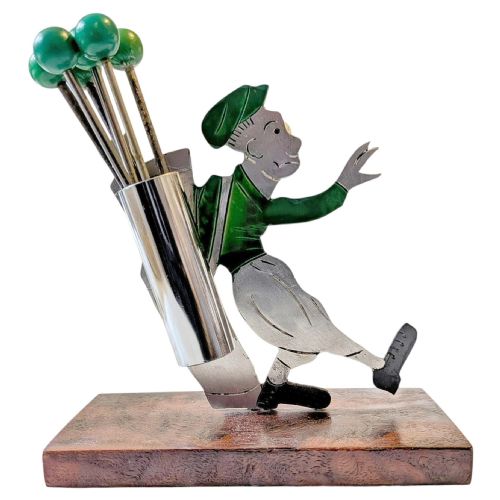
One exceptional French piece captures an Art Deco comical golfer man holding cocktail sticks inside his caddy.
What varies in quality
The standard of a caddy on stand rests upon the crispness of the cabinetwork, the weight of the timber, and the original integrity of the fitted interior. Superior examples retain their partitions, original brass hardware, and matching cut glass components without replacement.
Refinement shows in the subtlety of the veneer work, the thickness of the silver plate over base metals, and the balance of the supporting stand. Pieces bearing identifiable workshop attribution or superior joinery display a distinct grade of craftsmanship above standard utilitarian storage boxes.
Gillows·Mappin Brothers·Sudre
The Caddy on Stand Glossary
- Teapoy
- A small stand or table featuring a lidded box on top, designed to hold tea leaves and mixing bowls. These containers kept expensive tea secure under lock and key.
- Cellarette
- A lockable container used for storing wine bottles, frequently fitted with internal divisions and set upon a fixed stand or legs. They kept vintages close at hand in the dining room.
- Tantalus
- A locking beverage stand that holds decanters in place within a wooden frame, preventing the removal of bottles without a key. The design allowed hosts to display spirits securely.
- Cruet set
- A matched collection of glass bottles for vinegar, oil, and condiments, held within a silver-plated or metal frame fitted with a central carrying handle.
- Padouk
- A heavy, durable tropical hardwood with a reddish hue, utilised in fine eighteenth-century cabinetmaking for its rich colour and stability.
Caddy on Stand: Frequently Asked Questions
What is a teapoy?
A teapoy is an elevated lidded box designed specifically for storing and preparing tea leaves within the entertaining rooms of a house.
These pieces typically feature internal caddies and mixing bowls, standing securely upon a pillar, pedestal, or four-legged frame.
How were cellarettes used?
Cellarettes served as secure storage for wine bottles near the dining table before built-in sideboards became common.
Lined interiors and fitted dividers kept heavy glass bottles stable and protected during feasts in large houses.
What is a tantalus?
A tantalus is a beverage holder featuring a wooden frame and a locking metal bar that secures the necks of decanters.
This clever mechanism displayed expensive spirits while teasing guests by keeping the contents physically locked away.
Are cruet sets removable?
Cruet sets consist of individual glass bottles that lift freely out of a shared metal or silver-plated stand.
The metal framework incorporates a central loop handle, allowing the entire assortment of condiments to travel around the table together.