

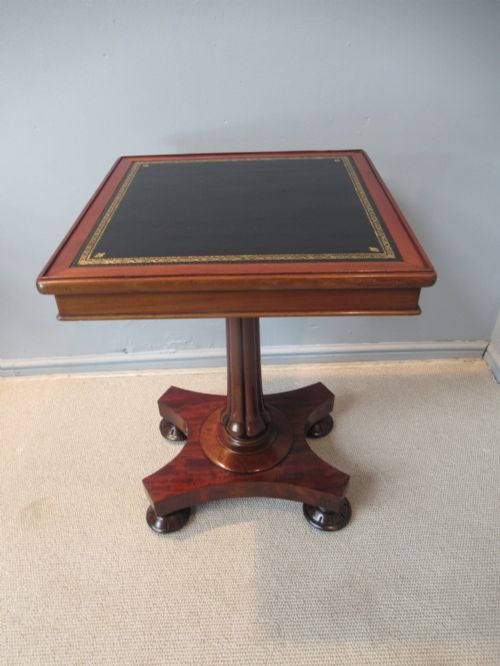


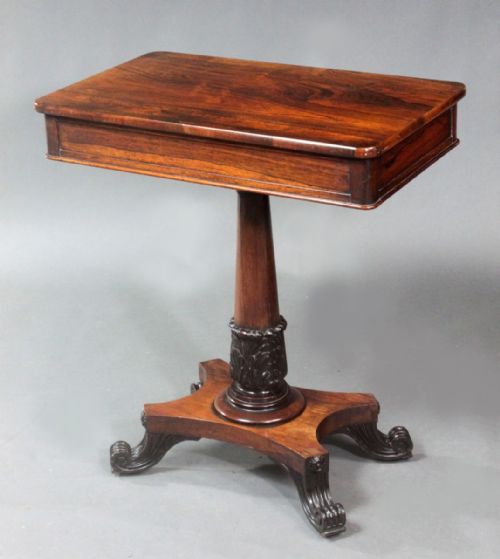


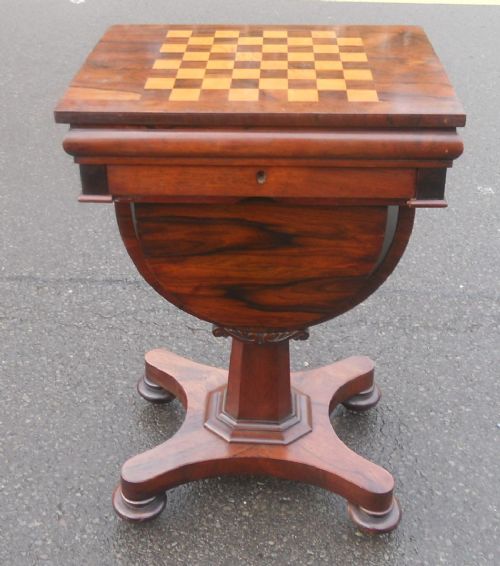


Quadform Base Side Table
These quadform base side table examples offer a sturdy support and rich timbers, making them a practical addition to any sitting room.
Quadform Base Side Table
A quadform base side table brings together a cluster of compact tables designed for functional use in nineteenth-century interiors. These pieces appear primarily across Georgian, Regency, William IV, and Victorian periods.
Mahogany and rosewood dominate the material palette, accompanied by padouk and oak. Many examples utilise a pedestal or four-way support structure beneath the timber top.
How they were made
Cabinetmakers worked dense hardwoods such as mahogany, rosewood, and padouk, often shaping them into solid tops or applying fine veneers over timber carcases. Brass fittings and gold leaf accents appear on selected pieces to highlight structural details.
Surfaces occasionally incorporate leather inserts or intricate inlay work to create decorative contrast against the dark wood grain. Folding mechanisms and pedestal columns required precise joinery to ensure stability during daily use.
Quadform Base Side Table Retail Price Guide 2026
Typical asking prices for quadform base side table among the pieces listed under this phrase on Sellingantiques today, from the lower quarter to the upper quarter. They describe what is for sale here now, not the wider market.
Some tables double as reading desks with double-sided surfaces, perfect for sharing the morning news.
What varies in quality
The choice of timber significantly dictates the standard of a piece, with figured rosewood and dense mahogany representing the higher tier of production. Rich grain patterns and select pollard oak veneers indicate a greater initial cost.
Construction details such as the integration of double-sided reading surfaces, metamorphic actions, or crisp inlay work separate standard tables from more ambitious workshop commissions.
The Quadform Base Side Table Glossary
- Occasional table
- A small, movable table intended for intermittent use around a room. These pieces serve various functions from lamp stands to tea placement.
- Fold-over table
- A table equipped with a hinged top that opens to double the surface area. This mechanism frequently conceals a green cloth interior for card games.
- Padouk
- A heavy, durable tropical hardwood with a distinctive reddish-brown colour. Cabinetmakers valued it for its strength and fine finish.
- Dumb waiter
- A tiered freestanding piece of furniture used for serving food or holding objects. It allows items to sit near a table without requiring extra surface space.
Quadform Base Side Table: Frequently Asked Questions
What is a quadform base side table?
A quadform base side table is a nineteenth-century support piece featuring a four-sided or four-way pedestal design beneath a timber top.
These tables were built in forms such as occasional, card, and work tables using woods like mahogany and rosewood.
How were card tables used?
Card tables served as multi-purpose furniture that remained closed against a wall until evening social gatherings.
Owners unfolded the top to reveal a baize or leather playing surface for games.
Which woods are most common?
Mahogany and rosewood appear most frequently across these listings, alongside padouk, oak, and pollard oak.
These dense timbers provided the durability required for nineteenth-century domestic use.
What is a work table?
A work table is a specialised nineteenth-century piece designed for needlework and small domestic tasks.
These tables often incorporate internal compartments or fabric bags beneath the top for storage.