
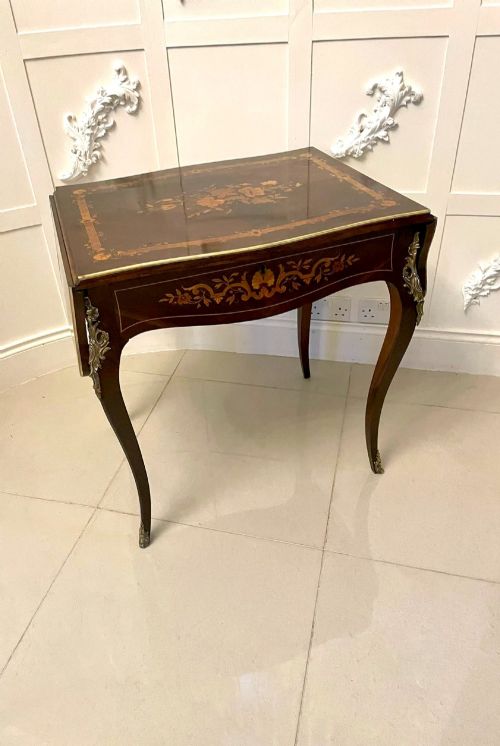
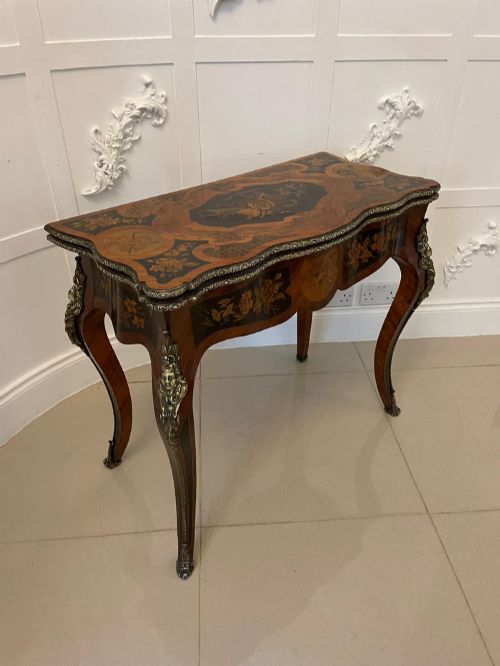

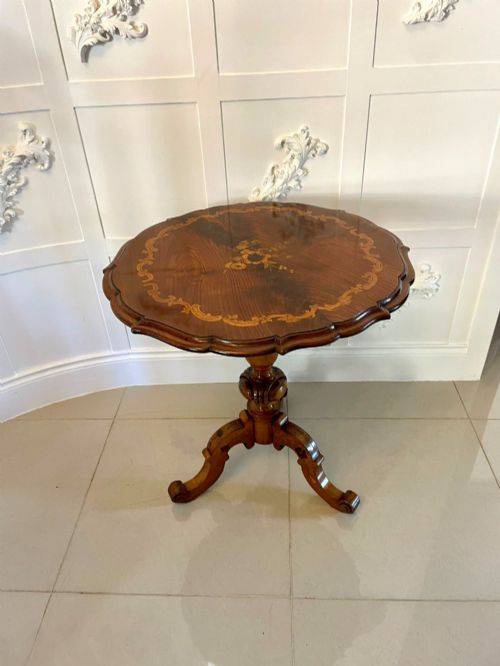
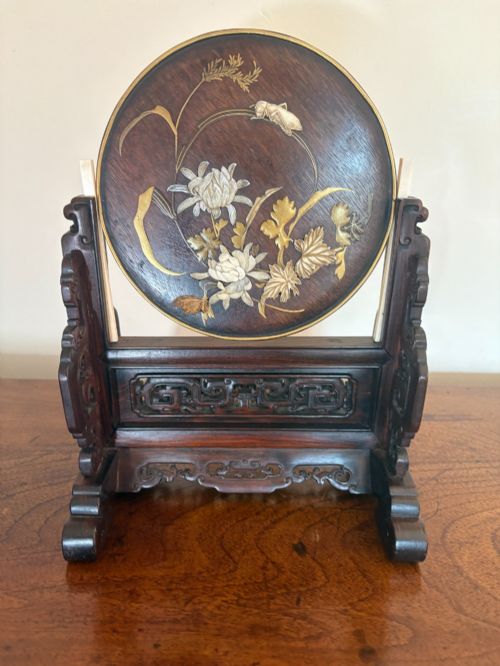
Floral Inlay Table
These floral inlay table examples bring centuries of marquetry craftsmanship into a room.

Understanding the floral inlay table
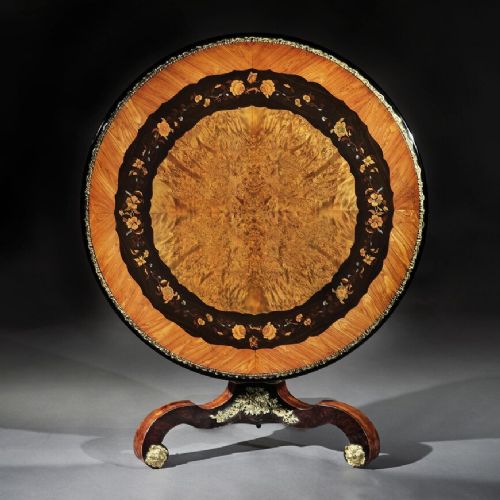
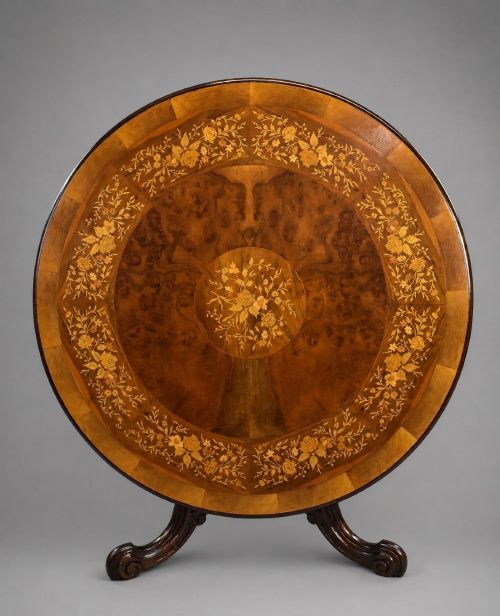
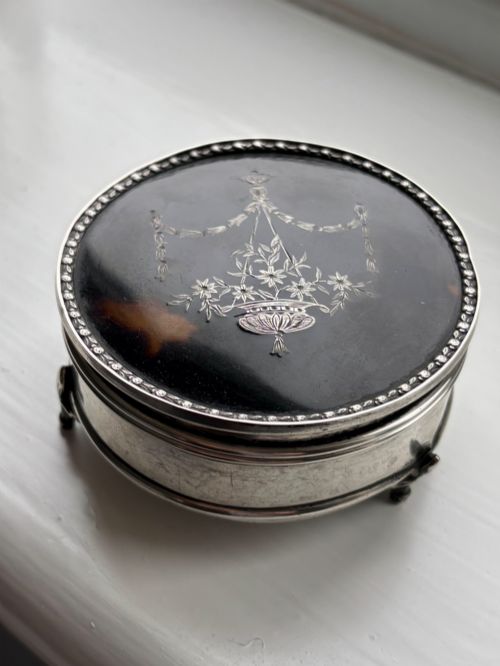
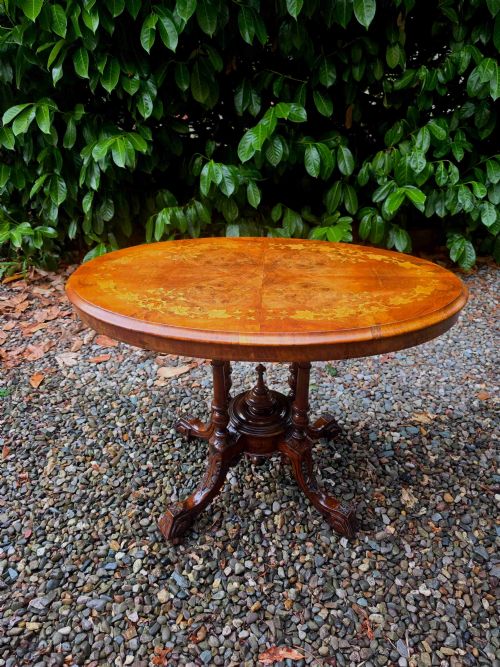
A floral inlay table combines practical furniture forms with intricate botanical woodwork, providing a decorative surface for daily use or formal display. Buyers seeking a floral inlay table will encounter several distinct periods, with Victorian examples appearing alongside items from the eighteenth century and the Edwardian era.
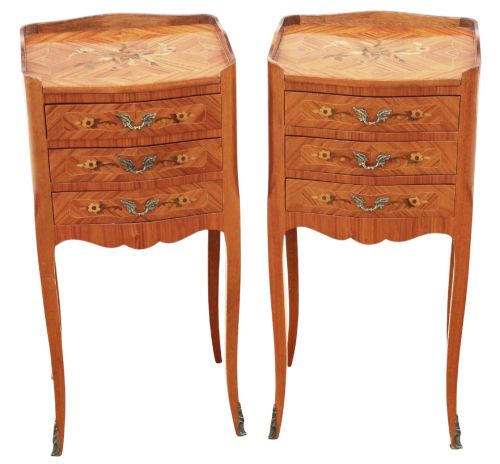
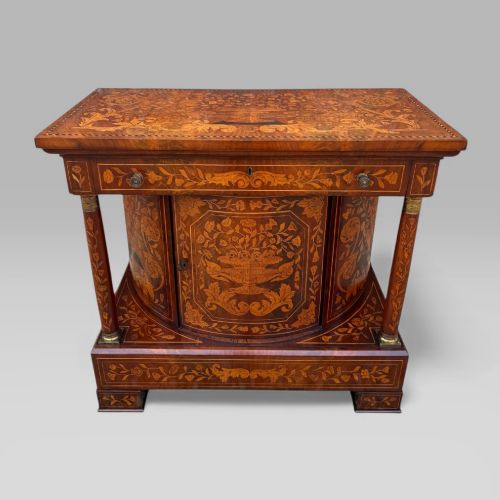
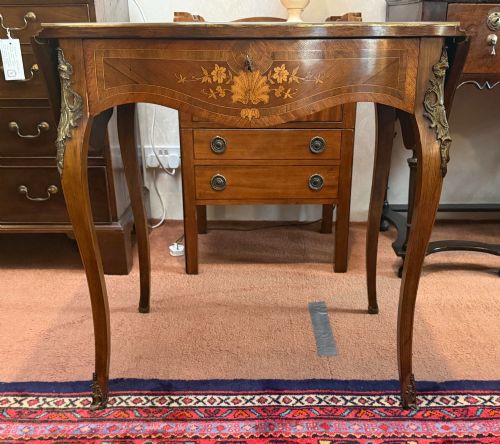
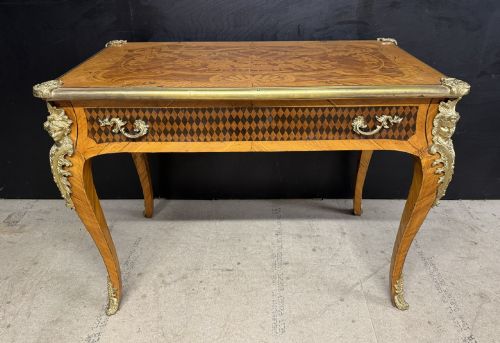
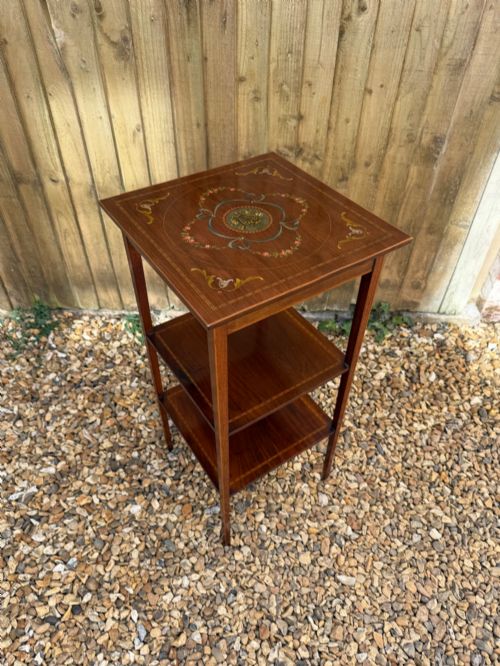
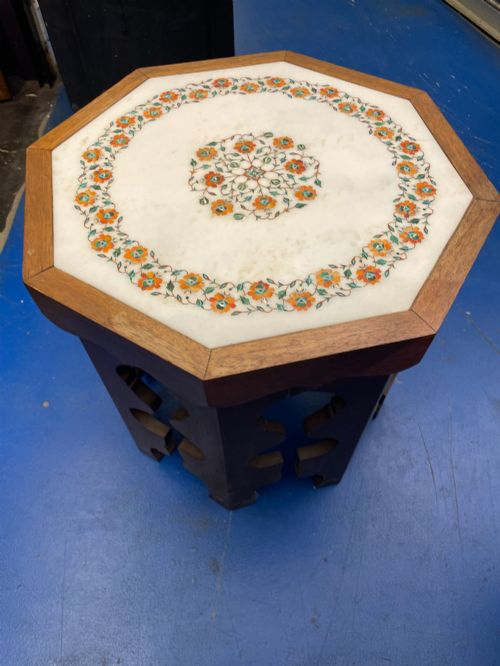
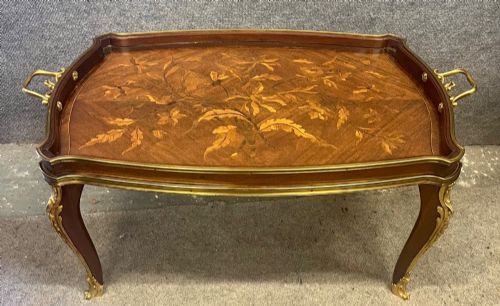
The objects on this page span various traditional furniture types, including centre tables, side tables, desks, games tables, dining tables, and architects tables. These pieces originate from different design traditions, ranging from Dutch Baroque and French Louis XV style to Louis XVI revival and standard Victorian aesthetics.
Burr walnut and standard walnut form the primary foundations for many pieces, often enhanced by elaborate marquetry patterns. Buyers are most likely to meet Victorian burr walnut centre tables and side tables on this page, alongside eighteenth-century Dutch walnut serpentine forms.
Materials and construction
Cabinet makers utilised walnut, burr walnut, rosewood, and fruitwood as the primary timber foundations for these tables. Marquetry techniques involved cutting thin sheets of veneer and intricate inlays to form botanical motifs.
Retail Price Guide 2026
Typical UK retail prices for floral inlay table, calculated from the Sellingantiques database of over a million retail prices indexed since 2003. This retail price guide relies exclusively on Sellingantiques data; no external sources or auction records are used, so the figures do not describe the wider market.
Listings feature walnut, burr walnut, rosewood, and fruitwood alongside boxwood inlay and brass elements.
Judging quality in floral marquetry
Quality rests upon the precision of the marquetry and the choice of timber figure, such as highly figured burr walnut or rich rosewood. Superior examples demonstrate seamless integration between the inlay and the surrounding veneer across complex forms like serpentine curves.
The sophistication of the design tradition dictates the character of the piece, distinguishing restrained domestic items from ambitious French Louis XV style pieces or Dutch Baroque interpretations. Maker attribution, as seen in signed works, further separates standard production from exceptional cabinet making.
John Kendal
The Floral Inlay Table Glossary
- Marquetry
- A technique where pieces of veneer are applied to a structure to form decorative patterns and pictures. This method creates the botanical motifs seen on the surface.
- Burr walnut
- Timber taken from the wart or burl of a walnut tree, yielding highly swirled grain patterns. It provides a dramatic background for floral inlay.
- Serpentine
- A furniture outline featuring a curving line that bends inward and outward. This shape appears on eighteenth-century Dutch examples.
- Bobbin legs
- Furniture supports turned to resemble a string of bobbins or spools. This style appears on Edwardian side tables.
Frequently Asked Questions
What periods do these tables come from?
The pieces span the eighteenth century, the Victorian era, and the Edwardian period. Specific dates include around seventeen fifty and eighteen eighty.
Cabinet making styles shifted across these eras from Dutch Baroque and French influences to distinct British Victorian interpretations.
How were the floral patterns created?
Craftsmen used marquetry techniques, cutting various woods and veneers to form floral designs. Boxwood inlay and fruitwood details provided contrasting tones for petals and leaves.
Timbers such as walnut, burr walnut, and rosewood formed the dark background surfaces that made the lighter floral inlays stand out.
Where should I place a centre table?
Centre tables are designed to stand free in a room rather than against a wall, allowing the marquetry top to be viewed from all sides. They serve as prominent decorative surfaces in reception spaces.
Care should be taken to place them away from direct sunlight and excessive heat sources to protect the delicate veneer and inlay.
How do I distinguish eighteenth-century pieces?
Eighteenth-century examples often exhibit Dutch walnut marquetry with characteristic serpentine fronts and architectural or games table configurations. The integration of the woodwork reflects earlier baroque sensibilities.
Later Victorian items tend to utilise burr walnut and rosewood with different leg structures and revival styles.