

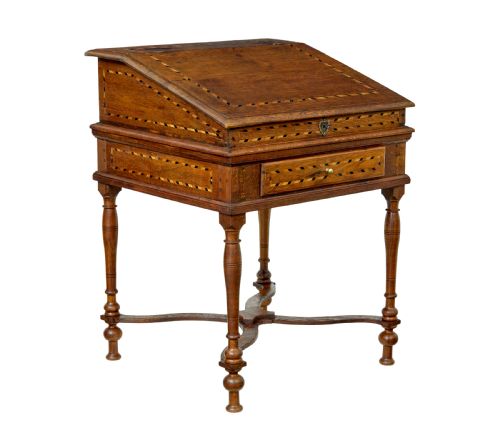
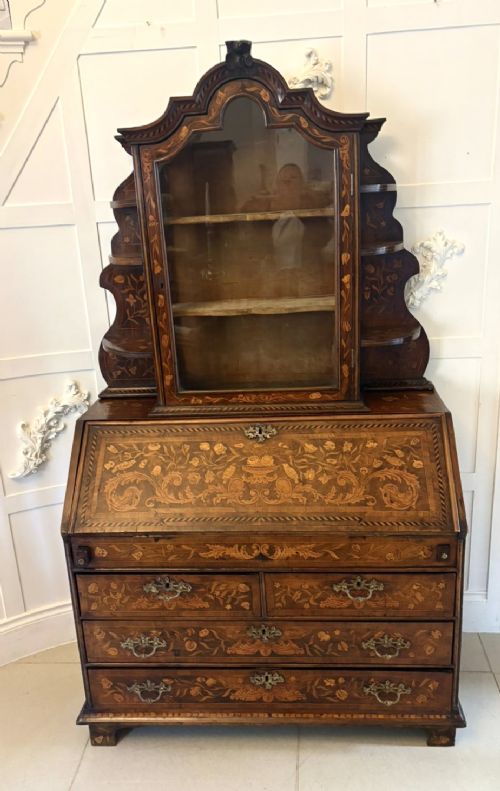
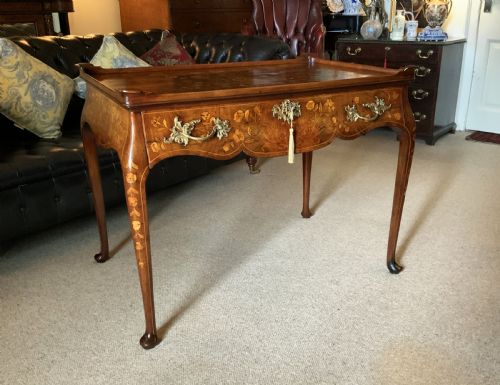


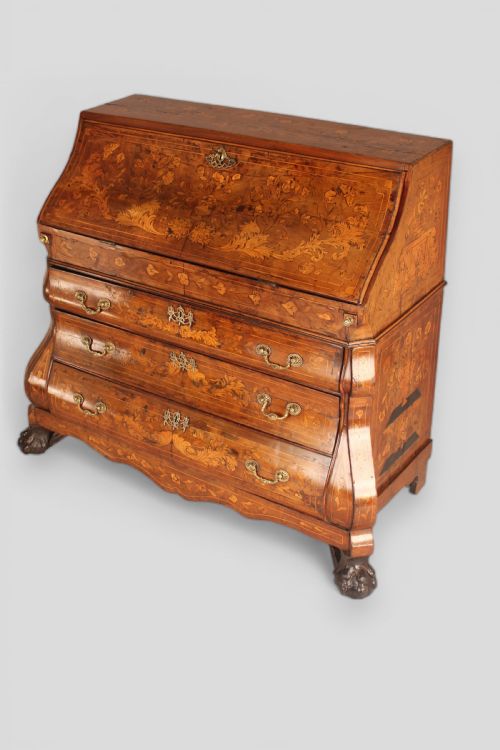
Dutch Marquetry Desk
A Dutch marquetry desk brings rich floral inlay and figured timber into a room, offering a functional workspace wrapped in Continental craftsmanship.
Identifying Dutch marquetry desk
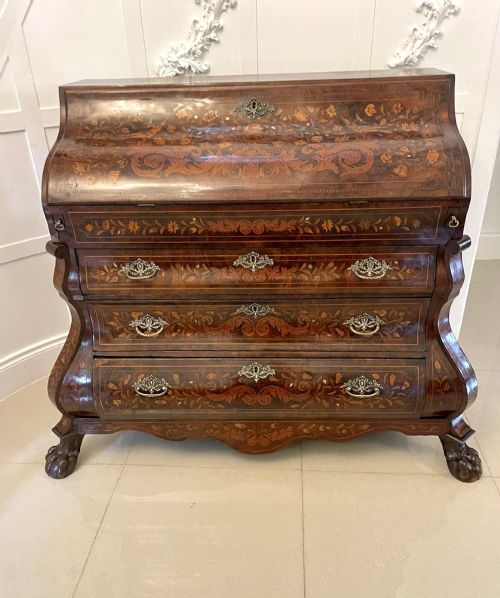
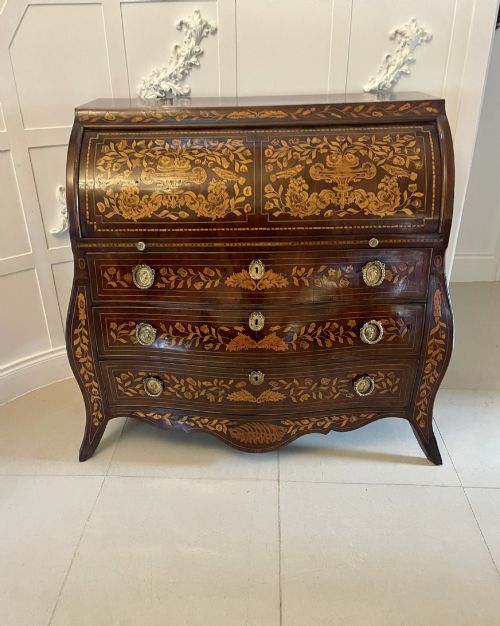
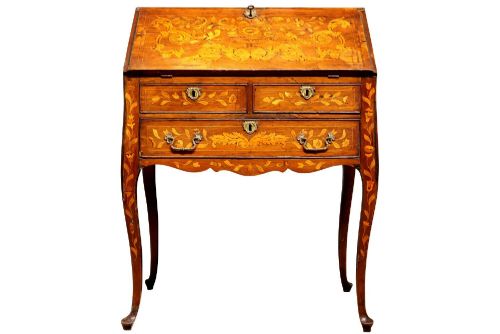
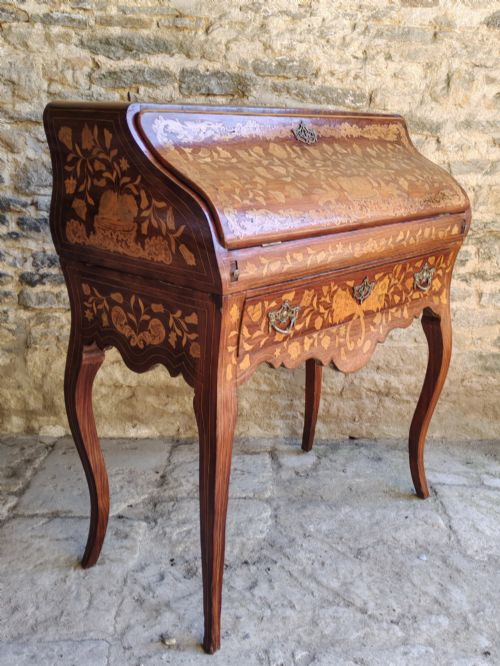
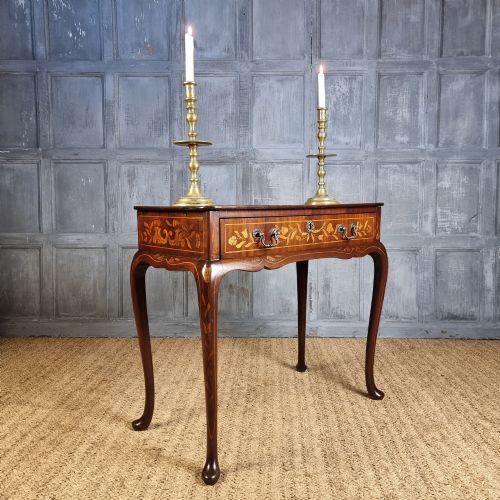
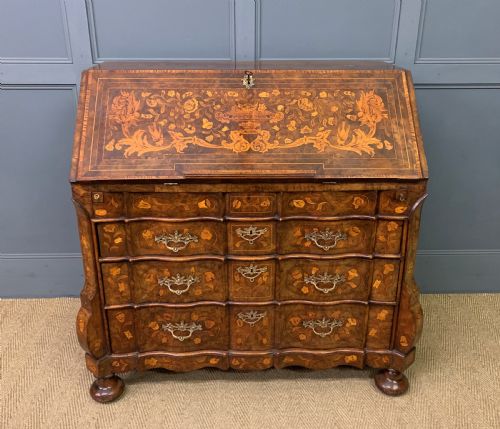
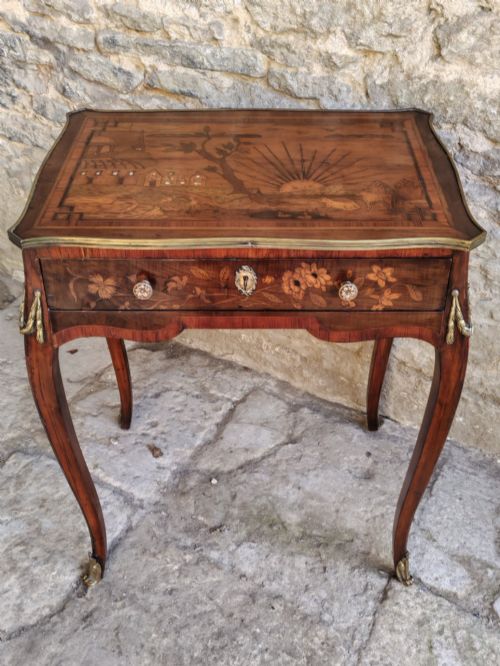
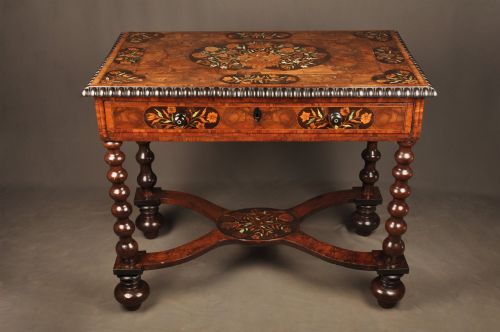
A Dutch marquetry desk combines intricate floral and figural veneer work with practical writing furniture. Buyers encounter forms ranging from bureau bookcases and cylinder desks to partners desks and freestanding centre tables.
The pieces span the eighteenth century, the nineteenth century, and the Georgian era, reflecting sustained European demand for heavily inlaid furniture. Regional styles include Dutch Baroque and traditional Dutch cabinetmaking.
Surviving examples encompass specialised writing forms, such as escritoires, abattants, and architects tables, alongside associated seating like inlaid armchairs. Walnut, mahogany, and satinwood frequently form the primary structure for these elaborate decorative schemes.
Construction and Materials
Craftsmen built these pieces using solid timbers like walnut, oak, and mahogany as a carcase, overlaid with finely sliced fruitwood veneers. Marquetry inlay required hand-cutting contrasting woods to form floral sprays, urns, and scrolling foliage.
Makers integrated specialised writing surfaces, often incorporating fitted interiors with pigeonholes and small drawers behind cylinder fronts or sloping lids. Brass hardware, including handles and escutcheons, complemented the dense surface patterning.
Retail Price Guide 2026
Typical UK retail prices for dutch marquetry desk, calculated from the Sellingantiques database of over a million retail prices indexed since 2003. This retail price guide relies exclusively on Sellingantiques data; no external sources or auction records are used, so the figures do not describe the wider market.
Some marquetry patterns include meticulously shaded flower petals created by scorching individual wood pieces in hot sand before gluing them down.
Assessing Quality
Quality rests in the precision of the veneer cutting and the natural shading of the fruitwoods, which gives petals and leaves a three-dimensional depth. Superior examples maintain crisp outlines in the marquetry without excessive use of filler or indistinct engraving.
The structural integrity of the carcase and the retention of original brass fittings distinguish finer items from heavily altered pieces. The complexity of the desk form, from a simple bureau to a double-sided partners table, influences the overall architectural ambition.
The Dutch Marquetry Desk Glossary
- Marquetry
- Decorative veneer work arranged in pictorial patterns using various coloured woods. This technique covers the entire visible surface of the desk.
- Escritoire
- A tall writing cabinet featuring a drop-front desk panel concealing internal compartments. It provides vertical storage alongside a compact writing surface.
- Abattant
- A wall-mounted or freestanding tall cabinet with a vertical drop-front writing flap. It shares similarities with the escritoire.
- Cylinder desk
- A writing desk featuring a rolling curved wooden shutter that conceals the writing surface and interior pigeonholes. This mechanism protects the desk contents when closed.
- Partners desk
- A large pedestal desk designed to be used from both sides simultaneously. These pieces feature drawers and cupboards accessible from opposite faces.
Frequently Asked Questions
What is a dutch marquetry desk?
A Dutch marquetry desk is a piece of antique writing furniture decorated with detailed inlaid wooden veneers, typically featuring floral and botanical motifs. These items encompass various forms including bureaus, cylinder desks, and partners tables from eighteenth and nineteenth-century periods.
Cabinetmakers utilised contrasting timbers like fruitwood, walnut, and satinwood to create pictorial designs across the writing flaps, drawers, and sides. Each piece serves as both a functional workspace and a decorative surface.
How do I date a dutch marquetry desk?
Dating relies on examining the underlying construction timber, the style of the brass hardware, and the complexity of the furniture form. Pieces range from eighteenth-century Baroque examples to nineteenth-century interpretations.
Secondary woods inside the drawers and the thickness of the veneer panels provide additional clues regarding the period of manufacture. Stylistic shifts between Georgian proportion and later nineteenth-century revivals help narrow the decade of origin.
Where were these desks placed?
These desks traditionally occupied reception rooms, libraries, and private studies in affluent homes where fine furniture displayed status. Freestanding forms like centre tables and partners desks stood in the middle of rooms rather than against walls.
Sloping bureaus and abattants sat against perimeter walls to maximise floor space while keeping writing materials close at hand. Their decorative inlay ensured they added visual interest from every angle.
How should I care for inlaid wood?
Inlaid wooden surfaces require stable humidity and temperature conditions to prevent the fruitwood veneers from lifting or cracking. Keeping the furniture away from direct sunlight preserves the natural colours of the dyed and shaded woods.
Polishing with appropriate wax maintains the sheen of the timber without damaging the delicate lines of the marquetry. Regular dusting prevents particulate buildup in the engraved details of the floral patterns.