


Marquetry Slant Front Desk
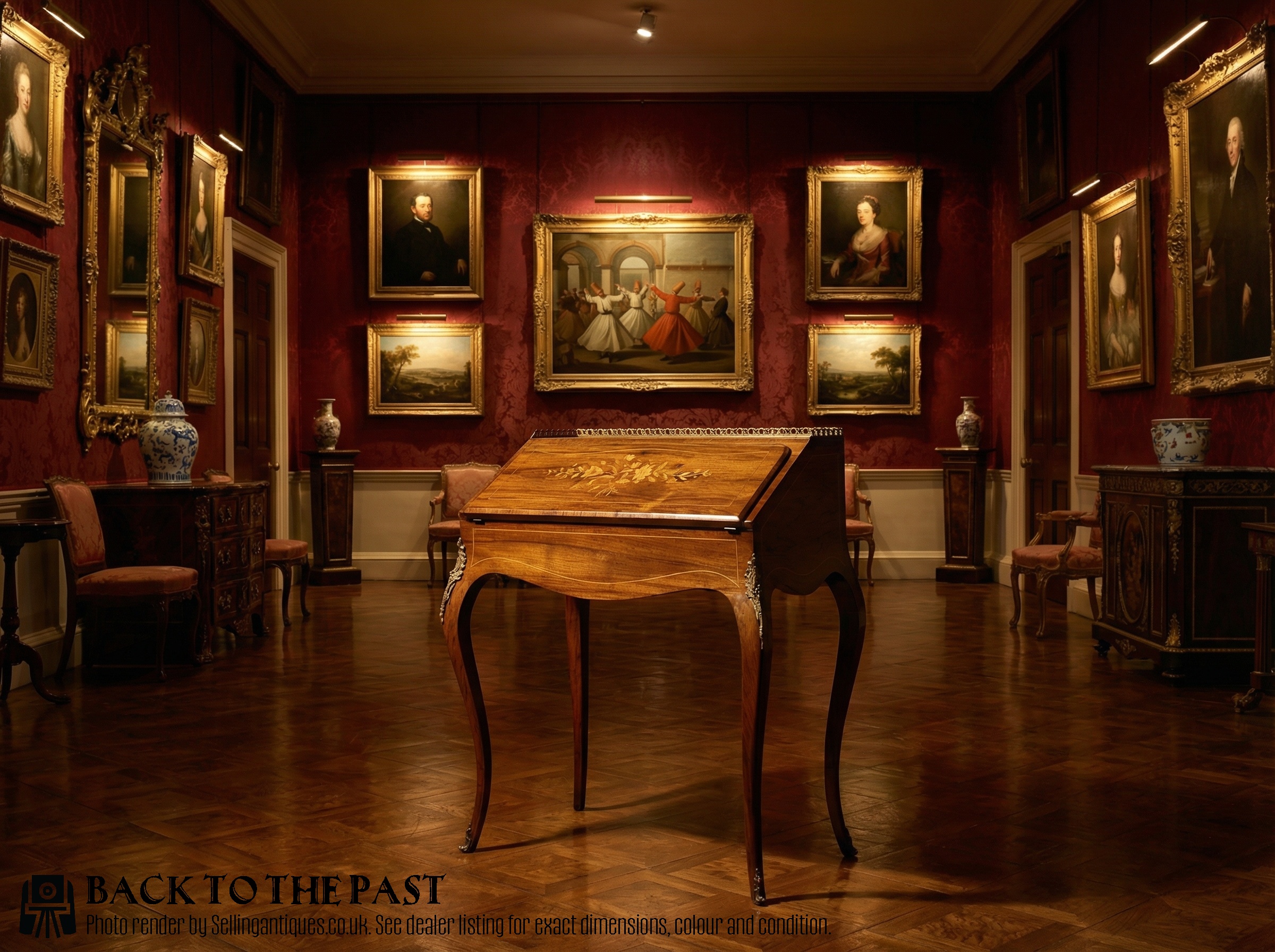
A marquetry slant front desk brings intricate floral woodwork and a practical hinged writing flap into any room with undeniable presence.
Understanding the Marquetry Slant Front Desk
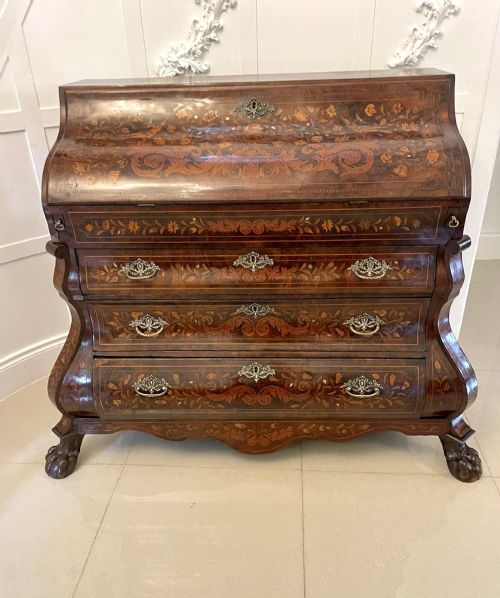
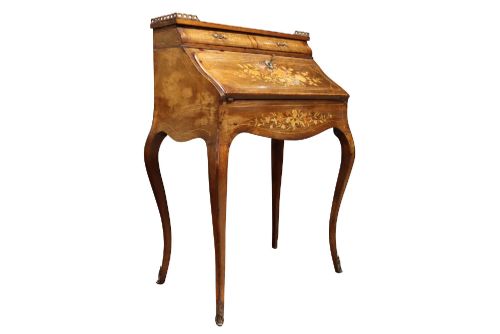
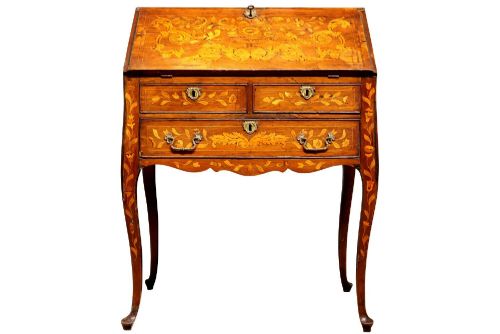
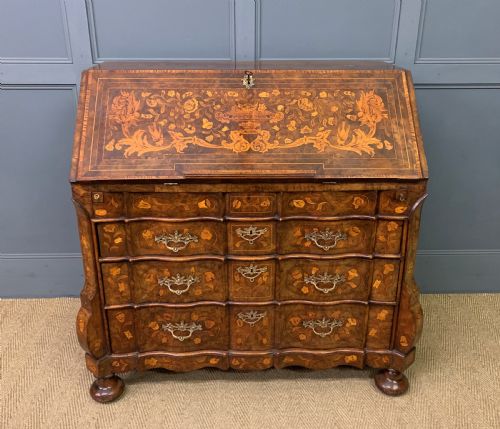
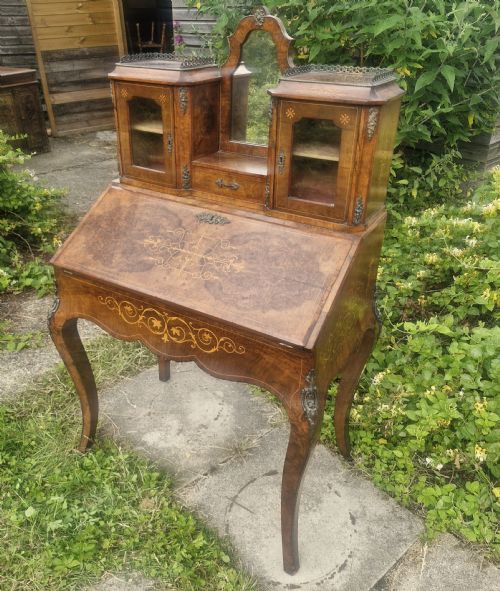
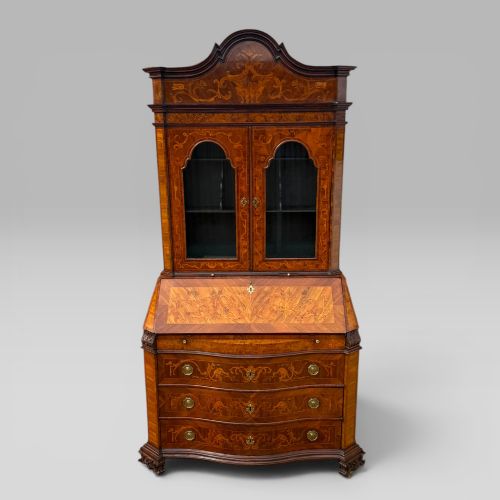
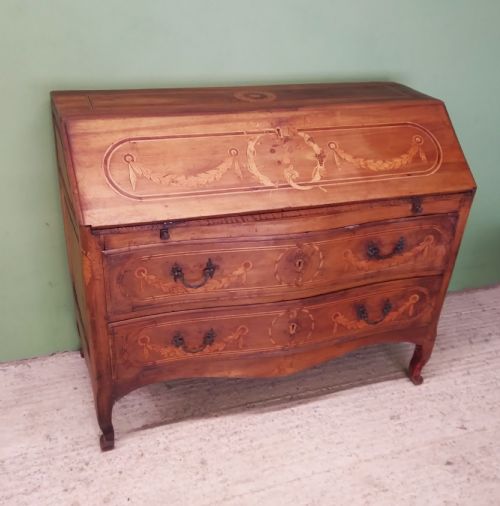
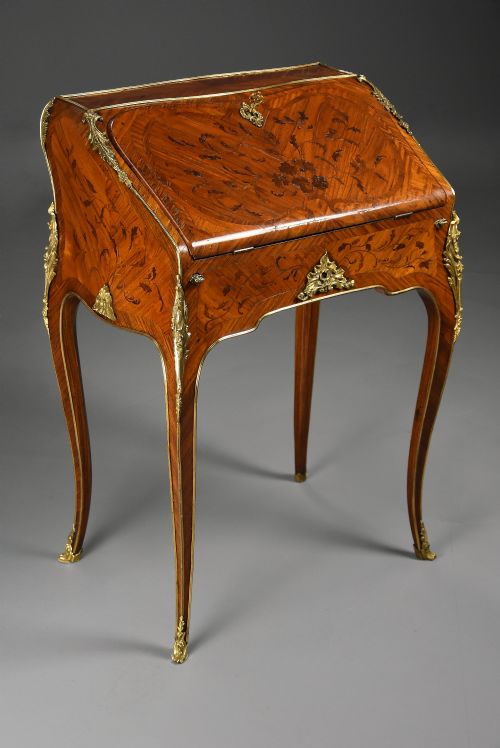
When you search for a marquetry slant front desk, you encounter sophisticated writing furniture defined by angled writing surfaces and detailed inlaid panels. The selection spans distinct eras, drawing heavily from eighteenth-century craftsmanship and nineteenth-century revivals.
Makers from the eighteenth century onwards utilised diverse stylistic influences, ranging from Dutch Baroque and Rococo to French Louis XV revivals. Such variety ensures that every surviving example offers a distinct interpretation of classic writing furniture.
Materials and Construction
Master artisans constructed these desks using sturdy timbers like walnut, burr walnut, mahogany, and rosewood as foundational carcases. These rich woods provided stable surfaces capable of supporting elaborate decorative schemes.
Fruitwood marquetry and dedicated inlay work created intricate floral motifs across the fall fronts and drawers. Brass hardware, including key escutcheons and drawer pulls, completed the functional elements of the design.
Retail Price Guide 2026
Typical UK retail prices for marquetry slant front desk, calculated from the Sellingantiques database of over a million retail prices indexed since 2003. This retail price guide relies exclusively on Sellingantiques data; no external sources or auction records are used, so the figures do not describe the wider market.
Current listings span the eighteenth century, the nineteenth century, and nineteen twenty, featuring walnut, mahogany, rosewood, and fruitwood.
Distinguishing Quality in Marquetry Furniture
Quality rests primarily in the precision of the marquetry inlay and the choice of timbers used for the primary surfaces. Burr walnut and finely figured mahogany denote higher ambition from the workshop.
The sophistication of the bombé profile and the fluidity of the floral motifs separate standard production from exceptional cabinet work. Structural integration of the slant front mechanism also dictates the overall standard.
The Marquetry Slant Front Desk Glossary
- Marquetry
- Decorative veneer work arranged in intricate patterns or pictures using various woods. This technique requires immense patience and precise cutting by hand.
- Slant front
- An angled hinged writing flap that conceals a fitted interior of pigeonholes and small drawers when closed. It drops down to provide a flat writing surface.
- Bombé
- A swelling, outward-curving contour on the front and sides of furniture. This sculptural shape is particularly characteristic of eighteenth-century Dutch cabinet making.
- Bureau
- A desk with a sloping lid, and often fitted with drawers beneath. The term frequently encompasses writing cabinets with multiple internal compartments.
Frequently Asked Questions
What is a slant front desk?
A slant front desk is a piece of furniture featuring a hinged, angled writing flap that folds down to reveal a fitted interior with small drawers and pigeonholes.
When closed, the sloping lid conceals correspondence and writing materials while presenting a tidy wooden surface to the room.
How do I date a bureau?
Dating relies on examining the secondary timbers, construction methods, hardware, and stylistic traits like floral marquetry or bombé shaping.
Eighteenth-century examples often display heavy walnut carcases and hand-cut dovetails, whereas nineteenth-century revivals adopt lighter internal structures.
Where were these desks made?
The pieces originate predominantly from workshops in Britain, the Netherlands, and France, reflecting distinct regional tastes.
Dutch makers favoured bombé shapes and elaborate floral inlay, while English and French cabinet makers utilised mahogany and rosewood.
How do I maintain marquetry?
Keep the timber away from direct sunlight and extreme temperature fluctuations to prevent the delicate veneer from drying or lifting.
Apply a traditional beeswax polish occasionally to nourish the wood and maintain a gentle, protective sheen across the surface.