



Carved Claw Foot Bureau
A carved claw foot bureau is a substantial writing desk with sculptural supports, offering both secure workspace and rich period presence for a study.
Carved Claw Foot Bureau
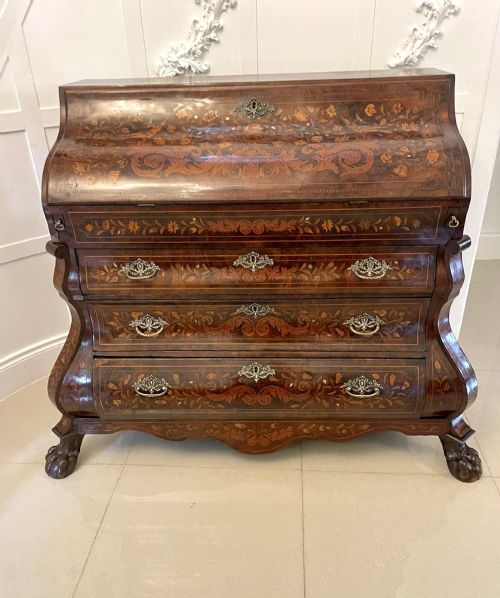
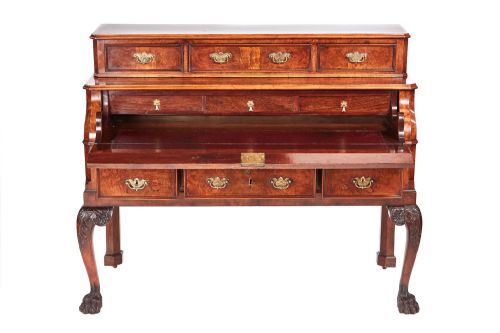
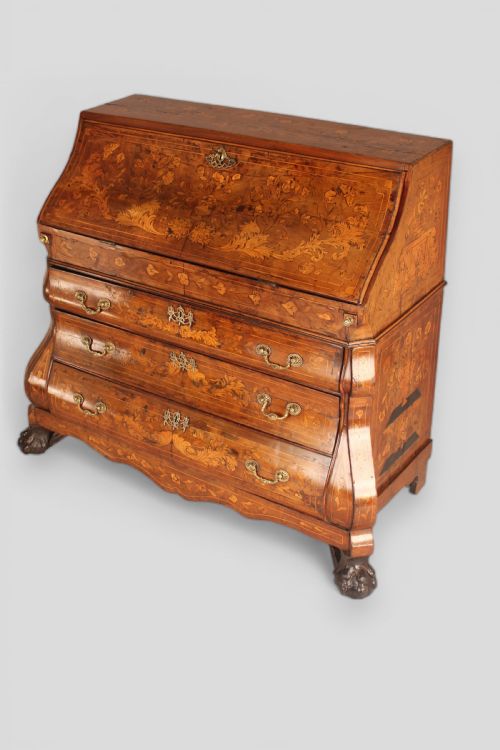
A carved claw foot bureau combines a fall-front writing slope with fitted interior compartments, resting upon distinctive animalistic or carved foot forms. Buyers searching this phrase encounter practical writing desks alongside larger bureau cabinets and bookcase combinations.
The pieces appearing on this page span several centuries and regional traditions, running from eighteenth-century Georgian designs to nineteenth-century Victorian interpretations. Walnut, burr walnut, and mahogany form the primary structural timbers, often enhanced by elaborate fruitwood marquetry and floral inlay.
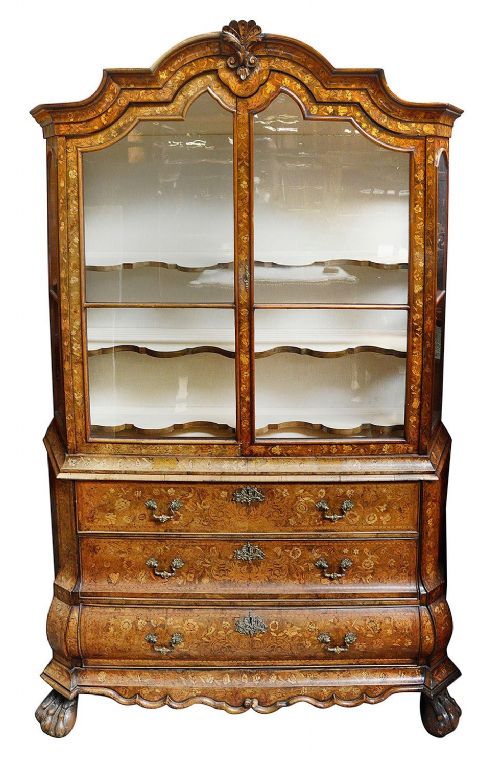
Dutch Baroque and Dutch Rococo influences appear frequently alongside Chippendale Revival and Regency styles, particularly in bombe-shaped forms. Alongside standard bureau desks, related objects such as pedestal desks and display cabinets share similar material vocabularies and period origins.
How they were made
Cabinetmakers constructed these pieces using dense hardwoods such as mahogany and walnut, frequently employing burr walnut veneers to create rich, swirling grain patterns across curved surfaces. Secondary timbers provided stable internal framing for the heavy fall-fronts and drawer assemblies.
Marquetry decoration involved meticulously cutting and fitting intricate floral motifs from fruitwood veneers directly into the primary surface. Carved paw and claw feet required skilled hand-chiseled detailing to achieve the sculptural support demanded by these grand desk forms.
Carved Claw Foot Bureau Retail Price Guide 2026
Typical asking prices for carved claw foot bureau among the pieces listed under this phrase on Sellingantiques today, from the lower quarter to the upper quarter. They describe what is for sale here now, not the wider market.
Listings feature pieces spanning the eighteenth and nineteenth centuries, utilising walnut, burr walnut, mahogany, and fruitwood inlay.
What varies in quality
Quality rests upon the depth and precision of the hand-carved feet and the complexity of the marquetry inlay across the fall-front and drawer fronts. Pieces displaying finely integrated fruitwood marquetry demonstrate a higher tier of workshop execution than simpler surfaces.
The treatment of curved bombe forms requires exceptional mastery of timber bending and veneer matching, distinguishing ambitious master pieces from standard regional production. Internal drawer arrangement and the preservation of original brass hardware further separate standard examples from finer works.
The Carved Claw Foot Bureau Glossary
- Bombe
- A swelling, outward-curving furniture profile associated with continental European cabinetmaking. This curved form requires advanced veneering and construction skill.
- Marquetry
- Decorative patterns formed by fitting contrasting veneer slices into a prepared wood ground. Floral and botanical motifs feature prominently on eighteenth-century surfaces.
- Fall-front
- A hinged writing flap that drops down to create a horizontal desk surface. It conceals pigeonholes and small drawers when closed.
- Burr walnut
- Timber sliced from walnut tree growths, yielding intricate and swirling grain patterns. It provides highly decorative surfaces on grand case pieces.
Carved Claw Foot Bureau: Frequently Asked Questions
What is a carved claw foot bureau?
A carved claw foot bureau is a traditional writing desk featuring a sloping fall-front that opens to reveal internal compartments and drawers. These pieces stand upon distinctive carved animalistic feet.
They combine practical workspace with concealed storage, making them prominent focal points in a traditional study or living space.
How do I date a bureau?
Dating relies on examining the structural timbers, dovetailing techniques, and secondary woods used inside the drawers. Stylistic cues such as bombe shaping and floral marquetry point toward specific regional traditions.
Eighteenth-century examples often display rich walnut and elaborate fruitwood inlay, whereas nineteenth-century pieces reflect revival styles and heavier Victorian proportions.
Where should I place a bureau?
These substantial desks require adequate floor space and clearance to allow the fall-front to drop fully open. They suit studies, libraries, or living rooms where their figured veneers and carved details can be appreciated.
Keep them away from direct sunlight and strong heat sources to protect the delicate wood veneers and historic finishes.
What styles are common?
The available pieces frequently showcase Dutch Baroque and Dutch Rococo influences, particularly through curved bombe forms and floral marquetry. Georgian and Chippendale Revival aesthetics also appear among the mahogany and walnut items.
Victorian interpretations offer heavier proportions and carved paw feet, reflecting nineteenth-century revivals of earlier cabinetmaking traditions.