
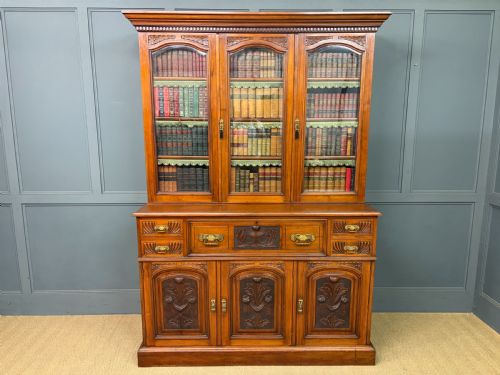


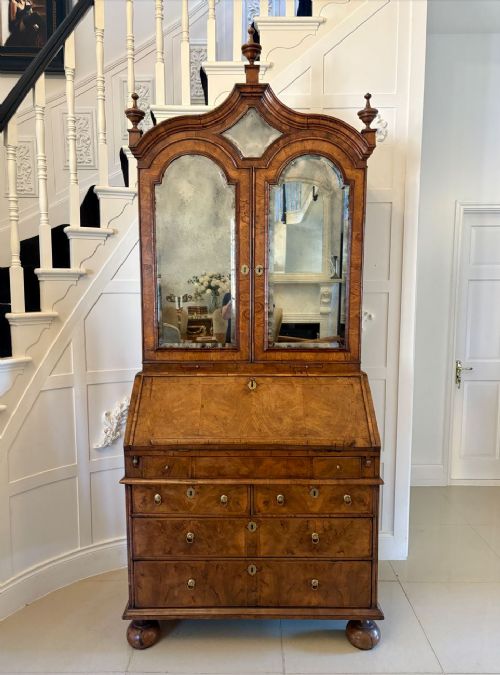
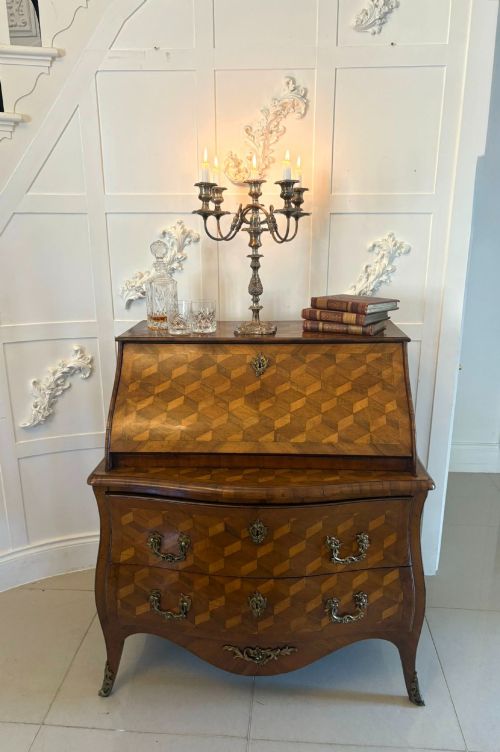
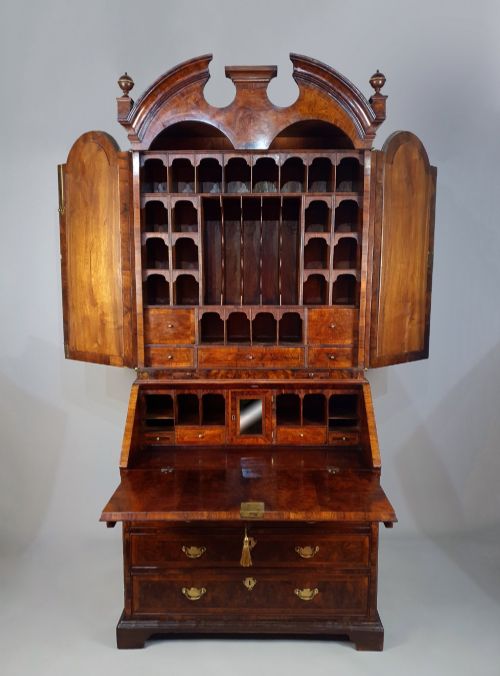
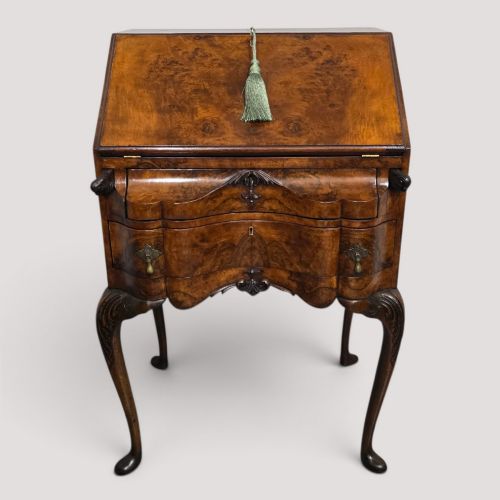
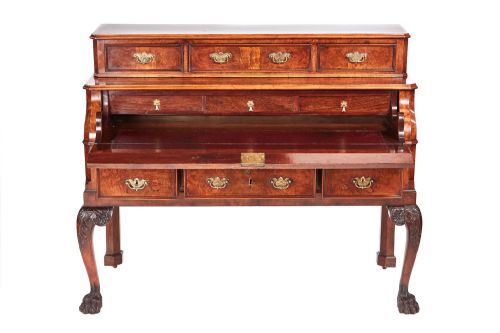
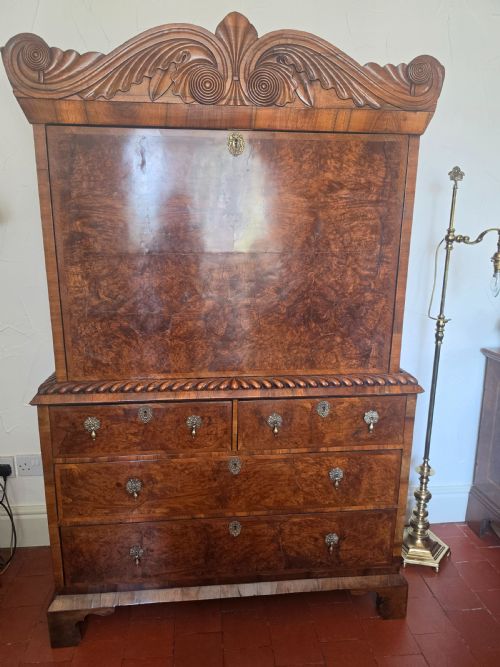
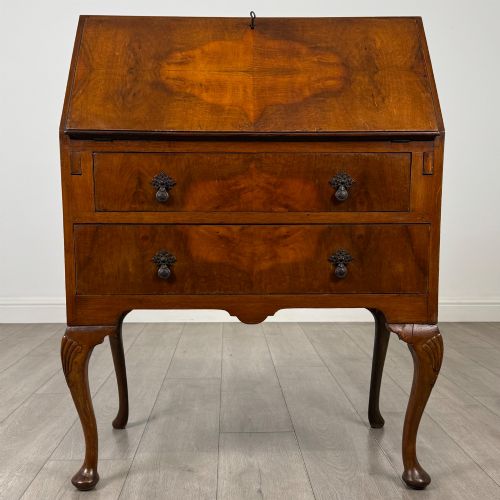
Brown Walnut Secretary
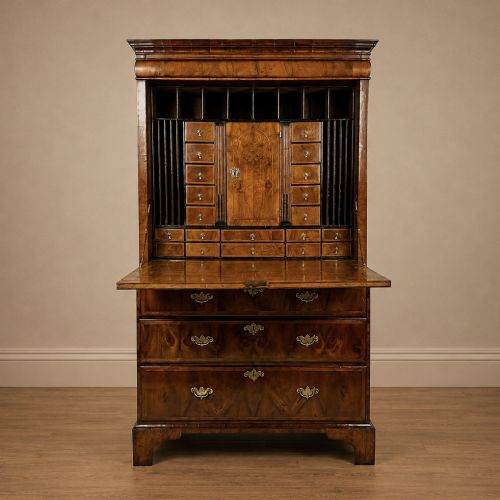
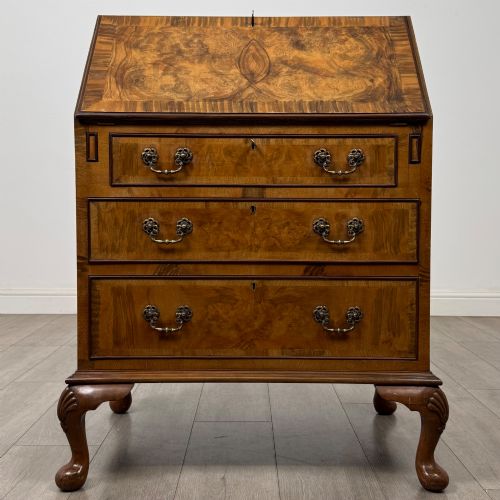
A brown walnut secretary brings together dark timber, fitted compartments and a drop-down writing surface to serve as a compact working library.
Brown Walnut Secretary
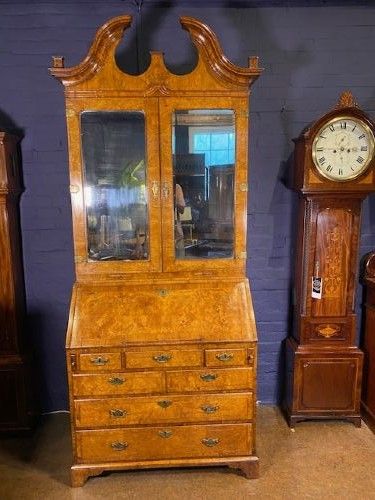
A brown walnut secretary combines a practical writing surface with concealed drawers and pigeonholes, often surmounted by a bookcase or cabinet for storage. These pieces take various forms, from simple fall-front desks to grand double-dome bureau bookcases originating across Britain, continental Europe and beyond.
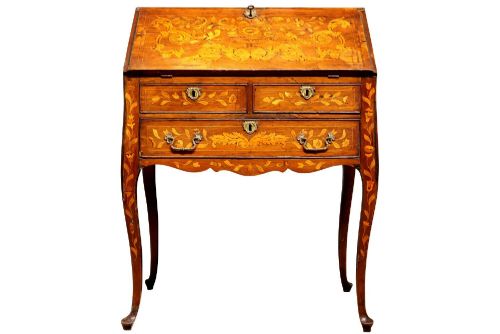
The brown walnut secretary appears most frequently in periods such as the seventeenth and eighteenth centuries, alongside Georgian, Victorian and later twentieth-century interpretations. Makers utilised specific regional silhouettes, ranging from Dutch marquetry and Italian bombe shapes to restrained English Queen Anne and George I designs.
How they were made
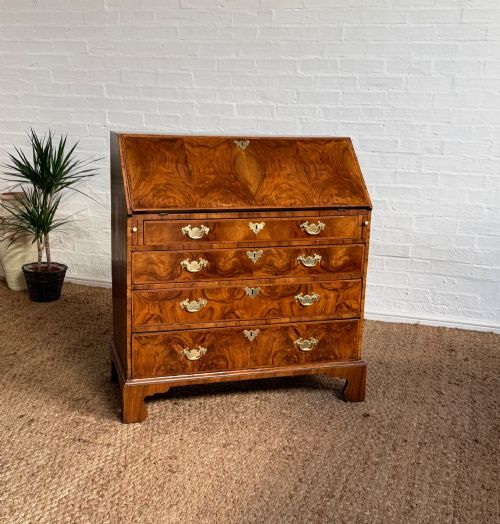
Craftsmen built these cabinets using solid timbers like oak or fruitwood as a structural carcase, then applied figured walnut or burr walnut veneers to the exterior surfaces. Featherbanding, marquetry and parquetry inlay often embellished the drawer fronts and fall-front panels to create rich decorative patterns.
Internal components relied on traditional joinery, integrating small drawers, pigeonholes and sliding wells behind the primary writing flap. Ironwork, brass handles, escutcheons and locks secured the compartments, while specialised feet such as carved paw shapes or bracket supports grounded the heavier cabinet forms.
Brown Walnut Secretary Retail Price Guide 2026
Typical asking prices for brown walnut secretary among the pieces listed under this phrase on Sellingantiques today, from the lower quarter to the upper quarter. They describe what is for sale here now, not the wider market.
Some early desks feature secret compartments activated by hidden wooden springs that only open once you remove a specific interior pigeonhole.
What varies in quality
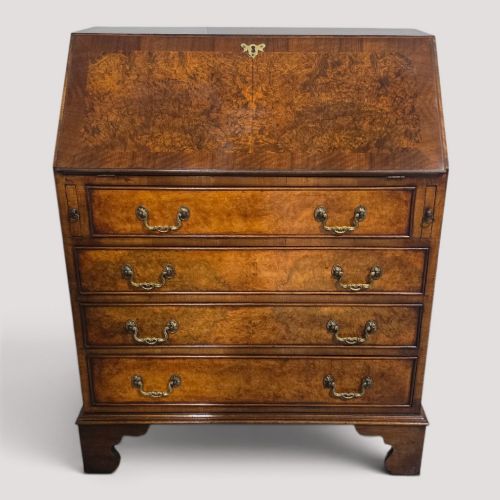
The refinement of a brown walnut secretary depends significantly on the choice of wood grain, where highly figured burr walnut or symmetrical veneer matching commands greater visual depth. The precision of the marquetry or inlay work and the retention of original brass hardware or ironwork also distinguish superior examples.
Structural integrity and the complexity of the interior fitments dictate the grade of a piece, with secret compartments, well-fitted pigeonholes and harmonious proportions marking out the more ambitious workshops.
F.H. Marshall & Co Glasgow
The Brown Walnut Secretary Glossary
- Escritoire
- A writing cabinet featuring a fall-front flap that conceals internal compartments. This term often applies to earlier seventeenth and eighteenth-century desk forms.
- Burr walnut
- A decorative wood veneer harvested from the gnarled growths on walnut trees. It provides a swirling, highly textured pattern across drawer fronts and panels.
- Marquetry
- The art of forming decorative patterns by fitting together small pieces of coloured wood veneer. Dutch and Italian pieces frequently display intricate floral motifs using this technique.
- Fall-front
- A hinged writing flap that drops into a horizontal position to serve as a desk. When closed, it conceals the inner drawers and pigeonholes.
- Featherbanding
- A delicate banding technique using small strips of veneer laid diagonally to form a herringbone pattern around the edges of panels.
Brown Walnut Secretary: Frequently Asked Questions
What is a brown walnut secretary used for?
These pieces function primarily as writing desks that incorporate enclosed storage for stationery, documents and books. The drop-down flap provides a dedicated writing surface that conceals paperwork when closed.
Upper cabinet sections, where present, serve to display or store volumes and papers behind glazed or solid timber doors, keeping the study area neat.
How do I distinguish eighteenth-century pieces?
Eighteenth-century examples typically display specific structural traits, such as candle slides beneath bookcase doors, finely cut dovetails on internal drawers and rich patination on the walnut surfaces. The proportions tend to be slender, supported by bracket feet or carved cabriole legs.
Later Victorian and twentieth-century interpretations often incorporate heavier carving, alternative interior layouts or different secondary woods like elm beneath the walnut veneers.
How should I care for walnut furniture?
Walnut benefits from stable indoor environments away from direct heat sources and strong sunlight, which can dry out the timber and fade the rich brown tones. Regular dusting with a dry, soft cloth preserves the finish without the need for heavy chemical polishes.
Maintaining moderate room humidity prevents the timber and underlying veneers from shrinking or cracking over time.
What is the difference between a bureau and a secretary?
The terms often overlap, though a secretary generally implies a taller piece combining a desk with a bookcase or cabinet top. A bureau more specifically refers to a sloping-lid desk, with or without upper shelving.
Regional terminology also plays a role, as American and continental European markets frequently use secretary for items British makers call bureau bookcases.