





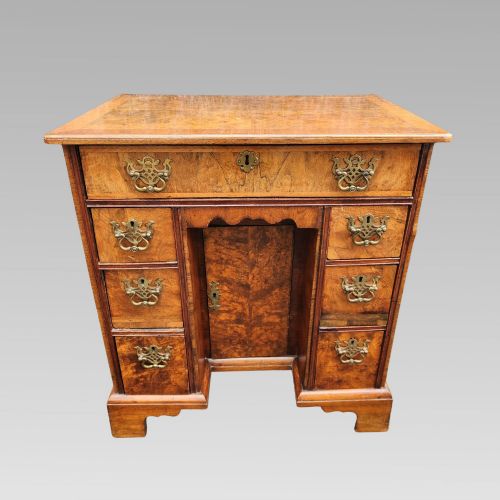

Queen Anne Style Bureau
A queen anne style bureau brings structured writing space and rich figured timber into a room.
Queen Anne Style Bureau
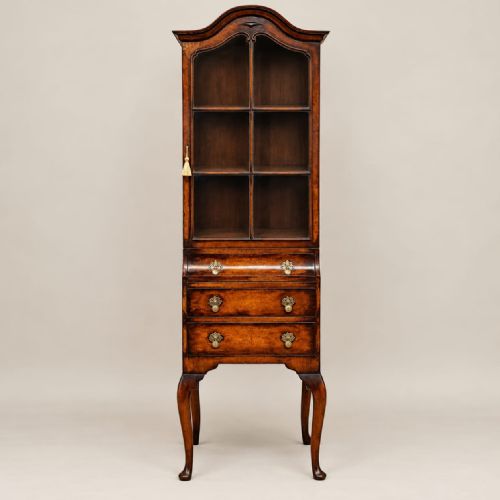
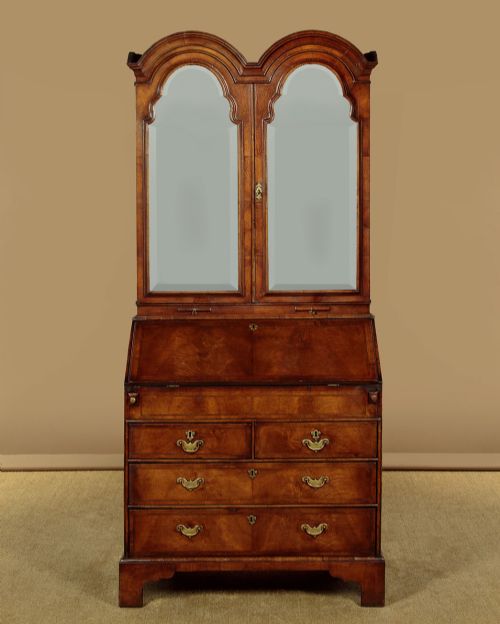
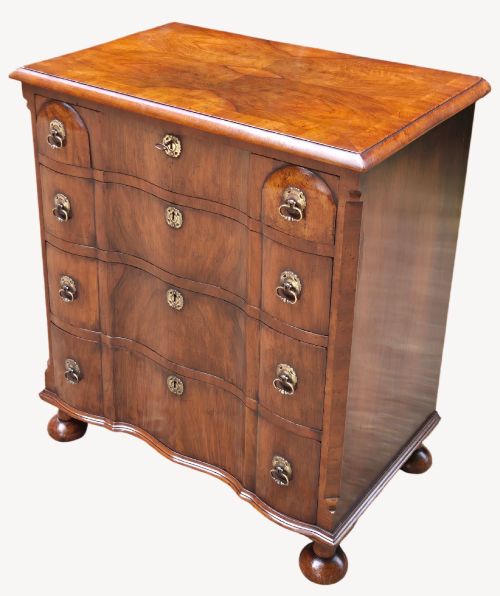
A queen anne style bureau unites a sloping fall front that conceals a fitted interior with a set of drawers below, echoing early eighteenth-century proportions. Many examples seen here date from the Edwardian era and the early twentieth century, alongside nineteenth-century interpretations of the Georgian period.
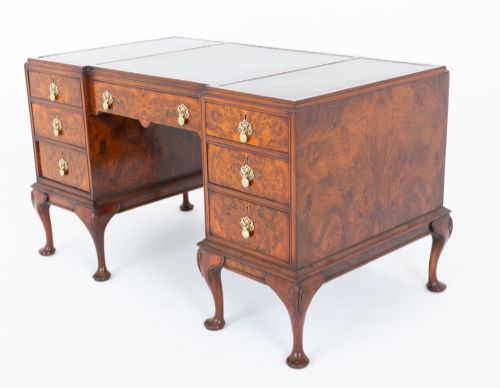
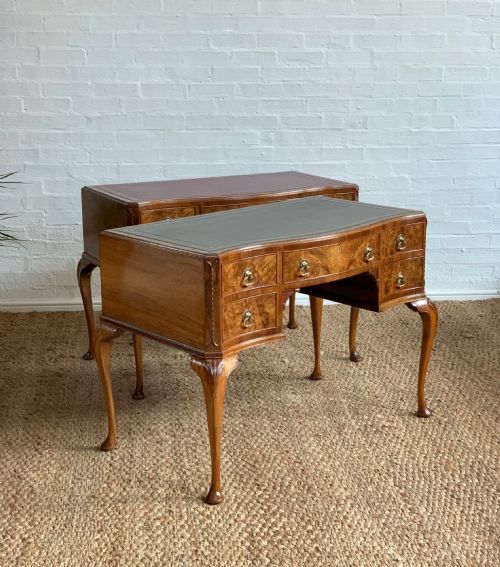
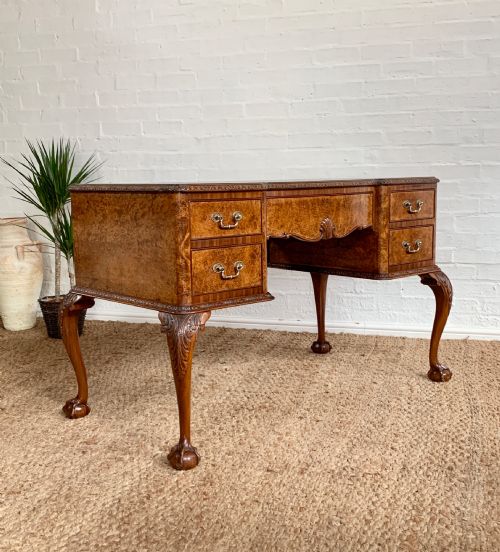
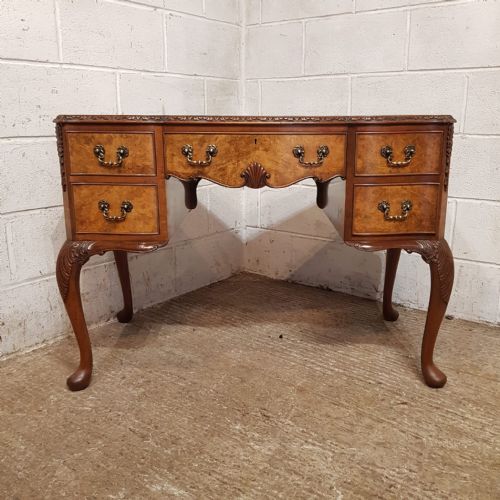
The selection ranges from compact writing desks and bureaus on stands to tall bureau bookcases featuring glazed upper sections. Walnut and burr walnut dominate the forms, frequently paired with oak, mahogany, and elm in varied desk and writing table configurations.
Materials and Construction
Cabinetmakers applied choice burr walnut and figured walnut veneers over stable secondary timbers, creating rich grain patterns across the sloping falls and drawer fronts. Brass is standard for drop handles and escutcheons, while inset leather writing surfaces often feature blind tooling.
Internal compartments incorporate pigeonholes and small drawers constructed with traditional dovetail joints. Selected pieces display marquetry inlay or red lacquer finishes reflecting oriental influences.
Queen Anne Style Bureau Retail Price Guide 2026
Typical asking prices for queen anne style bureau among the pieces listed under this phrase on Sellingantiques today, from the lower quarter to the upper quarter. They describe what is for sale here now, not the wider market.
The listings show walnut and burr walnut as the primary materials, complemented by oak, mahogany, and yew across various Edwardian and Georgian revival periods.
Assessing Quality
Quality rests primarily on the selection and matching of wood veneers across prominent surfaces like the fall front. Continuity of grain pattern and the crispness of internal drawer construction distinguish finer workshops from standard production pieces.
Proportions also dictate distinction, with smaller, well-balanced writing desks and bureau bookcases commanding greater appreciation. The integration of original brass hardware and well-figured timber elevates the piece.
Wylie & Lochhead Glasgow·maples of London·Waring & Gillow·Maple & Co
The Queen Anne Style Bureau Glossary
- Bureau
- A writing desk featuring a sloping hinged lid that opens to reveal internal compartments and pigeonholes. It usually sits atop a chest of drawers.
- Fall Front
- The hinged sloping board of a bureau that lowers to serve as a writing surface. When closed, it conceals the fitted interior.
- Burr Walnut
- Timber taken from the warted growths of a walnut tree, yielding complex, swirling grain patterns highly prized for cabinet veneers.
- Bureau Bookcase
- A two-part cabinet combining a lower writing bureau with an upper glazed shelving section. They provide both display and writing space.
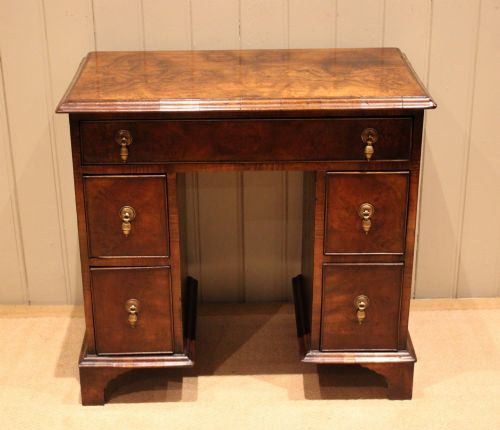
- Kneehole Desk
- A compact desk featuring a central recess for the legs, flanked by pedestals of small drawers. This form allows a comfortable seating position.
Queen Anne Style Bureau: Frequently Asked Questions
What is a queen anne style bureau?
A queen anne style bureau is a compact writing desk featuring a sloping fall-front lid that opens to reveal internal drawers and pigeonholes above a set of lower drawers. Most examples found on the market date from the Edwardian period and the early twentieth century, echoing original eighteenth-century forms.
These pieces combine practical writing space with decorative figured walnut veneers. They often stand on bracket feet or short cabriole legs typical of the aesthetic.
How were these bureaus used?
These pieces served primarily for private correspondence, record-keeping, and home administration. The sloping lid provided a firm surface for writing letters when lowered, while the interior compartments organised stationery and documents.
Lower drawers stored larger papers, account books, and personal belongings. Their compact footprint made them suitable for sitting rooms, bedrooms, and private studies.
How do I style a bureau at home?
A bureau works well placed against a plain wall in a study, living room, or hallway where its wood grain can serve as a focal point. Leaving the fall front open occasionally allows the fitted interior and leather writing surface to add visual depth to the room.
Pair the piece with a simple wooden or upholstered chair that matches the desk height. Small decorative items or a brass desk lamp can sit safely on top without cluttering the working surface.
How do I distinguish different periods?
Pieces originating from the eighteenth century typically exhibit hand-cut construction details, native timber framing, and patination acquired over centuries of use. Edwardian and early twentieth-century revivals often utilise machine-sawn secondary woods alongside finely matched walnut veneers.
Hardware styles, secondary timber choices, and internal construction methods help clarify whether a piece dates from the original era or a later revival.