

Dark Wood Bureau Desk
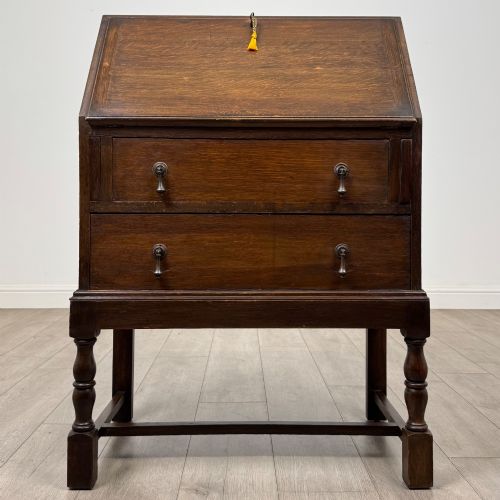
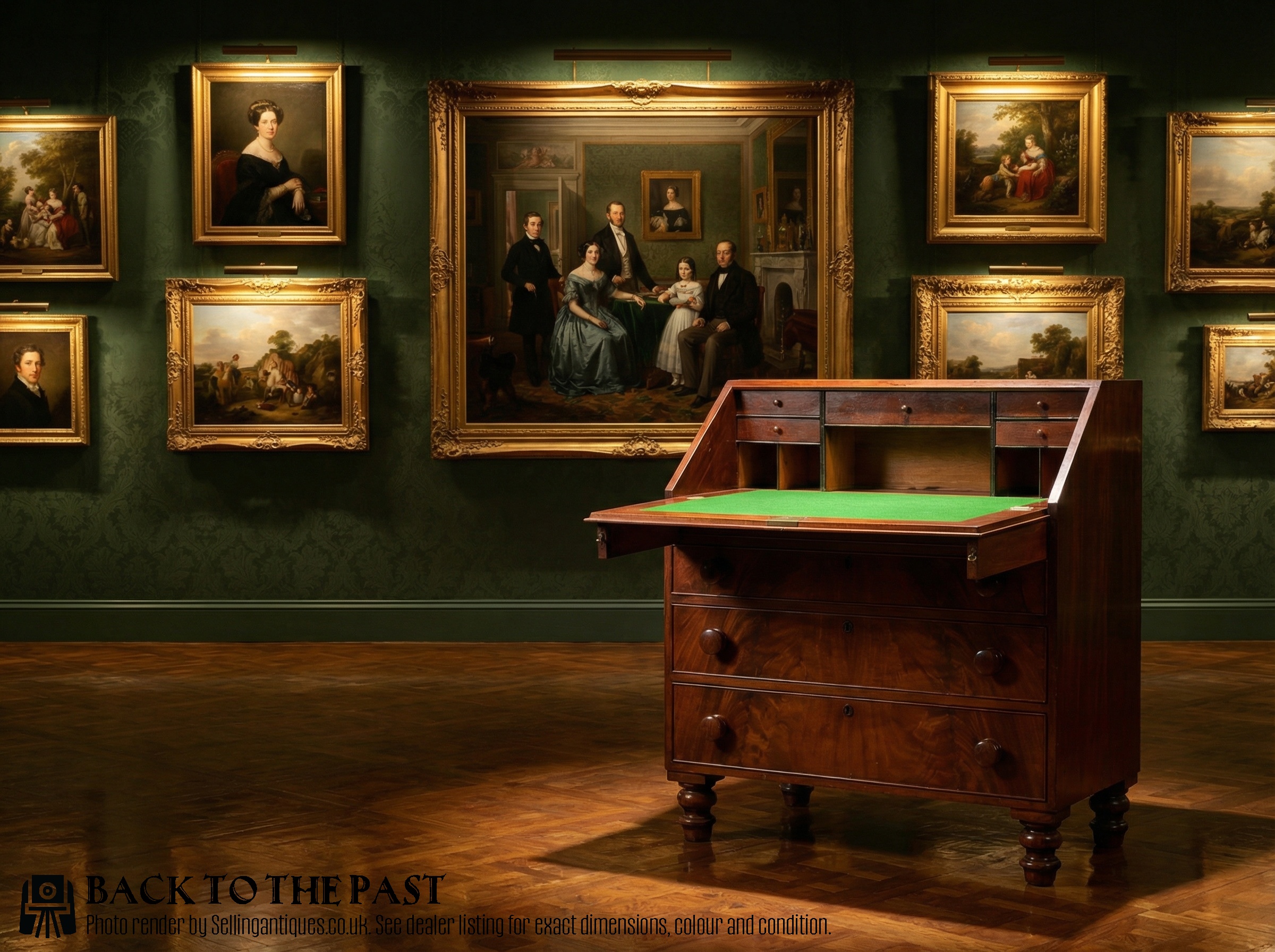
A dark wood bureau desk is a fitted writing cabinet built to conceal correspondence and ledgers behind a sloping fall-front or fitted cylinder.
Dark Wood Bureau Desk
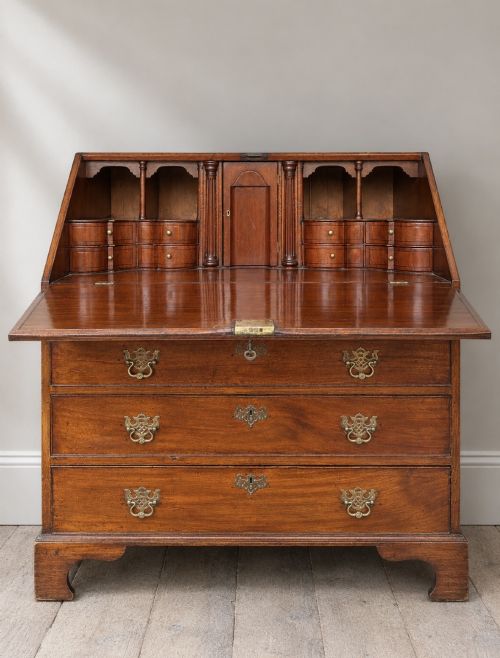
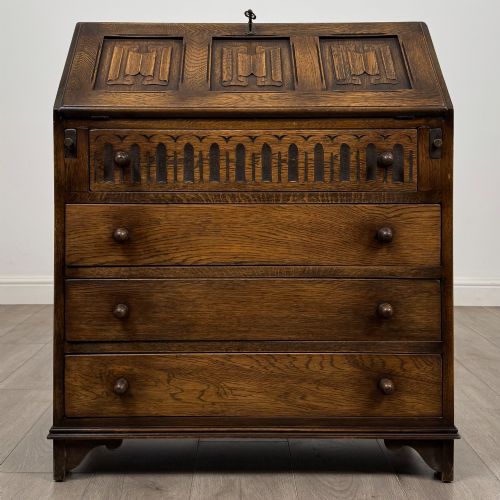
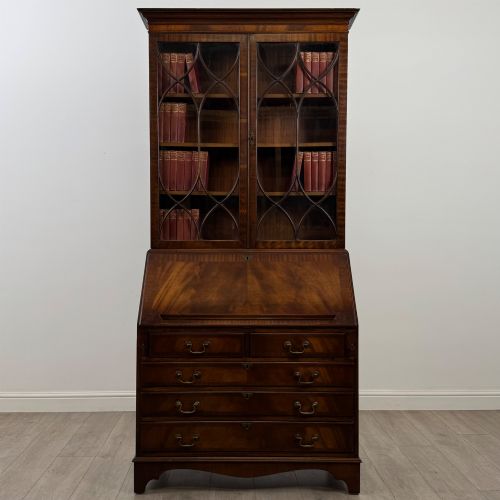
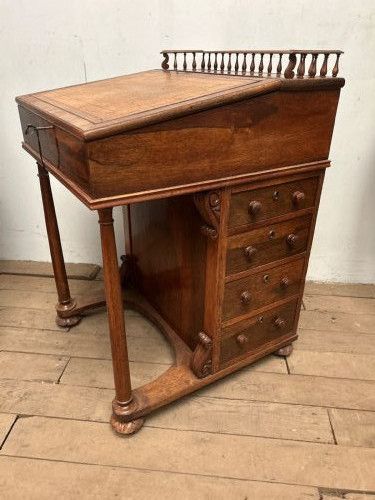
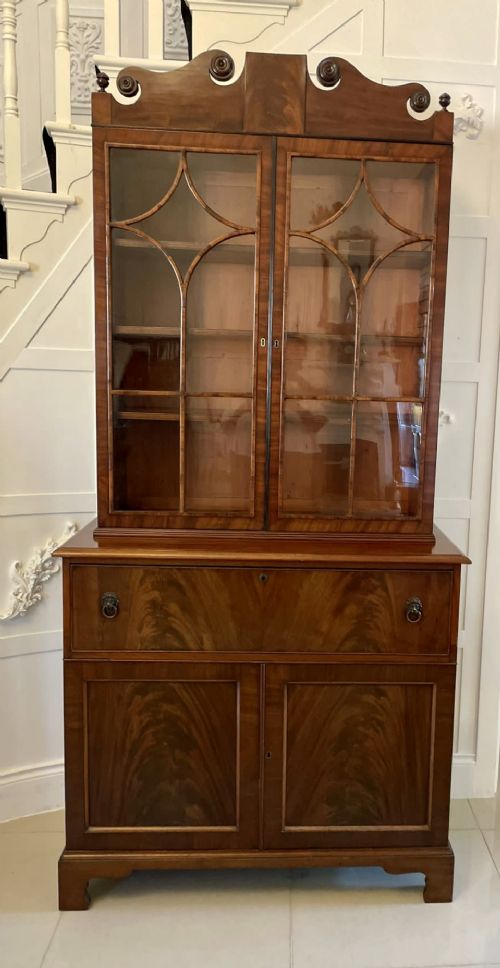
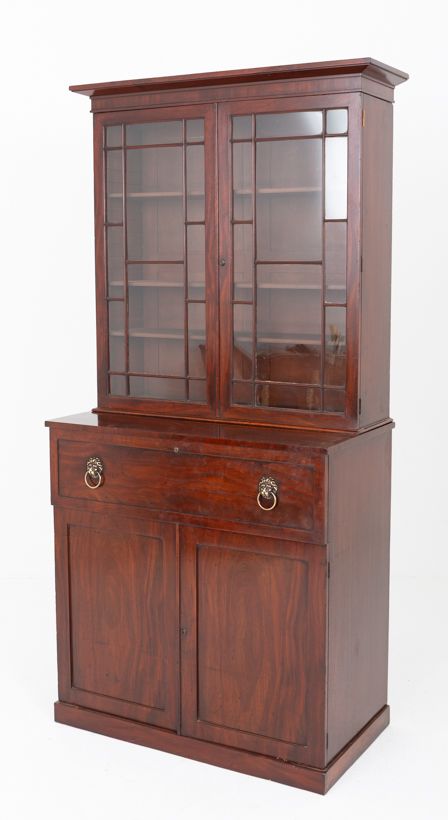
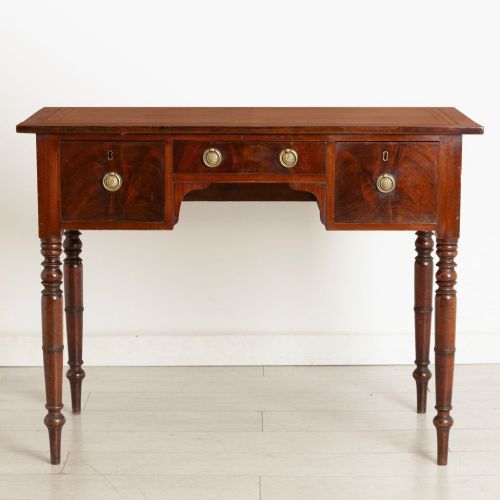
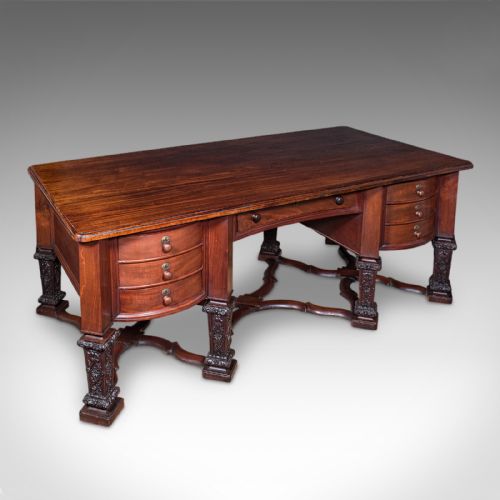
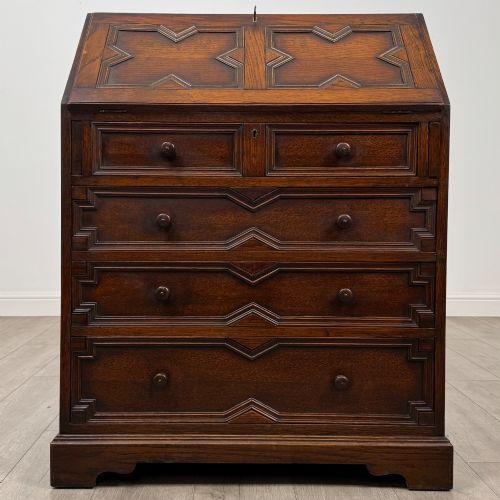
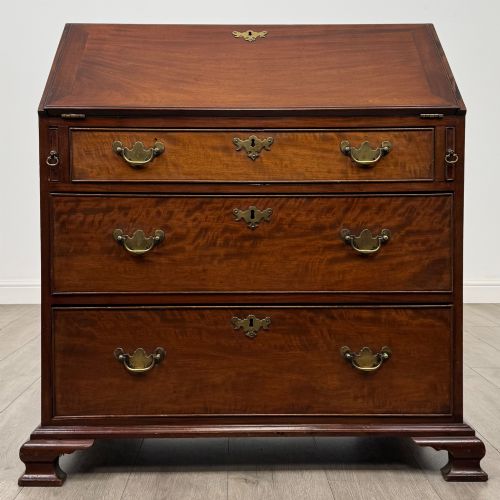
A dark wood bureau desk brings together centuries of writing furniture, ranging from compact 18th-century slope-front chests to tall bureau bookcases and narrow Davenport desks. The pieces span Georgian, Regency, Victorian, and Edwardian eras, utilising rich timbers such as mahogany, oak, and rosewood.
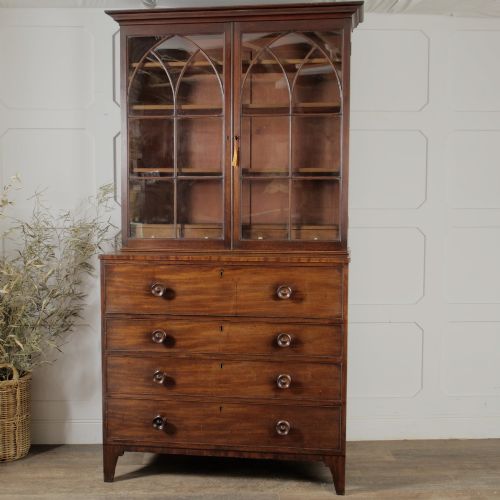
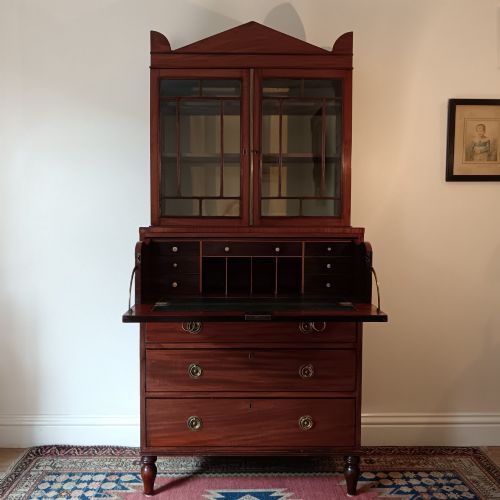
Buyers meet forms varying from small kneehole desks to monumental secretaire bookcases fitted with glazed upper cabinets and pigeonholed interiors. Regional variations and revivalist movements, including Jacobean and Louis XIV styles, appear alongside campaign pieces and tambour cylinders.
Materials and construction
Cabinetmakers constructed these desks predominantly from solid timbers and veneers of mahogany, oak, and rosewood, frequently incorporating flame or figured grain to enhance the polished surfaces. Brass hardware, leather writing inserts, and glass panelling complete the primary construction of the cabinets.
Joinery techniques involve dovetailed drawer construction, internal pigeonholes fashioned with secret compartments, and bracket or turned feet that support the heavy timber bodies. Tambour shutters and sliding writing surfaces demonstrate the precise carpentry required for functional mechanical components.
Dark Wood Bureau Desk Retail Price Guide 2026
Typical asking prices for dark wood bureau desk among the pieces listed under this phrase on Sellingantiques today, from the lower quarter to the upper quarter. They describe what is for sale here now, not the wider market.
Judging quality
Quality rests upon the selection of timber veneers, such as figured mahogany or exotic rosewood, and the crispness of carved details like linenfold panels or astragal glazing bars. Superior examples maintain uncompromised interior layouts with well-figured pigeonholes, quality drawer linings, and original brass fittings.
The sophistication of the mechanism distinguishes the finer cabinets, seen in smooth-sliding tambour doors, balanced drop-front hinges, and integrated pull-out writing slides that operate without binding. Structural integrity across large secretaire bookcases and heavy partner's desks further indicates the cabinetmaker's original tier of workmanship.
George Oakley·Gillows·Maison Krieger
The Dark Wood Bureau Desk Glossary
- Bureau
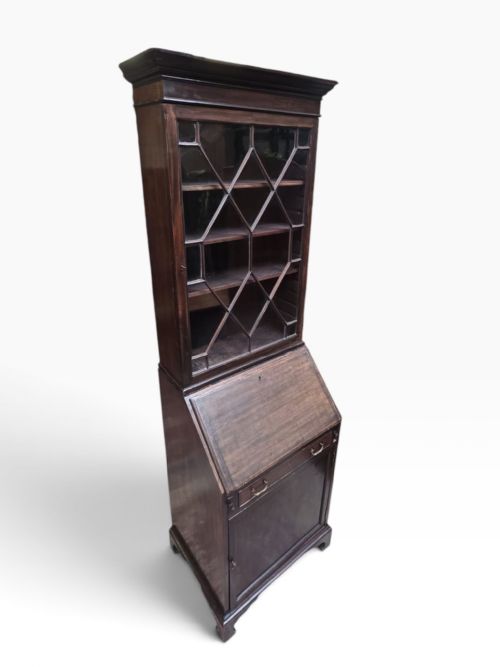
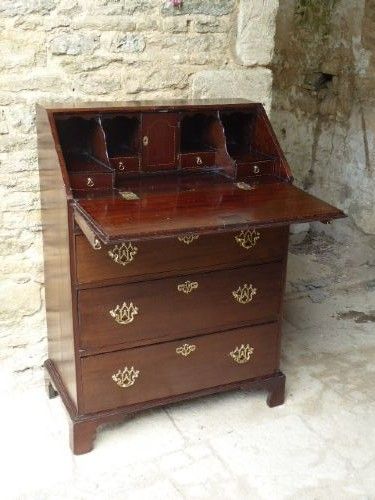
- A writing desk featuring a sloping lid that folds down to reveal an interior of small drawers and pigeonholes. It frequently sits atop a chest of standard drawers.
- Secretaire
- A piece of furniture containing a concealed writing drawer or drop-front desk compartment. These are often integrated into tall bookcases or cabinets.
- Davenport
- A compact writing desk featuring a sloped, hinged writing surface above a pedestal of drawers. The design originated in the early 19th century.
- Tambour
- A series of narrow strips of wood glued to a canvas backing, allowing a desktop or shutter to slide around a curved track. It conceals fitted stationery compartments.
- Astragal
- A moulding profile used to hold panes of glass within cabinet doors. These form decorative geometric grids across Georgian and Victorian bookcases.
Dark Wood Bureau Desk: Frequently Asked Questions
How do I use a bureau desk?
The sloping fall-front drops down to create a flat writing surface supported by automatic lopers or wooden arms. This reveals internal compartments designed for letters, inkwells, and ledgers.
When writing is finished, correspondence rests securely inside the closed cabinet, keeping the workspace tidy and private.
What is the difference between a bureau and a secretaire?
A traditional bureau relies on an angled, sloping front that opens outward to form the desk platform. A secretaire usually looks like a standard chest of drawers or bookcase until a central drawer folds downward to reveal a writing interior.
Both forms provide concealed compartments, but their exterior cabinet geometry differs significantly.
Where should I place a Davenport desk?
Davenport desks work well in smaller studies or living rooms because their compact footprint occupies minimal floor space. Their finished backs also allow them to stand freestanding away from a wall.
Positioning them near natural window light helps illuminate the sloped writing surface.
How do I date a mahogany bureau?
Dating relies on timber choice, hardware style, and internal construction methods such as hand-cut dovetails. Georgian pieces often feature bracket feet and solid mahogany timbers, while Victorian and Edwardian examples may show machine-sawn elements or revivalist carving.
Original brass handles and secondary woods like oak or pine offer further chronological clues.