

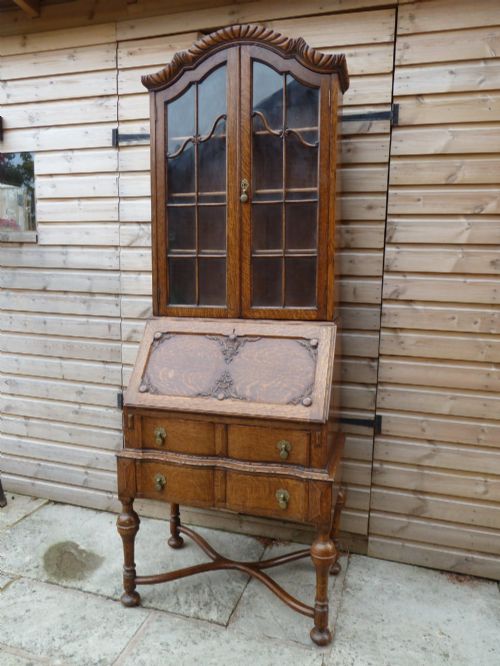
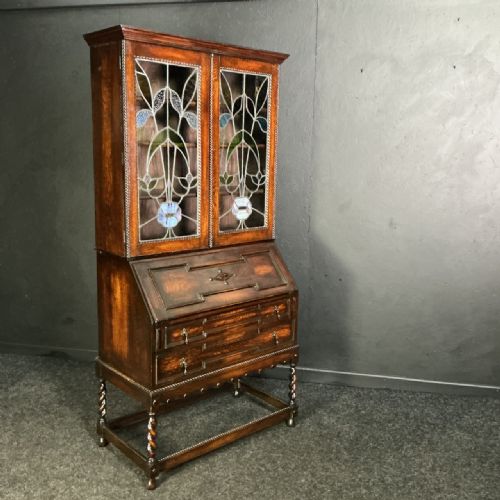
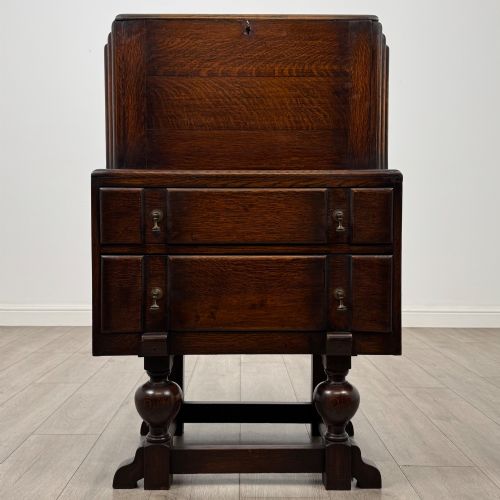
Dark Oak Writing Bureau
A dark oak writing bureau provides a solid, practical workspace that brings deep timber grain and historic character into a room.
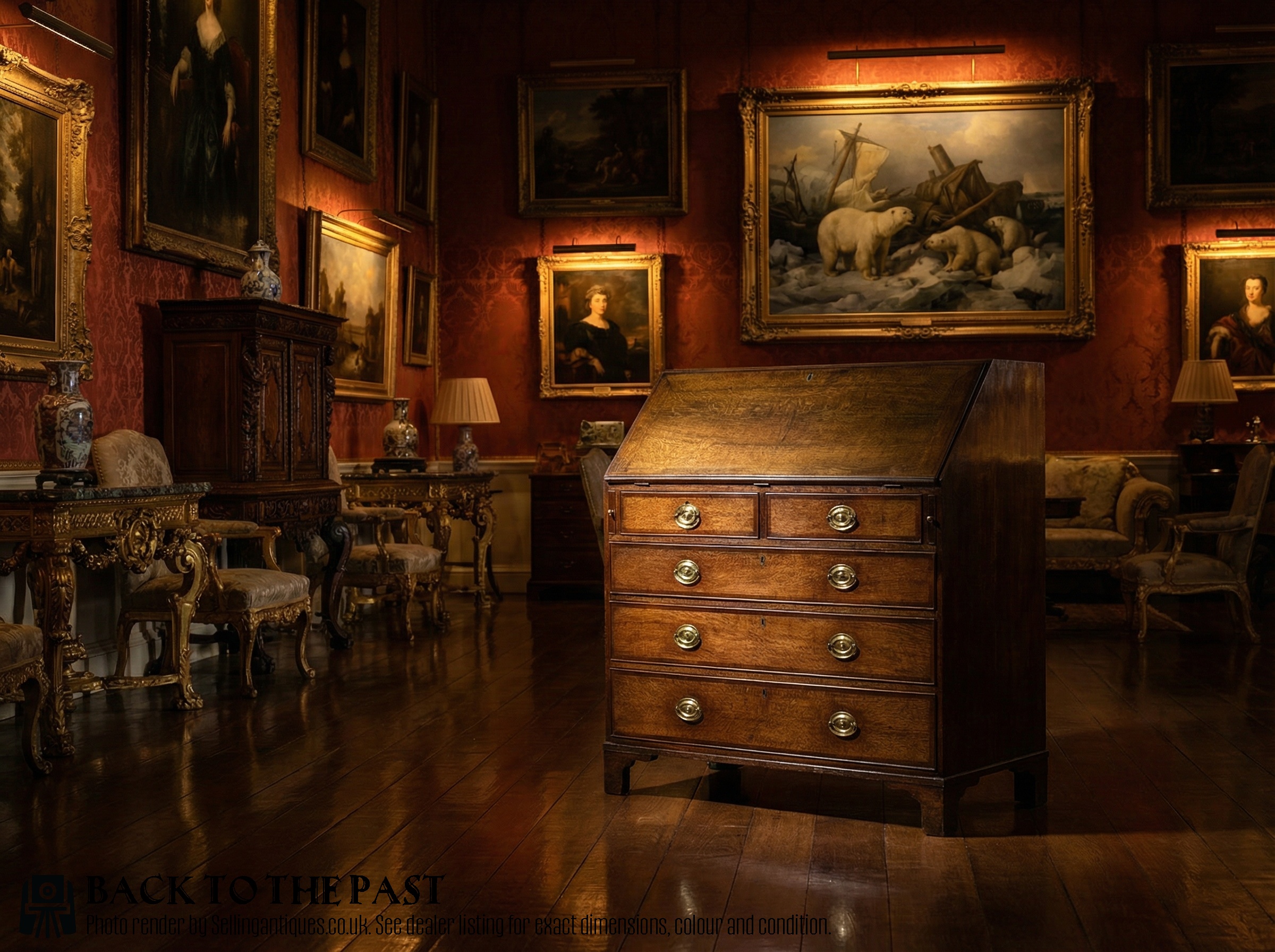
Dark Oak Writing Bureau
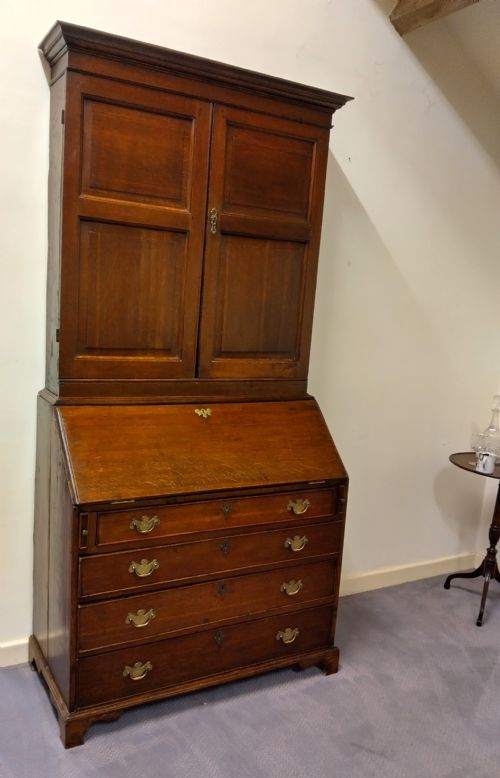
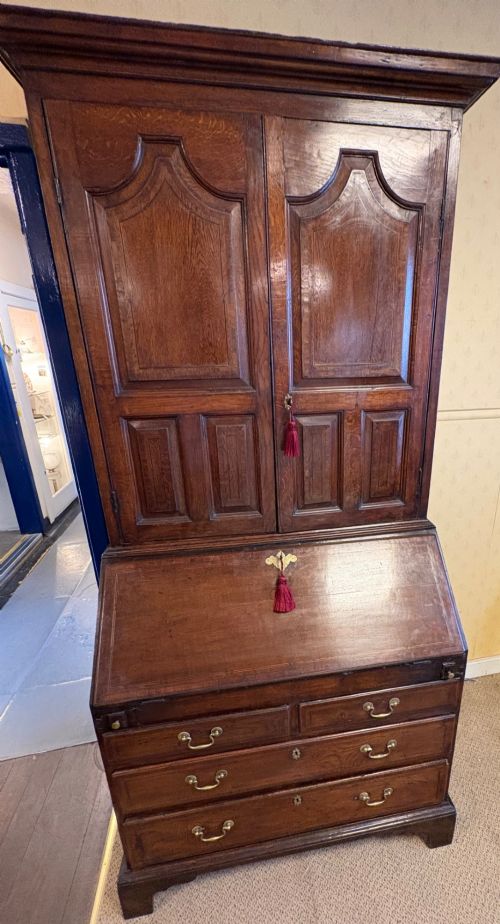
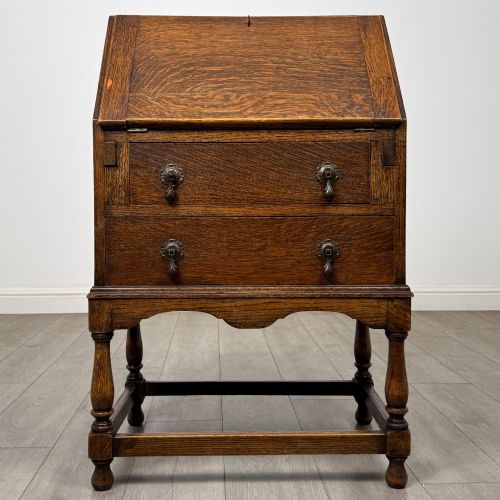
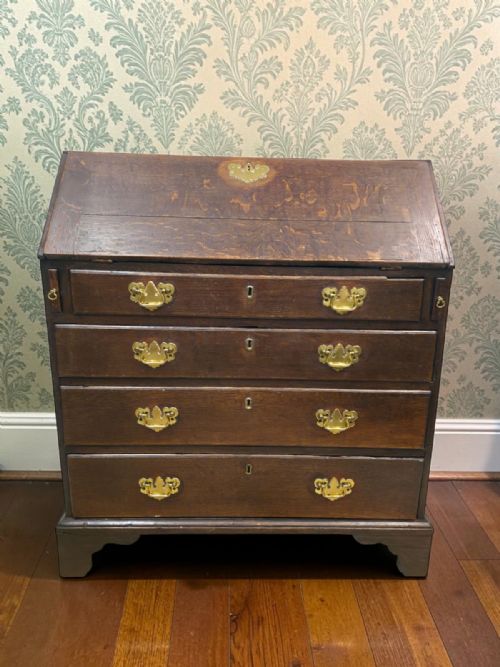
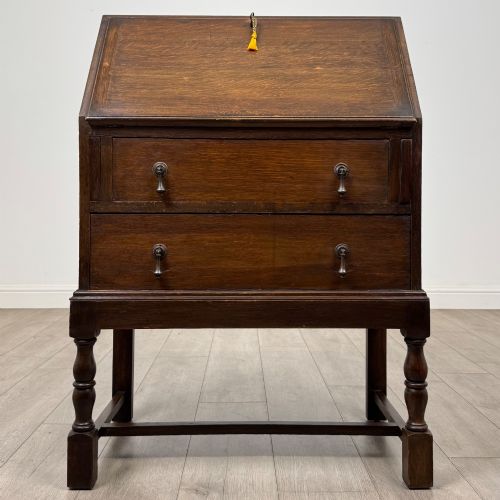
A dark oak writing bureau combines a sloping fall-front writing surface with concealed internal compartments, pigeonholes, and drawers. These pieces range from early seventeenth-century examples and eighteenth-century Georgian forms to later revival styles from the Victorian and Edwardian periods.
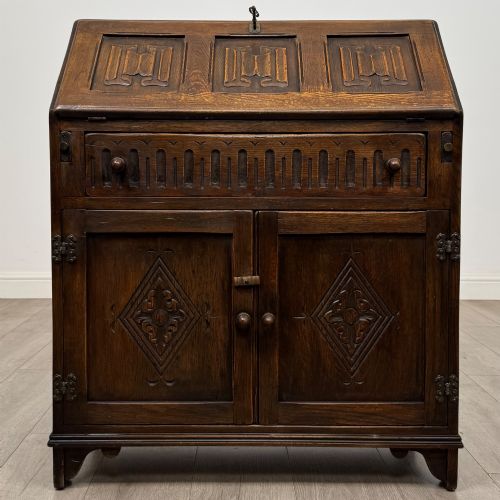
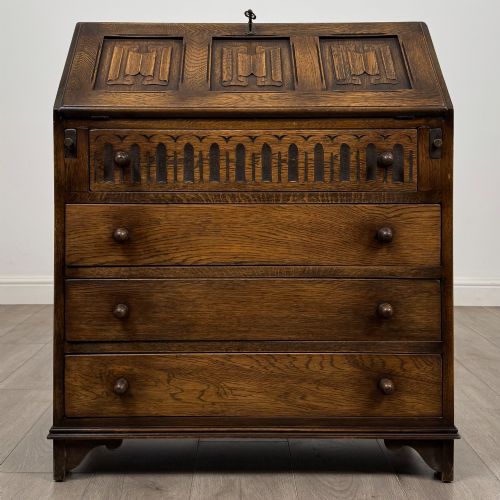
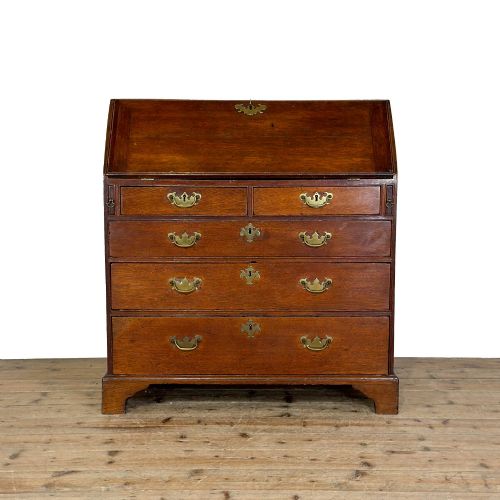
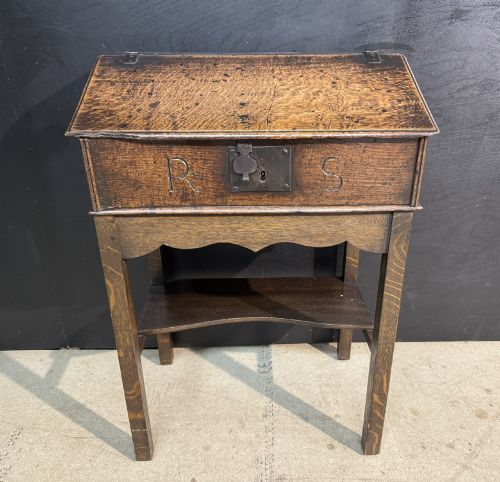
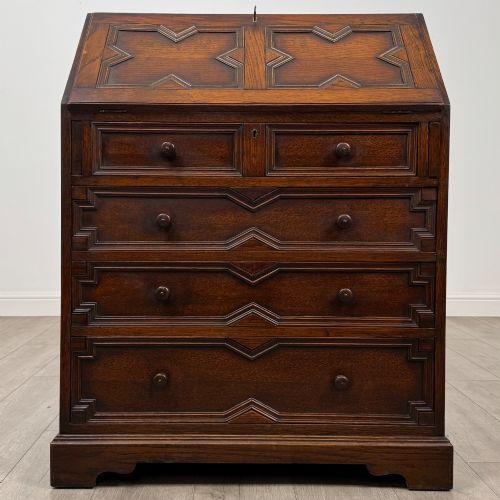
The version most commonly encountered on this page is the Edwardian or 1920s revival piece, often featuring linenfold panels or Jacobean-style carving alongside a practical fitted interior. Earlier eighteenth-century variants and clerk desks appear less frequently, offering simpler planes and heavier timber construction.
Buyers select these desks for daily administrative tasks or to anchor a study with traditional dark timber furniture. The combination of a drop-down writing flap and lower drawers or bookcase top provides functional storage for papers and books.
How they were made
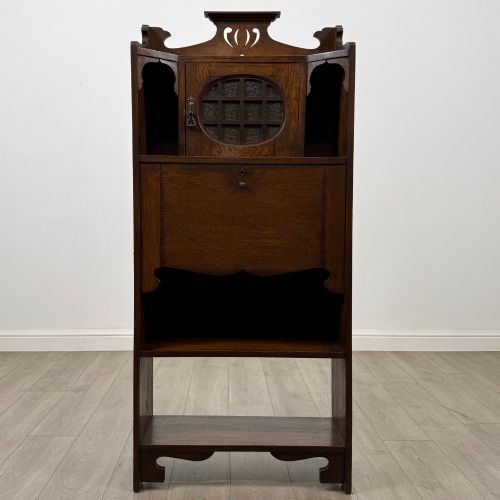
Construction relies heavily on solid oak boards, selected for durability and joined with traditional techniques suited to heavy timber. Artisans utilised brass for key escutcheons, hinges, and handles, while occasional pieces incorporate glass panels in upper bookcase sections or leather inserts on writing surfaces.
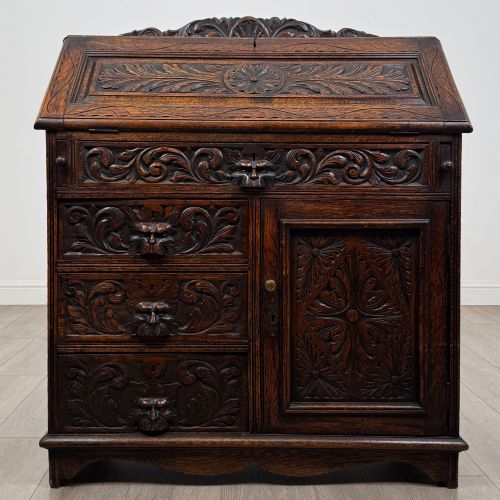
Surface decoration on revival and Victorian items often includes carved details such as Green Man motifs, linenfold panels, and geometric moulding. Earlier pieces depend on the natural figure of the wood, panelled construction, and pegged joints rather than applied surface carving.
Dark Oak Writing Bureau Retail Price Guide 2026
Typical asking prices for dark oak writing bureau among the pieces listed under this phrase on Sellingantiques today, from the lower quarter to the upper quarter. They describe what is for sale here now, not the wider market.
Materials appearing across these desks include solid oak, brass hardware, iron fittings, leather panels, and glass cabinet doors.
What varies in quality
Quality rests primarily on the choice of timber and the crispness of the construction rather than applied decoration alone. Superior examples display tightly figured oak boards that remain stable over centuries, while lesser pieces utilise thinner secondary timbers for internal partitions.
The sophistication of the interior fittings separates standard items from finer works. Bureau bookcases with stepped pigeonholes, secret compartments, and well-fitted small drawers demonstrate superior cabinet-making compared to plain, utilitarian desk interiors.
The Dark Oak Writing Bureau Glossary
- Bureau
- A desk featuring a sloping hinged writing flap that opens to reveal internal compartments and small drawers. It often sits above a chest of drawers or a kneehole recess.
- Fall front
- The hinged writing flap on a bureau that drops down to form a horizontal surface for writing. When closed, it conceals the fitted interior.
- Linenfold
- A style of carved wooden panelling that resembles folded fabric, frequently seen on Edwardian and revival oak furniture. This decorative motif adds texture to drawer fronts and fall flaps.
- Bureau bookcase
- A combination furniture piece featuring a writing bureau base with an enclosed shelving unit or glazed cabinet set above it. These tall items served as both desks and household libraries.
- Clerk desk
- A tall, utilitarian writing desk designed for standing or high-stool seating, often featuring a sloping top and internal storage wells. These pieces emphasise sturdy workspace over domestic elegance.
Dark Oak Writing Bureau: Frequently Asked Questions
What is a dark oak writing bureau?
A dark oak writing bureau is a traditional desk featuring a hinged fall-front panel that opens to reveal internal compartments and pigeonholes. They range from early seventeenth-century examples to later Edwardian revival pieces.
These items combine workspace and storage within a single timber cabinet, often incorporating drawers or upper bookcases.
How do I date an oak bureau?
Dating relies on construction methods, timber thickness, and stylistic details such as hardware and carving. Eighteenth-century pieces typically show hand-cut dovetails and simpler panel construction.
Revival pieces from the Victorian and Edwardian eras often feature machine-sawn elements, applied linenfold carving, or Jacobean-style geometric ornamentation.
Where should I place a bureau?
These desks suit studies, living rooms, and bedrooms where traditional timber furniture complements the interior. Ensure adequate clearance in front of the piece for the fall-front flap to lower completely.
Positioning the desk away from direct sunlight and heat sources protects the oak timber and prevents the wood from drying out.
How do I care for dark oak?
Maintain the finish by dusting regularly with a soft, dry cloth and applying occasional quality beeswax to nourish the timber. Avoid modern silicone polishes, which build up on antique surfaces over time.
Keep the room at a stable humidity level to prevent the solid oak panels from expanding, contracting, or splitting.