
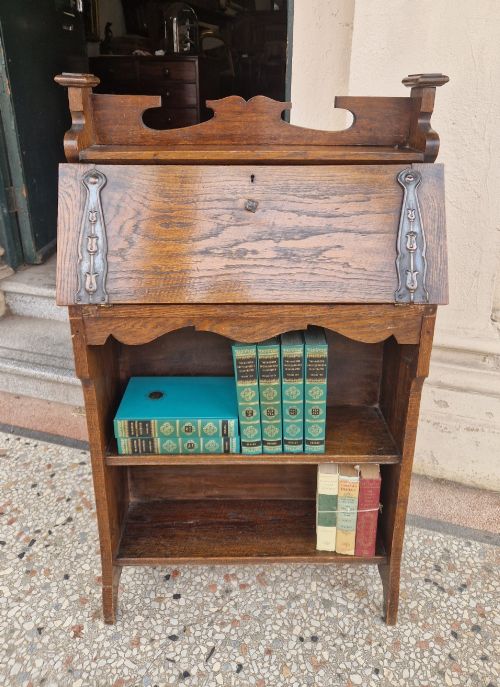
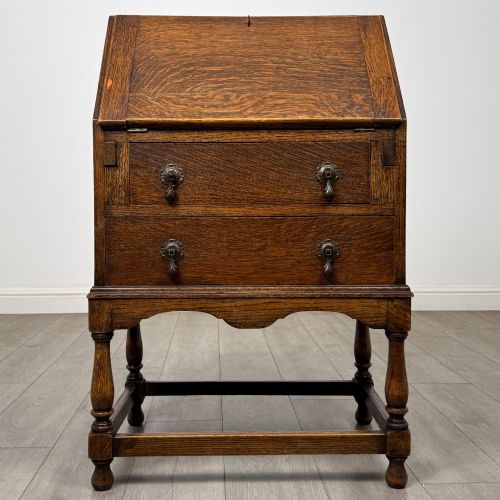
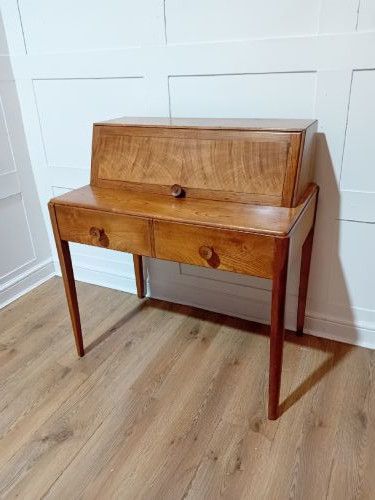
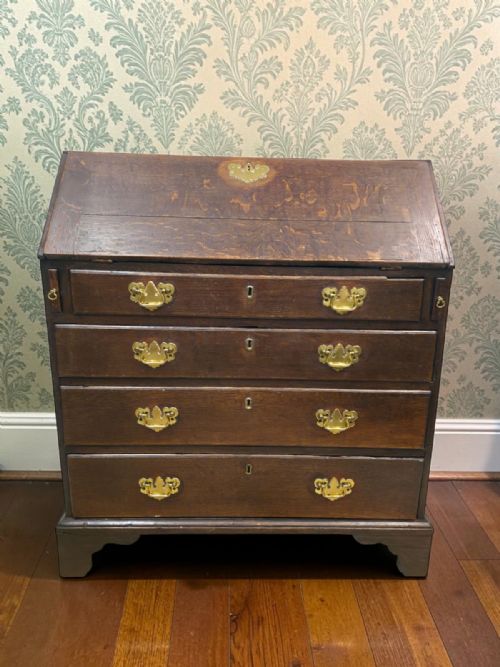
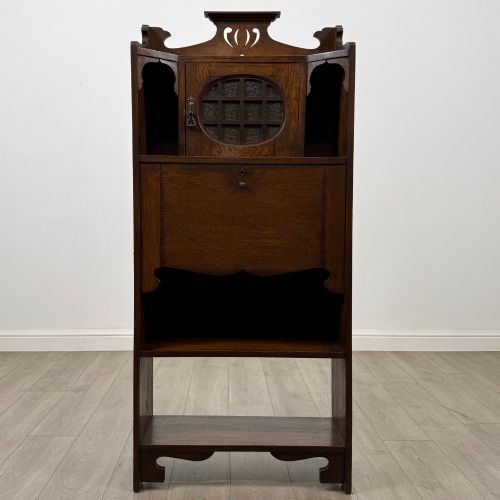
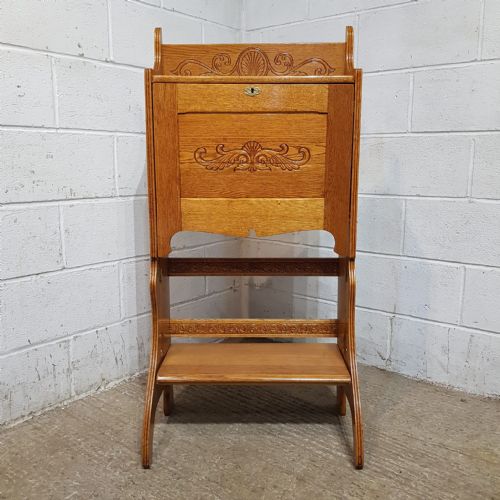
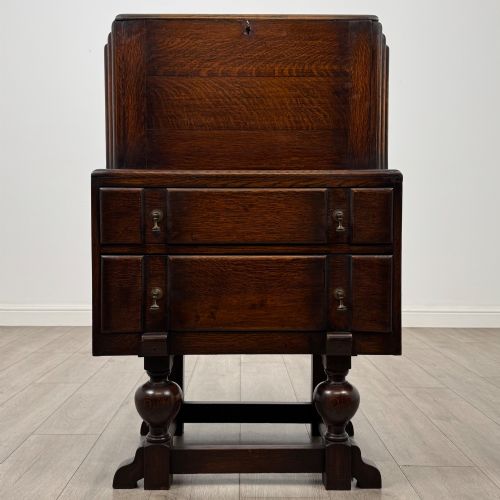

Oak Fall Front Bureau
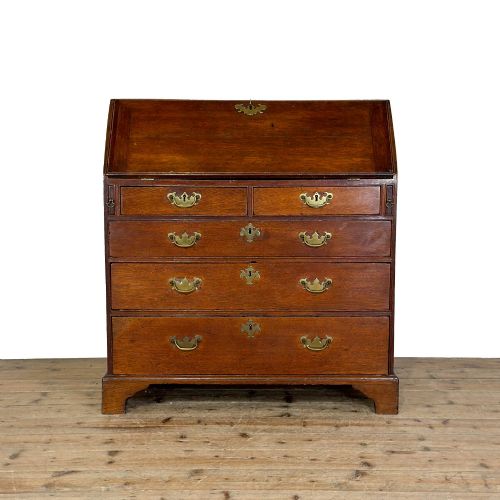
An oak fall front bureau provides a sloping writing surface that folds down to reveal fitted compartments and drawers.
Oak Fall Front Bureau
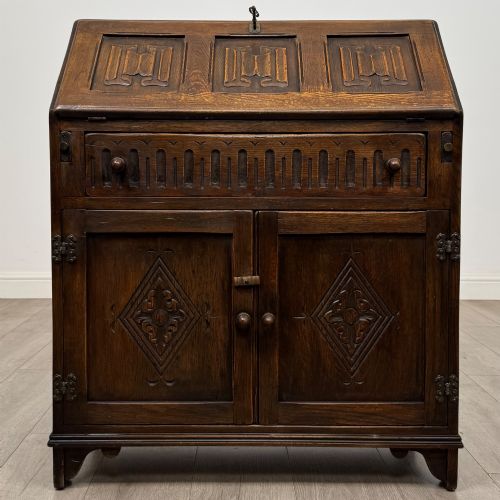
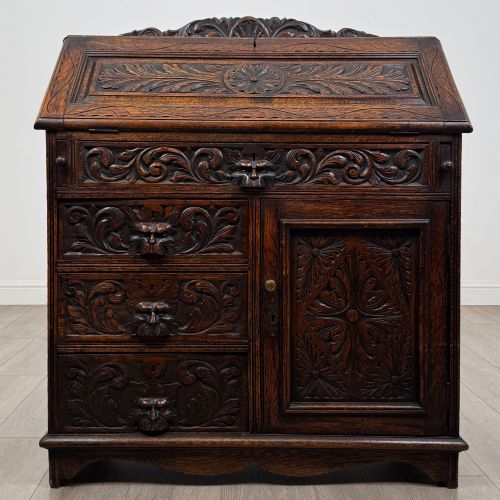
An oak fall front bureau combines a sloping writing flap with a concealed inner compartment above lower drawers for practical storage. These items appear across Georgian, Edwardian, and Arts and Crafts periods.
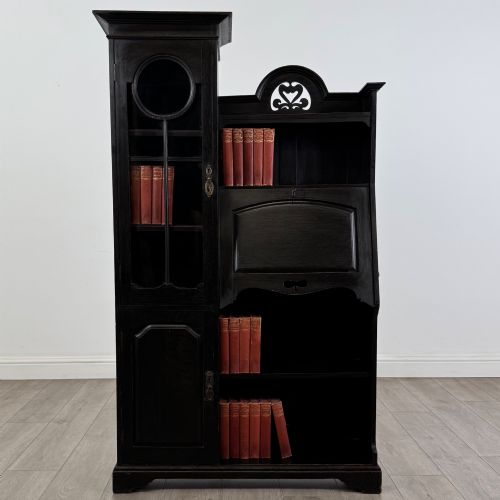
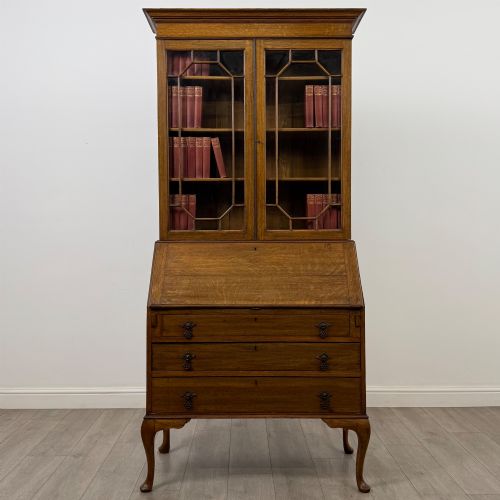
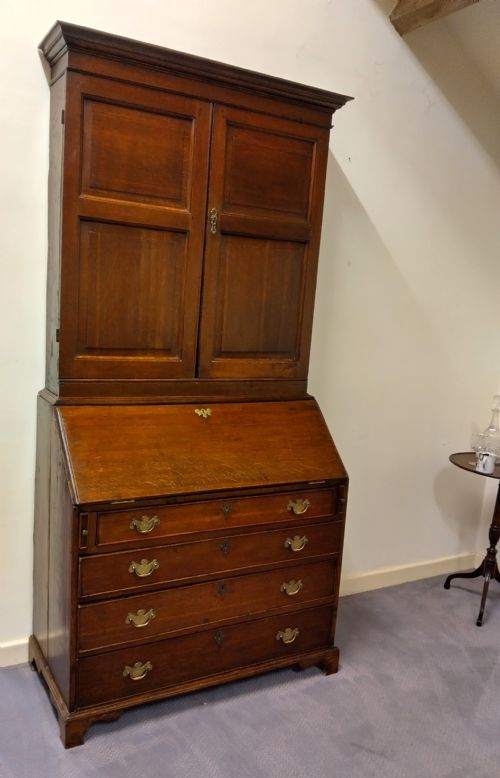
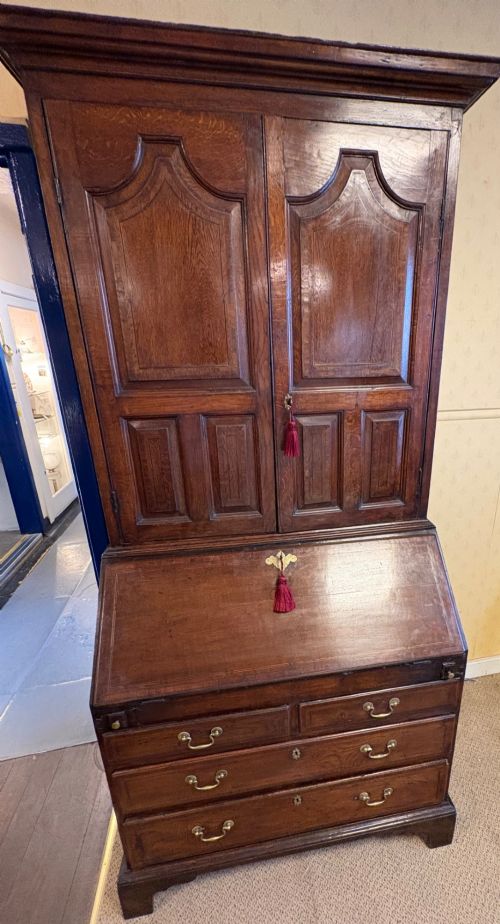
The format ranges from compact country examples to large bureau bookcases featuring upper display sections with glass doors.
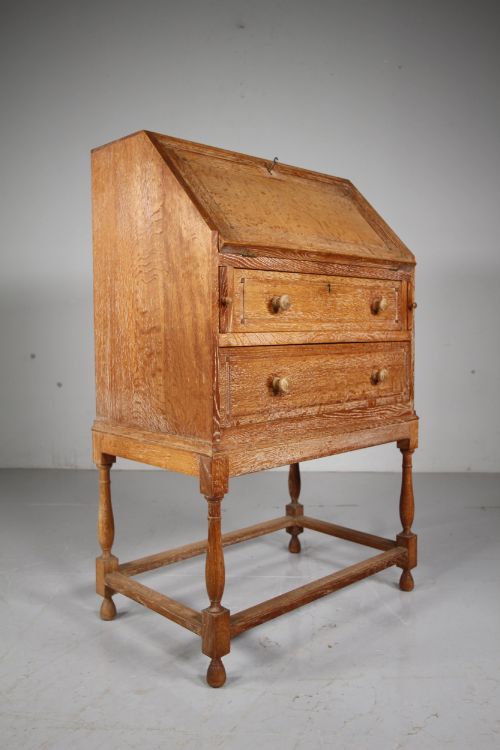
Buyers encounter regional country pieces alongside labelled workshop designs from the early twentieth century.
How they were made
Joiners constructed these pieces primarily from solid oak, sometimes incorporating wood inlay, mahogany, or walnut details on interior fittings.
Brass handles, escutcheons, and iron hinges provided functional hardware while glass featured in upper bookcase doors.
Oak Fall Front Bureau Retail Price Guide 2026
Typical asking prices for oak fall front bureau among the pieces listed under this phrase on Sellingantiques today, from the lower quarter to the upper quarter. They describe what is for sale here now, not the wider market.
Listings feature oak fall front bureau examples spanning the 17th, 18th, 19th, and 20th centuries, alongside Arts and Crafts and Georgian styles.
What varies in quality
The refinement of the interior stepped drawers and pigeonholes distinguishes standard pieces from superior examples.
Figured grain selection, precise dovetailing, and original brasswork elevate the standing of individual furniture items.
Heals of London·Arthur Basil Reynolds·Harris Lebus·Liberty of London·Robert Mouseman Thompson
The Oak Fall Front Bureau Glossary
- Fall front
- The hinged flap that lowers to form a horizontal writing surface. It conceals the fitted interior when closed upright.
- Bureau bookcase
- A dual-purpose piece combining a writing desk base with an upper shelving or cabinet section. Glass or wooden panel doors enclose the upper shelves.
- Stepped interior
- An arrangement of internal small drawers and pigeonholes set back in tiers within the writing compartment. It often includes a central secret well or door.
- Parquetry
- Geometric mosaic woodwork used for decorative surface patterns. It appears on early writing flaps and drawer fronts.
- Linenfold
- A carved wood panel motif resembling folded cloth. This decorative carving frequently ornaments Edwardian and revival panels.
Oak Fall Front Bureau: Frequently Asked Questions
How do I use a fall front bureau?
Lower the hinged wooden flap to create a stable desk surface for writing or laptop use. The support brackets bear the weight while you work.
Inside, sort papers and small items into the pigeonholes and drawers before closing the flap to conceal your workspace.
What periods do these bureaux come from?
Examples span from the late seventeenth century through the Georgian era up to Edwardian and 1920s revival periods. Country pieces often show traditional regional construction methods.
Later items reflect Arts and Crafts or Jacobean revival design movements using solid oak and distinctive hardware.
Are interior compartments standard?
Most models feature a fitted interior behind the fall front with small drawers, slots for letters, and sometimes a central sliding well. More elaborate versions include secret compartments.
Simpler country pieces might contain fewer internal divisions while refined urban examples offer stepped architectural compartments.
Where should I place a bureau?
These compact writing cabinets suit living rooms, studies, or bedrooms where floor space is limited. Ensure enough clearance in front for the flap to lower fully.
Keep them away from direct heat sources and strong sunlight to protect the timber and finish over time.