
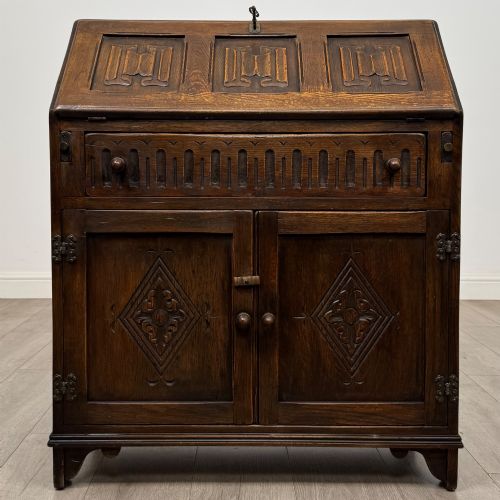
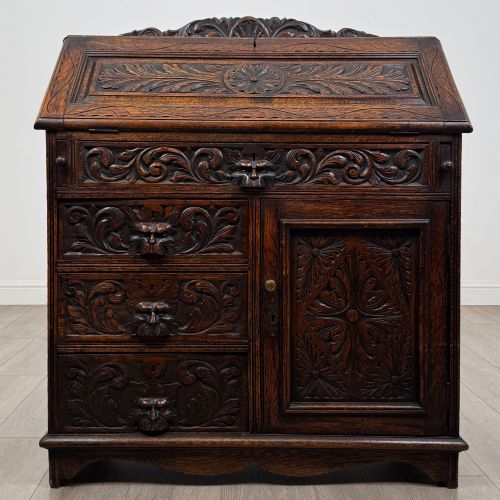

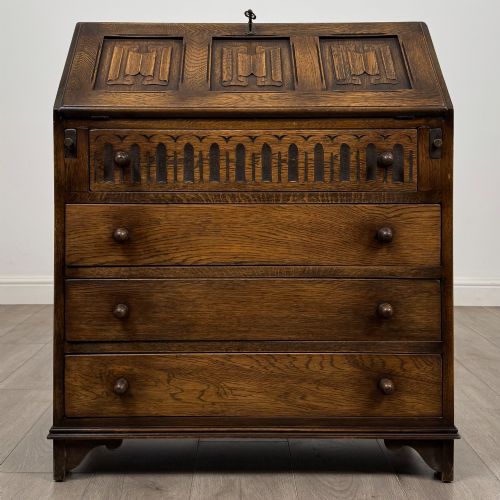
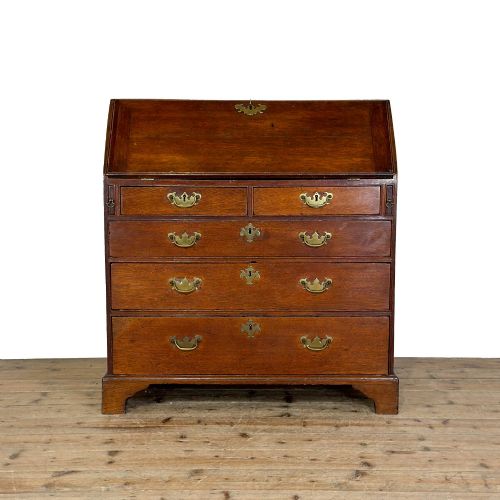
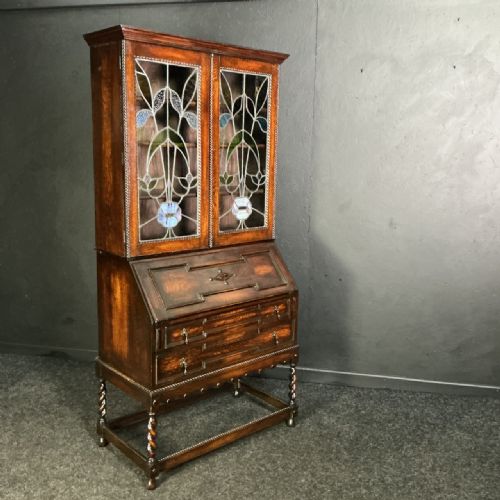
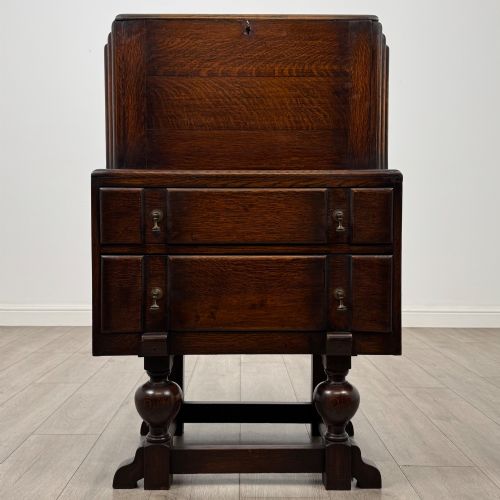
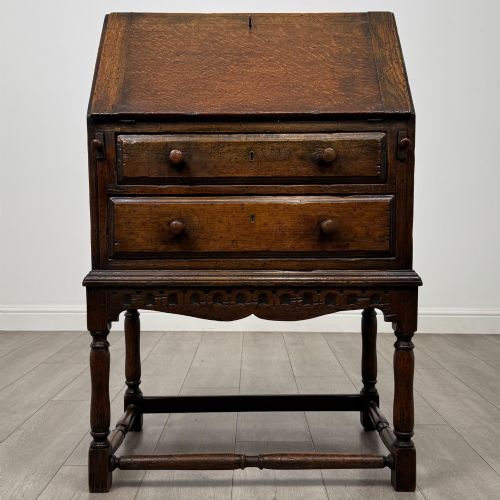
Dark Oak Slant Desk
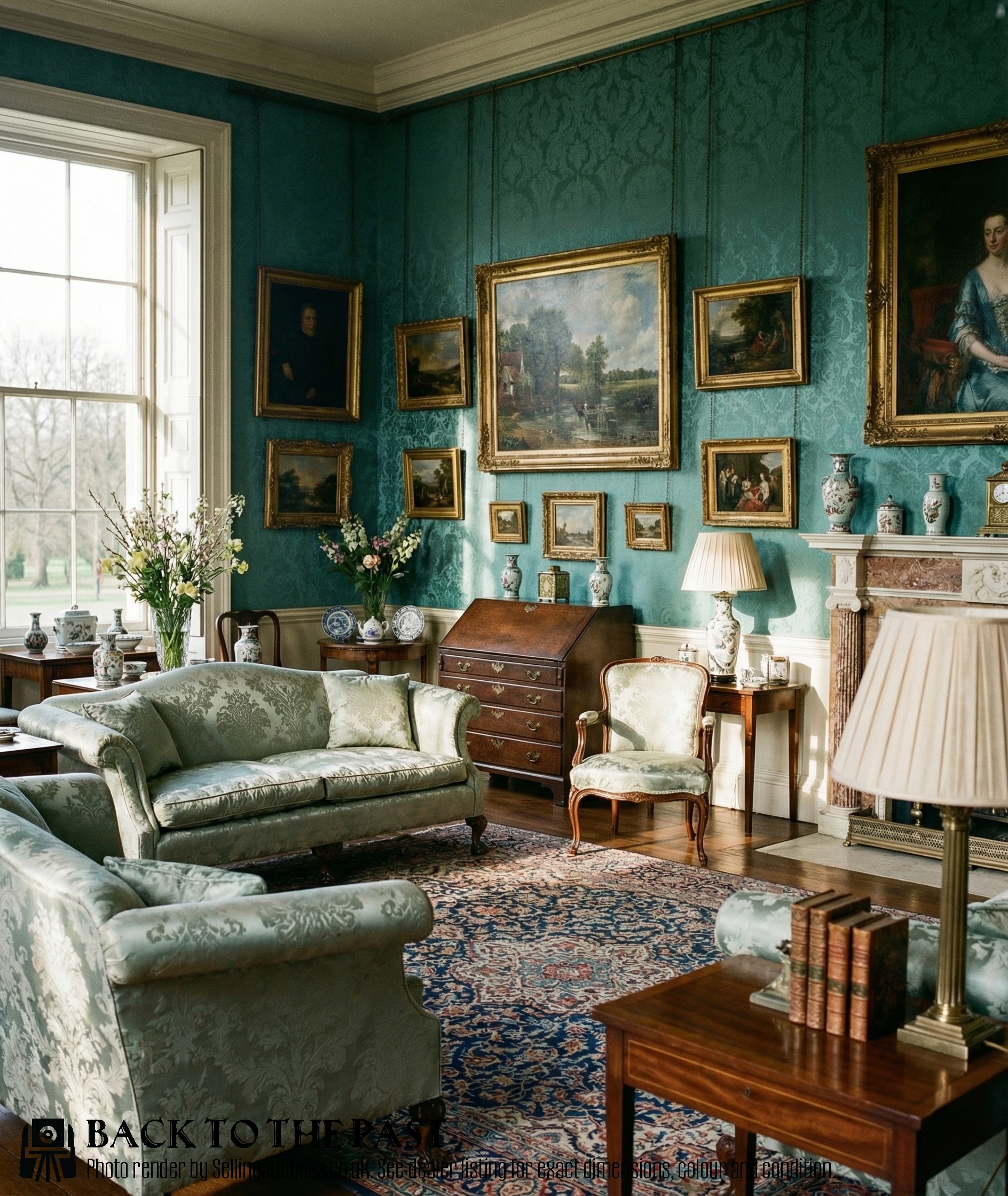
A dark oak slant desk brings centuries of practical writing tradition straight into a study through heavy timber and sloping lids.
Dark Oak Slant Desk
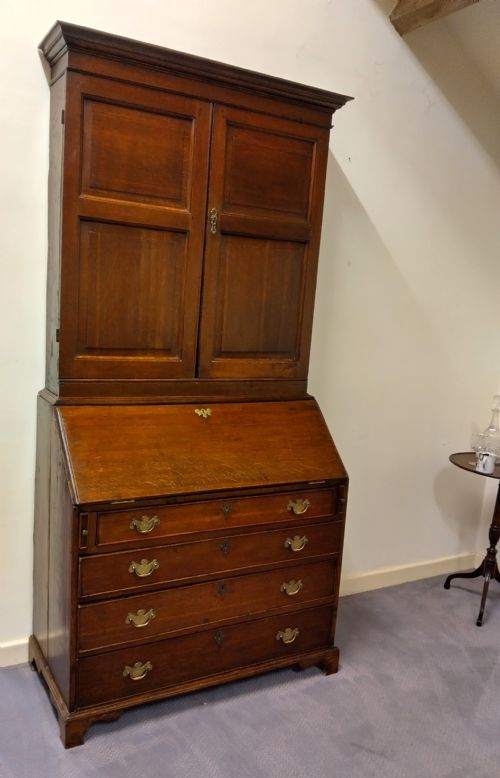
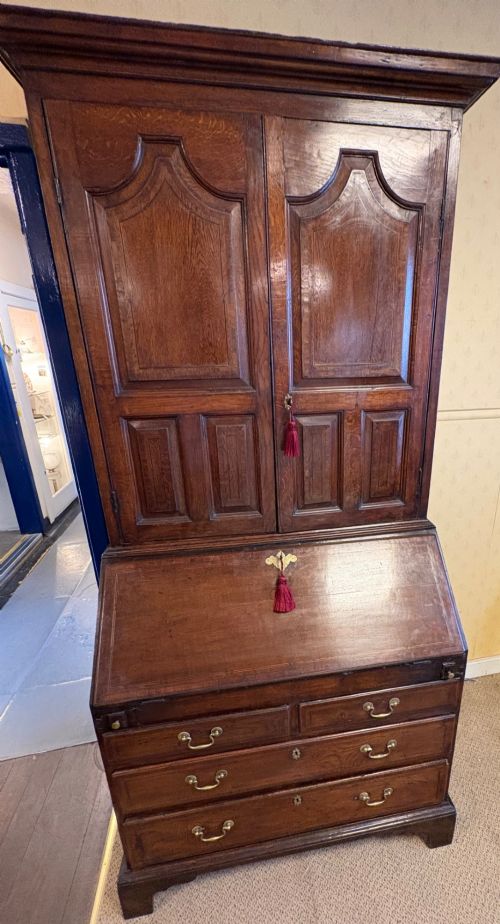
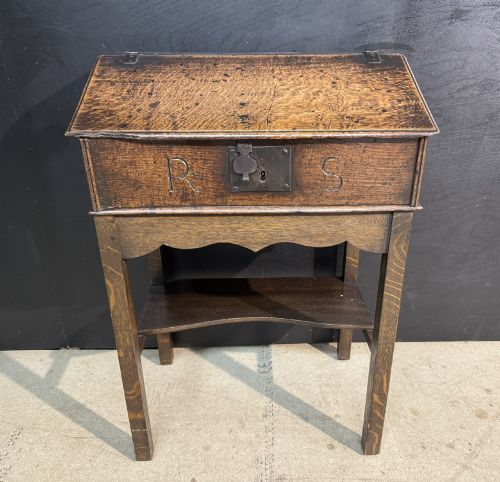
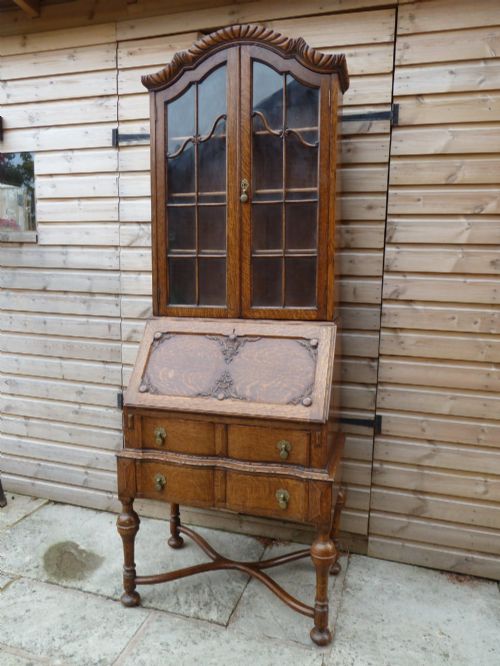
A dark oak slant desk unites functional workspace and enclosed storage within a sloping fall-front format. These pieces range from early 17th century writing slope boxes and Bible boxes to substantial 18th century bureaux and tall bureau bookcases.
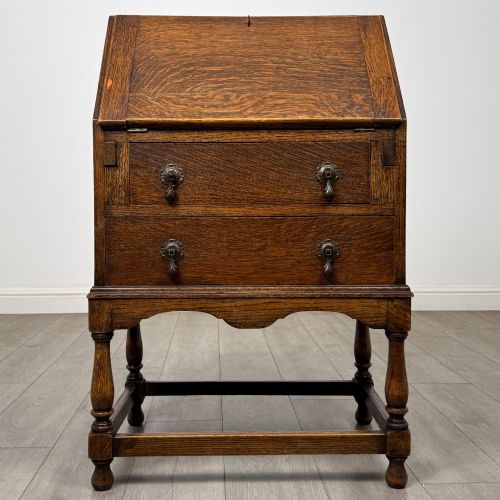
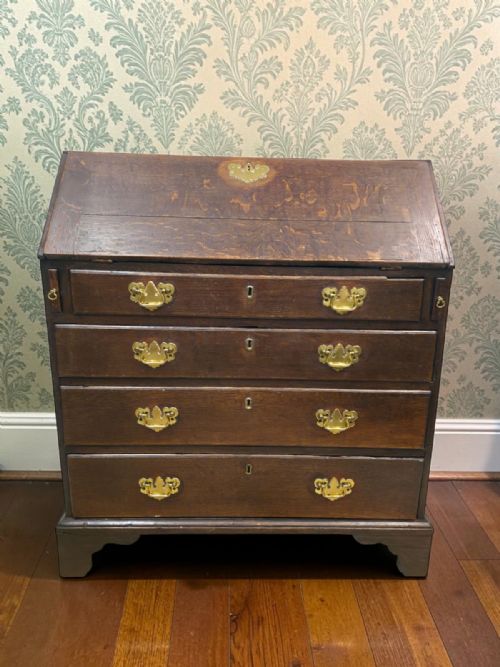
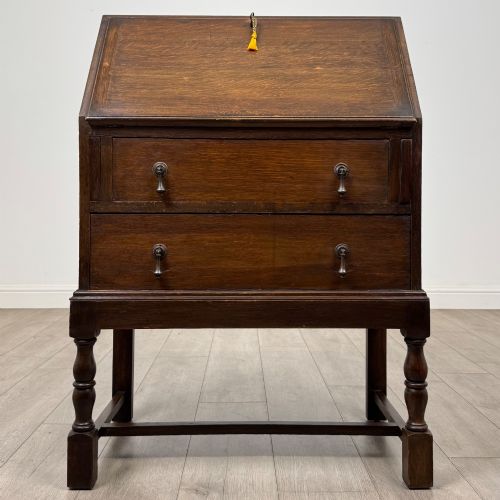
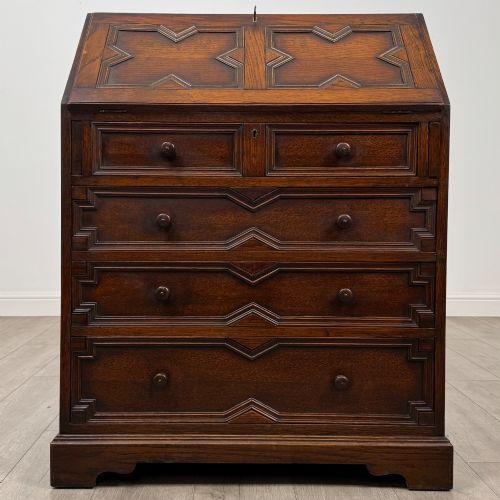
The pieces appearing on this page span several distinct periods including the 17th century, Georgian era, Victorian period, and Edwardian revivals. Bureau forms and writing desks dominate the selection, often featuring fitted stepped interiors and drawers beneath the main writing flap.
Buyers encountering these items will discover variations from vernacular 17th century construction to later Jacobean style and linenfold revivals. Each format provides a dedicated writing surface that conceals pigeonholes and small drawers when closed.
Assessing Quality and Character
Quality rests heavily on the sophistication of the interior fittings, such as stepped drawers and secret compartments found within early examples. The depth of patination on the oak surface and the crispness of any carved ornamentation distinguish superior pieces.
Proportion and structural integrity dictate the standing of a desk, particularly where fall fronts meet the main carcase. Adaptations and alterations alter the historical standing of older items, whereas untouched timber preserves the integrity of the period.
Dark Oak Slant Desk Retail Price Guide 2026
Typical asking prices for dark oak slant desk among the pieces listed under this phrase on Sellingantiques today, from the lower quarter to the upper quarter. They describe what is for sale here now, not the wider market.
A few dark oak desks conceal secret compartments inside their stepped interiors, ready to hide love letters or hidden fortunes.
Pairs MFG Co
The Dark Oak Slant Desk Glossary
- Fall front
- The hinged sloping panel that opens outward to create a writing surface on a bureau or slant desk. This panel conceals the interior pigeonholes and small drawers when locked in the vertical position.
- Bureau bookcase
- A dual-purpose piece combining a sloping desk base with an upper shelving or glazed bookcase section. These taller formats provide both writing facilities and display space.
- Bible box
- A small portable wooden box with a sloping lid traditionally used for storing scriptures and writing materials. These early antecedents often pre-date full-size standing desks.
- Stepped interior
- An arrangement of internal small drawers and pigeonholes arranged in ascending tiers inside the desk flap. This intricate cabinetry represents a mark of finer craftsmanship.
- Linenfold
- A style of wood carving that mimics the appearance of folded fabric or linen. This decorative motif frequently decorates panels on Edwardian revival pieces.
Dark Oak Slant Desk: Frequently Asked Questions
What is a slant desk?
A slant desk is a writing furniture piece featuring an angled lid that folds down to form a flat workspace. Inside, it typically houses a collection of small drawers and pigeonholes for stationery.
These desks evolved from portable writing boxes into substantial freestanding furniture pieces designed for domestic and professional correspondence.
How do I date an oak bureau?
Dating relies on observing construction methods, handle hardware, timber patination, and stylistic details like linenfold carving or green man motifs. Early pieces from the seventeenth century often show vernacular construction, whereas Georgian items display refined proportions.
Revival pieces from the Edwardian era emulate earlier Jacobean styles while retaining twentieth-century manufacturing signatures.
How do I maintain dark oak furniture?
Maintenance involves keeping the timber away from direct heat sources and extreme humidity fluctuations that cause wood to split. Regular dusting and occasional application of appropriate wax preserve the natural sheen of the oak.
Harsh chemical cleaners should be avoided to protect the historic patination accumulated over centuries.