

Brown Walnut Slant Desk
A brown walnut slant desk brings centuries of cabinet-making craft directly into a room, offering a private writing surface that conceals fitted drawers and pigeonholes beneath a sloping lid.
Brown Walnut Slant Desk
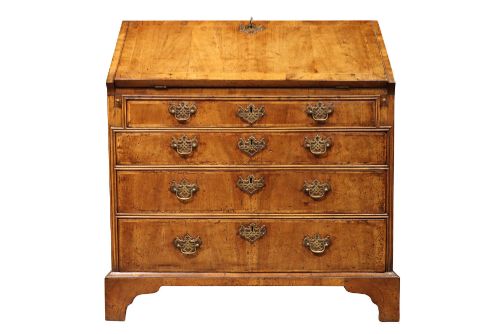
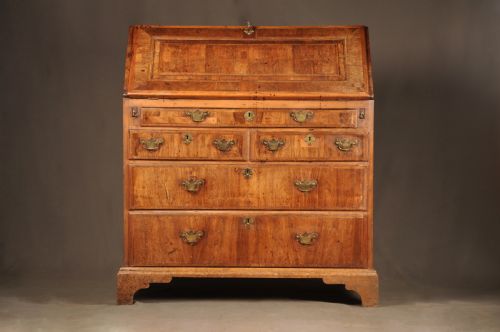
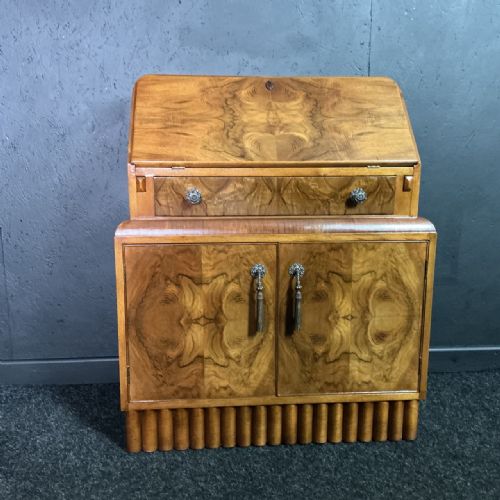
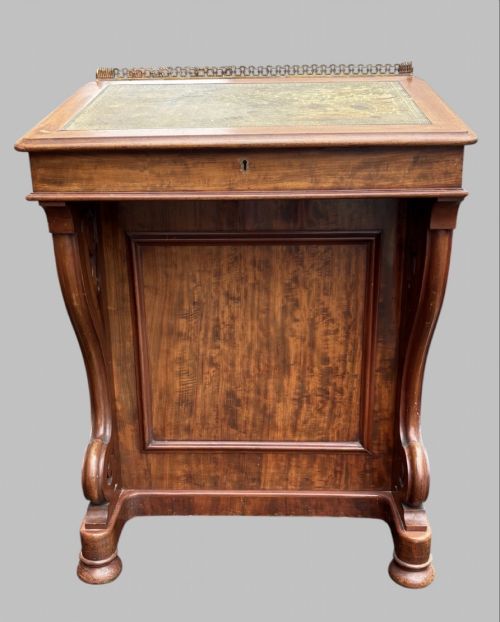
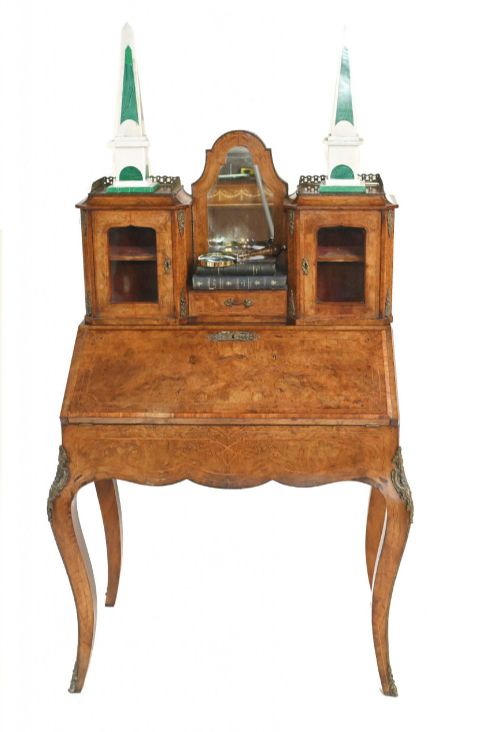
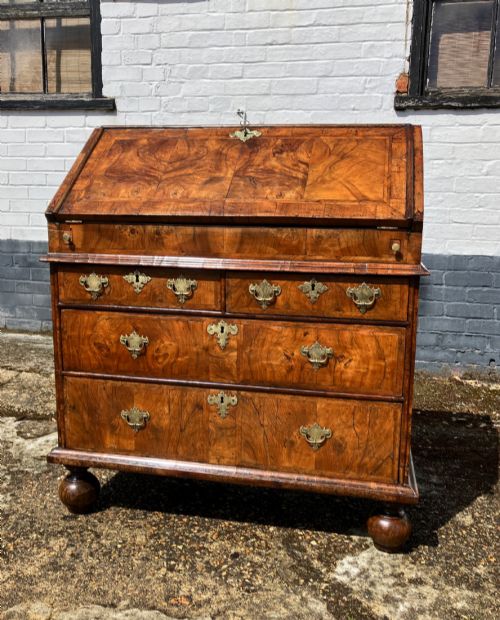
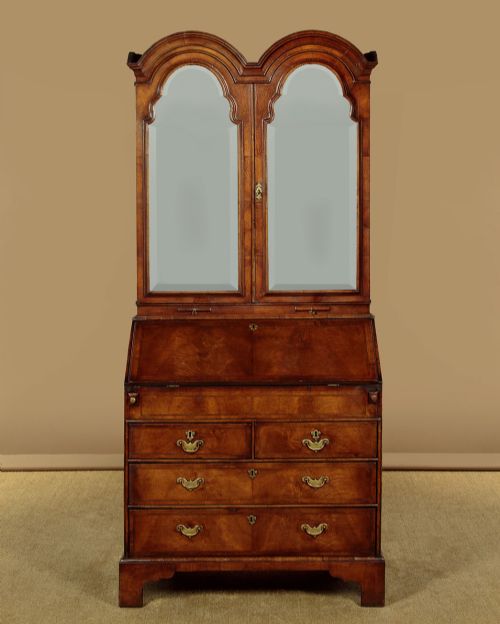
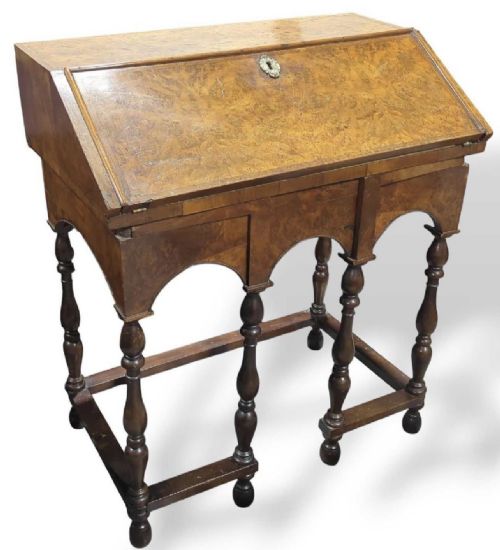
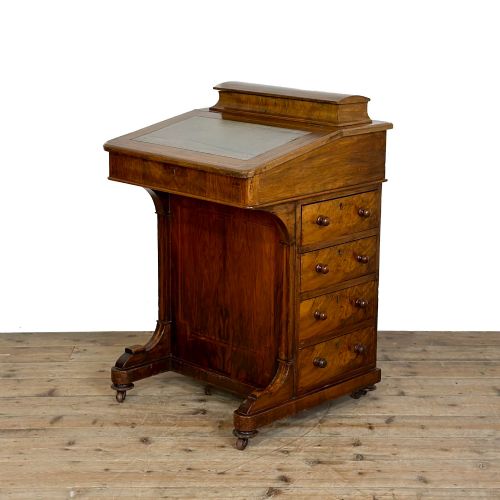
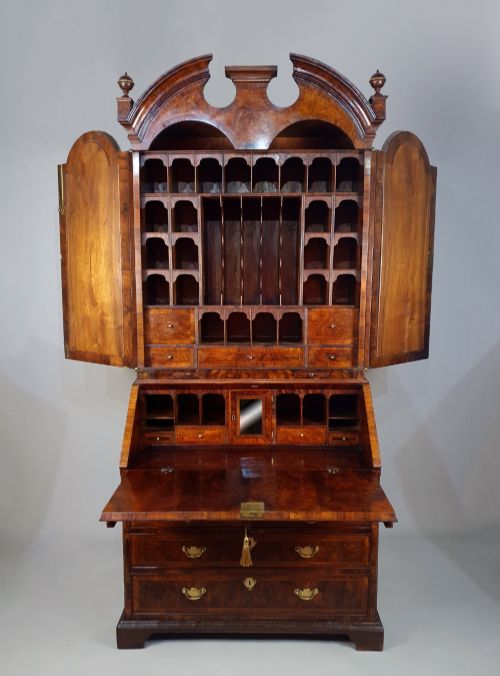
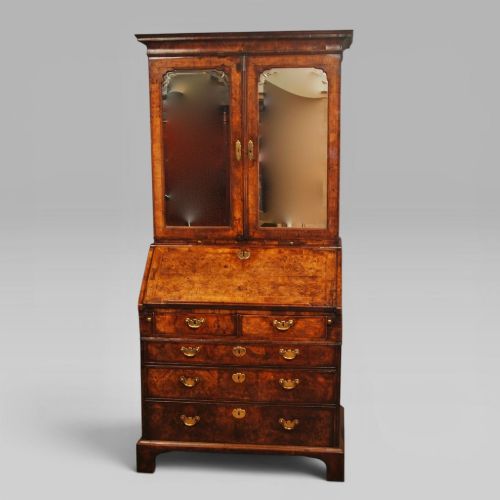
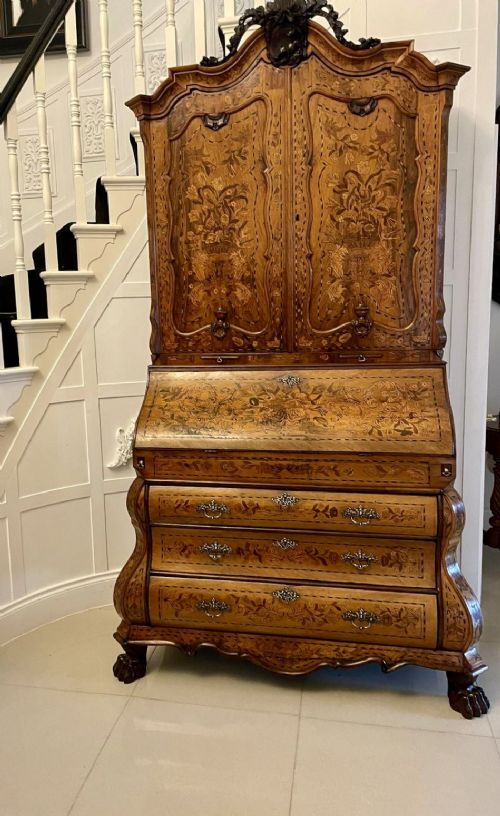
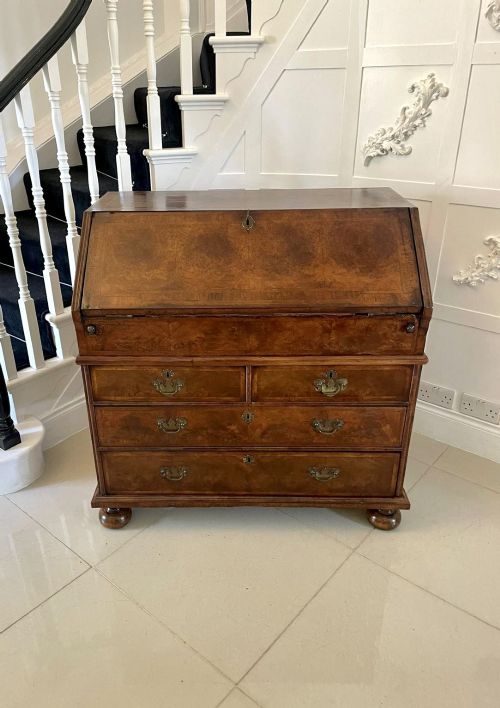
A brown walnut slant desk encompasses several historical forms, including traditional sloping bureaus, larger bureau bookcases with upper shelving, compact Davenport desks, and refined writing cabinets. These pieces span multiple eras, from early seventeenth-century origins and Queen Anne styles through Georgian periods, Victorian interpretations, and twentieth-century reproductions.
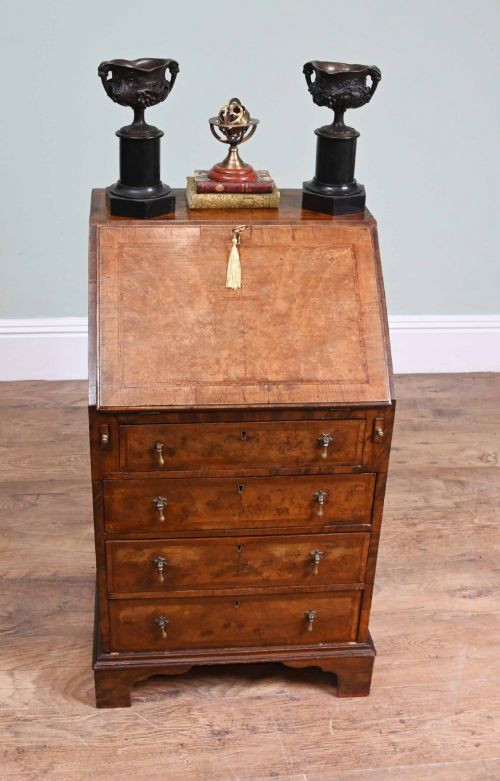
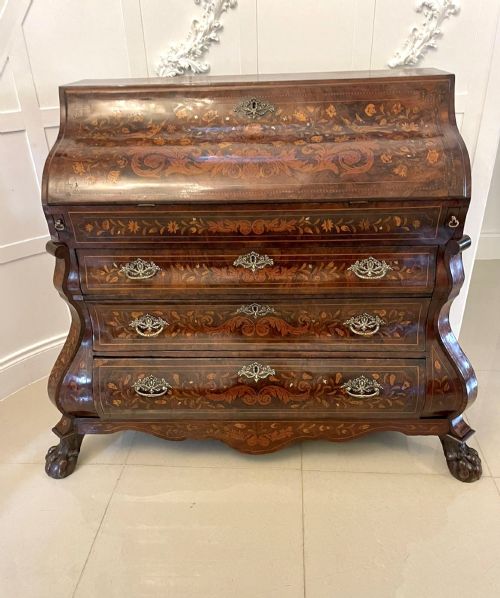
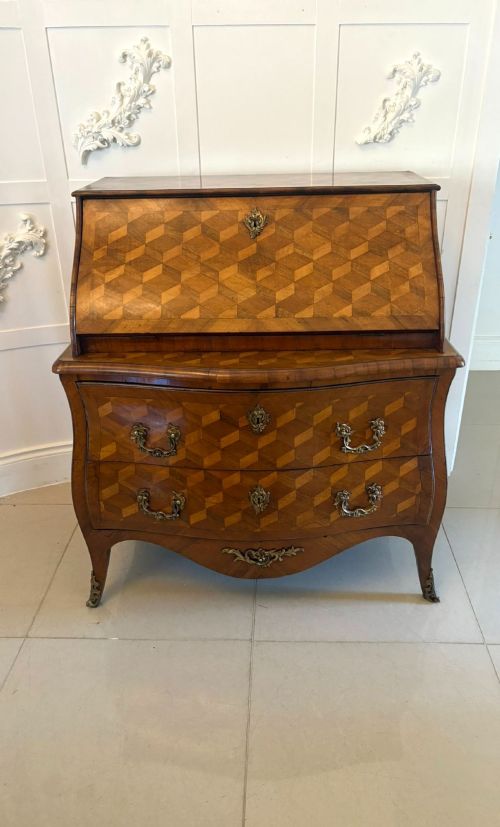
The varieties encountered here range from simple fall-front cabinets resting on bracket feet to elaborate bomb-shaped forms and tall double-dome bureau bookcases. Buyers frequently encounter standard writing desks alongside specialised formats like piano-top Davenports and bureau de dame models designed for intimate domestic spaces.
Judging execution and finish
The standard of a piece rests heavily on the selection and matching of the veneer grain across the fall front and drawer faces, where superior examples display symmetrical, mirrored patterns. The depth of the timber's natural colour and the crispness of inlaid banding indicate the original maker's level of skill.
Internal configuration also separates standard furniture from finer productions, particularly the complexity of secret compartments, stepped pigeonholes, and small drawers hidden within the writing well. The integration of period-appropriate brass hardware and original structural joinery determines the integrity of the piece.
Brown Walnut Slant Desk Retail Price Guide 2026
Typical asking prices for brown walnut slant desk among the pieces listed under this phrase on Sellingantiques today, from the lower quarter to the upper quarter. They describe what is for sale here now, not the wider market.
Some slant desks hide secret drawers inside the interior well, accessible only by sliding or lifting hidden wooden panels.
Maple and Co
The Brown Walnut Slant Desk Glossary
- Burr walnut
- A specialised wood cut from walnut tree growths, yielding highly swirled, mottled patterns that cabinet makers applied as decorative veneer to primary surfaces.
- Slant desk
- A writing furniture form featuring an angled, hinged lid that drops forward to create a flat surface for writing.
- Marquetry
- The art of forming decorative patterns by fitting together thin slices of various coloured woods, often depicting floral motifs.
- Bureau bookcase
- A tall combination piece uniting a sloping desk base with enclosed shelving or cabinet doors above.
- Davenport desk
- A compact writing desk featuring a sloping top, side drawers, and often a small superstructure for stationary.
Brown Walnut Slant Desk: Frequently Asked Questions
How do I identify the period of a walnut desk?
Dating relies on observing structural proportions, cabinetry techniques, and decorative motifs like herringbone stringing or floral marquetry. Early pieces from the seventeenth and early eighteenth centuries often display herringbone banding, candle slides, and rich walnut patination.
Later Victorian and Edwardian examples frequently adopt earlier Queen Anne or Georgian styles while utilising machine-cut veneers, different secondary woods, and varied interior drawer arrangements.
How were these slant desks used historically?
These pieces served as private household workstations where individuals wrote letters, managed accounts, and stored personal documents. Dropping the slant lid provided an immediate writing surface while concealing the messy collection of inkwells, papers, and letters stored inside.
When closed, the sloped fall front kept private correspondence secure from household staff and visitors, often locking in place with an iron key.
Where should I place a walnut slant desk in a room?
These desks suit studies, living rooms, and bedrooms where their rich walnut tones complement traditional or transitional interior schemes. Because many examples feature finished backs or sides, they can sit against perimeter walls or serve as statement accent pieces.
Consider natural light sources near a window to illuminate the writing surface while protecting the wood veneers from prolonged direct sunlight.