

Walnut Desk with Drawers
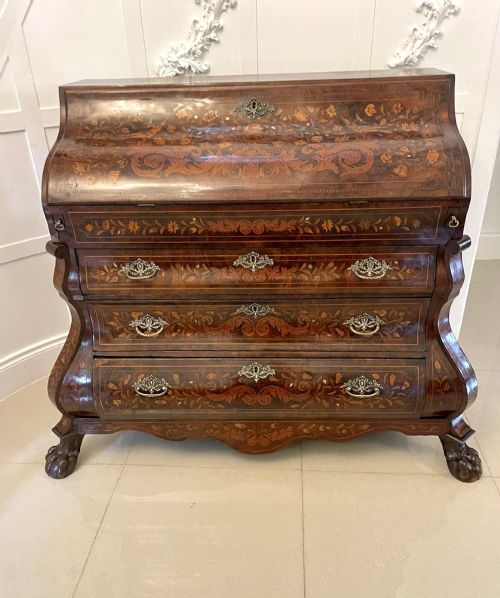
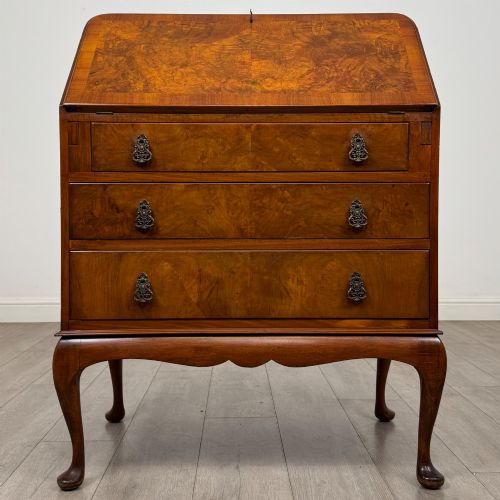
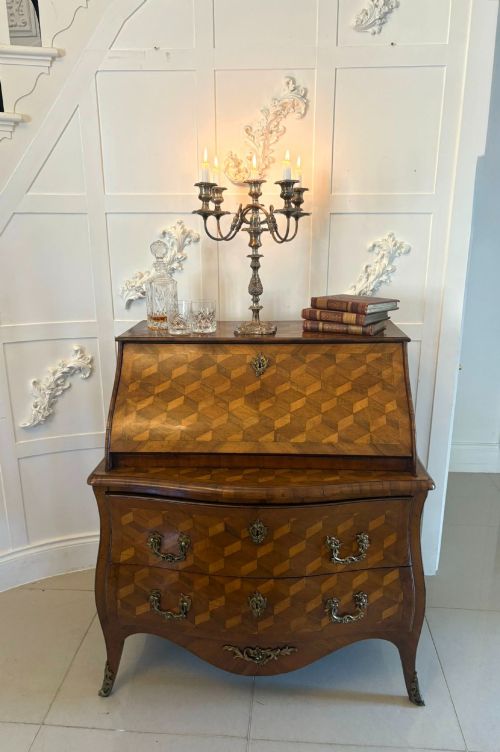
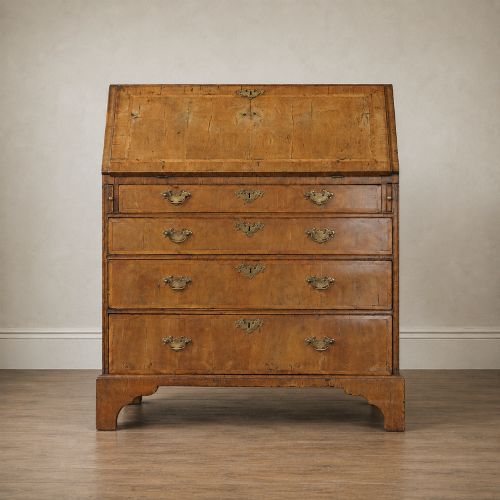
A walnut desk with drawers brings warmth and formal utility into a room, joining figured timber with compartments for correspondence.
Walnut Desk with Drawers
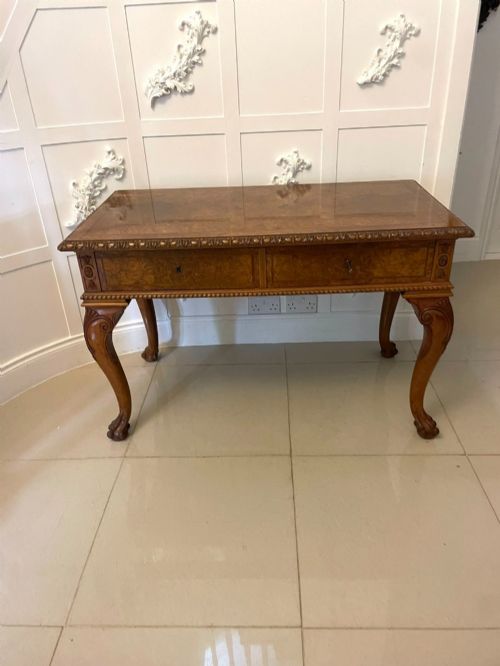
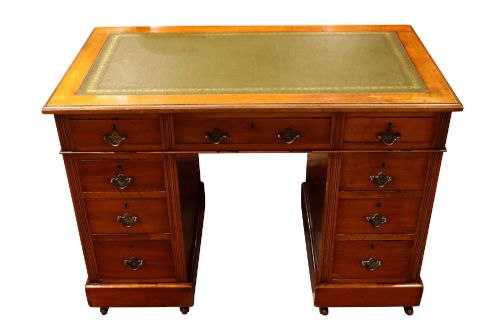
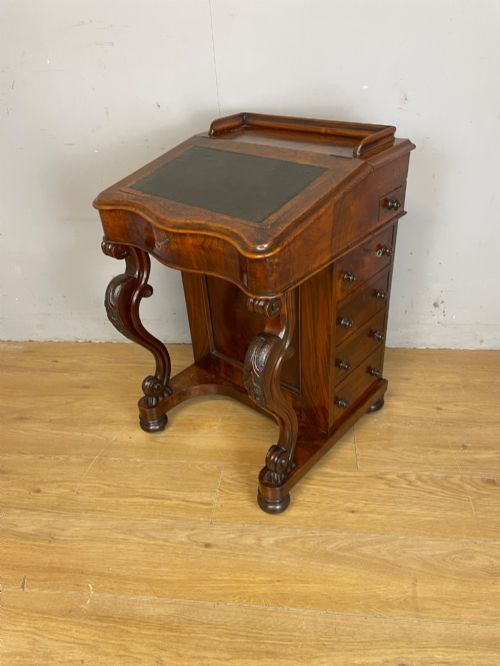
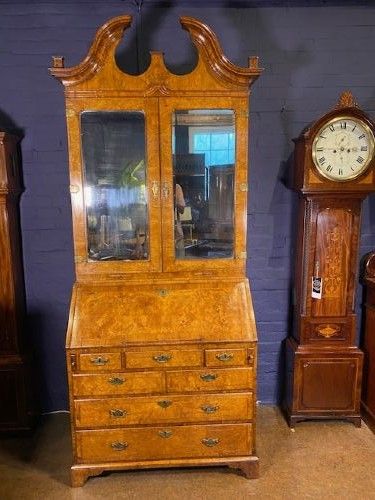
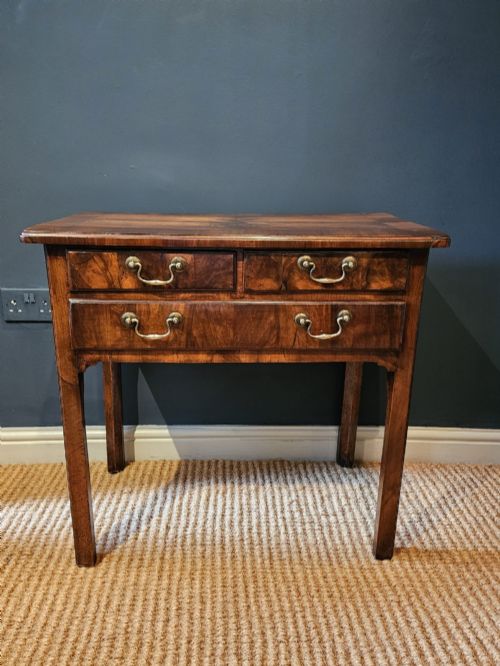
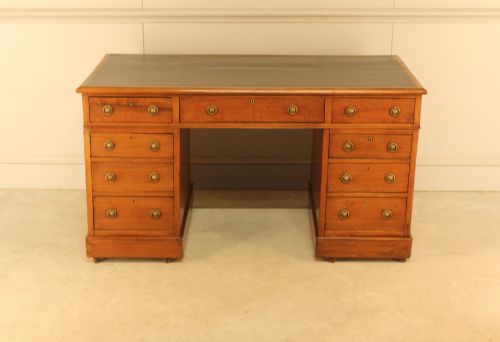
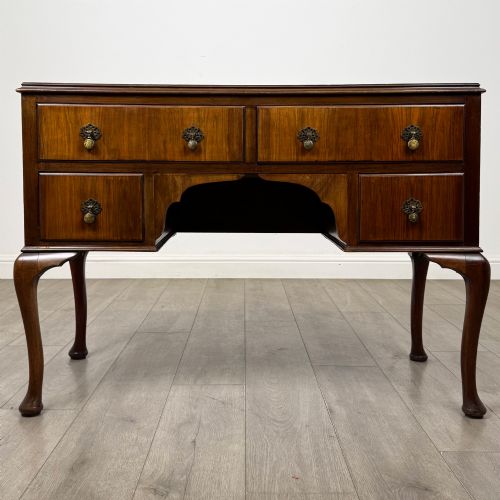
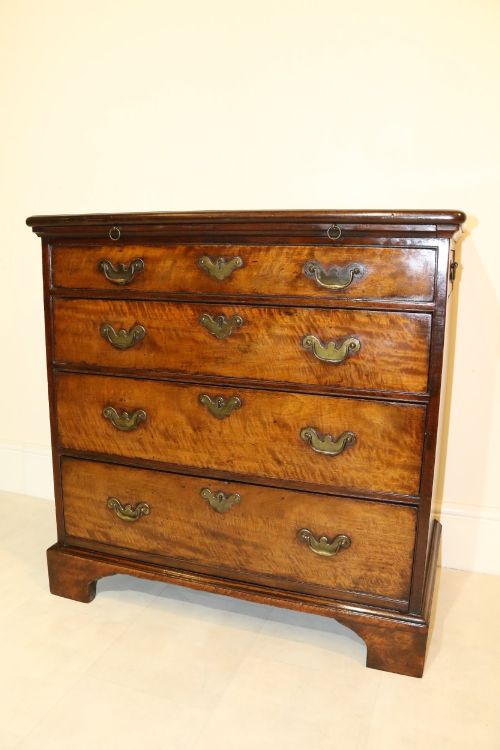
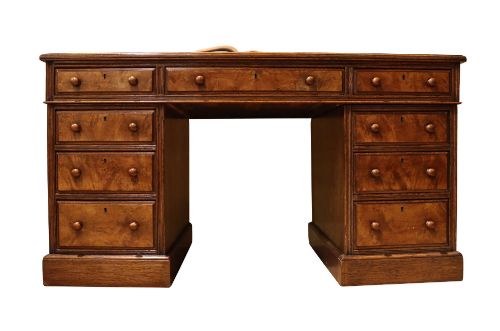
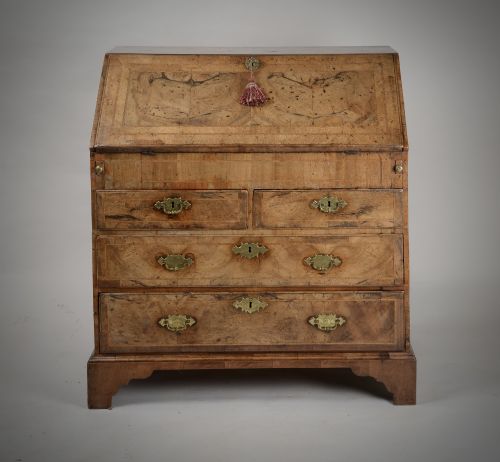
The practical function remains consistent across these periods, pairing a writing surface with multiple drawers for storage. You meet compact lowboys, kneehole desks with central recesses, and fall-front writing cabinets.
Early pieces often showcase fitted interiors with small pigeonholes and secret compartments behind the primary drawers. Later twentieth-century examples lean towards clean pedestal configurations suited to continuous daily use.
Judgements of Quality
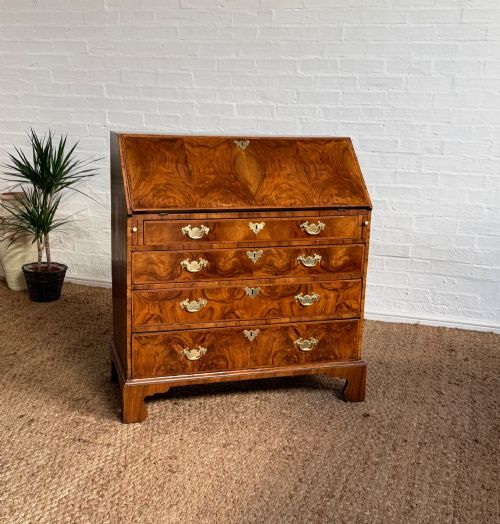
The distinction between tiers rests upon the selection of the timber veneers and the crispness of the cabinetmaker's joinery. Superior pieces display book-matched burr walnut grain that flows logically across the drawer fronts and fall fronts.
Attention to interior detail separates standard examples from exceptional ones, particularly the complexity of internal pigeonholes and the retention of original brass hardware or ironwork. The integrity of the underlying oak construction and the stability of the drawer frames govern longevity.
Walnut Desk with Drawers Retail Price Guide 2026
Typical asking prices for walnut desk with drawers among the pieces listed under this phrase on Sellingantiques today, from the lower quarter to the upper quarter. They describe what is for sale here now, not the wider market.
Listings span from early eighteenth-century walnut bureaux to Edwardian pedestal writing desks.
Gill & Reigate·Gillow and Co·Maple and Co
The Walnut Desk with Drawers Glossary
- Bureau
- A writing cabinet featuring an angled fall-front that drops to reveal a fitted interior above a set of drawers. It provides both a closed writing slope and concealed storage.
- Burr Walnut
- A distinctively figured wood grain taken from the growth excrescences of the walnut tree. It produces intricate, swirling patterns prized for decorative veneer panels.
- Lowboy
- A small table with drawers, typically standing on four legs, used historically for writing or dressing. Eighteenth-century examples often feature cabriole legs.
- Kneehole Desk
- A pedestal desk or table featuring a central recess for the user's legs, flanked by vertical stacks of drawers. It allows a seated position directly facing the writing surface.
- Pedestal Desk
- A heavy writing desk supported by two independent banks of drawers reaching down to the floor. The top surface often incorporates an inset leather panel.
Walnut Desk with Drawers: Frequently Asked Questions
What is a walnut bureau?
A walnut bureau is a writing cabinet featuring a sloping lid that opens to form a desk surface. It usually includes internal pigeonholes and multiple exterior drawers.
These pieces served as private writing stations for correspondence and accounts in period homes.
How do I date an old desk?
Dating relies on examining construction methods, timber choice, and hardware styles. Hand-cut dovetails and original ironwork point to earlier centuries.
Later Victorian and Edwardian examples often display machine-sawn elements and different secondary woods like pine or oak linings.
Are these desks good for daily use?
Many solid pedestal desks and writing tables suit regular laptop and writing work. Their robust construction handles everyday tasks.
Antique bureaux with delicate fall-fronts require slightly more care regarding the hinges and writing surface strains.
What is burr walnut?
Burr walnut is a specialised veneer harvested from tree burls. It exhibits swirling, organic patterns that make each furniture piece unique.
Makers reserved this timber for the most prominent exterior surfaces of high-status desks.