
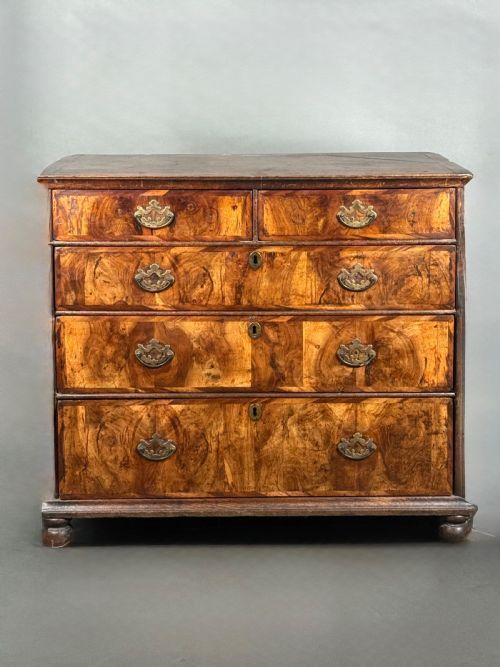
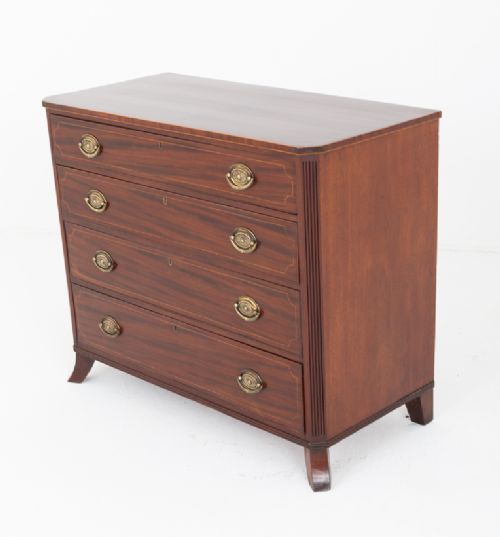
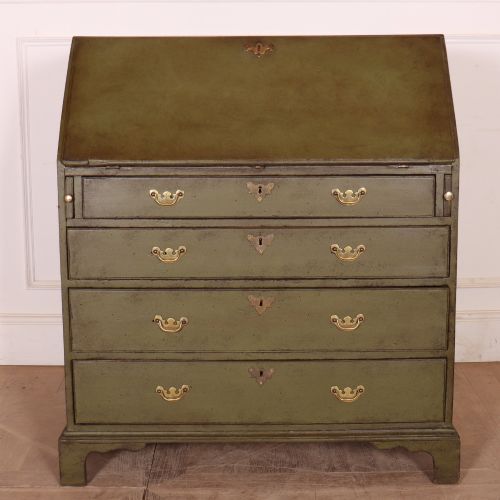
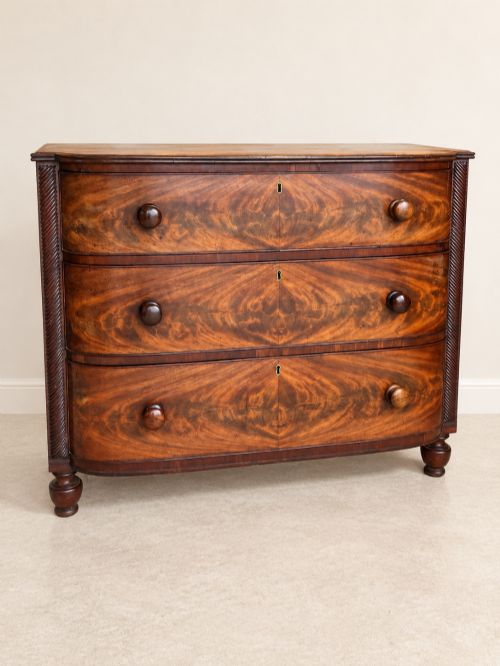


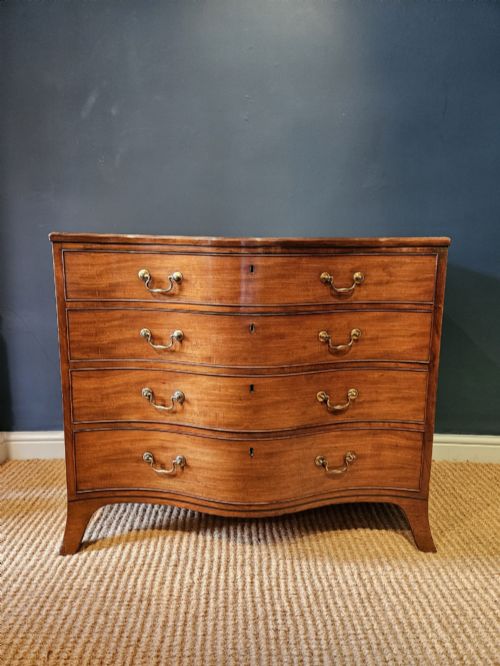
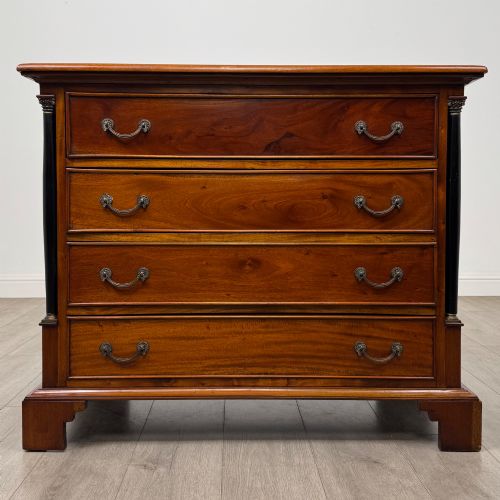
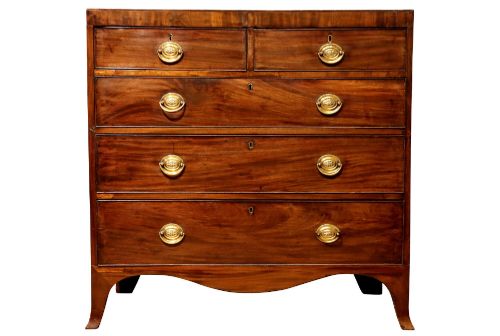
Georgian Bureau with Drawers
A georgian bureau with drawers offers a practical writing slope and hidden compartments, combining daily utility with period presence.
What a georgian bureau with drawers is
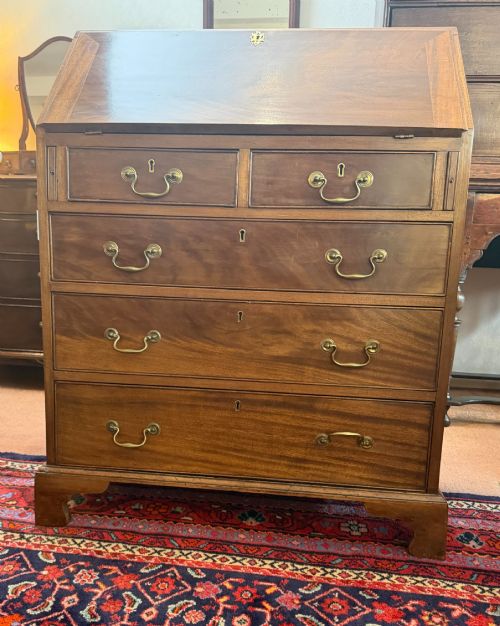
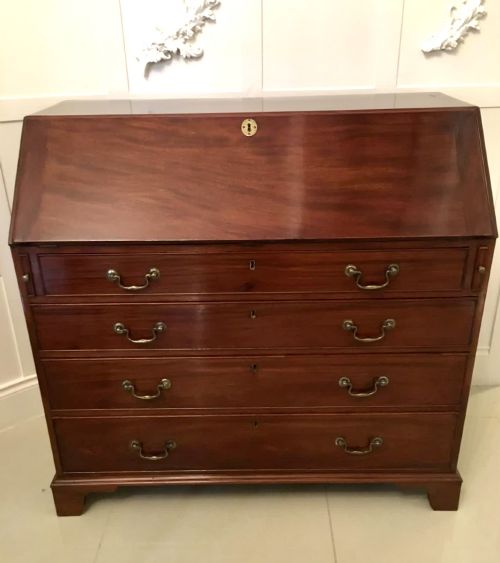
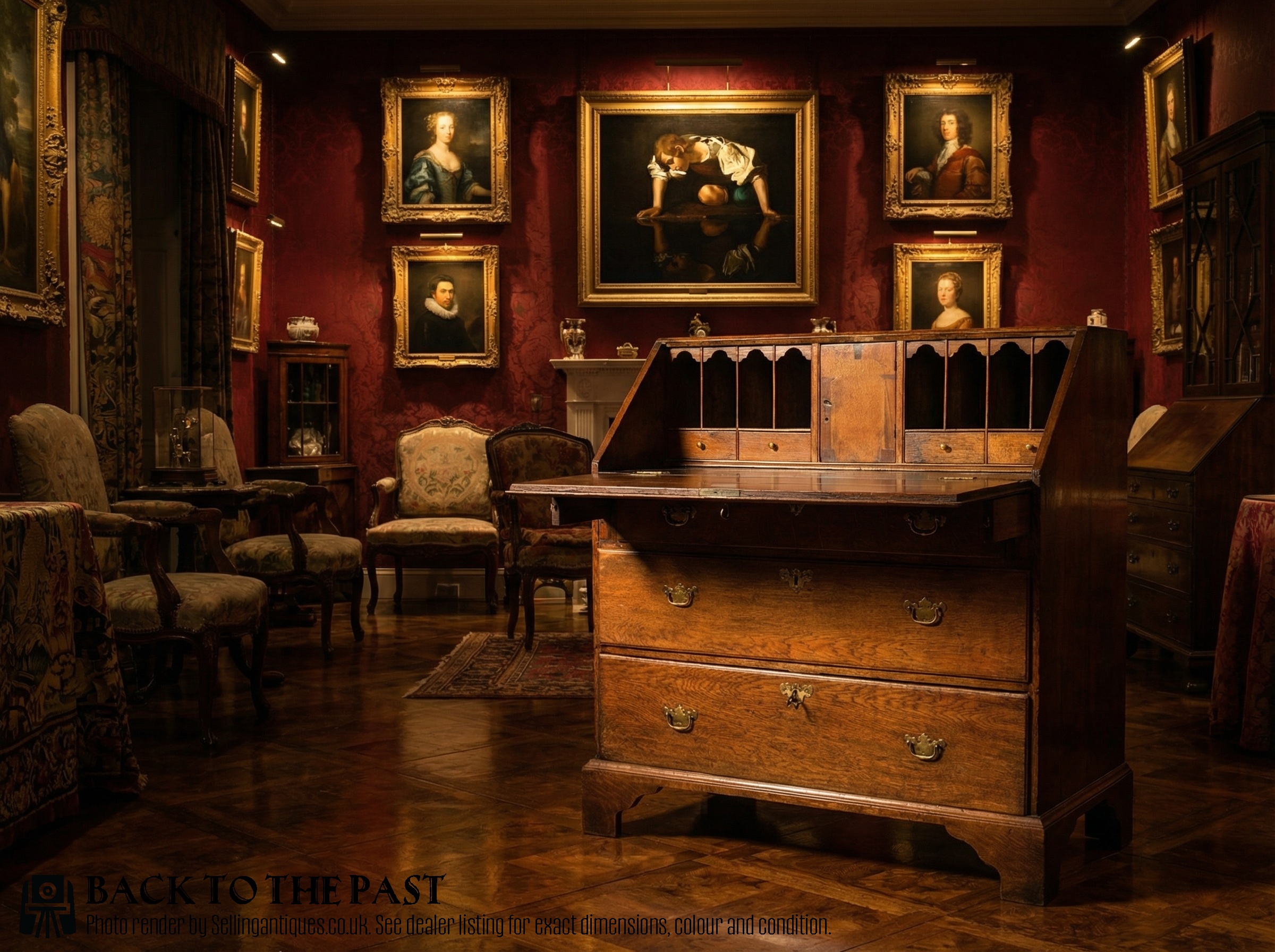
A georgian bureau with drawers is a dual-purpose writing desk and storage chest, housing a hinged flap that drops to reveal fitted pigeonholes and small drawers. Beneath this writing surface sit graduating exterior drawers for household storage.
Most pieces seen here belong to the Georgian and Georgian style eras, spanning from the early eighteenth century through to later nineteenth-century interpretations and early twentieth-century revivals.
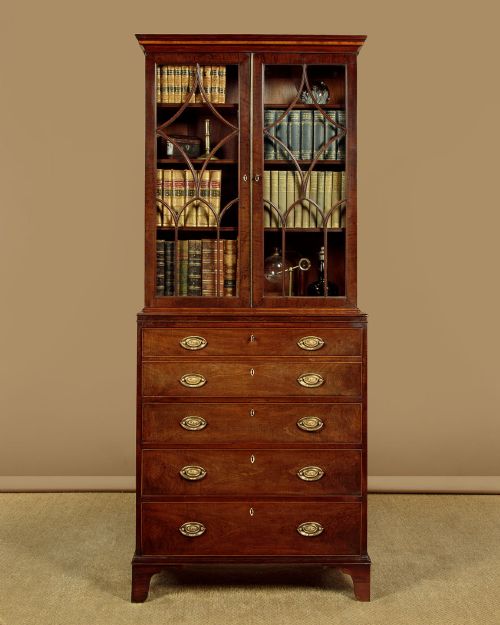
The primary forms on this page take the shape of freestanding mahogany or oak writing bureaux, occasionally incorporating secret compartments or supplementary bookcase upper sections.
How they were made
Cabinet makers constructed these pieces using solid hardwoods and selected veneers, primarily relying on mahogany, walnut, and oak. Interiors often feature secondary timbers such as oak for drawer linings.
Construction methods utilise traditional joinery techniques, paired with brass hardware including escutcheons, handles, and occasional ogee feet to support the heavy carcase.
Retail Price Guide 2026
Typical UK retail prices for georgian bureau with drawers, calculated from the Sellingantiques database of over a million retail prices indexed since 2003. This retail price guide relies exclusively on Sellingantiques data; no external sources or auction records are used, so the figures do not describe the wider market.
The listings span multiple centuries, showing mahogany and oak as dominant materials across Georgian and later revival periods.
What varies in quality
Quality rests in the selection of timber figures and the precision of the interior fitments, where concealed compartments and pigeonhole layouts demonstrate the maker's skill. Solid drawer linings and crisp secondary timber choices elevate an example.
The architectural proportion of the fall-front slope and the integrity of the bracket or ogee feet dictate the visual balance of the bureau.
The Georgian Bureau with Drawers Glossary
- Bureau
- A writing desk featuring a sloping hinged lid that opens to form a writing surface above a chest of drawers.
- Fall-front
- The hinged writing flap of a bureau that lowers to reveal the fitted interior and supports the user's weight while writing.
- Escutcheon
- A protective brass plate surrounding a keyhole, designed to prevent the surrounding wood from splintering.
- Ogee bracket foot
- An S-shaped architectural foot style commonly used on eighteenth-century case furniture to lift the base off the floor.
Frequently Asked Questions
What is inside a bureau?
Opening the fall-front reveals a fitted interior containing small stationery drawers, pigeonholes for documents, and occasionally concealed secret compartments.
Beneath this writing space, exterior graduating drawers provide ample room for household storage.
How do I date a bureau?
Dating relies on observing timber choices, construction methods of the drawer linings, and stylistic details such as foot design and brass hardware.
Walnut and early oak examples generally point to earlier periods, while mahogany becomes prominent through the George III era.
Where were they used?
These desks served as private writing spaces and account-keeping stations in the parlours, studies, and bedrooms of period homes.
The lockable fall-front ensured private correspondence and valuables remained secure.
How do I care for the wood?
Protect the timber surfaces by avoiding direct sunlight and maintaining steady indoor humidity levels to prevent veneer lifting.
Applying occasional appropriate wax preserves the historic finish of mahogany, walnut, and oak.