
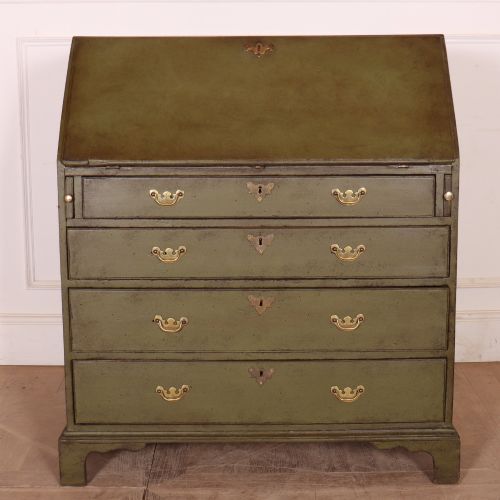
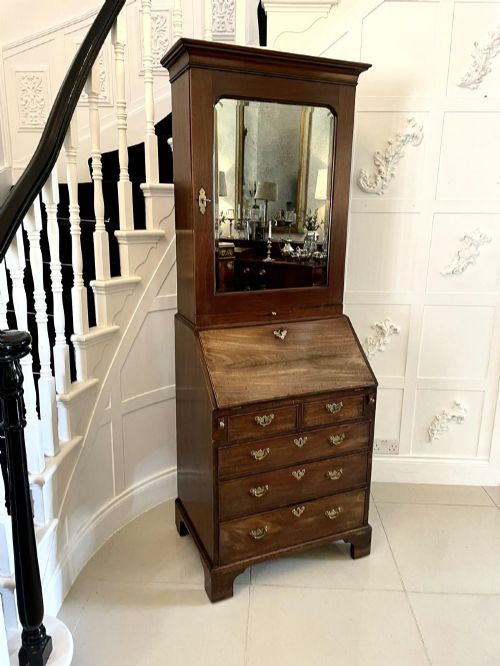


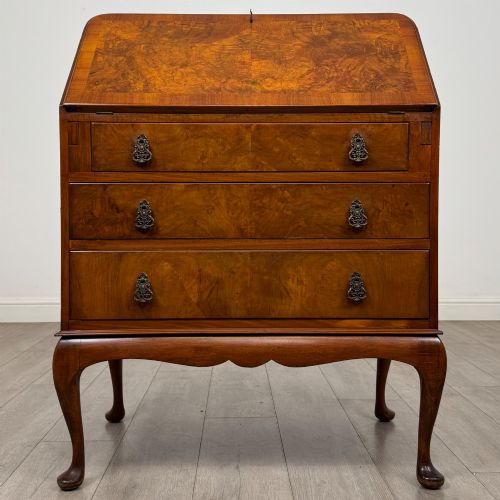
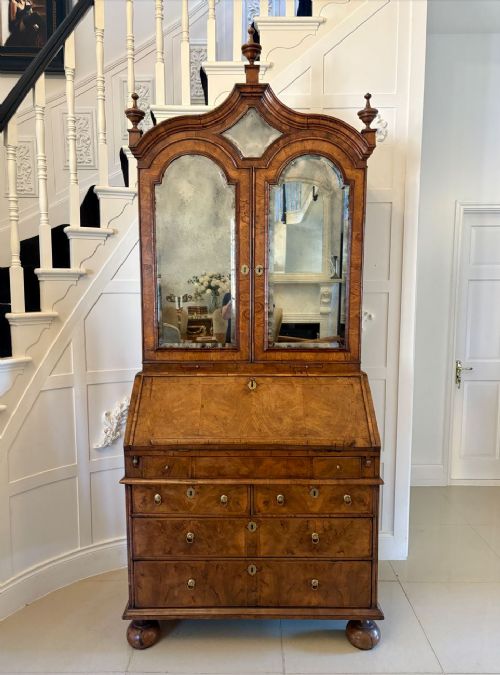
Fall Front Writing Bureau
A fall front writing bureau conceals a fitted desk inside a drop-down panel, offering clever compartments for letters and papers behind a deceptively simple exterior.
Fall Front Writing Bureau
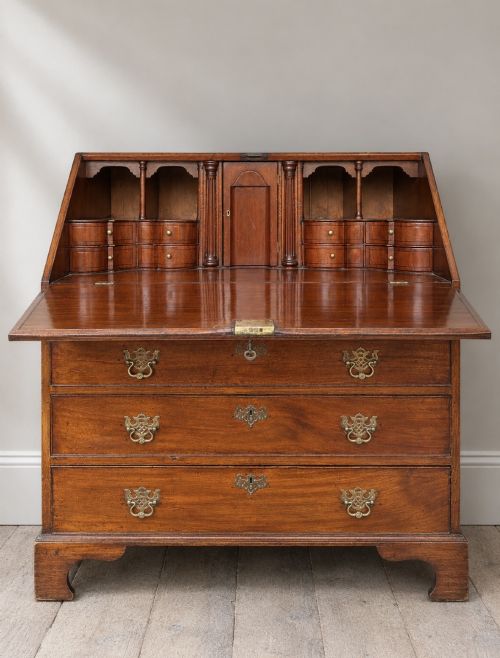
A fall front writing bureau provides a sturdy vertical cabinet that transforms into a writing surface when the hinged flap drops down. These pieces range from compact Edwardian examples to grand eighteenth-century walnut and mahogany forms equipped with tiered drawer interiors.
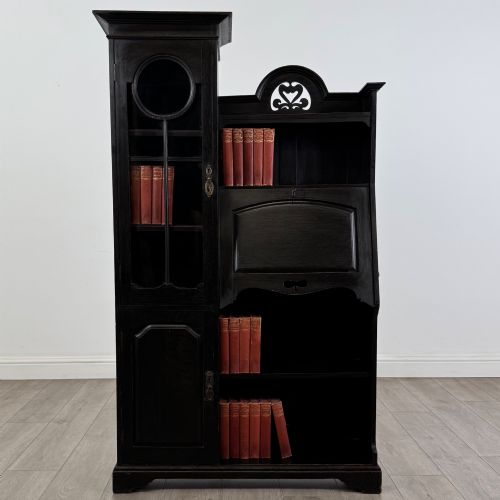
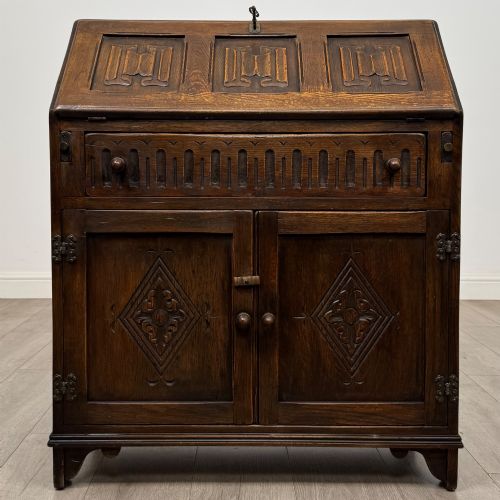
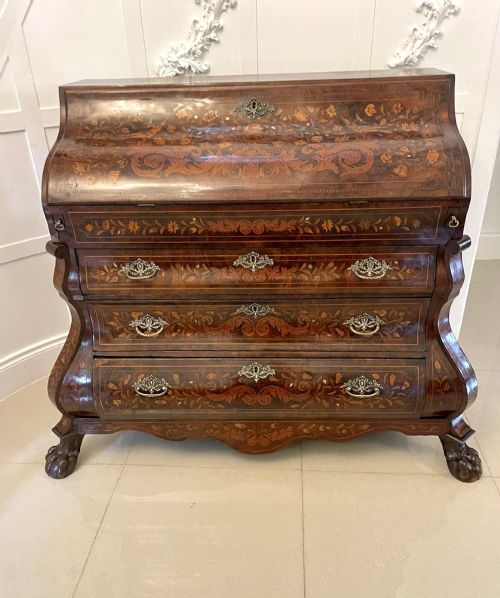
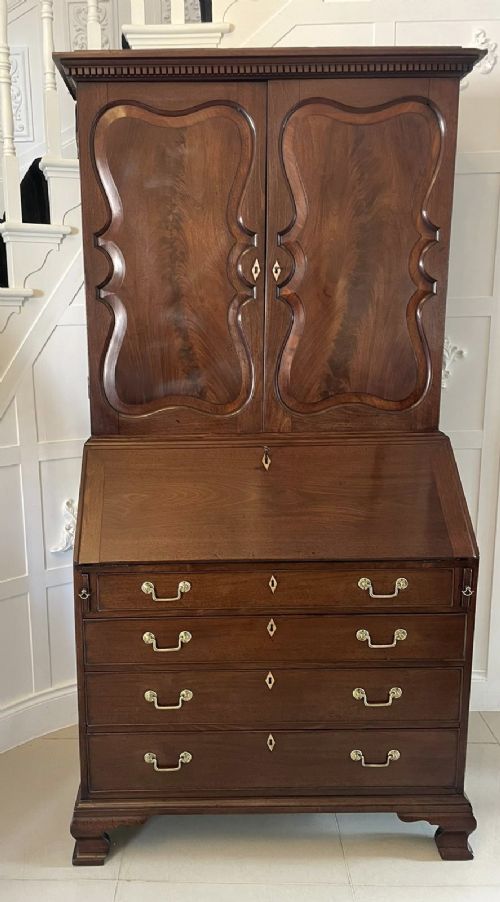
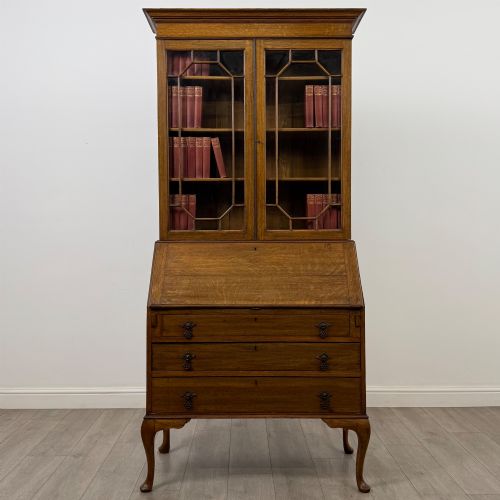
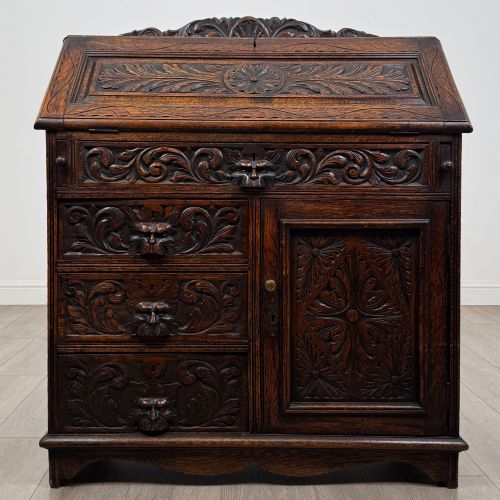
The most common pieces encountered here date from the Georgian and Edwardian eras, spanning simple oak constructions to elaborate marquetry and bureau bookcases. Makers adapted these desks for domestic and commercial use across centuries, resulting in varied regional styles from English bracket-foot designs to continental bombe shapes.
Buyers select these items for practical home writing use and traditional storage. The fitted interior remains the primary focal point, housing small pigeonholes and secret drawers beneath the primary writing flap.
How they were made
Cabinetmakers constructed these pieces primarily in timber, relying on oak, mahogany, and walnut as structural and decorative bases. Workshops applied burr walnut veneers, floral marquetry, and featherbanding to elevate the visual depth of the primary surfaces.
Interior compartments required precise joinery to build miniature drawers, pigeonholes, and sliding wells within the restricted space behind the fall front. Brass handles, escutcheons, and bracket or barley twist supports provided the necessary functional hardware and structural lift.
Fall Front Writing Bureau Retail Price Guide 2026
Typical asking prices for fall front writing bureau among the pieces listed under this phrase on Sellingantiques today, from the lower quarter to the upper quarter. They describe what is for sale here now, not the wider market.
Listings feature eighteenth-century, Regency, Edwardian, and nineteenth-century periods, constructed in oak, mahogany, walnut, and fruitwood.
What varies in quality
Quality rests heavily on the sophistication of the internal timber selection and the complexity of the internal fittings. Superior examples display figured mahogany or burr walnut veneers carried consistently across the fall front and drawer fronts, matched with intricate stepped pigeonhole layouts.
The execution of decorative techniques such as floral marquetry, parquetry, and herringbone inlay distinguishes standard workshop output from exceptional commissions. Secondary woods, drawer linings, and the crispness of carved details further separate high-tier survivals from later or simpler domestic pieces.
Heals of London·Arthur Basil Reynolds
The Fall Front Writing Bureau Glossary
- Fall front
- A hinged writing flap that closes vertically to conceal the desk interior and drops down horizontally to provide a writing surface. This panel is held by internal desk arms or chains when open.
- Bureau bookcase
- A taller furniture form that combines a writing bureau base with an upper shelving or cabinet section enclosed by doors. These pieces often feature glazed or panelled upper doors.
- Marquetry
- Decorative veneer work formed by fitting pieces of various coloured woods, bone, or ivory into a ground veneer to create pictorial patterns. Floral motifs remain common on Dutch and English examples.
- Secretaire abattant
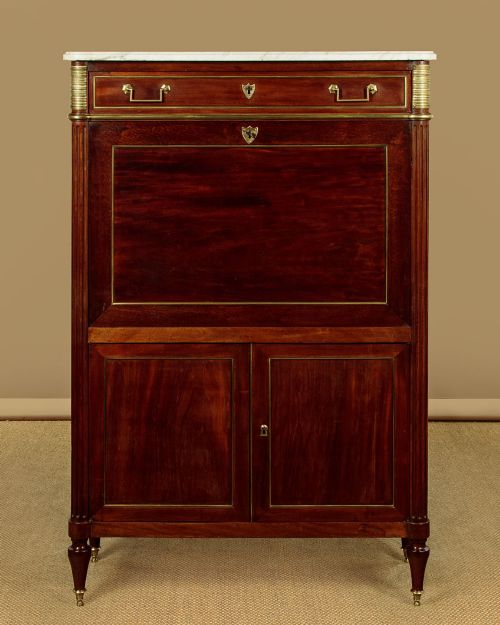
- A vertical wall cabinet featuring a drop-front writing flap derived from French furniture traditions. These pieces typically display fine mahogany veneers and classical proportions.
- Bracket foot
- A structural support foot shaped like a bracket, commonly seen on eighteenth-century chests and desks. It elevates the body of the piece off the floor with clean mitred corners.
- Featherbanding
- A type of inlay using thin strips of veneer laid in a herringbone pattern around the borders of drawer fronts and panels. It creates a decorative contrasting frame effect.
Fall Front Writing Bureau: Frequently Asked Questions
What is a fall front writing bureau?
A fall front writing bureau is a compact desk featuring a hinged writing panel that folds down for use and lifts up to hide the internal compartments.
These pieces combine cabinet storage with a dedicated writing surface, making them practical for small spaces.
How were bureaus used historically?
Owners used these desks for correspondence, keeping stationery, account books, and personal letters within the fitted interior pigeonholes.
The drop-down flap provided a firm writing table that could be closed quickly to tidy away unfinished paperwork.
How do I date an antique bureau?
Dating relies on examining the timber species, construction methods, hardware, and interior layout style. Eighteenth-century models often feature bracket feet and solid oak drawer linings, while Edwardian versions use lighter oak or mahogany.
Stylistic markers such as Arts and Crafts influences or Dutch marquetry help narrow the production period further.
How do I care for a walnut or mahogany bureau?
Keep wooden surfaces away from direct sunlight and extreme humidity fluctuations to prevent veneer cracking or warping. Regular dusting with a dry cloth and occasional wax maintenance preserves the polished finish.
Avoid placing hot cups or damp items directly onto the leather or wood writing surfaces.