


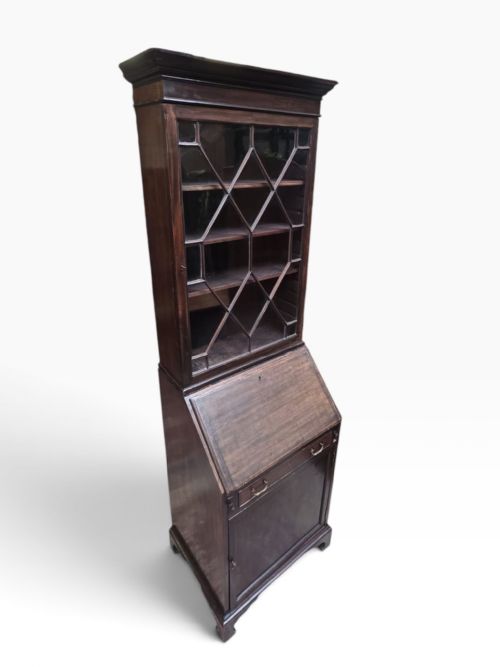
Vintage Secretary Desk
A vintage secretary desk brings traditional writing function and enclosed storage to any room, offering fold-down flaps and concealed compartments.

Vintage Secretary Desk
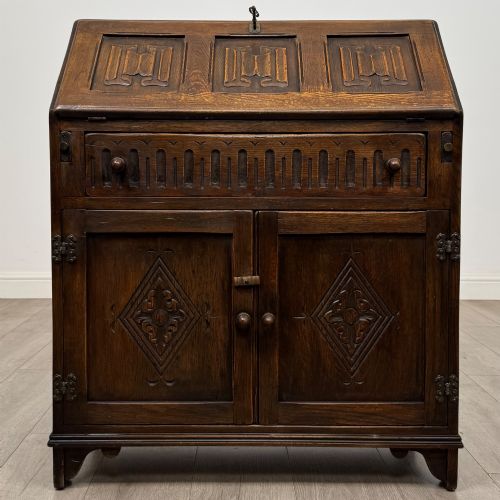
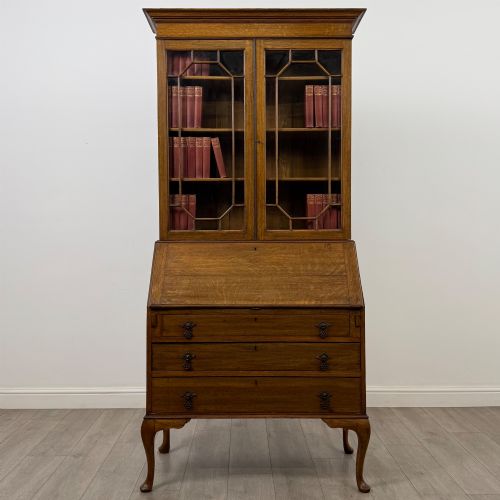
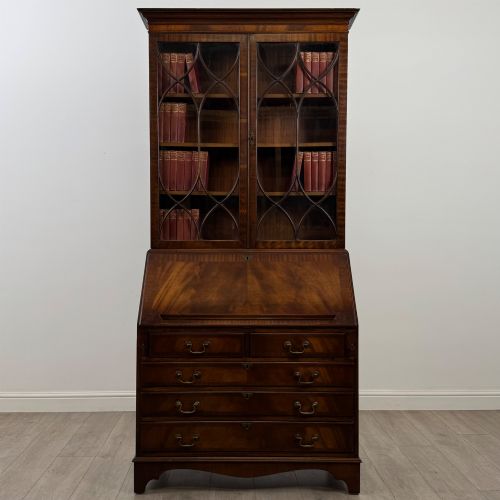
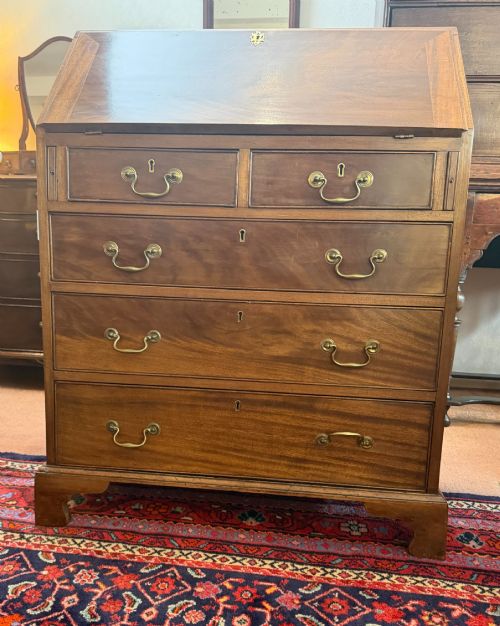
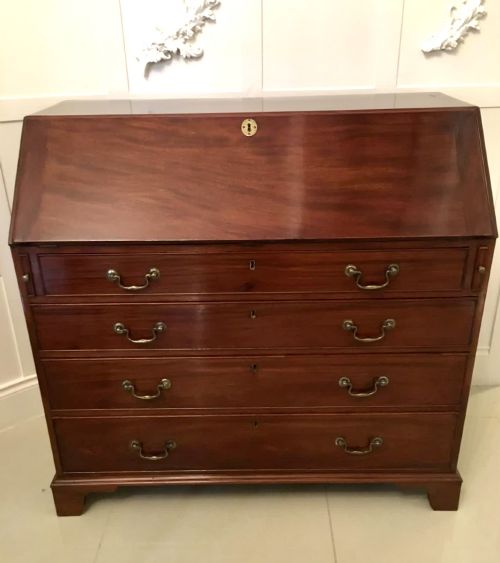
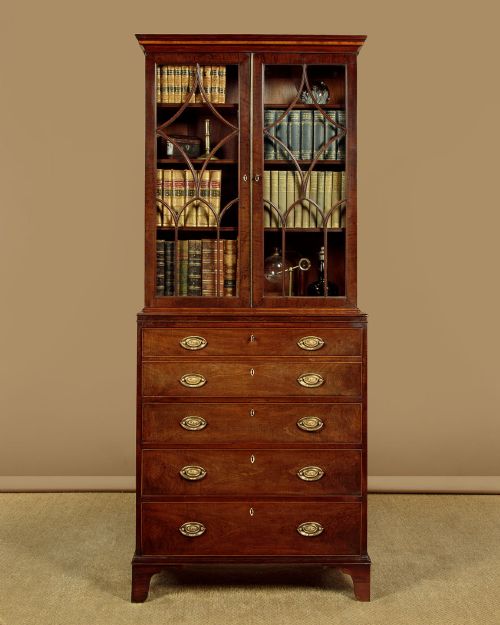
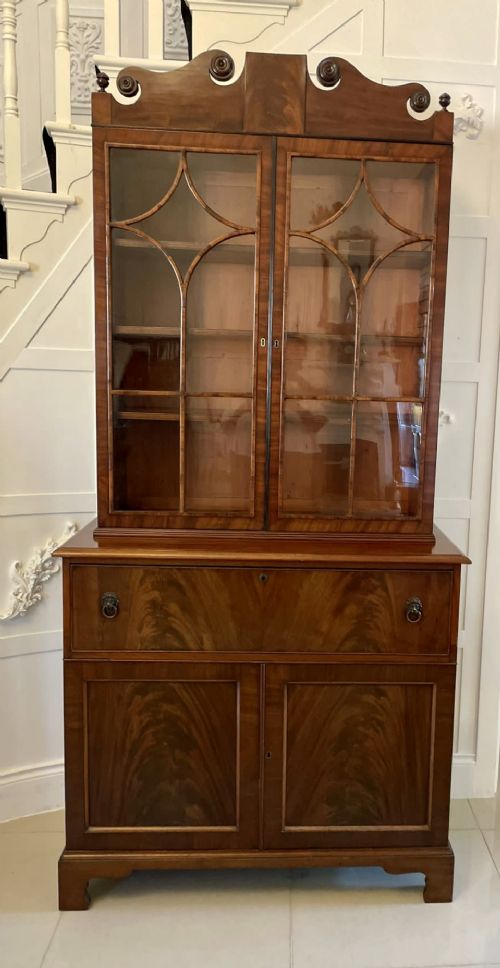
A vintage secretary desk unites a writing surface with compartmentalised storage, frequently combining a lower fall-front bureau with an upper glazed bookcase. These pieces span centuries of cabinet-making, drawing heavily on Georgian proportions and Edwardian domestic practicalities.
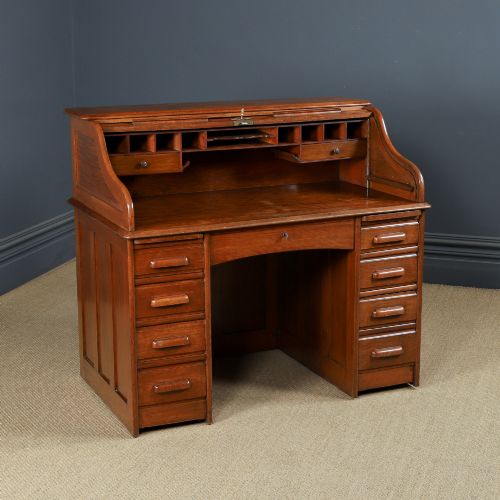
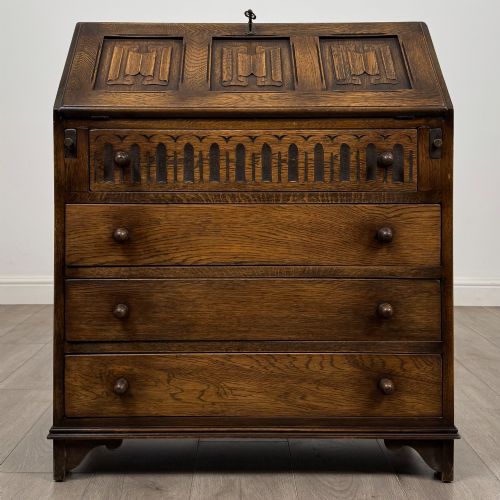
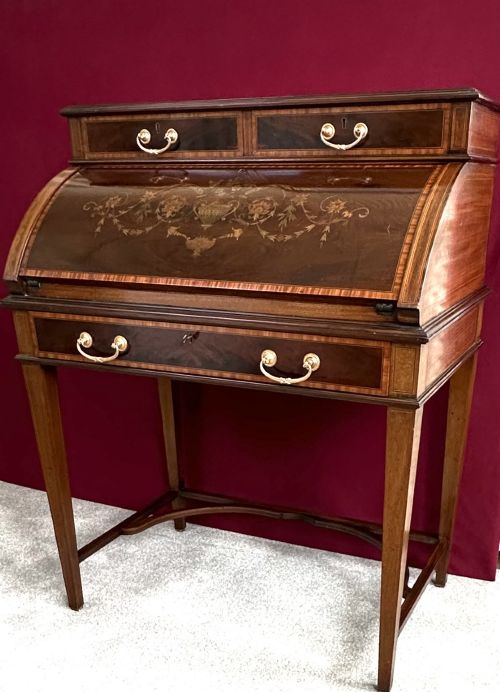
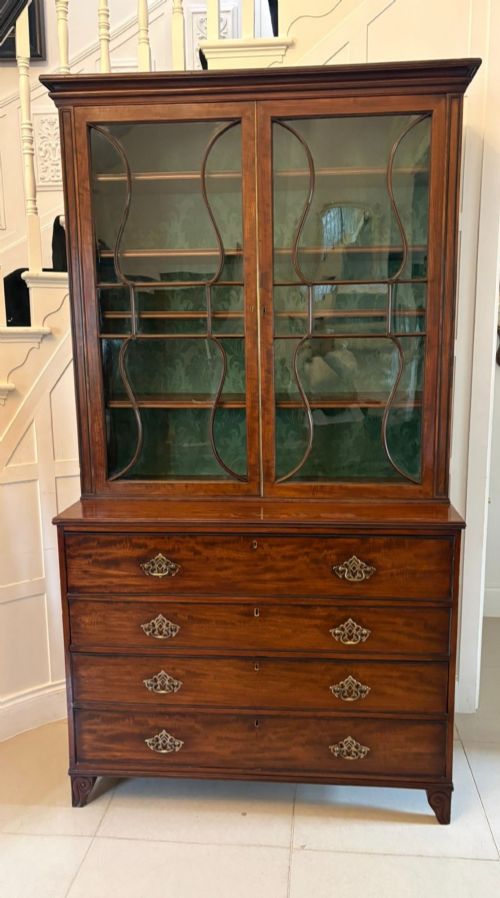
The version most commonly met on this page is the Edwardian oak or mahogany bureau, often featuring fitted interior pigeonholes behind a sloping writing flap. Alongside these fall-front writing desks appear substantial secretaire bookcases and simpler oak writing tables.
Origins range across English workshops from the eighteenth through to the early twentieth century, incorporating revival styles such as Jacobean and Queen Anne alongside Arts and Crafts ideals. Each piece reflects the changing domestic requirements for correspondence and household administration over successive periods.
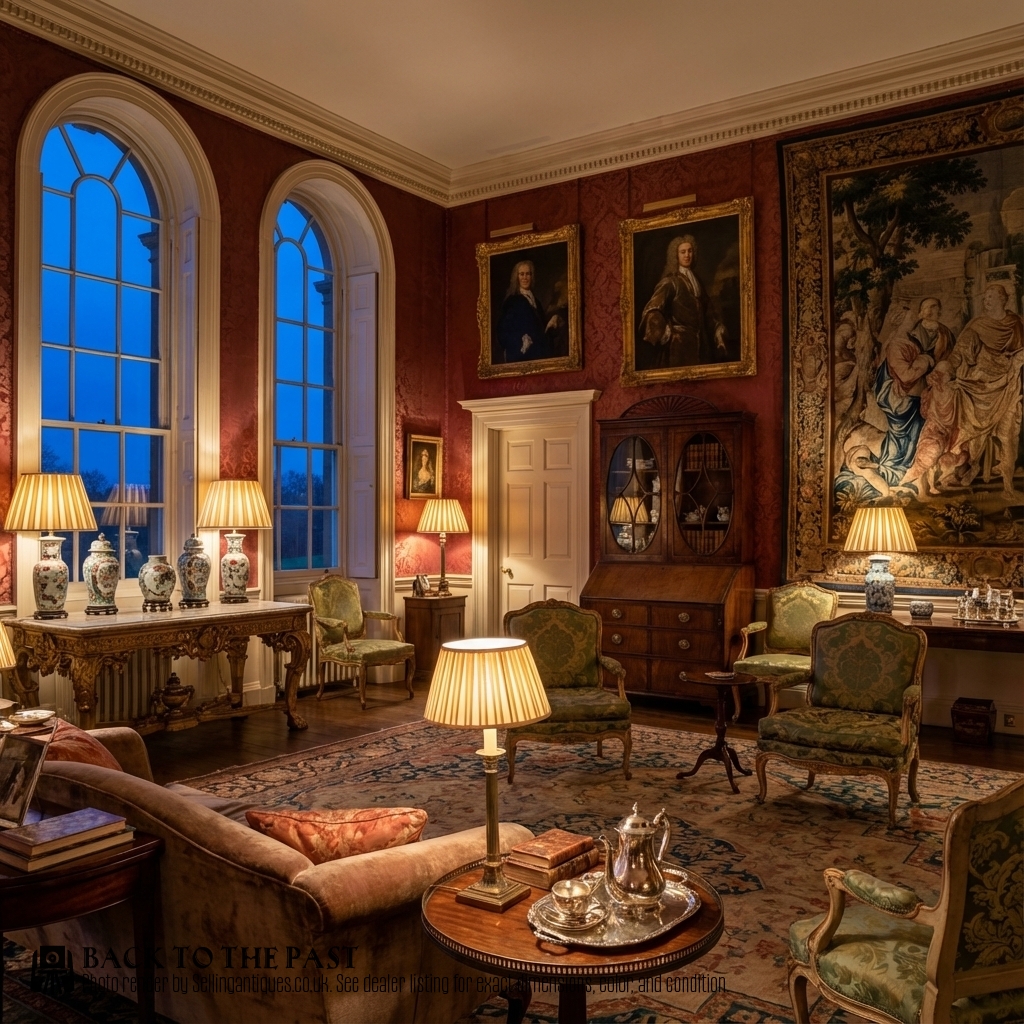
Judging Quality
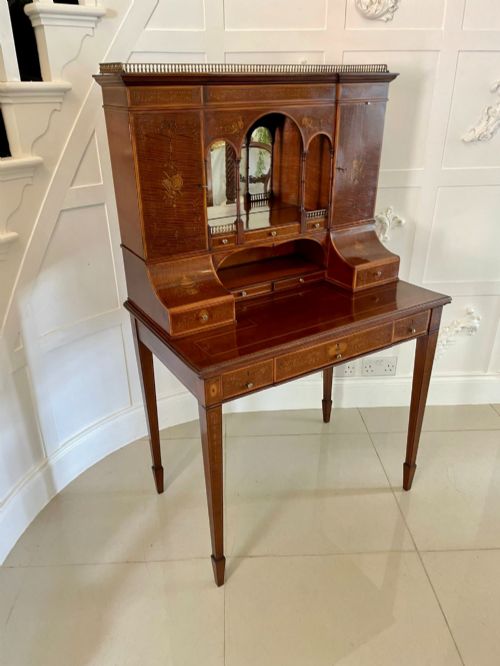
Quality rests upon the selection of timber figures and the precision of the cabinet-making, where highly figured burr veneers and well-matched grain patterns distinguish superior examples from plain utility pieces. The interior arrangement of the writing compartment demonstrates the maker's skill through subtle detailing in pigeonholes, small drawers, and secret compartments.
Proportion and structural integrity dictate the standing of a desk, with balanced cornices, clean lines on fall-front flaps, and smoothly operating drawers marking out finer examples. Maker signatures, labels, or distinctive regional workshop traits further elevate the standing of individual items.
Vintage Secretary Desk Retail Price Guide 2026
Typical asking prices for vintage secretary desk among the pieces listed under this phrase on Sellingantiques today, from the lower quarter to the upper quarter. They describe what is for sale here now, not the wider market.
Listings feature woods including oak, mahogany, walnut, burr walnut, satinwood, and yew, spanning periods from the seventeenth century through the Edwardian era.
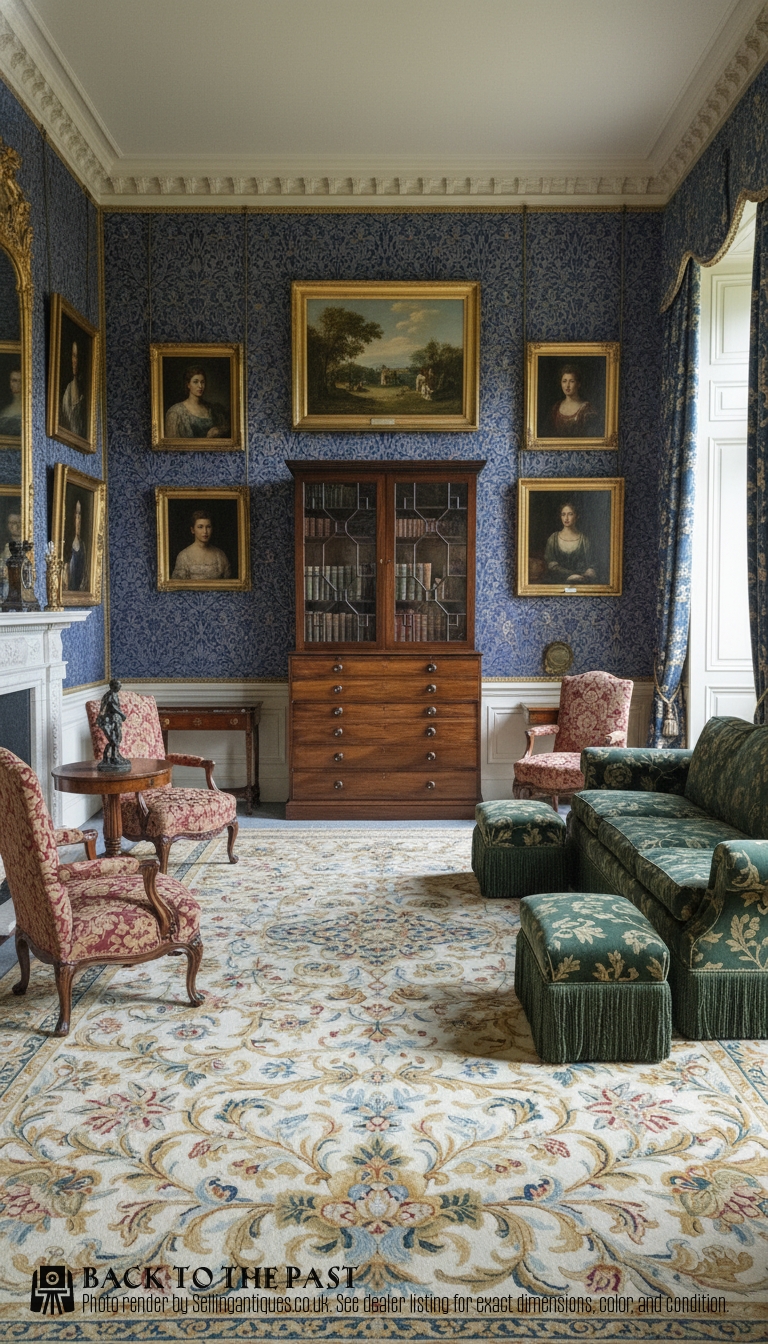
Heals of London·Arthur Basil Reynolds·Larkin
The Vintage Secretary Desk Glossary
- Bureau
- A writing desk featuring a sloping hinged flap that opens to reveal a fitted interior of pigeonholes and small drawers. This form forms the core of many secretary designs.
- Secretaire
- A piece of furniture containing a drawer or compartment with a drop-down front for writing. It often disguises its function behind the facade of a chest of drawers or library bookcase.
- Fall front
- A hinged writing flap that drops into a horizontal position for use. When closed, it conceals the inner compartments and papers.
- Linenfold
- A style of wood carving that imitates folded linen cloth. It appears frequently on panels of oak pieces from the period.
- Pigeonhole
- A small compartment within a desk interior used for sorting letters and documents. These compartments often sit above concealed drawers.
Vintage Secretary Desk: Frequently Asked Questions
What is a secretary desk?
A secretary desk is a piece of furniture that combines a writing surface with storage space, typically featuring a hinged fold-down front and internal compartments for paperwork.
Many examples also incorporate shelving or a glazed bookcase section above the writing area, making them versatile furniture for both study and display.
How do I use a bureau daily?
The sloping front folds down to create a stable writing platform while keeping correspondence and stationery organised within the internal pigeonholes and small drawers.
When writing is finished, papers are simply enclosed behind the flap and locked away, restoring a neat appearance to the room.
How are different periods told apart?
Georgian pieces generally show heavy proportions in solid mahogany with minimal fuss, whereas Edwardian versions frequently utilise lighter oak or inlaid mahogany with simpler domestic scaling.
Revival pieces adopt earlier decorative motifs such as linenfold carving or Burr walnut veneers, reflecting the historicist tastes of the early twentieth century.
Where should I place a secretary desk?
These desks suit studies, living rooms, and bedrooms where their dual function as a writing surface and bookcase provides practical utility without occupying excessive floor space.
Allowance must be made for the clearance required when the writing flap is folded down and a chair is pulled up to the desk.