
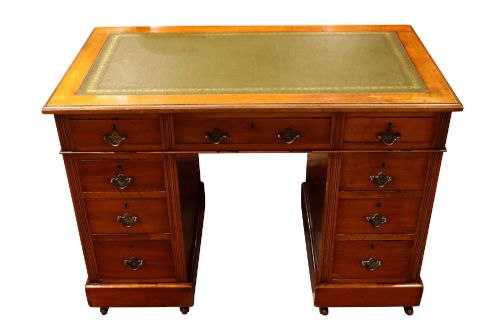
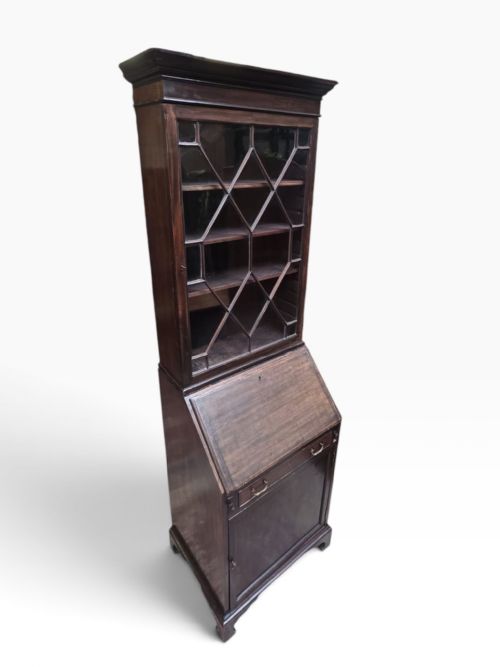
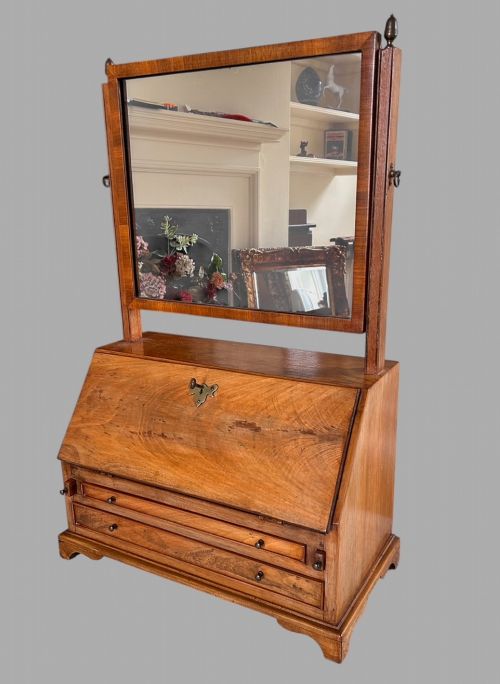
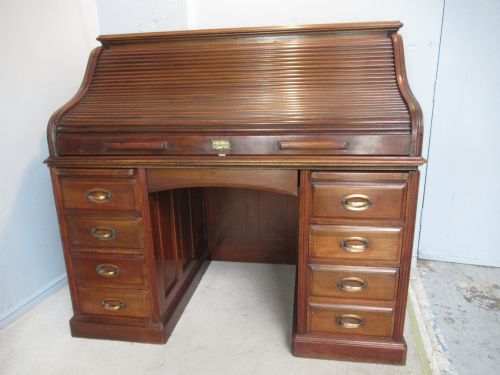
Edwardian Bureau Desk
When searching for an edwardian bureau desk, expect compact fitted writing furniture designed for domestic correspondence in mahogany and oak.
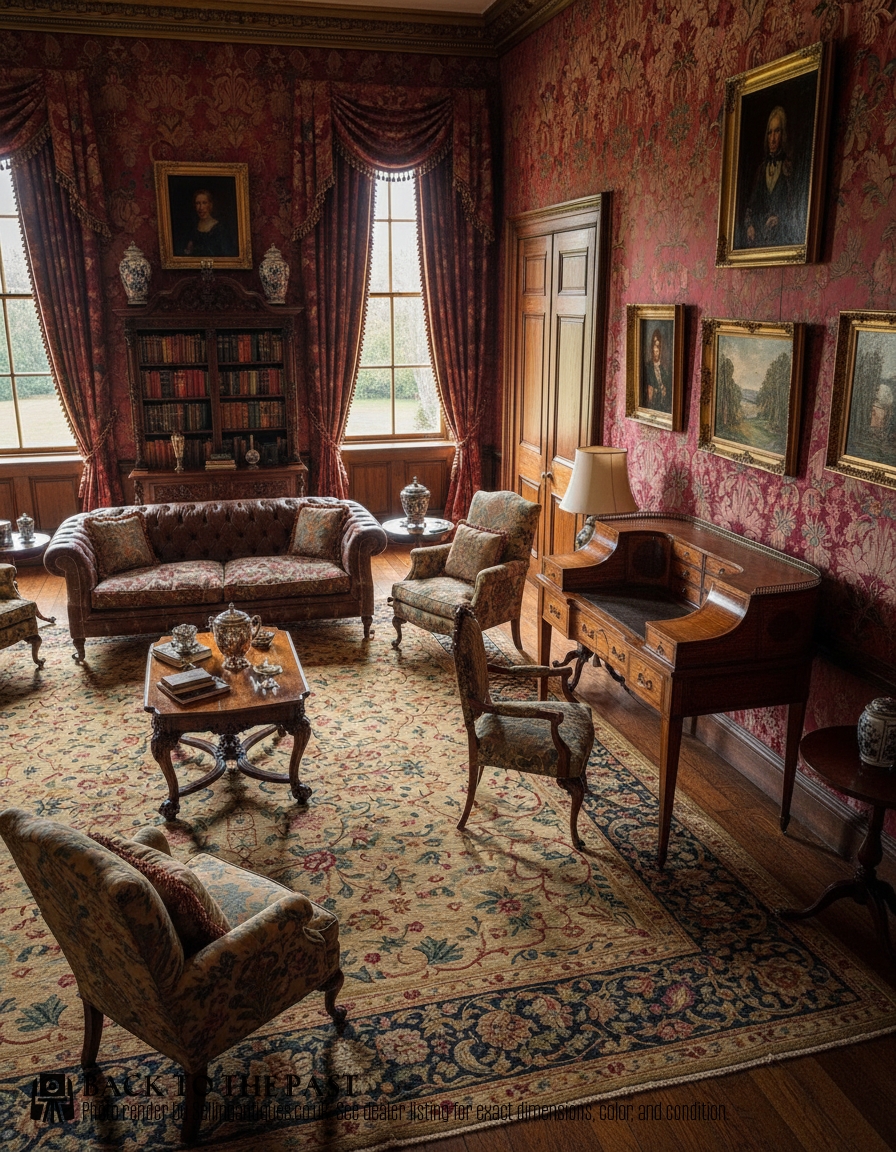
Edwardian Bureau Desk
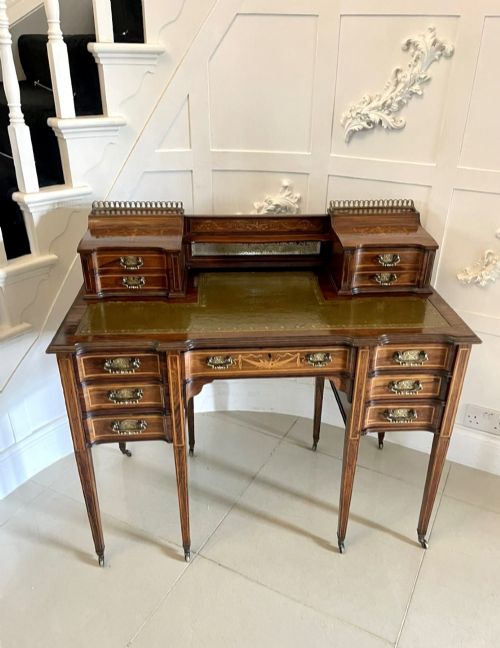
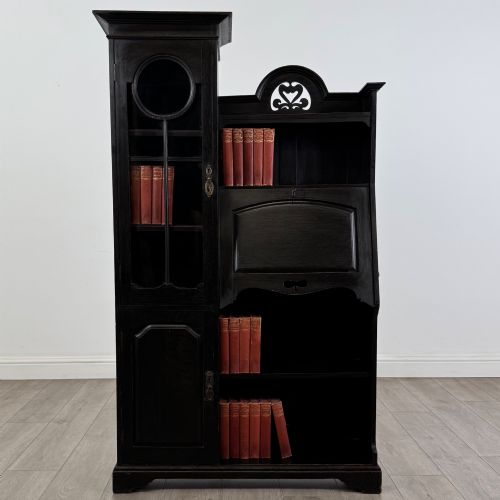
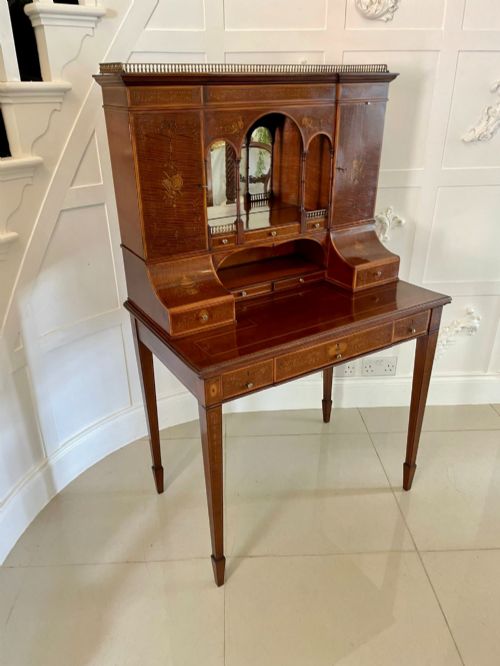
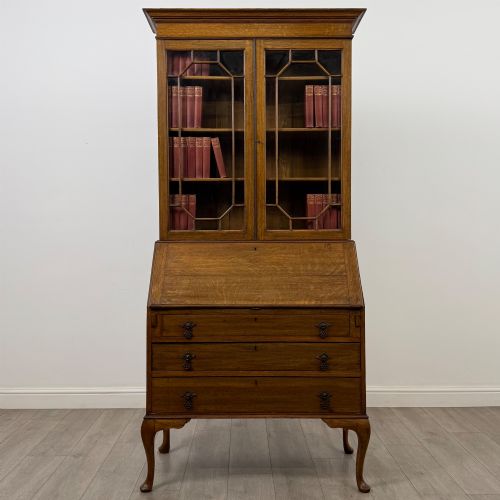
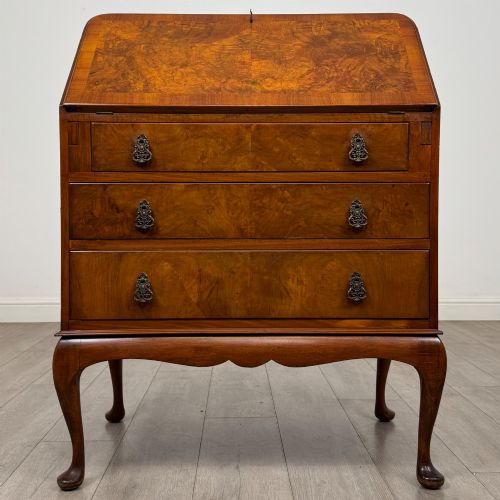
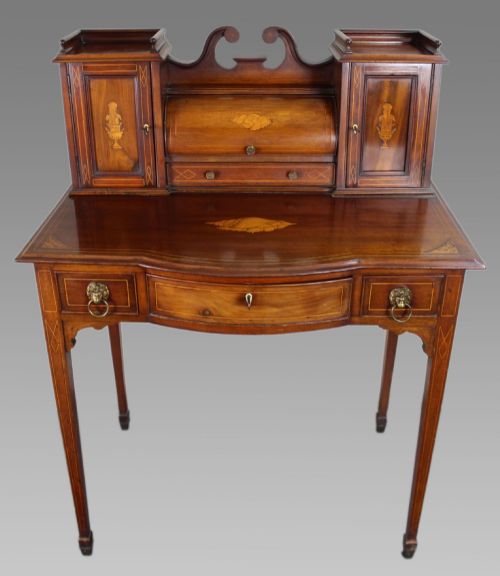
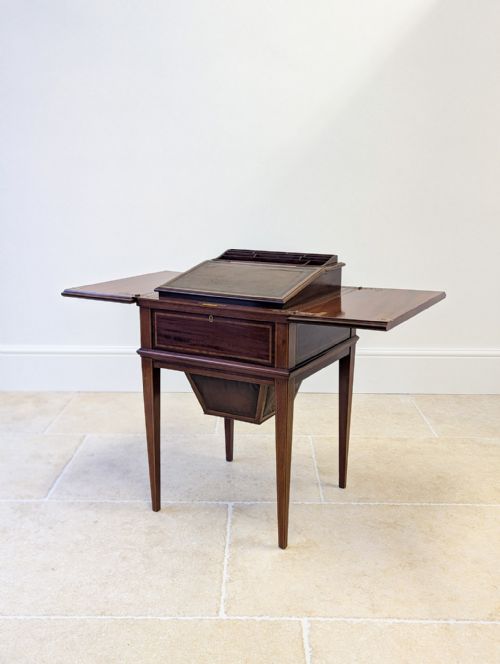
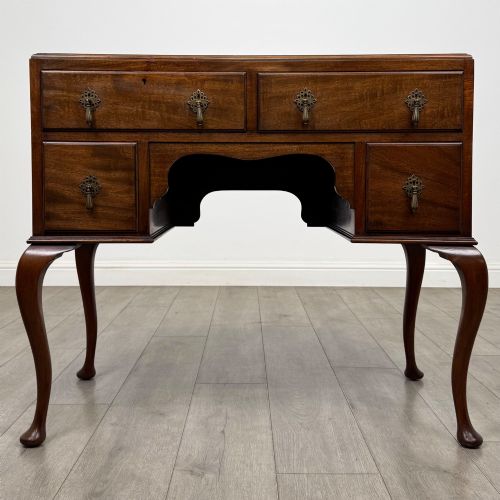
An edwardian bureau desk combines a sloping fall-front writing flap with internal pigeonholes and small drawers above lower storage drawers. These domestic writing pieces emerged strongly around the turn of the twentieth century, bridging Victorian solidity with lighter revival styles.
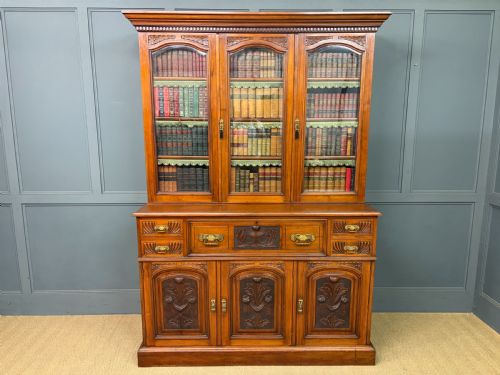
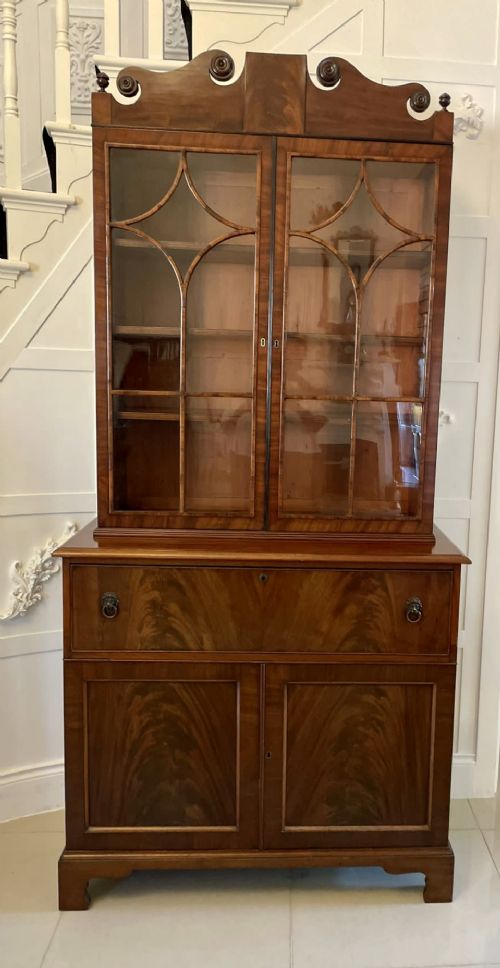
Most examples found in this category date from the Edwardian period or span related late nineteenth to early twentieth-century decades. They appear in forms ranging from compact oak fall-front writing desks to substantial bureau bookcases fitted with glazed upper display shelves.
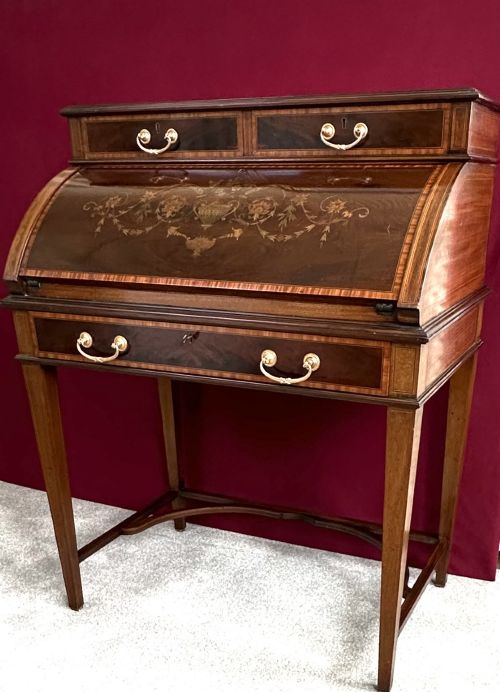
Makers utilised various timbers to suit different interiors, constructing robust oak models for studies alongside finely veneered mahogany and walnut versions for drawing rooms. Many incorporate marquetry inlay, satinwood banding, or Sheraton and Queen Anne revival motifs.

Materials and Construction Methods
Cabinetmakers built these desks using solid hardwoods like oak and mahogany, often applying decorative veneers of flame mahogany, burr walnut, or satinwood across the writing surfaces and fall fronts. Crossbanding and marquetry inlay provide ornamental contrast to the primary timber grains.
Internal compartments require precise joinery to create miniature pigeonholes, secret drawers, and sliding pen trays concealed behind the drop-down flap. Brass handles, escutcheons, and leather writing inserts complete the functional writing space.
Secondary framing timbers such as pine support the internal carcase structures and drawer linings, ensuring stability while keeping the weight manageable for domestic placement.
Edwardian Bureau Desk Retail Price Guide 2026
Typical asking prices for edwardian bureau desk among the pieces listed under this phrase on Sellingantiques today, from the lower quarter to the upper quarter. They describe what is for sale here now, not the wider market.
Secret inner compartments often require discovering hidden wooden spring latches just to reach the deepest miniature drawer.
What Distinguishes Quality Among Examples
The refinement of the internal stationery fittings largely separates standard utilitarian pieces from master-workshop productions. Elaborate pigeonhole arrangements, secret compartment mechanisms, and finely carved or inlaid exterior details indicate higher craftsmanship.
Timber selection and matching dictate overall visual balance. Superior pieces display continuous grain alignment across the fall front and drawers, utilising rich figured veneers rather than plain stained surfaces.
Structural integrity of the fall-front hinges, supporting lopers, and drawer dovetailing determines long-term durability and smooth daily operation.
Maple and Co·Wylie and Lochhead·Edwards and Roberts
The Edwardian Bureau Desk Glossary
- Bureau
- A writing cabinet featuring a sloping hinged flap that opens to reveal a fitted interior of small drawers and pigeonholes. This form provides a concealed writing surface that tidies away correspondence instantly.
- Fall Front
- The hinged writing flap on a bureau or desk that drops down into a horizontal position for writing. When closed, it locks vertically to secure the inner compartments.
- Loper
- A pull-out wooden support arm that extends from the desk carcase beneath the open fall-front flap. It bears the weight pressed onto the writing surface.
- Marquetry
- Decorative patterns formed by fitting contrasting pieces of veneer into a prepared wood ground. This technique creates floral or geometric motifs across drawer fronts and desk tops.
- Crossbanding
- A narrow strip of veneer applied across the grain along the border of a panel or drawer front. It frames the central timber with a contrasting directional grain.
Edwardian Bureau Desk: Frequently Asked Questions
What is an edwardian bureau desk?
An edwardian bureau desk is a compact wooden writing cabinet featuring a hinged sloping writing flap that conceals internal pigeonholes and small drawers. These pieces were designed for domestic correspondence during the early twentieth century.
Beneath the writing flap, standard configurations include two to four graduated drawers for storing paper and household documents. They combine functional storage with decorative cabinetry suited for principal rooms or studies.
How do you use a fall-front desk?
Using a fall-front desk involves unlocking the sloping wooden flap and lowering it forward until it rests horizontally upon wooden support lopers pulled out from the frame. This action exposes the integrated stationery compartments and provides a flat writing surface.
When writing concludes, papers are returned to the internal compartments and the flap lifts back to a vertical position, concealing the contents and locking securely.
Where were these desks placed?
These pieces typically served in domestic reception rooms, bedrooms, or entrance halls as convenient writing stations for managing daily household correspondence and accounts. Their compact footprints suited the smaller room proportions common in Edwardian homes.
Freestanding models allowed placement away from walls, while smaller table-top variants sat comfortably upon chests or dedicated stands.
How do you distinguish Edwardian from Victorian desks?
Edwardian desks generally exhibit lighter proportions, brighter inlay work, and simpler revival styles compared to the heavier, darker, and more heavily carved forms typical of the Victorian era. Timbers such as satinwood and figured mahogany frequently feature in lighter Edwardian designs.
Construction details and hardware also shift around the turn of the century, moving away from dense, imposing architectural forms toward refined elegance and space-saving efficiency.