
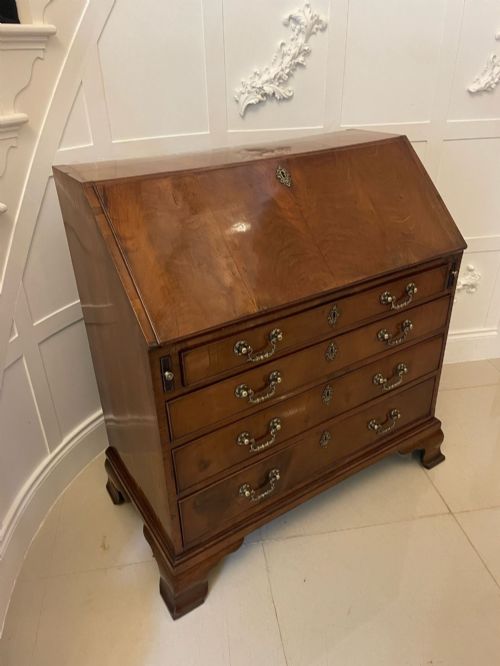
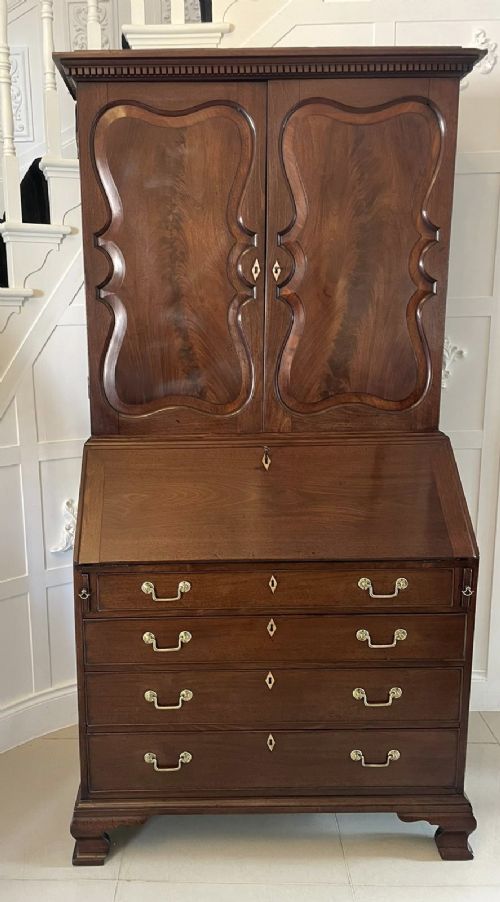
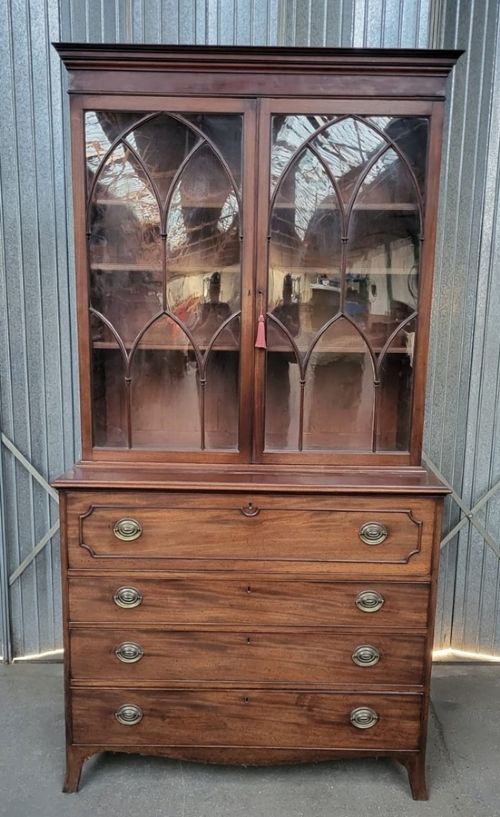
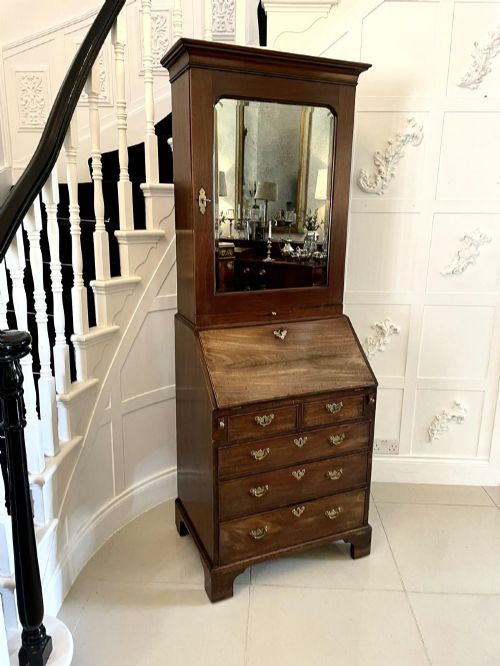
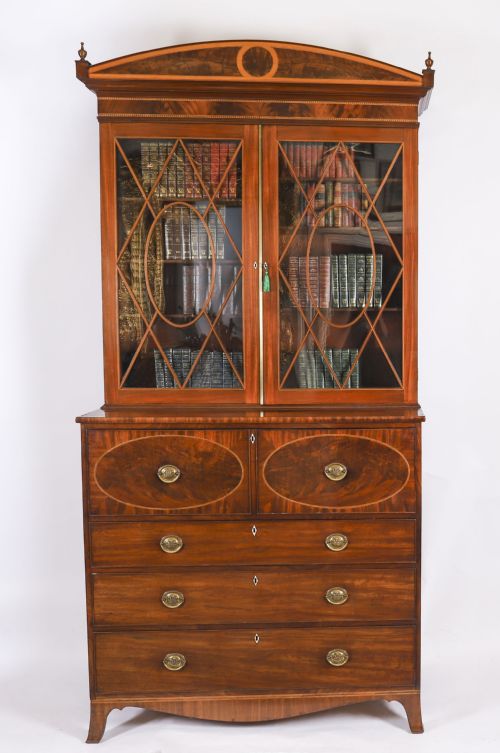

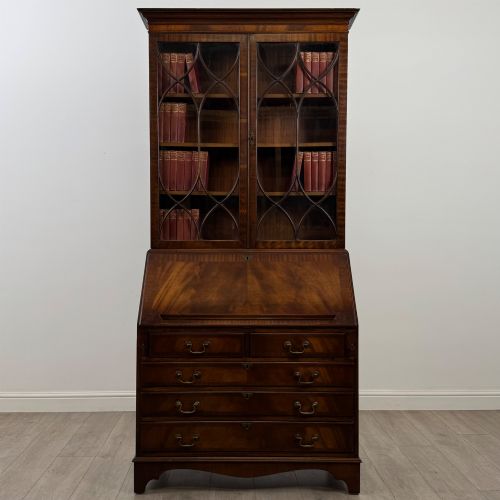
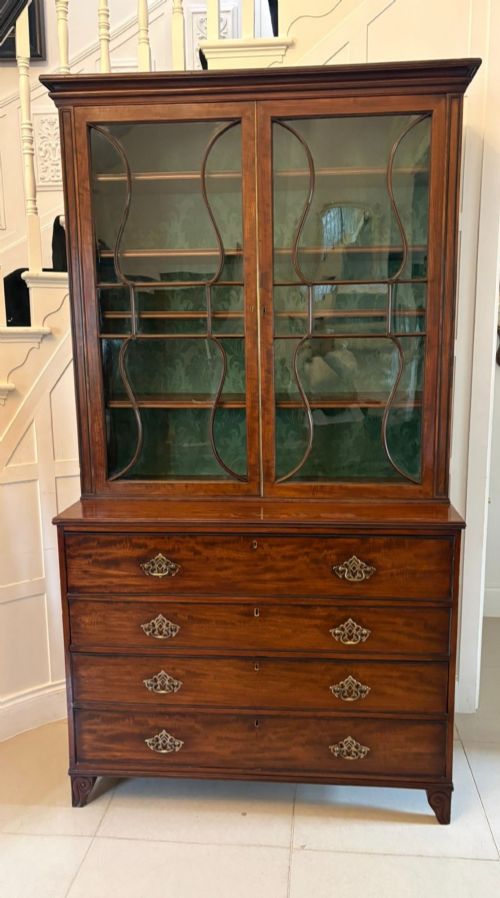
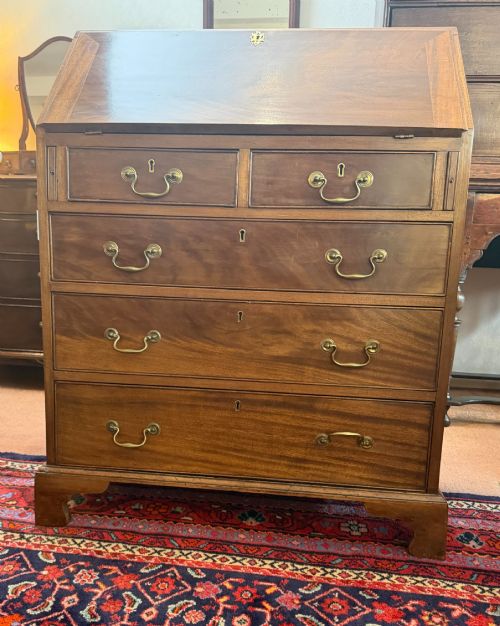
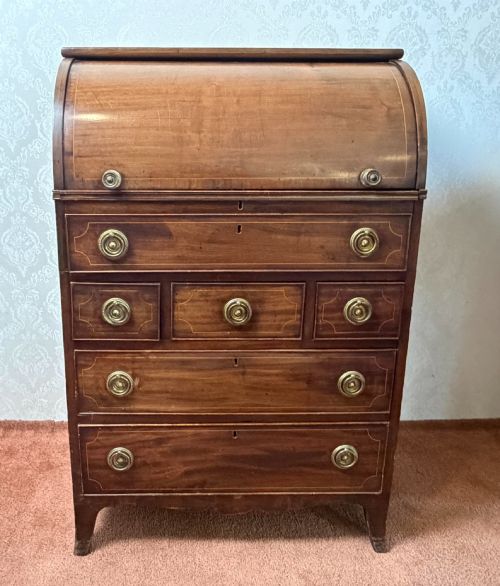
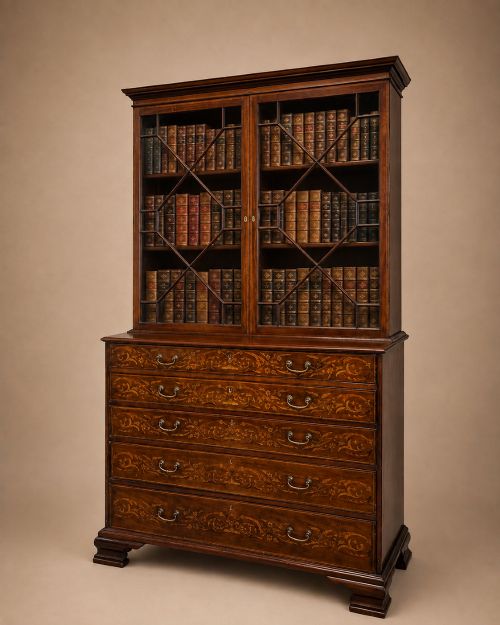
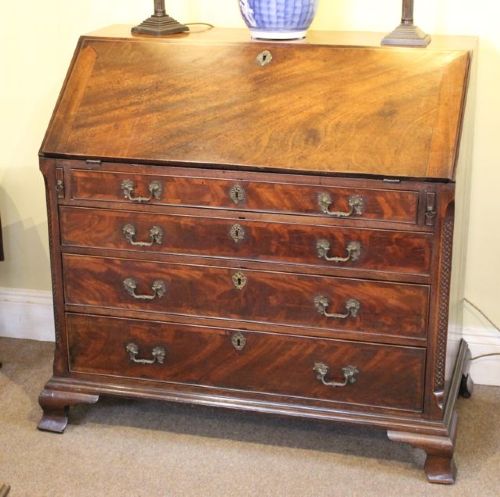
Georgian Mahogany Writing Bureau
A georgian mahogany writing bureau offers a drop-front workspace concealing fitted drawers and pigeonholes, combining functional utility with rich timber grain.
What They Are
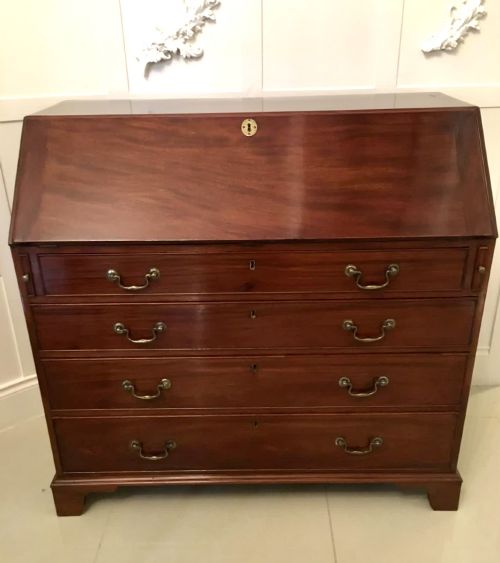
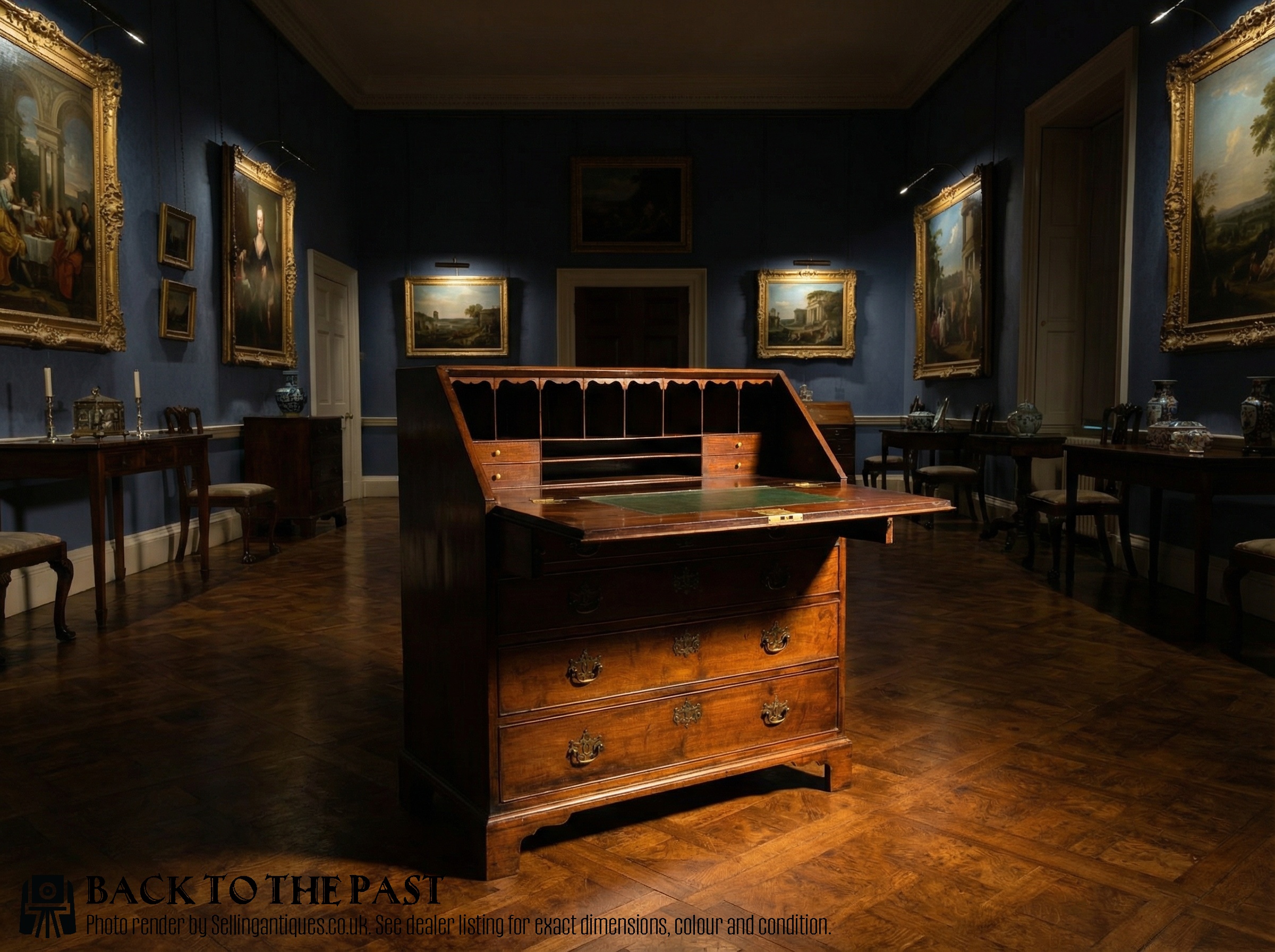
When you search for a georgian mahogany writing bureau, you are looking at a classic form of antique furniture designed for correspondence and storage. These pieces typically feature a hinged fall-front panel that lowers to create a writing surface, resting upon a chest of graduating drawers below. The interior contains an arrangement of small drawers, pigeonholes, and sometimes a secret compartment.
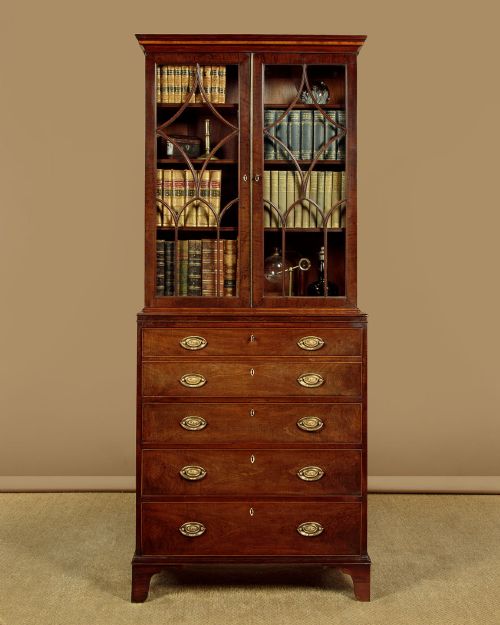
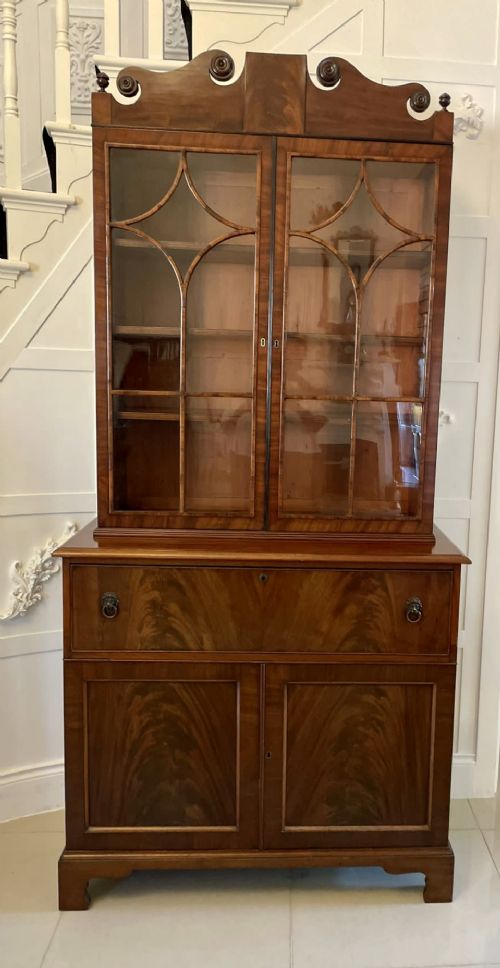
The versions you meet on this page span the eighteenth century and the early nineteenth century, alongside later revival interpretations. You will find compact examples suitable for smaller rooms as well as larger bureau bookcases topped with glazed cabinetry. Most examples are constructed from solid mahogany and mahogany veneers, occasionally incorporating marquetry inlay.
Styles range from straightforward vernacular pieces to more ornate Chippendale and late Georgian expressions. The form remained remarkably consistent in purpose throughout its production periods, serving as the household administrative centre before the widespread adoption of the freestanding desk.
How They Were Made
Makers utilised dense tropical mahogany, selecting timber for its deep colour and figuring, which was often polished to a high lustre. Drawer linings commonly employ secondary woods such as oak or pine, joined with hand-cut dovetails that indicate traditional cabinet-making methods.
Brass hardware, including escutcheons and handles, was cast and hand-finished, while glass panels in upper bookcase sections were held with wooden glazing bars. Marquetry inlay was carefully pierced and fitted into contrasting recesses to add decorative borders and central motifs.
Retail Price Guide 2026
Typical UK retail prices for georgian mahogany writing bureau, calculated from the Sellingantiques database of over a million retail prices indexed since 2003. This retail price guide relies exclusively on Sellingantiques data; no external sources or auction records are used, so the figures do not describe the wider market.
Listings on this site include pieces from the Georgian period and the 18th century, alongside early 20th-century revival examples.
What Varies in Quality
The distinction between ordinary and exceptional examples rests upon the choice of timber and the precision of the construction. Superior pieces display carefully matched mahogany grains across the fall-front and drawer facades, creating a continuous visual flow.
Internal architecture marks the difference between basic utilitarian boxes and ambitious cabinet-work. Finely appointed pigeonholes, shaped drawer fronts, and well-executed secret compartments demonstrate the maker's skill and ambition.
The Georgian Mahogany Writing Bureau Glossary
- Fall-front
- The hinged writing flap that pulls down to reveal the internal pigeonholes and drawers. It provides the primary writing surface when open.
- Bureau bookcase
- A two-part form consisting of a writing bureau base surmounted by a glazed or panelled cabinet for books. This tall configuration maximises storage space in domestic interiors.
- Chippendale
- A style influenced by the designs of Thomas Chippendale, characterised by architectural proportions and restrained carving. It represents the height of mid-eighteenth-century cabinet-making.
- Graduating drawers
- A set of drawers that decreases in depth from bottom to top. This arrangement provides structural stability and visual balance to the chest base.
- Marquetry inlay
- Decorative patterns formed by fitting contrasting veneers into prepared recesses in the primary timber. It creates geometric or floral ornamentation across the surface.
Frequently Asked Questions
How do I use a writing bureau daily?
Lower the fall-front flap to use the internal surface for writing or laptop work, keeping stationery stored within the fitted pigeonholes.
Close the flap when finished to conceal papers and maintain a tidy room with a traditional chest appearance.
How do I tell an 18th-century bureau from a revival piece?
Examine the secondary timbers inside the drawer construction and look for hand-cut dovetails rather than uniform modern machine joints.
Check the drawer linings and backboards for tool marks and timber shrinkage patterns consistent with age.
What is the best way to care for mahogany?
Keep the wood away from direct sunlight and heat sources to prevent the timber from drying out and the polish from fading.
Apply natural beeswax periodically and buff with a soft cloth to nourish the grain and maintain the surface sheen.
Where should I place a bureau in my home?
Position the piece against a flat interior wall where the fall-front can drop fully without obstructing room pathways.
Ensure the space receives indirect light so the mahogany grain is visible without exposing the polish to damaging rays.