
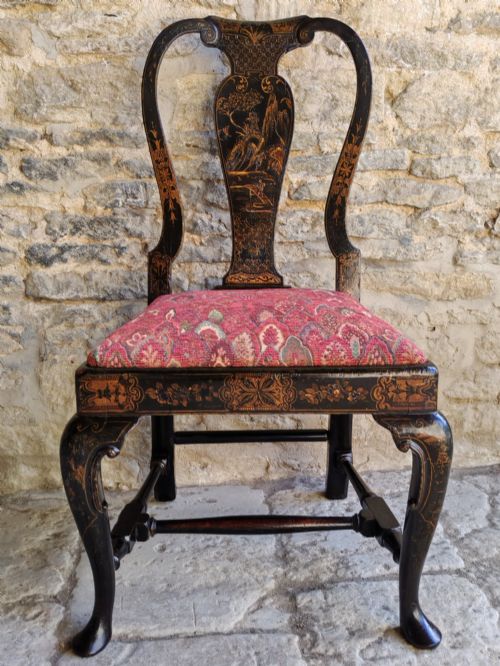
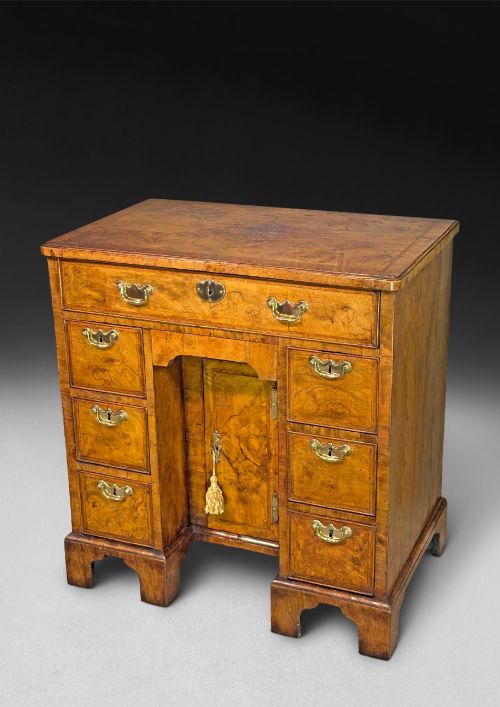
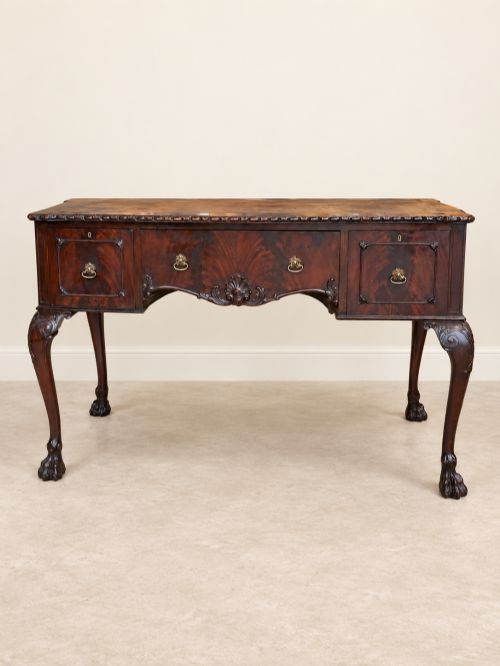


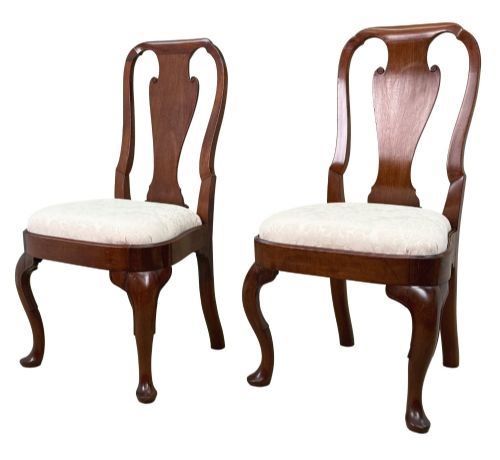
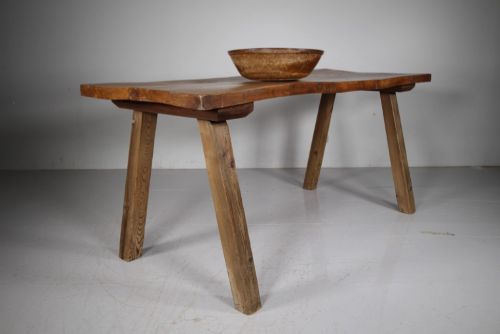
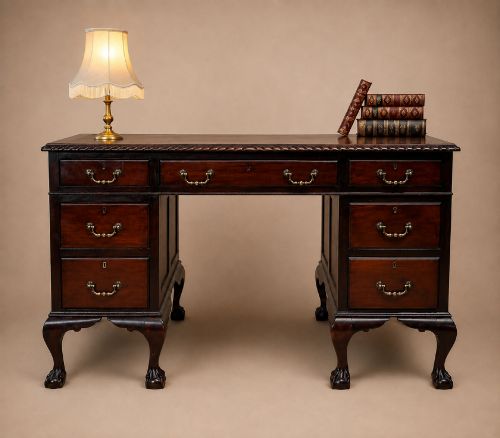
Early Georgian Desk
An early georgian desk brings domestic timber into sharp focus, offering practical writing surfaces shaped by walnut and mahogany.
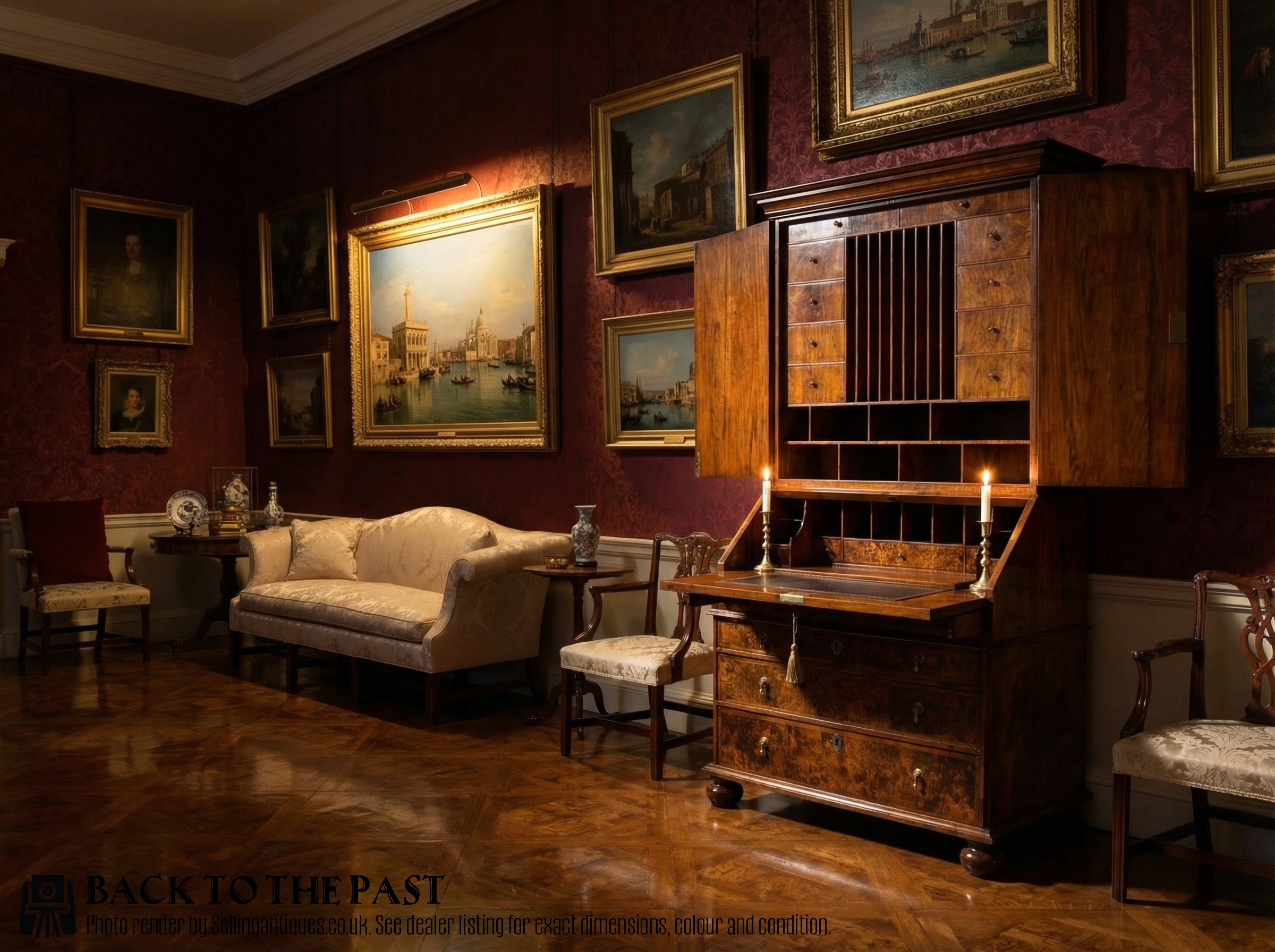
Early Georgian Desk
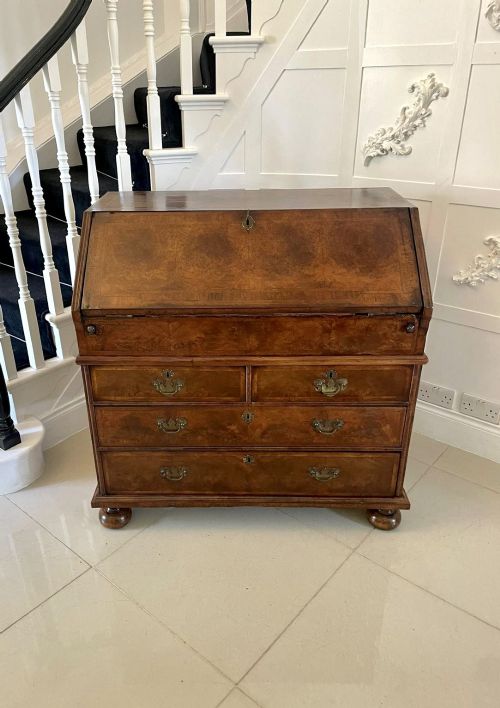
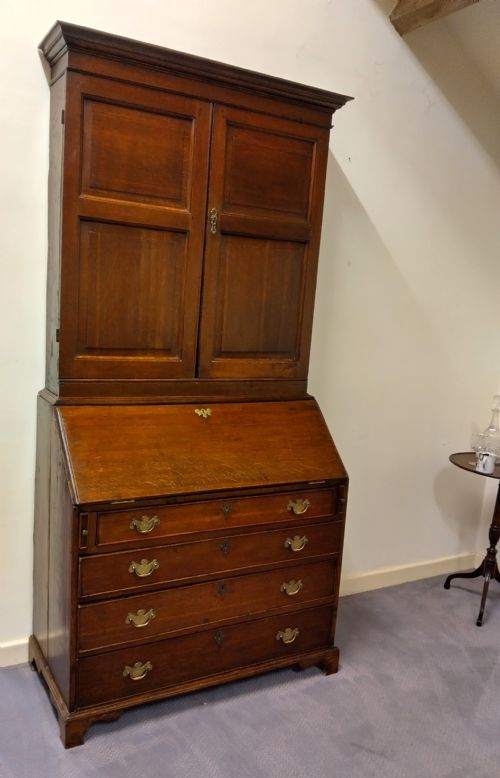
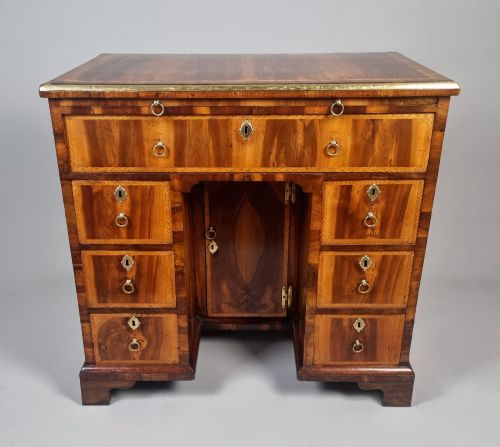
An early georgian desk encompasses forms designed for writing, correspondence and storage, appearing predominantly as walnut or mahogany bureaux, kneehole desks and escritoires. These pieces originate largely from the eighteenth century, aligned with the reigns of George I and George II, alongside related items from the wider georgian period.
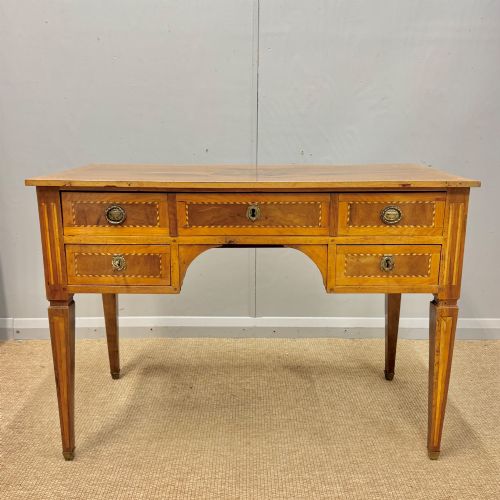
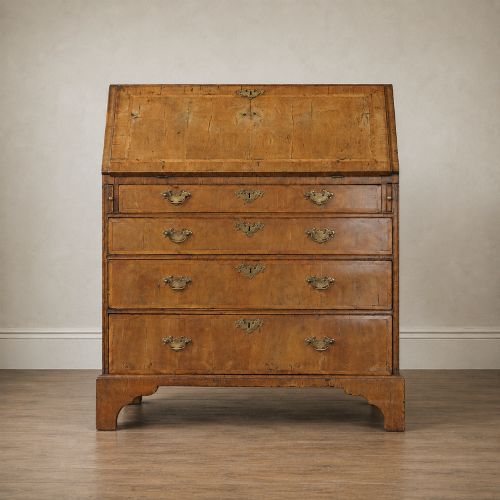
Buyers seeking an early georgian desk commonly encounter fitted interiors containing secret compartments, pigeonholes and small drawers behind a sloping fall front. Lower forms such as walnut lowboys and kneeholes also populate the selections, providing compact workspaces with central knee spaces flanked by banks of drawers.

How they were made
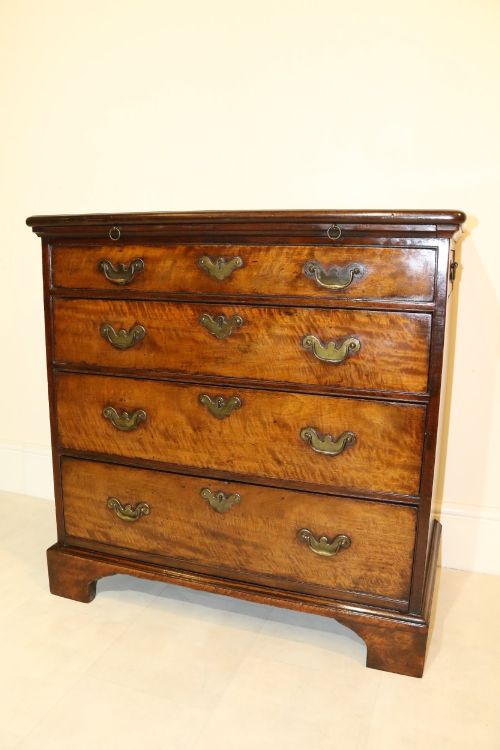
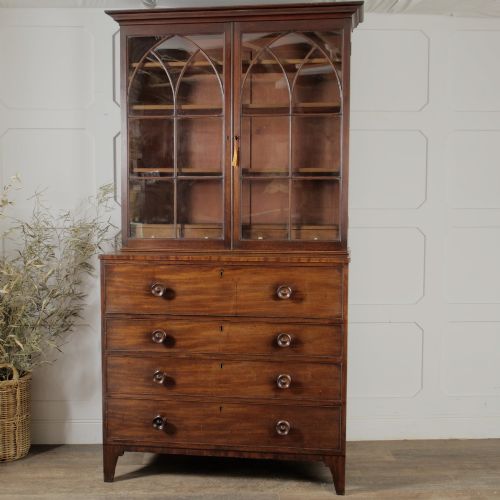
Cabinetmakers constructed these pieces using solid and veneered timbers, applying figured walnut, burr walnut and mahogany over foundational woods like oak or pine. Herringbone inlay and crossbanding frequently border the principal surfaces, while brass handles, escutcheons and drop pulls secure the drawers and fall fronts.
Internal joinery relies on hand-cut dovetails for drawer construction, while primary panels utilise feather banding and book-matched veneers to create symmetrical grain patterns. Secondary timbers such as oak support the interior framing and drawer linings.
Early Georgian Desk Retail Price Guide 2026
Typical asking prices for early georgian desk among the pieces listed under this phrase on Sellingantiques today, from the lower quarter to the upper quarter. They describe what is for sale here now, not the wider market.
Materials span walnut, burr walnut, mahogany, oak, yew wood, brass fittings and leather writing inserts across multiple periods.
What varies in quality
The degree of sophistication in the timber selection and figure dictates much of the distinction between pieces, with burr walnut and figured mahogany commanding greater visual presence. The crispness of internal drawer divisions and the retention of original brass hardware further elevate certain examples.
Proportion and scale play significant roles in desirability, where smaller bureaux on legs or compact kneehole desks demonstrate greater structural restraint and balance. The survival of untouched patination and original fitted interior components separates standard survival pieces from those of finer execution.
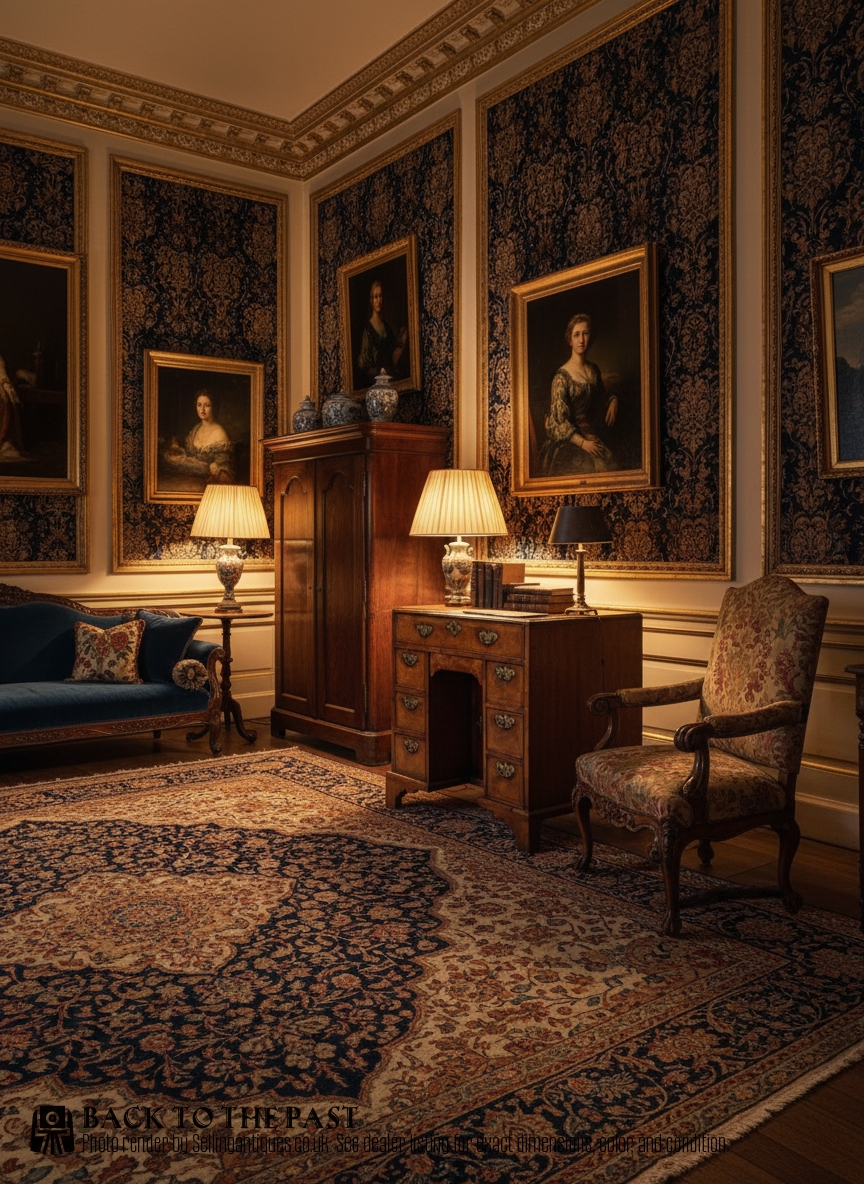
The Early Georgian Desk Glossary
- Bureau
- A writing cabinet featuring a sloping lid that opens to reveal a fitted interior of small drawers and pigeonholes. This form serves as the primary writing desk format of the early eighteenth century.
- Kneehole desk
- A compact pedestal desk featuring a central recessed space beneath a drawer, flanked by small cupboards or stacks of drawers. These pieces often incorporate a concealed central compartment.
- Escritoire
- A tall writing cabinet or desk with a drop-down writing flap enclosing a fitted interior above lower drawers. They provide substantial vertical storage alongside a dedicated writing surface.
- Crossbanding
- A decorative border technique where thin strips of veneer are laid around the perimeter of a panel so the grain runs perpendicular to the central field. It frames walnut and mahogany surfaces on finer case furniture.
- Herringbone inlay
- A fine zigzag pattern formed by diagonally laid veneers, commonly executed in contrasting light and dark woods. This detail borders drawer fronts and fall fronts on walnut furniture.
- Lowboy
- A small side table with one or more rows of drawers, frequently utilised as a dressing table or writing surface. They share stylistic vocabulary with contemporary desks of the period.
Early Georgian Desk: Frequently Asked Questions
What is an early georgian desk?
An early georgian desk is a wooden writing form dating roughly from the first half of the eighteenth century, encompassing walnut and mahogany bureaux, kneehole desks and escritoires.
These pieces were constructed for domestic correspondence and estate management, combining a writing surface with enclosed storage for papers and valuables.
What woods were used?
Walnut dominates the earliest eighteenth-century examples, frequently displaying figured veneers, burr walnut and herringbone inlay across the exterior surfaces.
Mahogany becomes more prevalent as the century progresses, alongside secondary woods such as oak utilised for structural framing and drawer linings.
Where were they placed?
These desks typically stood in parlours, libraries or private bedchambers where household accounts and personal correspondence were managed.
Their finished backs and freestanding forms allow them to sit away from walls in modern interior layouts.