



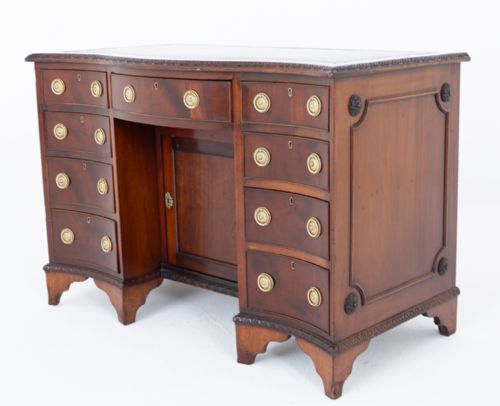
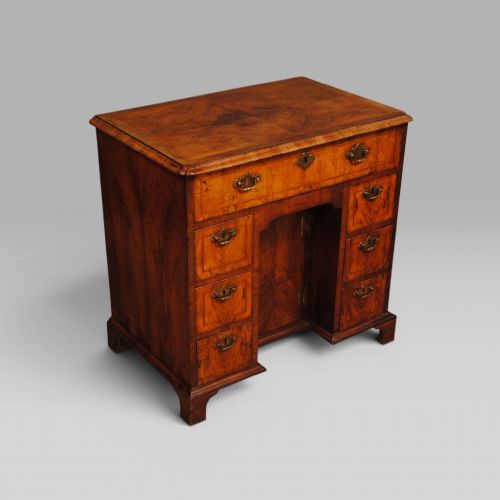
Antique Kneehole Cupboard
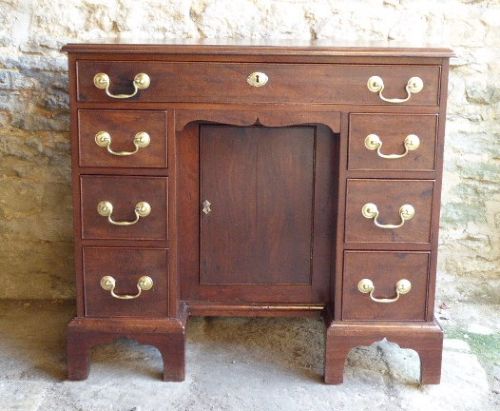
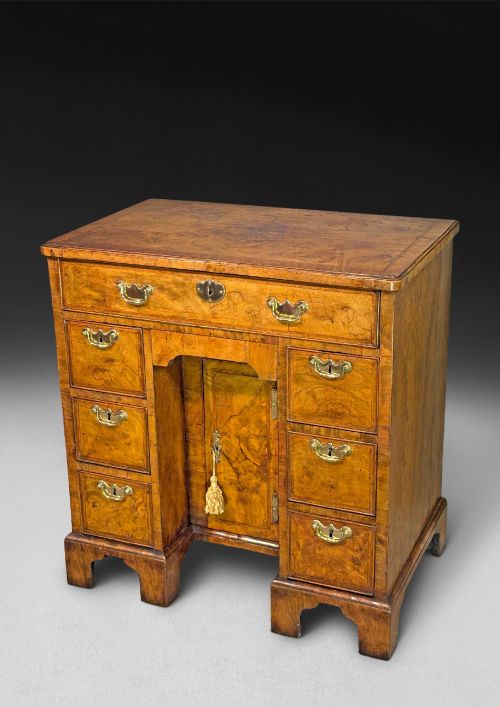
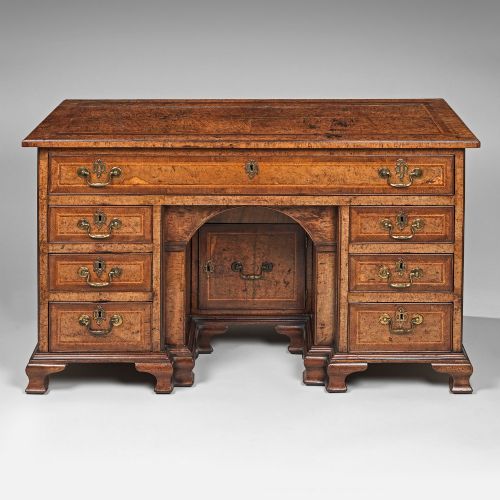
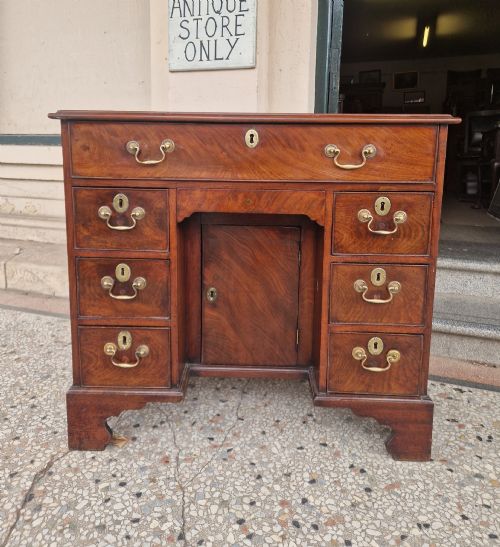
An antique kneehole cupboard is a compact writing or dressing table with a central recess, offering neat proportions and concealed storage for daily use.
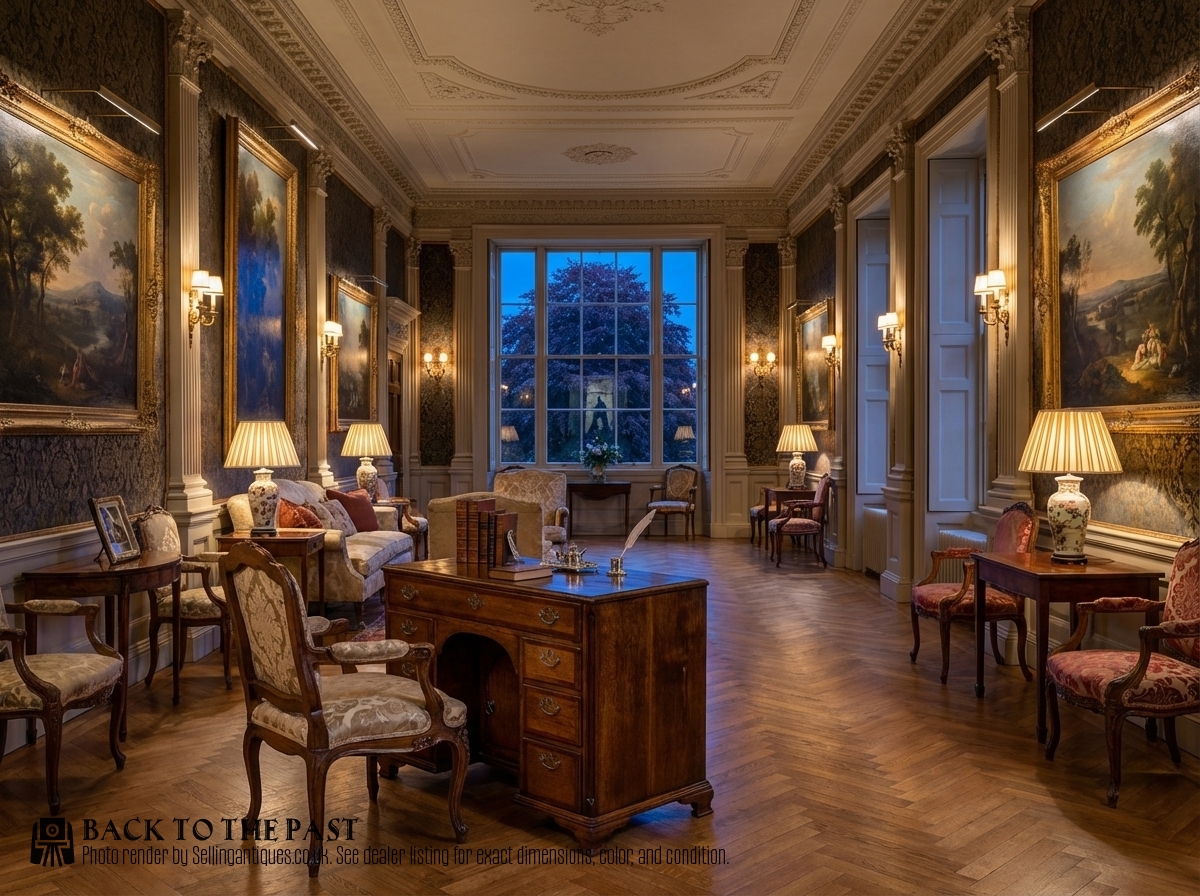
Antique Kneehole Cupboard
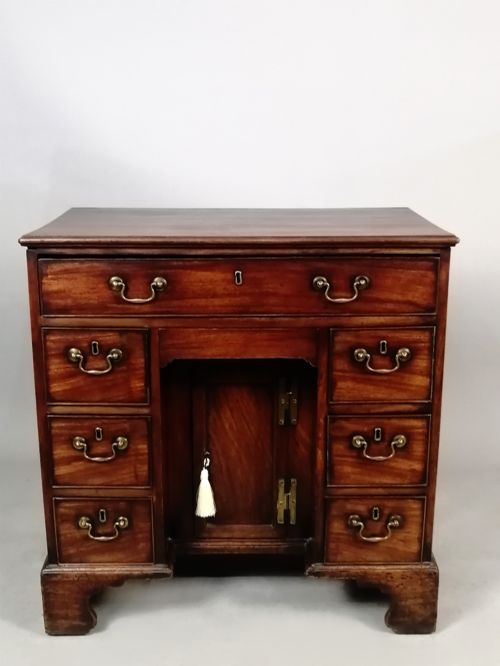
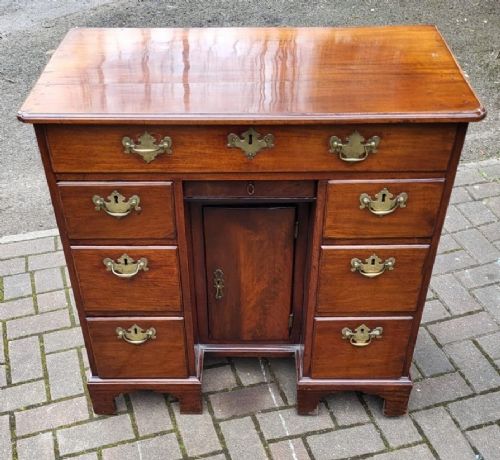
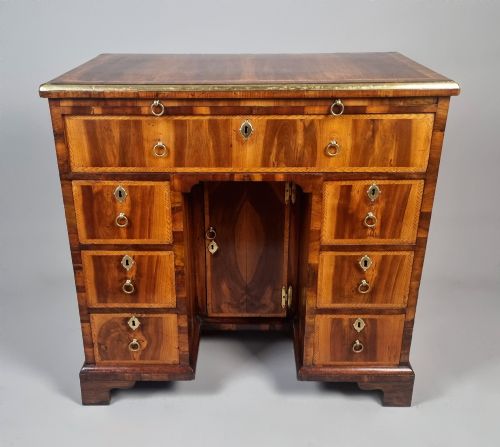
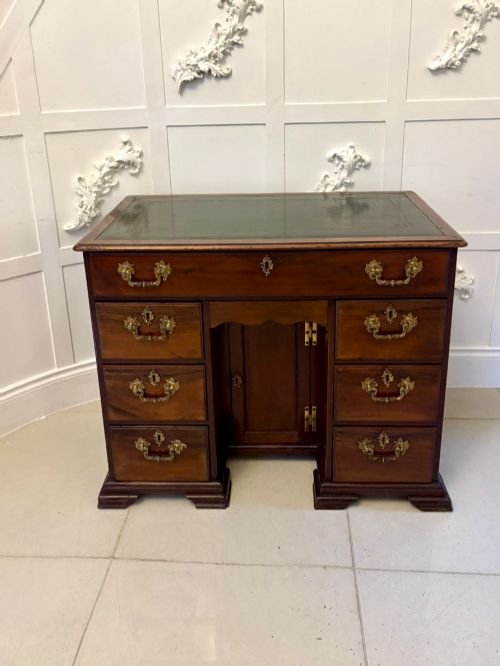
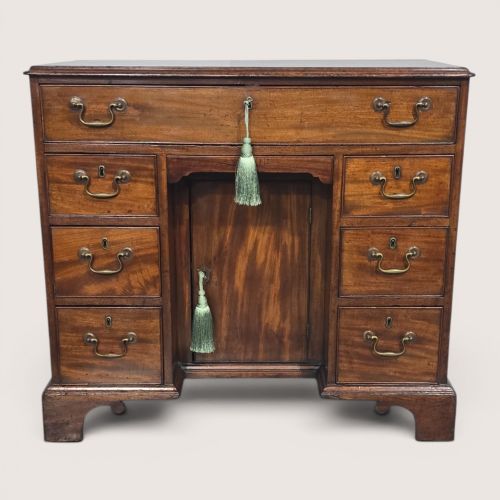
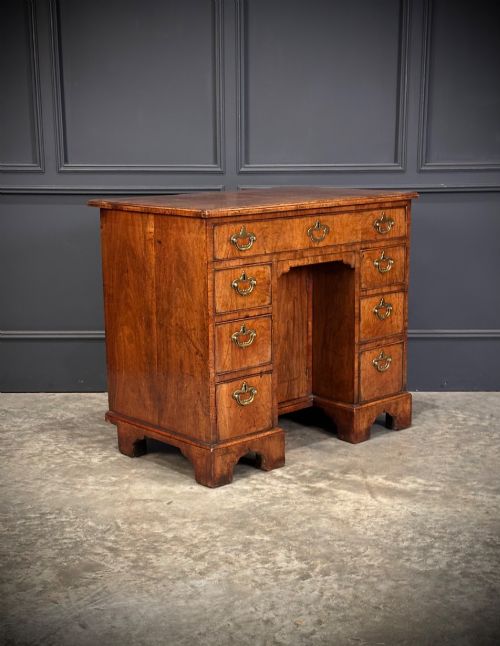
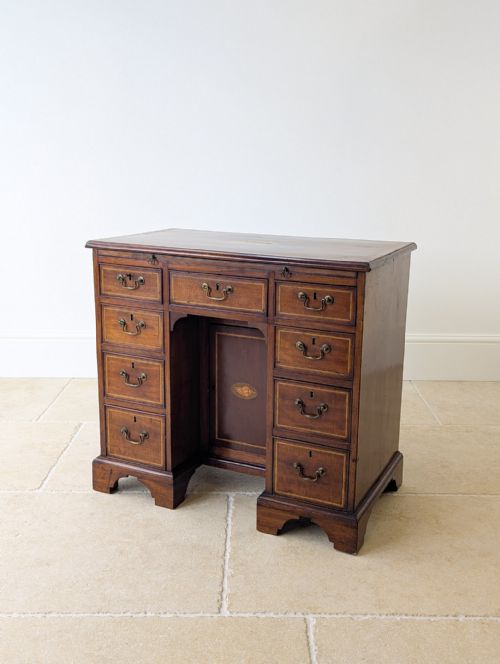
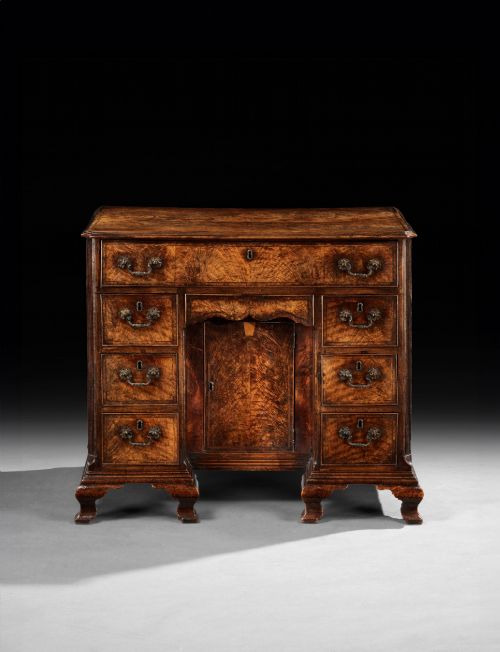
When you search for an antique kneehole cupboard, you encounter formal writing tables and compact desks designed with a recessed central cupboard flanked by pedestals of small drawers. The pieces on this page span from the early eighteenth century through the Georgian and Victorian eras, often taking the form of low desks or dressing tables.
Makers of the eighteenth century frequently utilised rich figured timbers such as walnut, burr elm and mahogany, constructing the central recess to house a small concealed cupboard door rather than an open knee space. These items served intimate domestic purposes in bedrooms and private studies, combining surface writing space with secure compartmentalised storage.
Materials and construction methods
Cabinet makers of the Georgian and Victorian periods relied heavily on solid mahogany, oak and walnut, frequently applying fine veneers like burr walnut and fiddleback walnut to the primary drawer fronts and top surfaces. Secondary woods such as oak and pine were utilised for internal drawer linings and carcass framing.
Construction details include hand-cut dovetails on drawer sides and the use of brass drop handles or brass backplates secured to traditional mortise and tenon frames. The central cupboard door often conceals small internal pigeonholes or hidden compartments, demonstrating meticulous joinery.
Antique Kneehole Cupboard Retail Price Guide 2026
Typical asking prices for kneehole cupboard among the pieces listed under this phrase on Sellingantiques today, from the lower quarter to the upper quarter. They describe what is for sale here now, not the wider market.
The listings on this site span multiple centuries, ranging from early eighteenth-century walnut and burr elm examples to late Victorian mahogany and oak interpretations.
Factors determining quality and execution
The distinction between standard examples and superior pieces rests on the choice of timber veneer and the precision of the cabinet work. Highly figured grain patterns, such as burr elm or fiddleback walnut selected for the main facades, indicate greater ambition by the maker.
Proportion and untouched original brass hardware elevate a piece, whereas replacements or heavily worn secondary timbers alter the integrity of the design. The restraint and alignment of the cockbeading around the drawers reveal the underlying skill invested in the construction.
Johnstone & Jeanes
The Antique Kneehole Cupboard Glossary
- Kneehole
- A recessed space beneath the central part of a desk or dressing table designed to accommodate the user's legs. This architectural feature creates the characteristic tripartite arrangement of drawers and cupboards.
- Cockbeading
- A narrow half-round moulding fixed to the edges of drawer fronts to protect the wood from chipping and to frame the construction cleanly. It is a hallmark of better cabinet making.
- Fiddleback
- A figure in timber, particularly mahogany or walnut, resembling the grain pattern found on the back of a violin. This desirable figuring is achieved by cutting across the log in a specific manner.
- Burr walnut
- A wood harvested from walnut tree growths or excrescences that produces swirling, highly decorative grain patterns. It was favoured by cabinet makers for elite furniture fronts.
- Veneer
- A thin layer of choice wood applied to a firmer, plainer timber base to provide a decorative surface. Eighteenth-century examples demonstrate careful book-matching of these thin sheets.
Antique Kneehole Cupboard: Frequently Asked Questions
What is a kneehole cupboard used for?
These pieces functioned historically as private writing desks, dressing tables or personal study desks where correspondence and valuables were kept secure.
The central cupboard typically conceals small drawers or pigeonholes, while the flanking pedestals provide orderly storage for papers and personal items.
How do I date an antique kneehole desk?
Dating relies on observing the timber species, handle styles, construction methods of the internal drawers, and the overarching architectural style of the period.
Early eighteenth-century pieces often feature walnut with herringbone stringing, whereas later Georgian and Victorian examples display straight-grained mahogany or heavier Victorian proportions.
Are kneehole cupboards and desks the same?
The terms are frequently used interchangeably in trade descriptions because many kneehole desks incorporate a small central cupboard within the recessed arch.
Strictly speaking, a cupboard version emphasises the enclosed door in the centre, whereas simpler kneehole desks leave that central space entirely open.
How do I fit one into a modern room?
Their compact depth and finished back panels allow these items to sit comfortably against walls or function as freestanding writing surfaces in home offices and living rooms.
The modest footprint provides practical surface area without dominating the floor space of smaller contemporary interiors.