
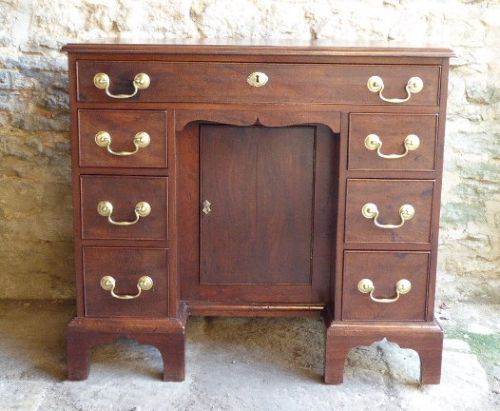
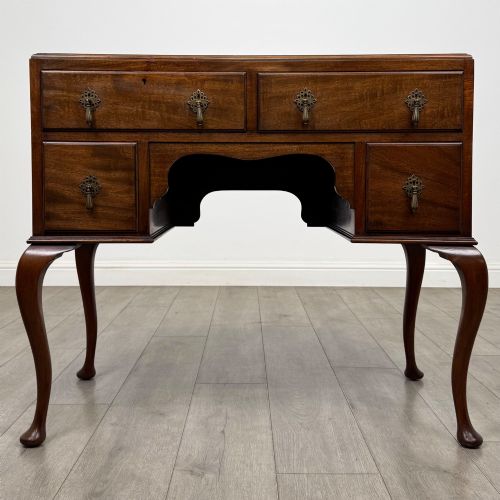
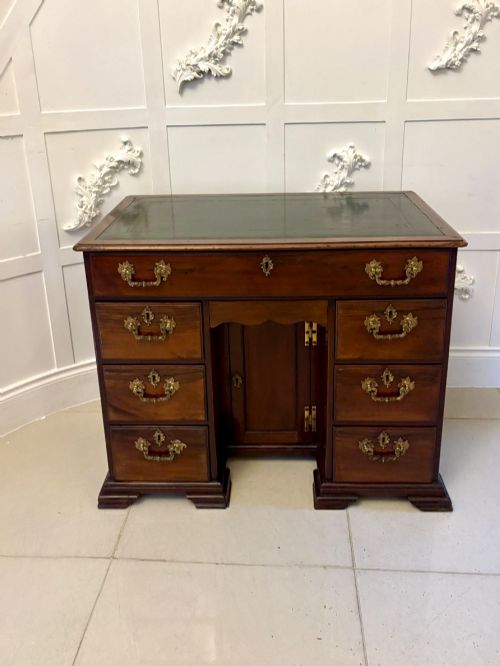
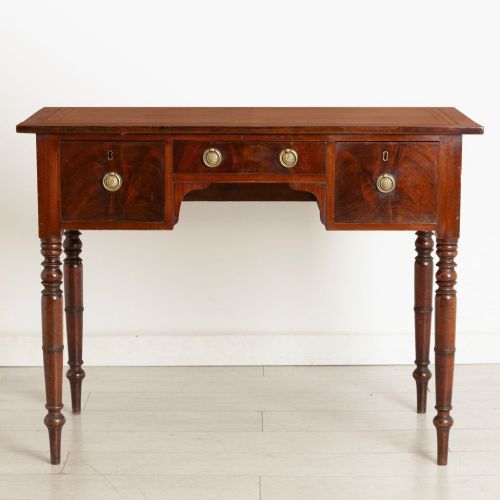
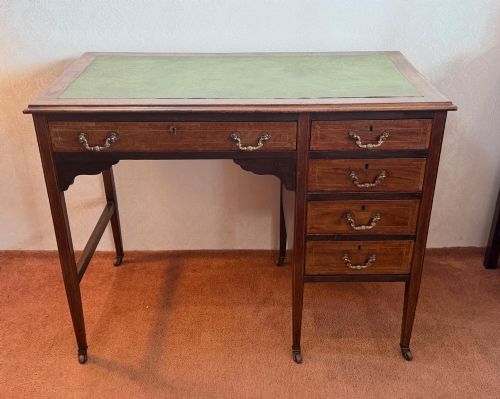
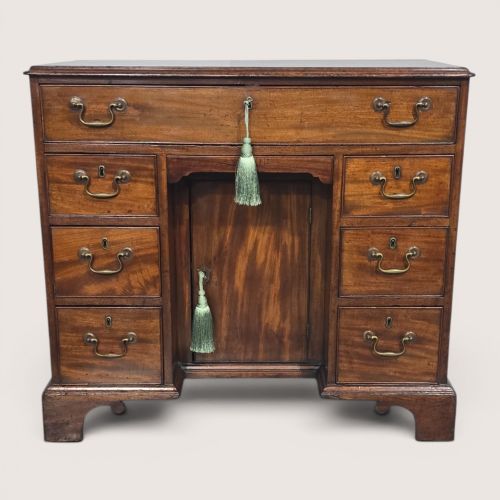
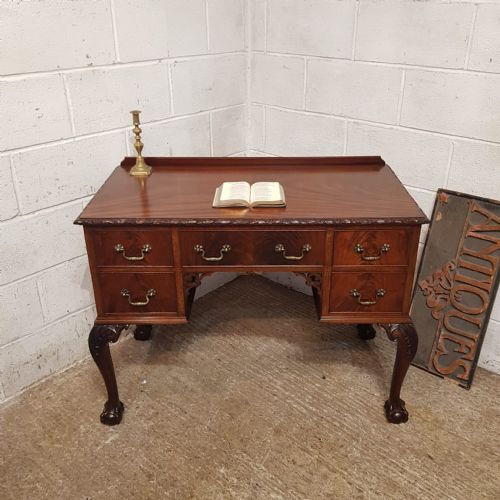
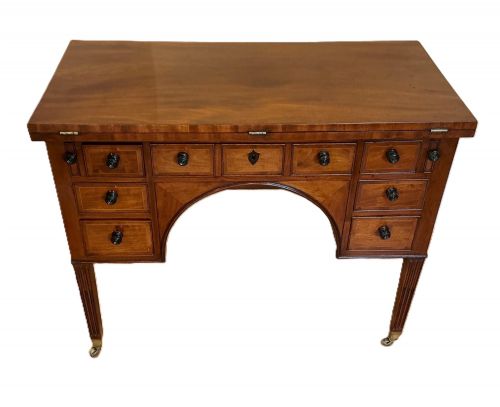
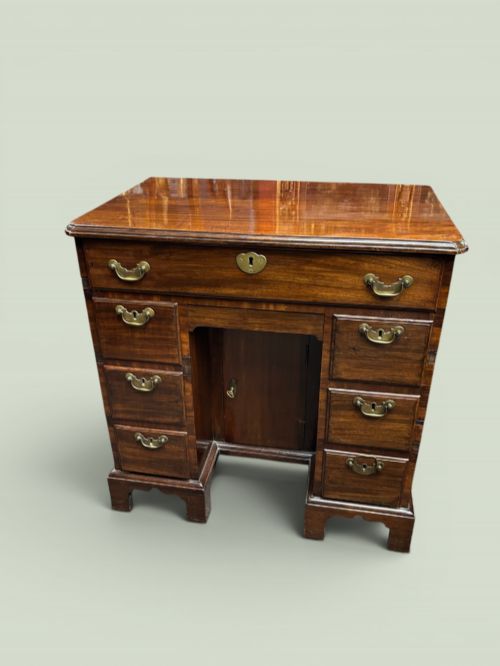
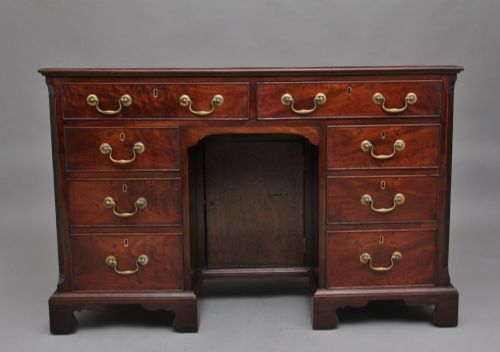

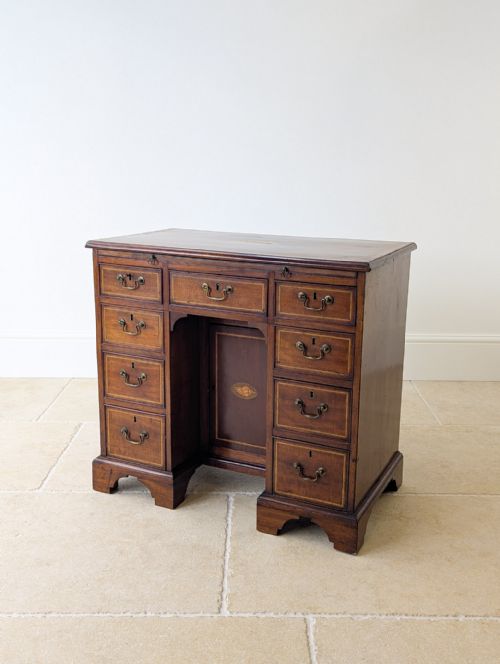
Mahogany Kneehole Bureau
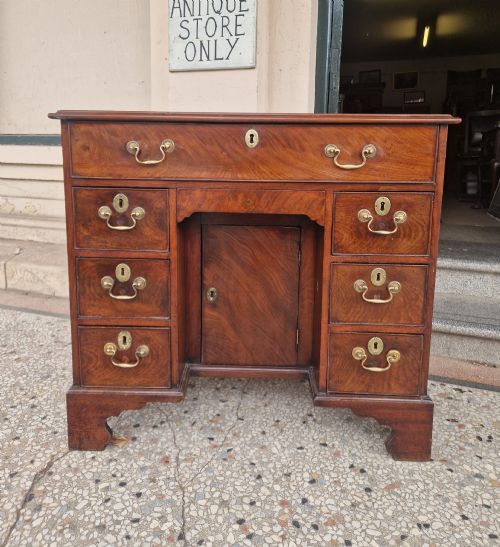
A mahogany kneehole bureau is a compact writing desk with a central recess flanked by drawers, valued for its fine timber and practical storage.
Mahogany Kneehole Bureau
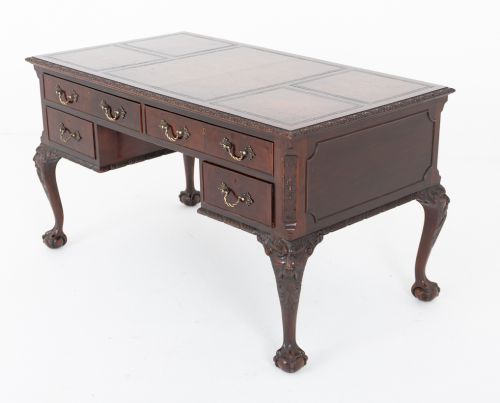
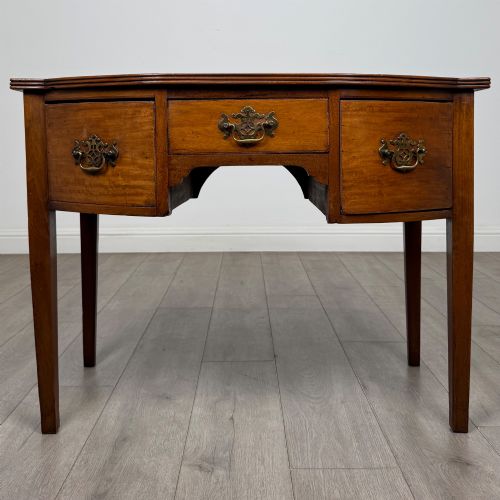
A mahogany kneehole bureau provides a dedicated writing space combined with pedestal storage, taking various forms from small desks to secretary bookcases. These pieces originate primarily from the Georgian and Victorian periods, alongside Edwardian revivals.
Buyers searching for a mahogany kneehole bureau encounter compact writing desks designed with a recessed knee space, often incorporating slides, leather tops, or fitted drawers. The selection spans George III craftsmanship through to twentieth-century revival interpretations.
Materials and construction
The primary timber used is mahogany, frequently accented with satinwood inlay, marquetry, and wood inlay to create decorative contrasts on the writing surfaces and drawer fronts. Secondary woods such as oak appear in the internal framing and drawer linings.
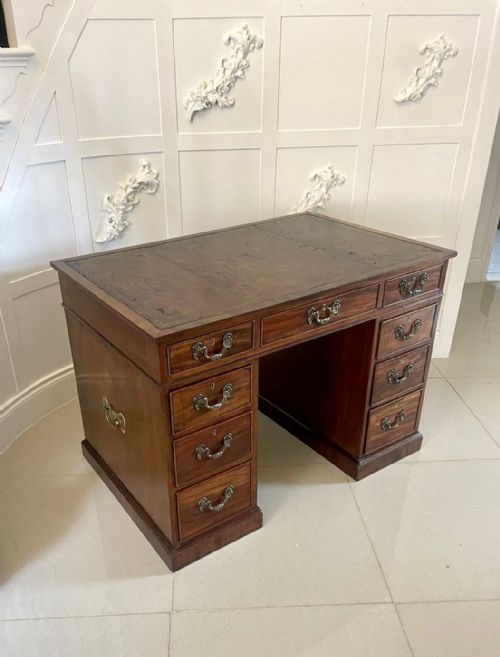
Hardware details such as brass handles complement the dark grain of the timber, while inset leather tops provide a durable surface for writing. Construction techniques range from eighteenth-century cabinet making to later revival methods.
Some nineteenth-century examples are scaled down as child's desks, offering miniature pedestals for tiny correspondents.
Assessing quality and craftsmanship
Quality in these desks rests on the choice of timber and the precision of the inlay work, where finer pieces display carefully selected mahogany grain and crisp satinwood detailing. The presence of original brass hardware and well-fitted internal compartments further separates standard examples from superior items.
Proportions and scale also define the tier of a piece, with smaller and more unusual formats commanding attention for their refined joinery and balanced pedestals. The integrity of the secondary woods inside the drawers reveals the standard of the original workshop.
James Shoolbred of London·Maple and Co.
The Mahogany Kneehole Bureau Glossary
- Kneehole desk
- A writing table featuring a central recessed space for the legs, enclosed by small pedestals of drawers on either side. This form offers efficient storage while maintaining a compact footprint.
- Satinwood inlay
- A contrasting light-coloured timber inserted into the mahogany surface in decorative geometric or botanical patterns. It adds visual depth to drawer fronts and borders.
- Pedestal desk
- A heavy writing table supported by two upright banks of drawers rather than simple legs. They provide substantial internal storage beneath the main writing surface.
- Secretary bookcase
- A tall combination piece incorporating a writing desk section beneath upper shelving enclosed by doors. These multi-functional items combine a bureau workspace with library storage.
Mahogany Kneehole Bureau: Frequently Asked Questions
What is a kneehole bureau?
A kneehole bureau is a timber writing desk featuring a central recess for the user's legs, flanked by vertical stacks of drawers. It combines a compact writing surface with significant enclosed storage.
These pieces were designed for domestic studies and bedrooms, offering an organised space for correspondence and personal documents without occupying the footprint of a large library table.
How do I date a mahogany desk?
Dating relies on examining the timber selection, construction methods of the drawer linings, and the prevailing decorative style such as Georgian proportions or Edwardian inlay. Secondary woods inside the drawers often reveal the period of manufacture.
Hardware styles and the presence of original brass handles or leather inserts provide further clues to whether a desk originates from the eighteenth century or a later revival.
Where were these desks used?
These desks served primarily in private libraries, drawing rooms, and bedrooms as personal writing and administrative stations. Their compact size made them suitable for domestic spaces requiring organised storage.
They allowed individuals to manage correspondence and keep papers secure within private chambers rather than grand public offices.
How do I care for mahogany furniture?
Maintenance involves keeping the timber away from direct sunlight and steady heat sources to prevent the mahogany grain from drying out and splitting. Regular dusting with a soft, dry cloth preserves the polished finish.
Application of appropriate wax helps nourish the wood and maintain the lustre of the surface without building up excessive residue over time.