
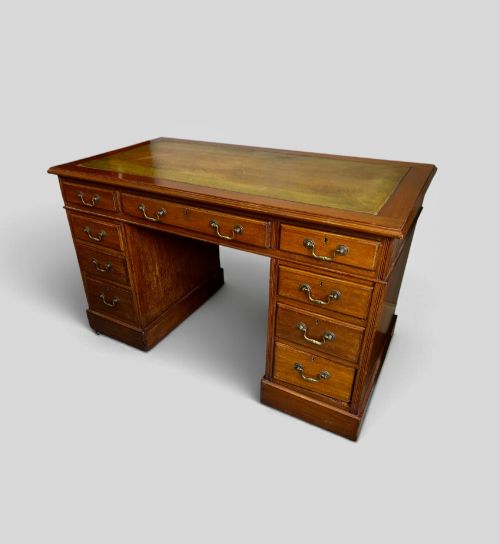
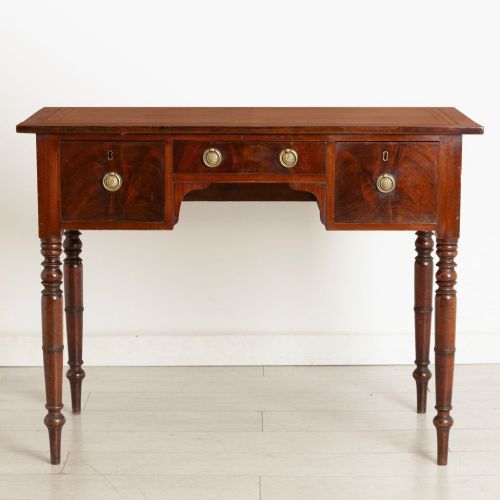
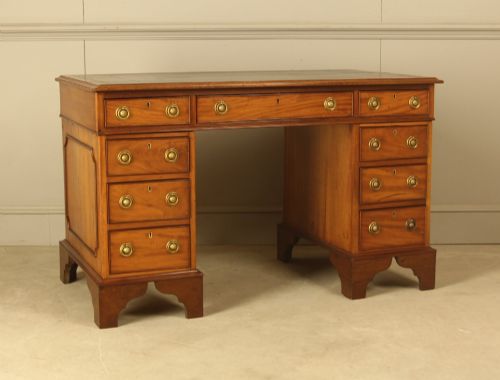


Mahogany Computer Desk
These mahogany computer desk examples provide solid workspace with traditional timber warmth.
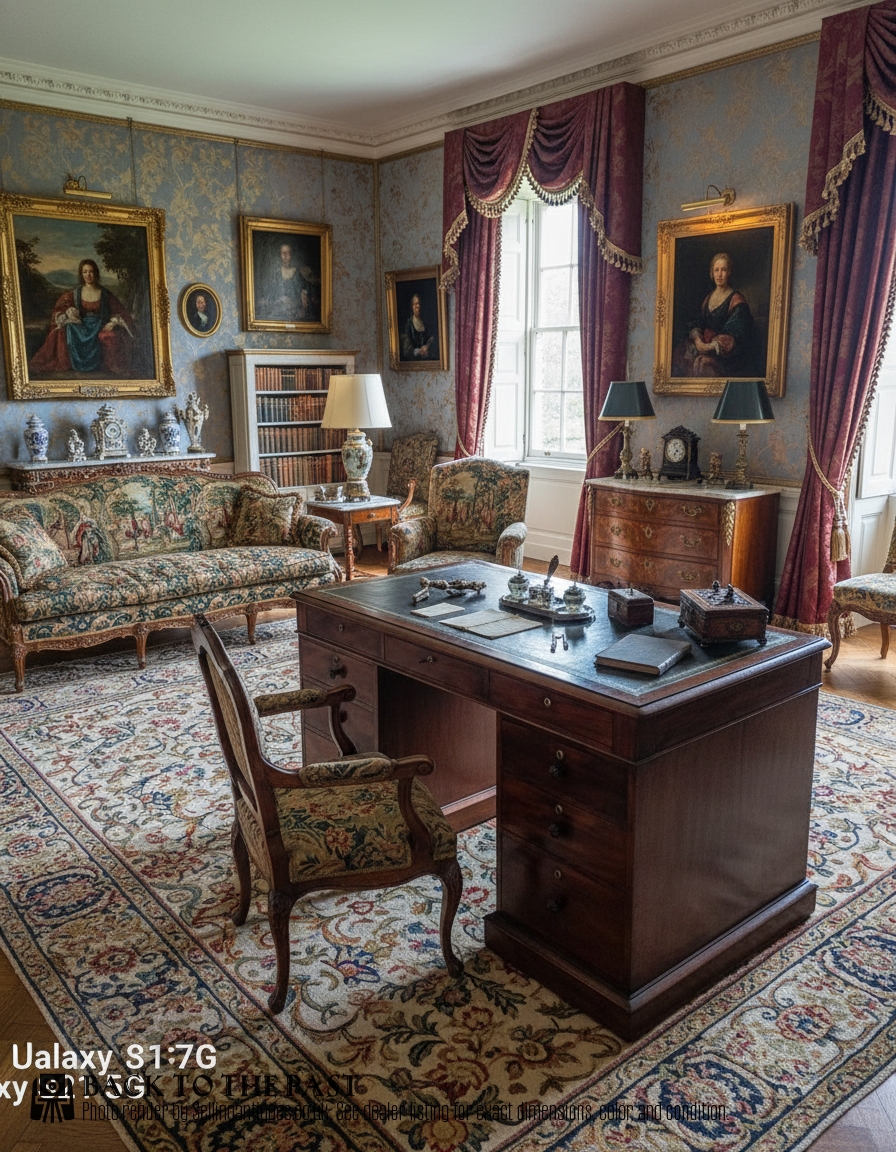
What they are
When you search for a mahogany computer desk, you meet substantial timber furniture built for writing and study. The pieces listed span periods from the eighteenth century through the nineteenth century and into the early twentieth century.
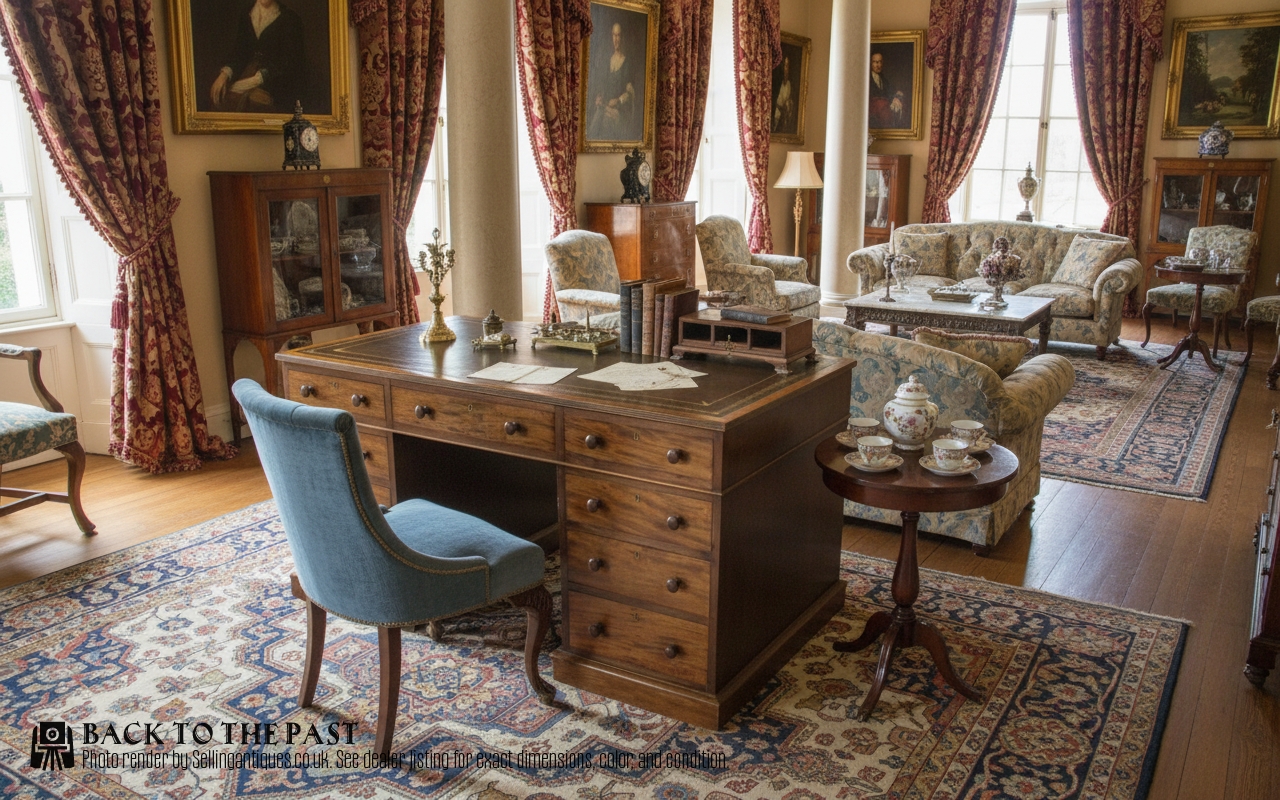
Most examples take the form of pedestal desks or writing tables, often featuring kneehole configurations and fitted drawer spaces. You will encounter Victorian and Georgian designs alongside George IV and Neoclassical Revival styles.
Origins include American workshop production as well as British cabinetmaking. The selection ranges from compact side tables to large three-part twin pedestal formats adapted for modern study use.
How they were made
Cabinetmakers constructed these desks primarily from solid mahogany and mahogany veneers, sometimes incorporating oak and satinwood inlay for decorative contrast. Timber selection focused on rich grain patterns and deep natural colour.
Hardware additions include cast brass handles and fittings that complement the dark wood tones. Many writing surfaces incorporate inset leather tops tooled with gilt borders.
Retail Price Guide 2026
Typical UK retail prices for mahogany computer desk, calculated from the Sellingantiques database of over a million retail prices indexed since 2003. This retail price guide relies exclusively on Sellingantiques data; no external sources or auction records are used, so the figures do not describe the wider market.
Some nineteenth century desks cleverly hide computer cables where clerks once kept spare inkwells.
What varies in quality
Superior quality rests in the depth of timber selection and the precision of the cabinetwork. Finer desks display careful matching of mahogany veneers and crisp detail in satinwood inlay.
The integration of original brass hardware and well-preserved leather writing surfaces elevates an example. Structural integrity in the pedestal construction and drawer runners defines the standard across the range.
The Mahogany Computer Desk Glossary
- Pedestal desk
- A large freestanding desk comprising two supporting banks of drawers beneath a main writing surface. This format provides substantial storage space.
- Kneehole desk
- A desk featuring a central recessed space for the legs beneath the desktop. Smaller variants often use this compact layout.
- Satinwood inlay
- Decorative woodwork utilising contrasting light satinwood strips set flush into the mahogany surface. This technique creates geometric borders.
- George IV
- A design period spanning the early nineteenth century defined by neoclassical influence and heavy mahogany forms. Pieces from this era often show refined proportions.
Frequently Asked Questions
What is a pedestal desk?
A pedestal desk is a heavy freestanding piece featuring two vertical stacks of drawers with a central opening for seating. They offer generous surface area and extensive storage.
These desks often feature inset leather writing panels and brass drawer pulls. Their robust build suits professional studies and libraries.
How do I date a mahogany desk?
Dating relies on observing construction methods, timber choice, and hardware styles across different historical periods. Georgian and Victorian pieces show distinct shifts in proportion and decorative detail.
Examining drawer linings and backboards reveals the age of the timber and assembly techniques. Maker marks or stamps occasionally assist with provenance.
Can I use an antique desk for computing?
Many of these desks accommodate modern technology while retaining traditional aesthetics. Kneehole spaces and drawer arrangements provide practical clearance for daily use.
Careful measurement of the kneehole height ensures comfortable seating. Protecting the leather top helps preserve the historic surface during regular work.
What is satinwood inlay?
Satinwood inlay involves cutting contrasting light-coloured timber into recesses carved into the dark mahogany surface. It creates decorative borders and geometric motifs.
This technique highlights the craftsmanship of the cabinetmaker. It adds visual brightness to the darker tones of the primary wood.