
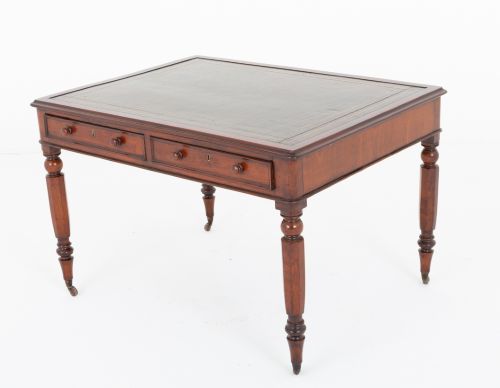


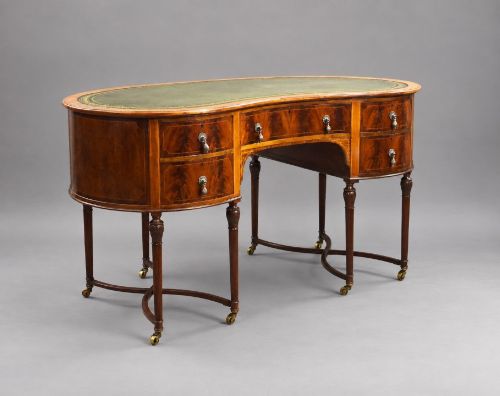
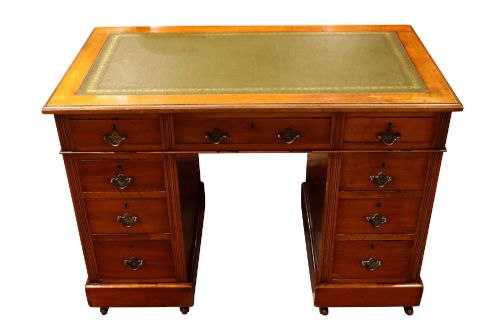
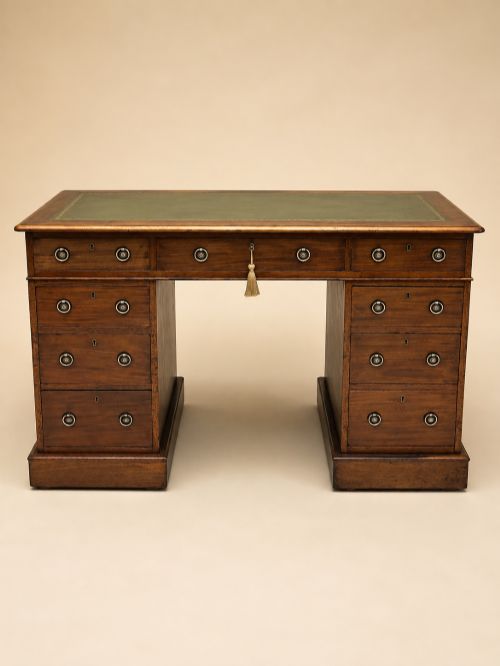
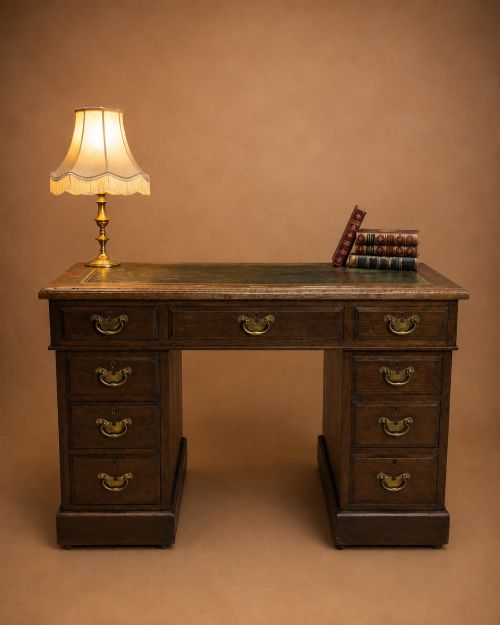
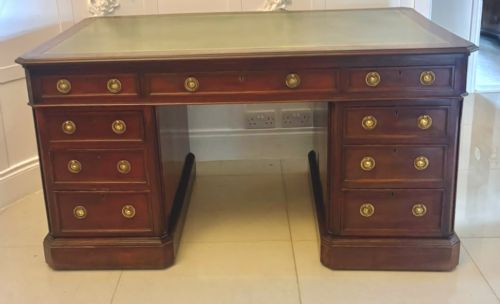
Leather Top Office Desk
A leather top office desk brings solid timber and aged hides together, offering a practical workspace shaped by Victorian, Edwardian, and Art Deco hands.
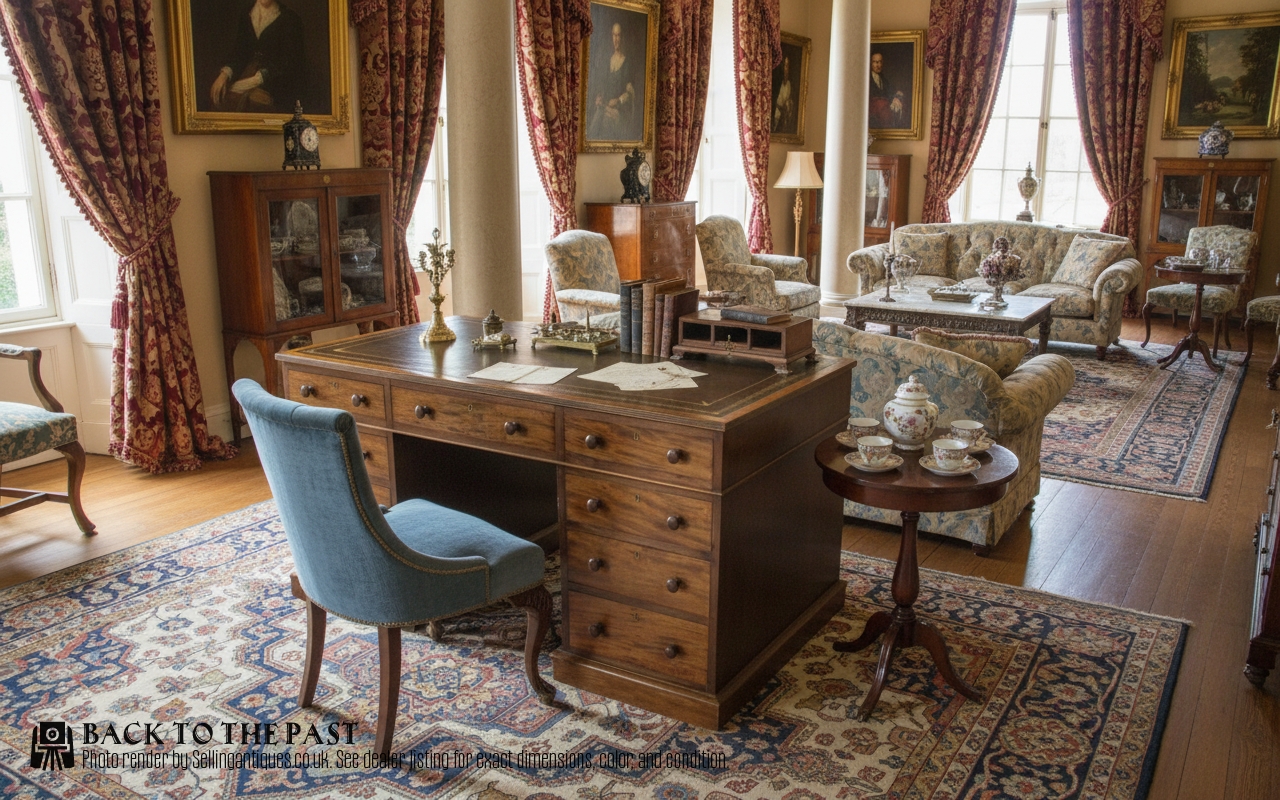
Understanding the leather top office desk
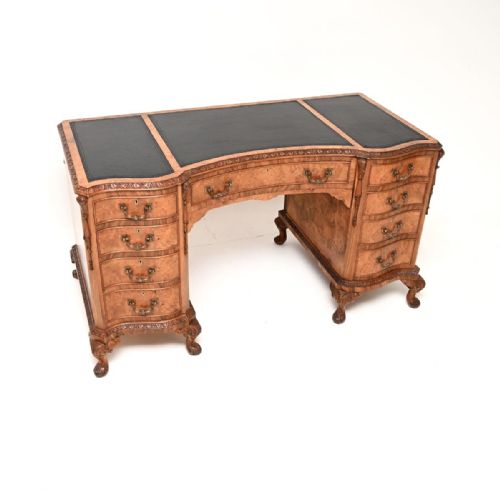
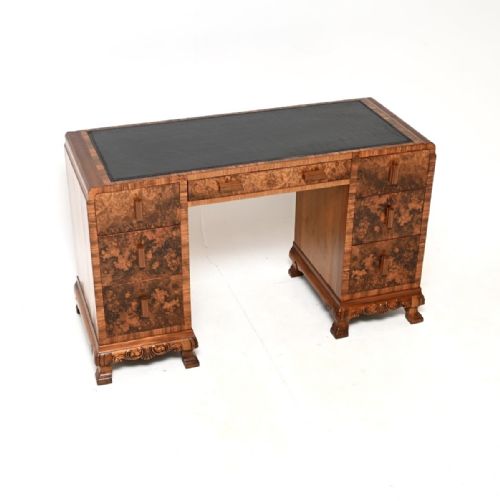
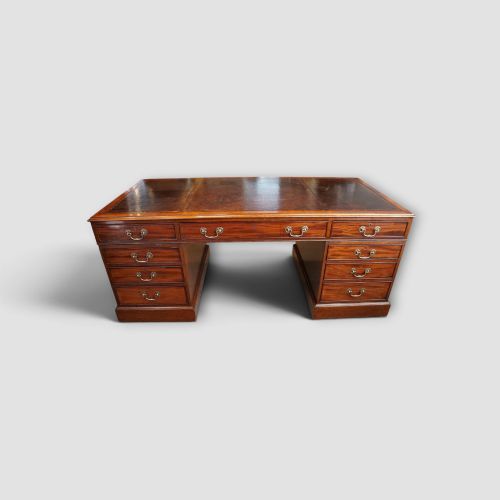
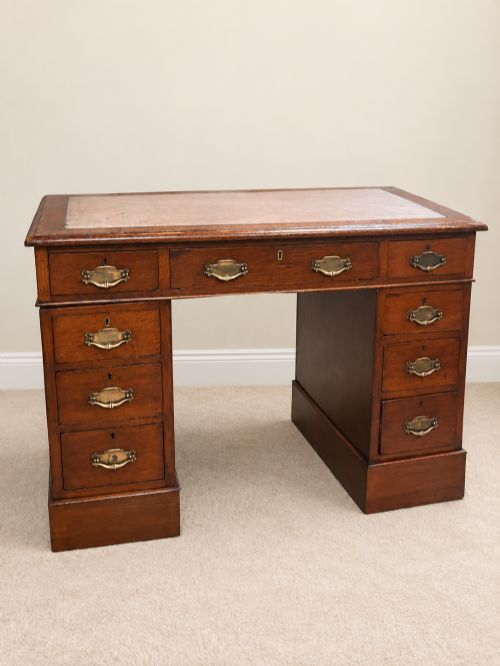
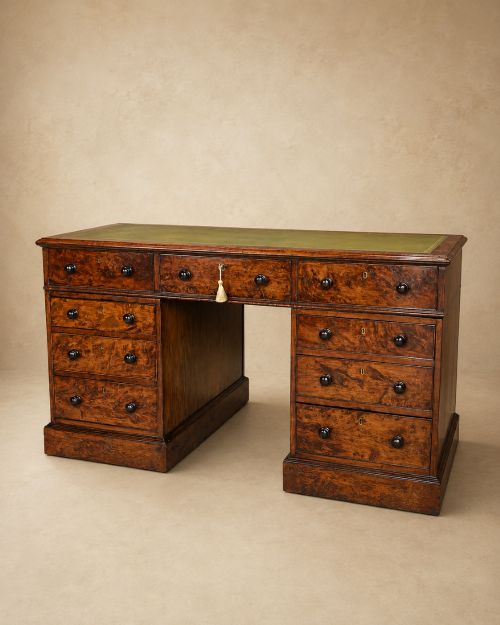
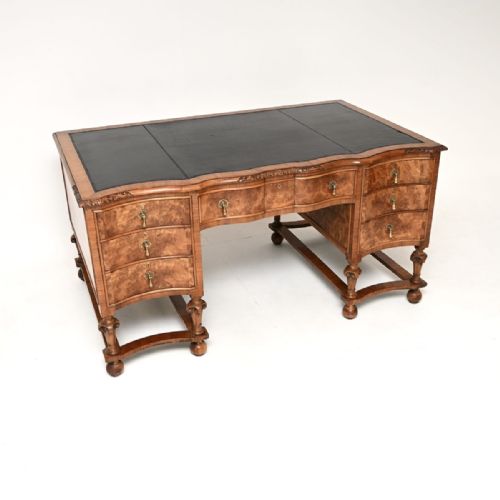
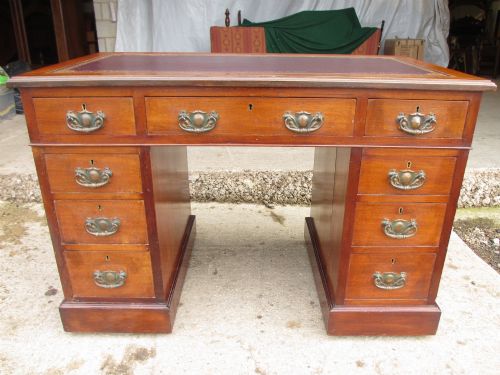
A leather top office desk provides a traditional working surface framed in timber and inset with a hide writing panel. You meet pedestal forms most often on this page, arranged with banks of drawers beneath the top.
The evidence spans the mid-nineteenth century through to the art deco period of 1930, taking in Victorian, Edwardian, and arts and crafts styles. Pieces range from large mahogany partners desks to compact satin birch writing tables.
Makers such as James Shoolbred of London and Ray and Miles of Liverpool appear in the records alongside government issue oak tables and estate pieces. Each version reflects the workspace demands of its decade, from cylinder roll tops to twin pedestal layouts.
Materials and construction
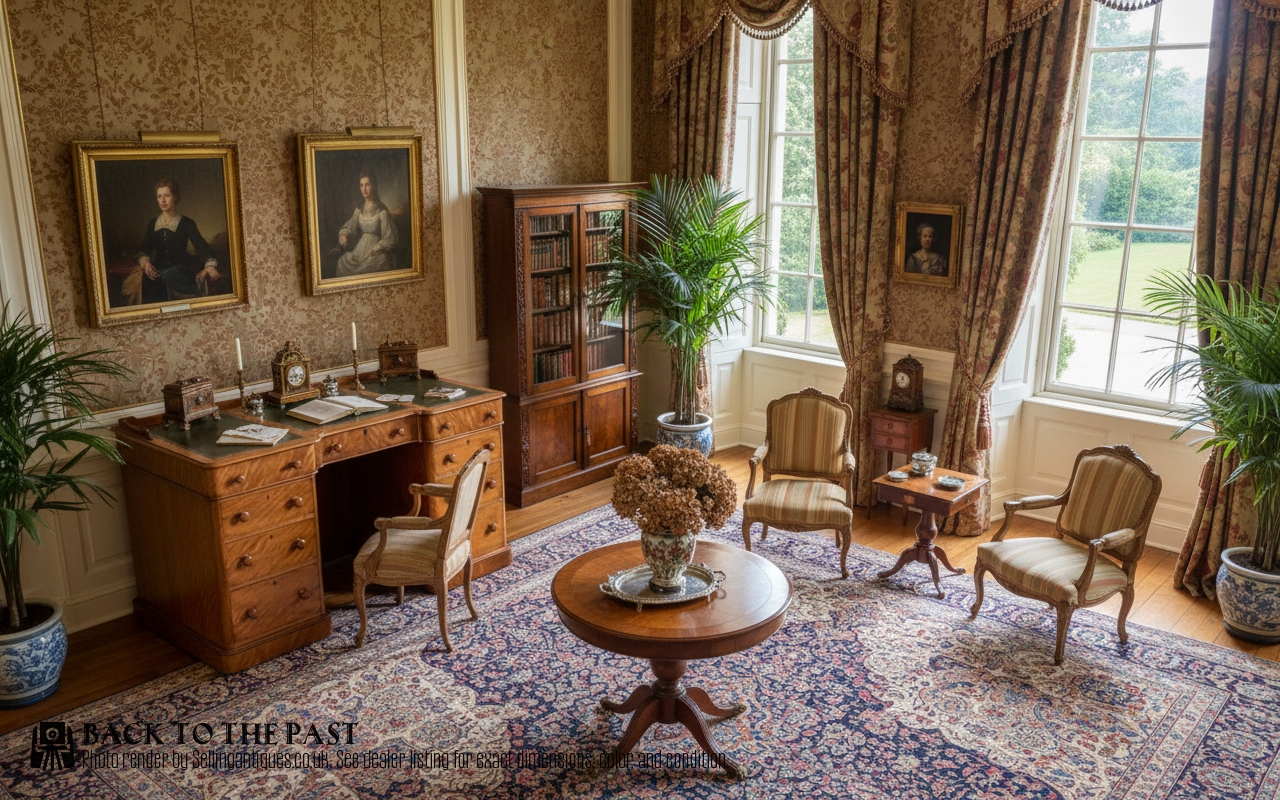
Makers built these desks from hardwoods including mahogany, oak, burr walnut, satinwood, and satin birch, often combining solid timbers with veneers. Brass handles, escutcheons, and castors complete the hardware on pedestal and roll top designs.
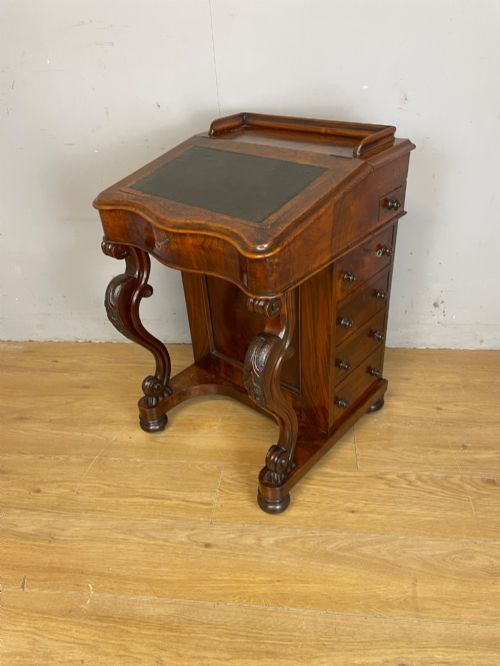
Insets of worked leather form the central writing surface, frequently framed by blind or gilt tooling around the perimeter. Cylinder roll tops and pedestal carcases rely on traditional joinery to house numerous drawers and internal pigeonholes.
Retail Price Guide 2026
Typical UK retail prices for leather top office desk, calculated from the Sellingantiques database of over a million retail prices indexed since 2003. This retail price guide relies exclusively on Sellingantiques data; no external sources or auction records are used, so the figures do not describe the wider market.
Listings feature woods such as oak, mahogany, burr walnut, and satin birch across Victorian, Edwardian, and art deco periods.
Assessing quality and character
The distinction between standard utility pieces and finer examples rests in the choice of timber figure, such as burr walnut or figured mahogany, and the subtlety of inlay. Cabinet work shows in the neatness of dovetails within the drawer boxes and the weight of the brass fittings.
The condition and texture of the inset leather define the character of the surface, with older hides showing natural patination from decades of use. Maker stamps or labels add documentary weight to specific pedestal and cylinder desks.
James Shoolbred of London·Ray and Miles of Liverpool
The Leather Top Office Desk Glossary
- Pedestal desk
- A heavy office table featuring two freestanding banks of drawers that support the main writing surface. These large pieces usually sit centrally within a room.
- Cylinder desk
- A writing table fitted with a quarter-circle rolling wooden shutter that conceals the pigeonholes and writing slide when closed. This design keeps paperwork secure.
- Partners desk
- A large double-sided workspace designed for two people to sit opposite each other, featuring drawers on both faces. These pieces were standard in boardrooms and estate offices.
- Satin birch
- A pale, lustrous hardwood sourced from birch trees, chosen for light-coloured Victorian cabinet work. It offers a distinct yellow-gold grain pattern.
- Blind tooling
- A decorative impression pressed into leather using heated metal tools without adding gold leaf. This technique creates a subtle, textured border around the writing surface.
Frequently Asked Questions
How do I care for the leather top?
Clean the hide gently with a damp cloth and apply a neutral leather wax occasionally to prevent drying and cracking.
Avoid placing direct heat sources or harsh cleaning chemicals near the writing surface to preserve the original tooling.
Can these desks fit modern computers?
Many historical pedestal and writing desks offer ample surface area for laptops and desk lamps, though drawer depths vary by period.
Measure the kneehole height carefully to ensure comfortable legroom when seated in an office chair.
What is a partners desk?
A partners desk provides matching drawer arrangements on both sides so two people can work face-to-face in a shared study.
These substantial pieces require a central floor placement rather than pushing flat against a wall.
How do I date a Victorian desk?
Examine the secondary timbers inside the drawer boxes, the style of the brass handles, and the construction methods used on the carcase.
Maker stamps and registration marks can also narrow down the exact decade of manufacture.