
Nineteenth Century Pedestal Desk
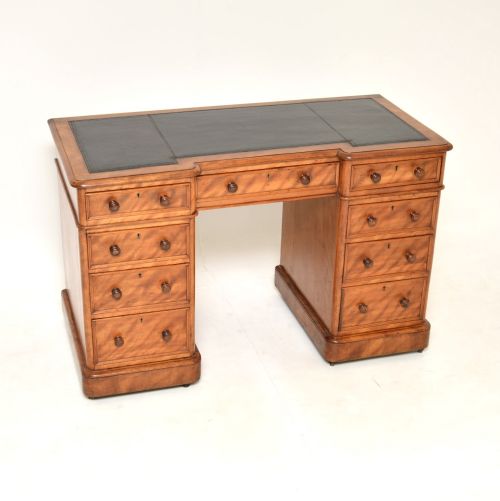
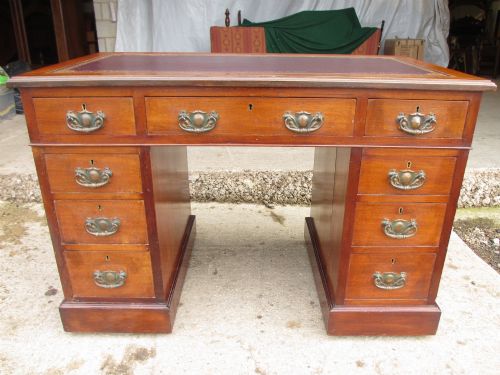
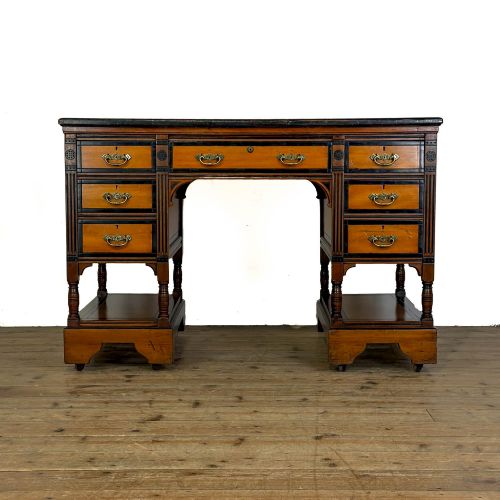
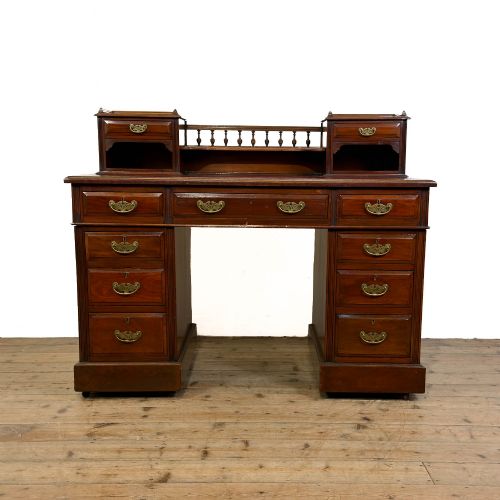
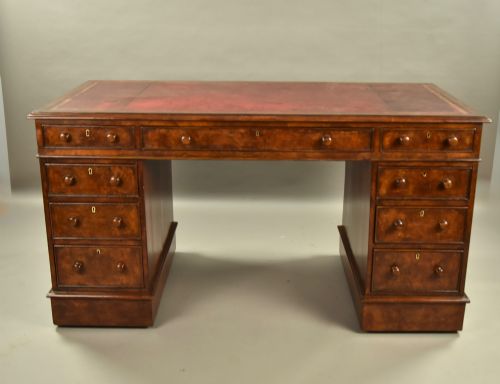
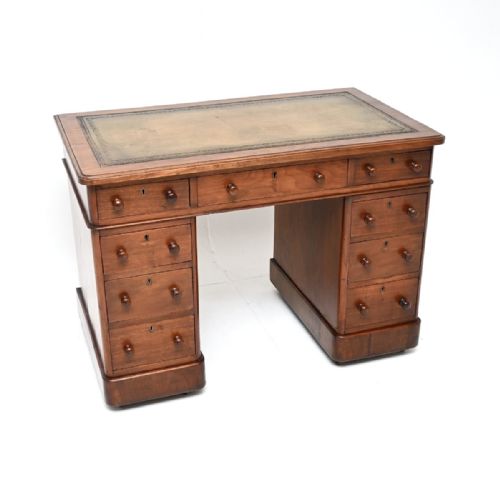
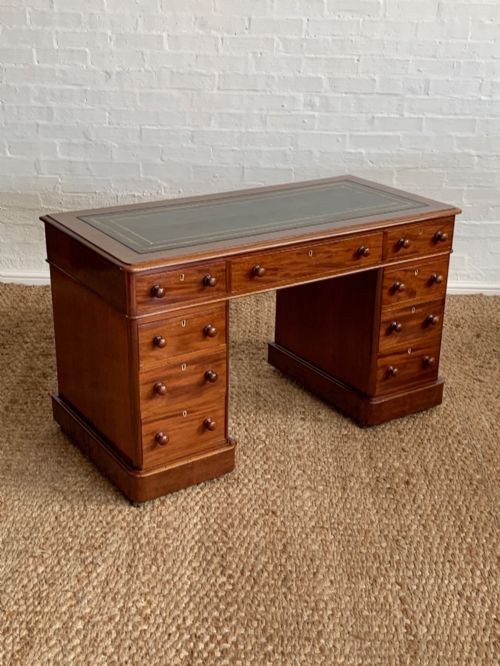
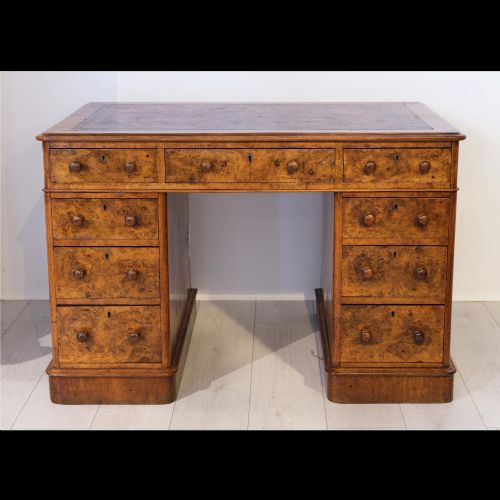
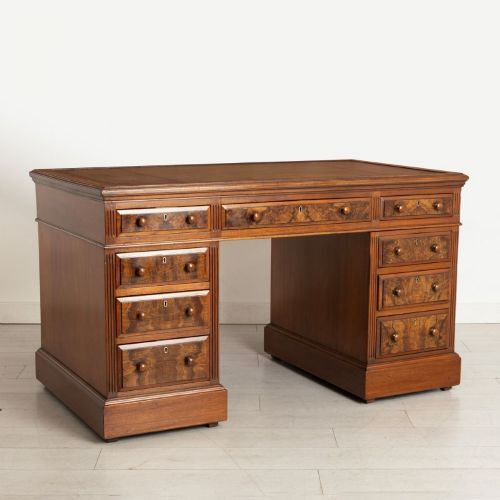
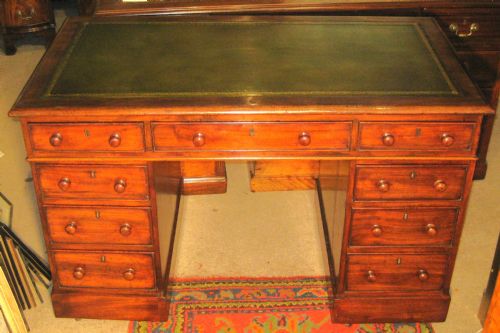
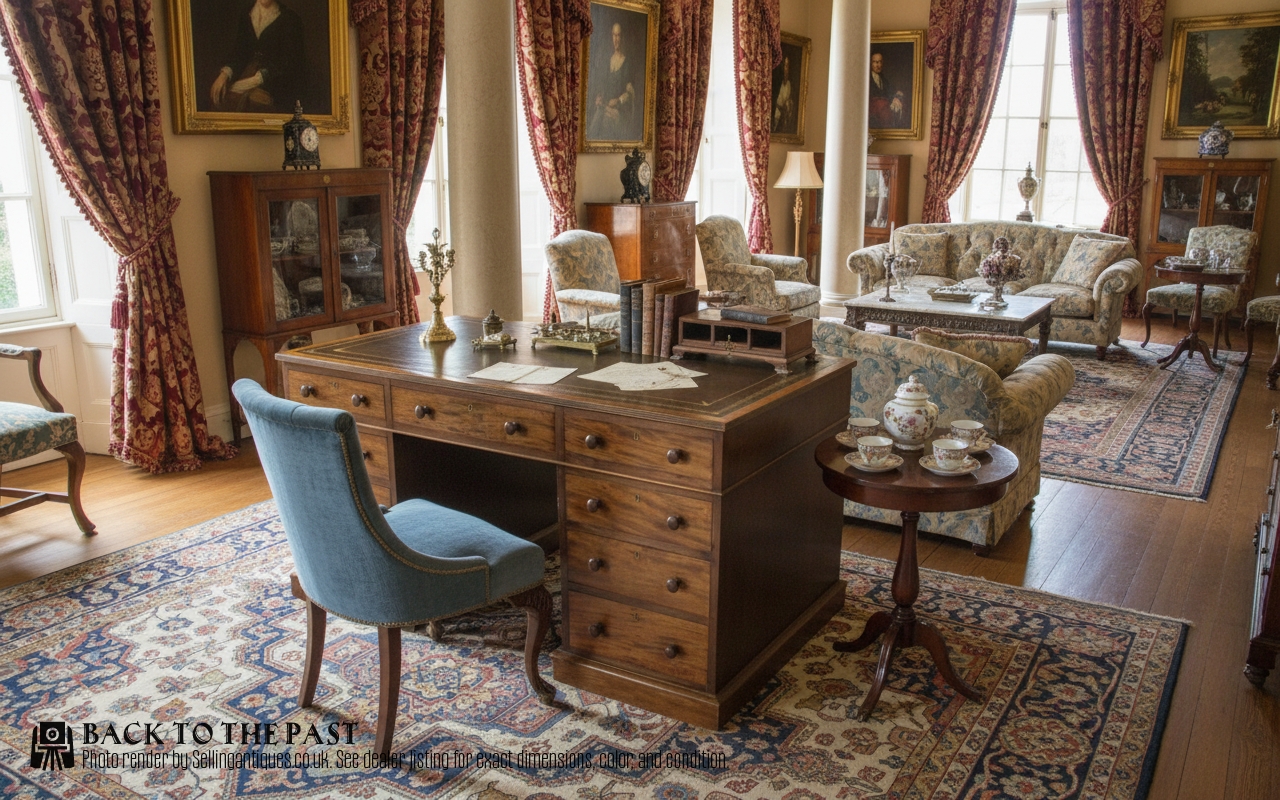
A nineteenth century pedestal desk is a substantial writing workstation built with two banks of drawers supporting a central top, designed for serious correspondence and study.
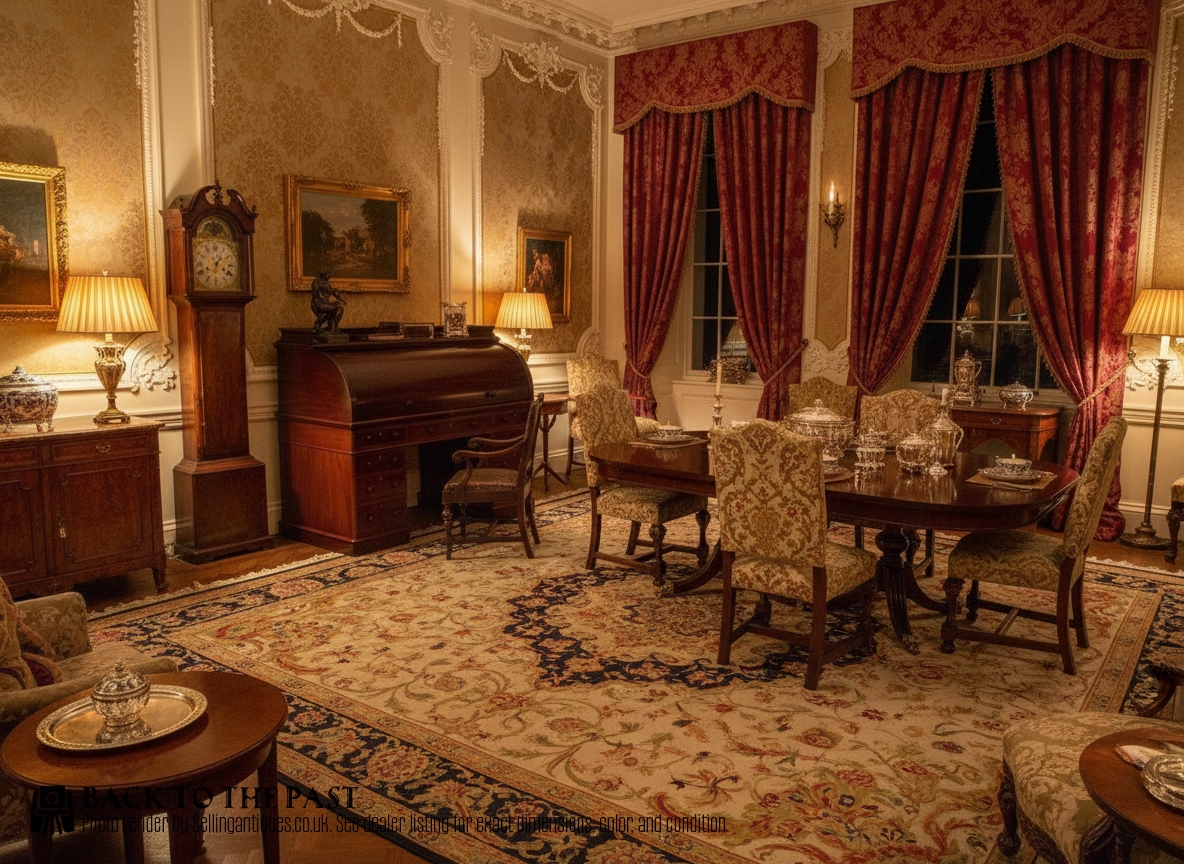
Nineteenth Century Pedestal Desk
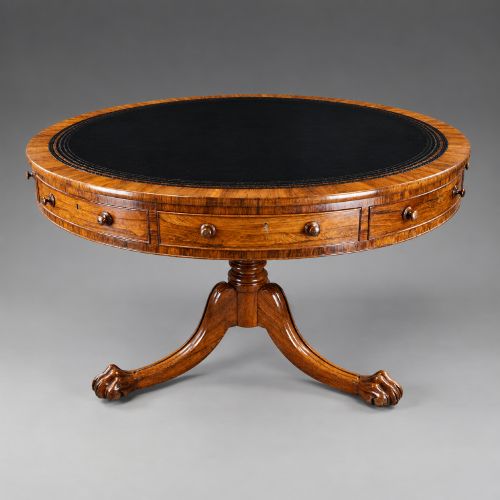
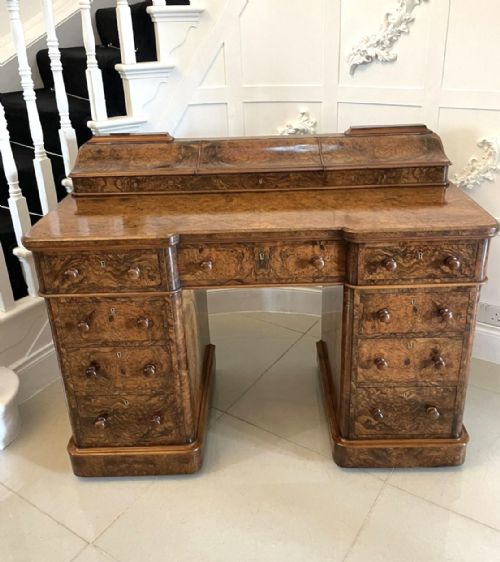
When you search for a nineteenth century pedestal desk, you encounter a variety of substantial writing furniture originating from the Victorian, Regency, and William IV periods. These pieces typically take the form of twin pedestal desks, partners desks with workspace on both sides, or specialised kneehole variations.
Mahogany and walnut dominate the forms on this page, often paired with inset leather writing surfaces and brass hardware. Most examples divide into multiple sections for ease of transport, reflecting the heavy domestic and office use they endured across the nineteenth century.
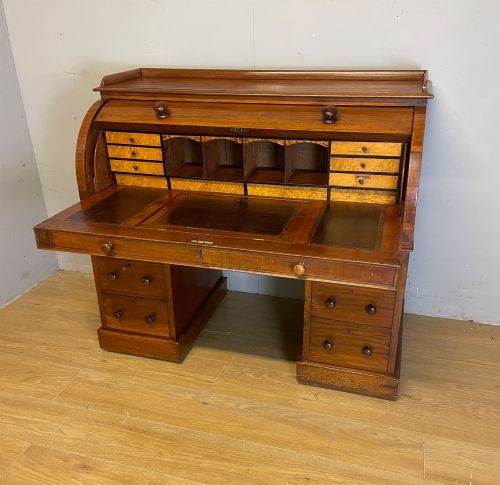
The selection ranges from simple oak utility desks to highly figured burr walnut and crossbanded flame mahogany partner pieces. Buyers looking for specific workspace solutions find variations including cylinders, Dickens desks, and standard nine-drawer configurations.
How They Were Made
Cabinet makers constructed these desks using solid timbers like mahogany, oak, and walnut, frequently applying fine veneers such as burr walnut, satinwood, and flame mahogany to exterior surfaces. Timber selection governed the visual weight and richness of each piece, while secondary woods provided structural stability inside the pedestals and drawer linings.
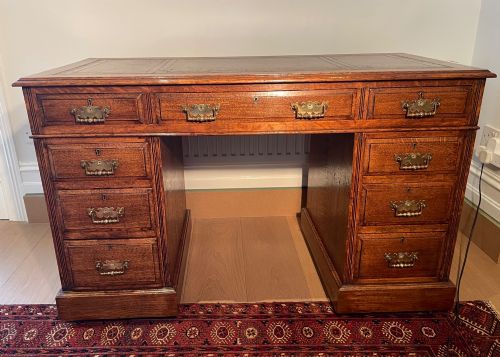
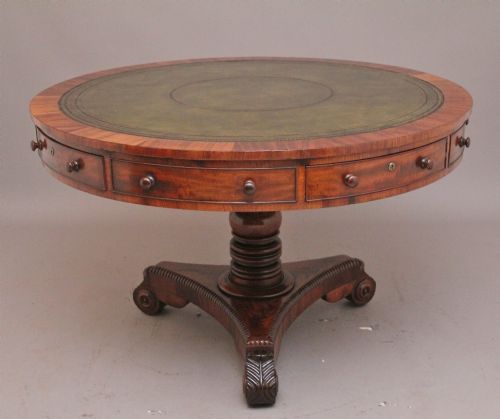
Working surfaces received inset panels of leather, frequently tooled with gold leaf and blind stamping, secured around the perimeter with timber mouldings. Brass hardware, including drop handles and oval plates, accented the drawer banks, while occasional pieces incorporated brass fittings for cylinders and tambour mechanisms.
Nineteenth Century Pedestal Desk Retail Price Guide 2026
Typical asking prices for nineteenth century pedestal desk among the pieces listed under this phrase on Sellingantiques today, from the lower quarter to the upper quarter. They describe what is for sale here now, not the wider market.
Several desks include built-in stationery compartments designed for fountain pens and inkwells that haven't seen an ink drop in over a century.
What Varies in Quality
The grade of timber veneer and the symmetry of its grain arrangement dictate the initial visual impact of a desk. Superior examples display carefully matched flame mahogany or burr walnut across multiple drawer fronts, whereas simpler utilitarian versions rely on plain solid timbers.
Construction detail separates standard office furniture from fine domestic pieces. Dovetailed drawer joints, secondary oak linings, original brass hardware, and crisp crossbanding or inlay denote skilled workshop production rather than mass commercial output.
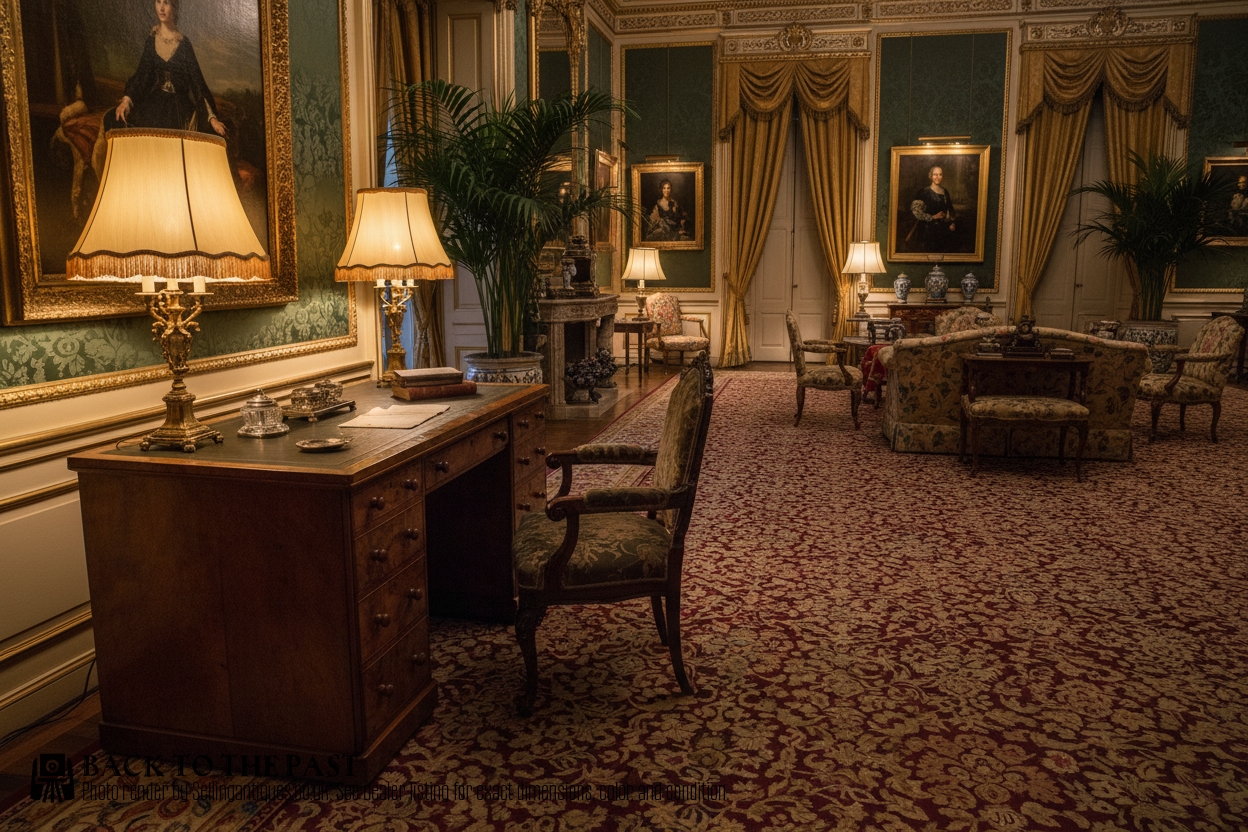
Hobbs & Co.·Maple & Co.·Holland and Sons
The Nineteenth Century Pedestal Desk Glossary
- Pedestal Desk
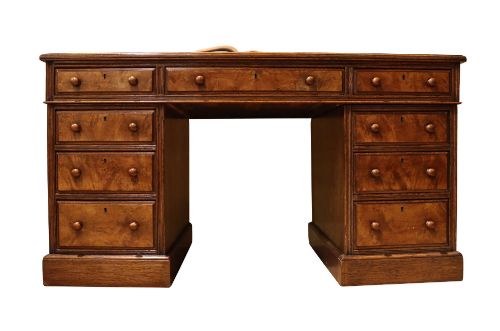
- A freestanding writing table comprising two separate drawer pedestals supporting a wide top. Most versions incorporate a central kneehole drawer flanked by banks of smaller drawers.
- Partners Desk
- A large double-sided desk designed for two people to work opposite one another at the same time. These pieces feature functional drawers and cupboards on both the front and rear elevations.
- Crossbanding
- A decorative border technique where thin strips of veneer are laid across the grain direction of the main timber panel. This frames the drawer fronts or desk top with a contrasting linear pattern.
- Kneehole Desk
- A compact writing desk featuring a recessed central space for the user's legs, flanked by single or double columns of drawers. They offer a slightly smaller footprint than standard twin pedestal formats.
- Tooled Leather
- A writing surface insert decorated with decorative borders impressed into the hide using heated metal tools and gold leaf. The tooling creates a finished frame around the perimeter of the leather top.
Nineteenth Century Pedestal Desk: Frequently Asked Questions
Are partners desks double sided?
Partners desks feature working drawers and cupboards on both the front and back elevations. This layout allowed two individuals to sit opposite each other in a library or study.
Standard pedestal desks have finished backs with dummy drawers or plain panels, meaning they sit flush against a wall.
How do I tell Victorian from Regency?
Regency pieces often display lighter proportions, classical brass mounts, and rosewood or figured mahogany surfaces dating from the early nineteenth century. Victorian desks tend to be heavier, utilising oak, walnut, or dense mahogany with deeper drawer configurations.
Construction methods and secondary woods inside the drawers also help differentiate the decades.
Can these desks be taken apart?
Nineteenth century pedestal desks typically separate into three distinct sections for transport: two individual pedestals and the heavy top. Some cylinder and partner formats include removable superstructure elements.
Lifting the top off reveals alignment pins or screw fixings inside the upper drawer bays.