


Traditional Partners Desk
Traditional partners desk designs provide double-sided workspace surfaces for shared offices, appearing here mostly in mahogany, walnut and oak across Victorian and Edwardian periods.
Traditional Partners Desk
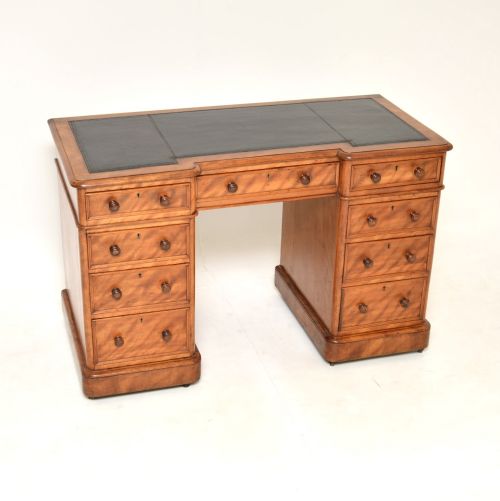
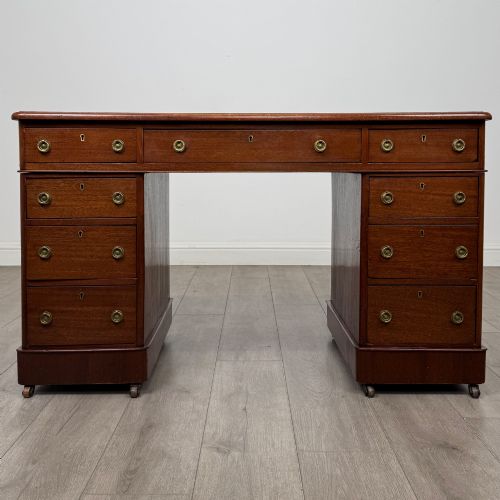
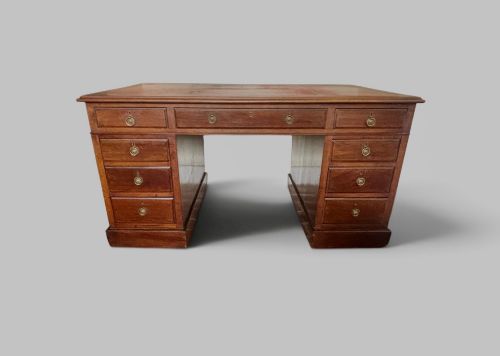
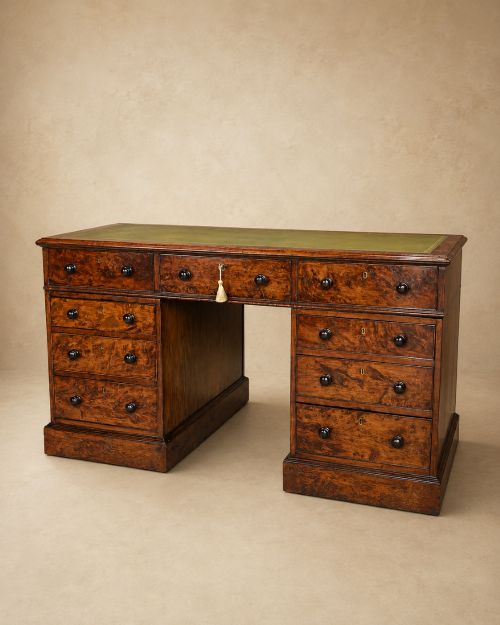
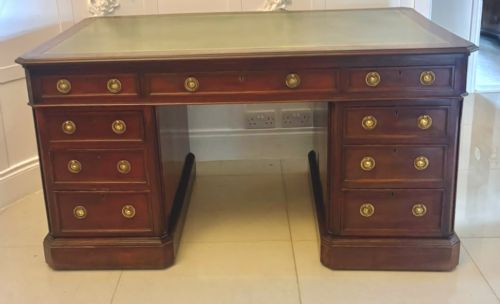
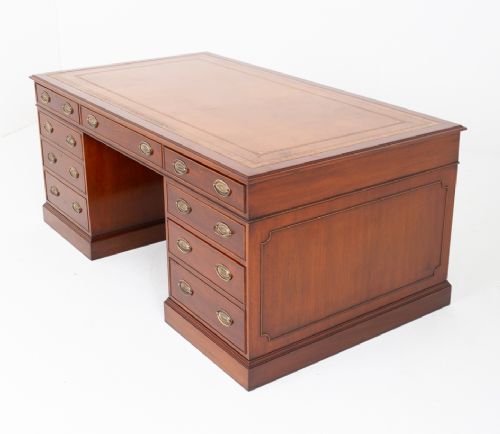
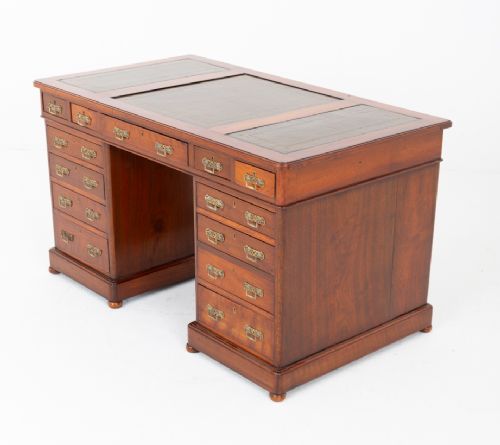
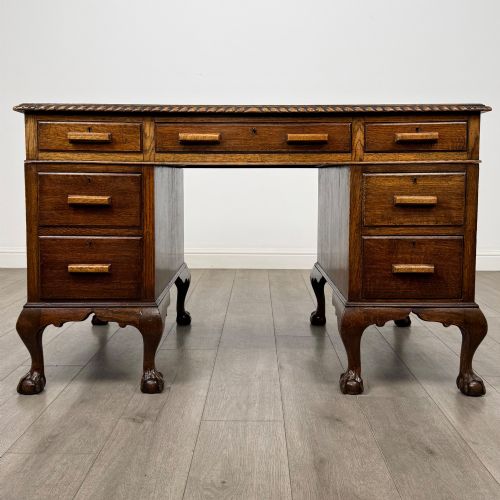
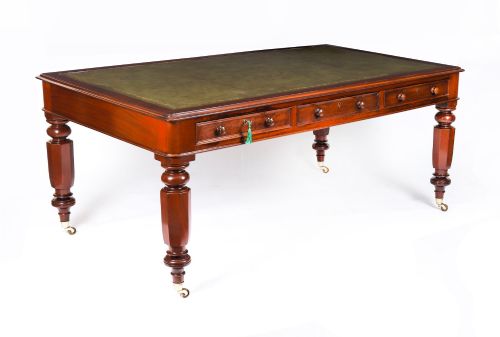
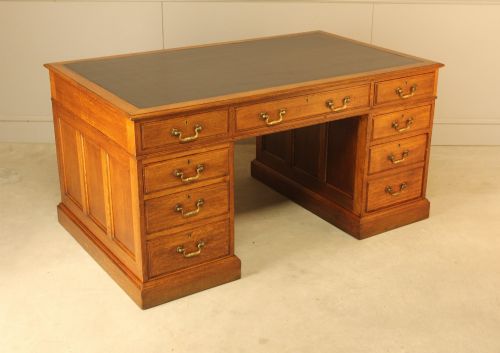
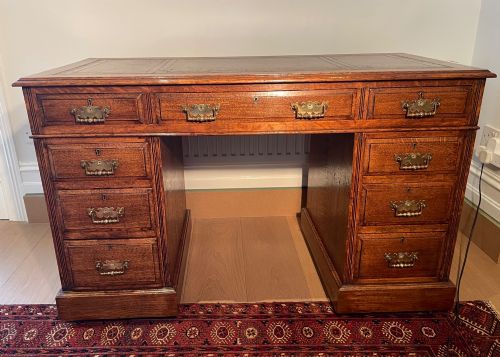
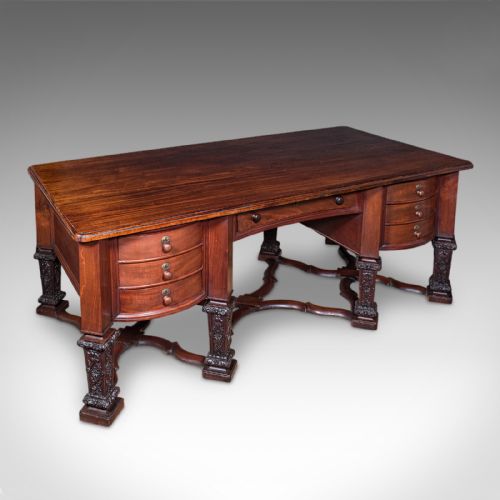
A traditional partners desk is a large freestanding double-sided writing table designed with pedestals of drawers facing both directions so two people can work opposite each other. The pieces seen on this page span the eighteenth, nineteenth and early twentieth centuries, drawing on Georgian, Victorian and Edwardian periods.
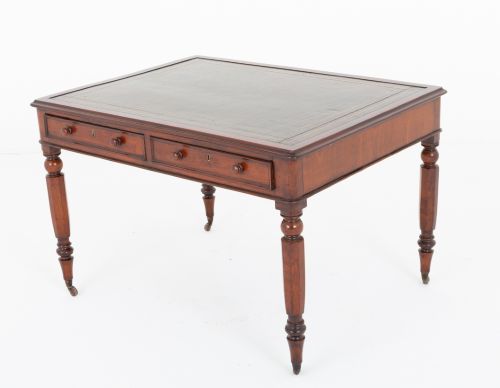
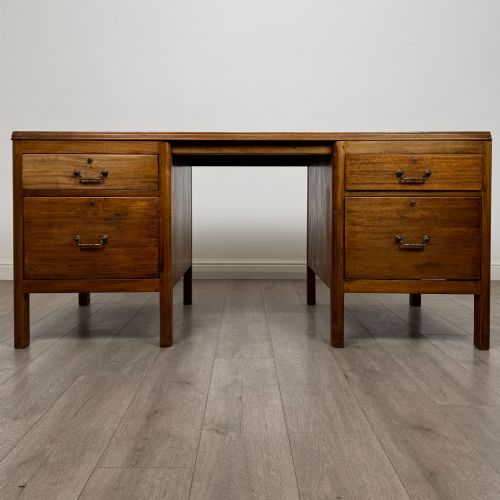
Most examples encountered here are constructed in rich timbers such as mahogany, walnut and oak, frequently fitted with inset leather writing surfaces on top. The layouts include pedestals with multiple drawers, kneehole compartments and pull-out writing slides for functional administrative tasks.
Makers often drew upon historical revivals, producing Chippendale style, Queen Anne style, and Louis XIV revival versions alongside classic Victorian and Edwardian iterations. These large tables served administrative and clerical duties in period libraries, banks and private studies.
How traditional partners desk furniture was constructed
Cabinetmakers utilised solid timbers and choice veneers, applying mahogany, walnut, burr walnut, satinwood and oak over sturdy carcases. Brass hardware such as drop handles and escutcheons secured the drawer fronts while leather writing surfaces were tooled and gilt along the edges.
Joinery techniques involved sturdy dovetailed drawer construction and panelled pedestals designed to support heavy loads of books and papers. Desks were frequently built in modular sections like three-part pedestal assemblies to allow movement and positioning within large rooms.
Traditional Partners Desk Retail Price Guide 2026
Typical asking prices for traditional partners desk among the pieces listed under this phrase on Sellingantiques today, from the lower quarter to the upper quarter. They describe what is for sale here now, not the wider market.
Some desks hide secret stationery compartments for stashing midnight letters away from prying eyes.
What varies in quality
Quality rests upon the selection of timber figure, such as highly grained burr walnut or dense figured mahogany, combined with the crispness of carved details like bracket feet or moulding. Superior examples display thoughtful proportion, hand-cut dovetails and intact period brassware.
The sophistication of the internal fittings, such as mahogany-lined stationery drawers, concealed compartments and secondary sliding trays, separates standard utility furniture from fine cabinet work produced by prominent workshops.
Trollope And Sons·Whytock And Reid Of Edinburgh·Maple And Co
The Traditional Partners Desk Glossary
- Partners desk
- A large freestanding double-sided writing table featuring pedestals of drawers on both sides to accommodate two users facing one another. These pieces were traditionally utilised in professional offices and libraries.
- Pedestal desk
- A heavy flat-topped desk supported by two vertical columns or pedestals containing banks of drawers. The user sits in the kneehole space between them.
- Burr walnut
- A prized timber veneer taken from the warted growths on walnut trees, showing swirling decorative patterns. It was favoured by cabinetmakers for high-status surfaces.
- Leather top
- An inset writing panel of dyed leather, often decorated with blind tooling or gold leaf embossing around the perimeter. It provides a smooth writing surface.
- Writing slide
- A pull-out wooden shelf integrated beneath the desk top to extend the usable surface area for documents. Slides retract flush into the frieze when not required.
Traditional Partners Desk: Frequently Asked Questions
What is a traditional partners desk used for?
These large double-sided tables provide workspace for two people sitting opposite each other. They served administrative duties in period offices, libraries and private studies.
The dual configuration allows simultaneous access to drawers and writing surfaces from both sides of the freestanding piece.
How do I date a traditional partners desk?
Dating relies on timber choices, construction methods and stylistic revivals seen across the eighteenth, nineteenth and early twentieth centuries. Georgian and Victorian examples display specific carving motifs and drawer dovetailing techniques.
Cabinetmaker stamps or paper labels inside the drawers can also provide direct evidence of origin and period.
Are all traditional partners desks double-sided?
True partners desks feature operational drawers or cupboards accessible from both the front and the back. Some variations on this page include library tables or single-sided pedestal desks with dummy drawers on the reverse.
Examining the back of the pedestals reveals whether drawers are functional on both faces.
How do I care for a leather top?
The leather writing surface benefits from occasional conditioning with specialist wax or balms to prevent drying and cracking. Avoiding direct sunlight and excessive moisture preserves both the leather and the surrounding timber.
Gentle dusting with a dry cloth keeps the gilt tooling along the borders clean.