


Brown Wood Pedestal Desk
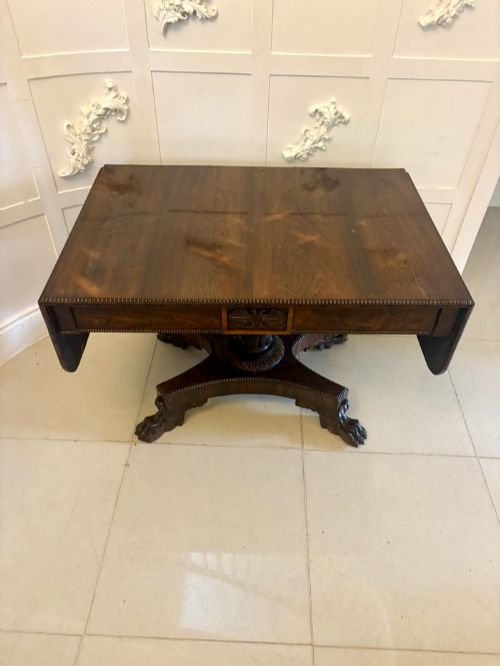
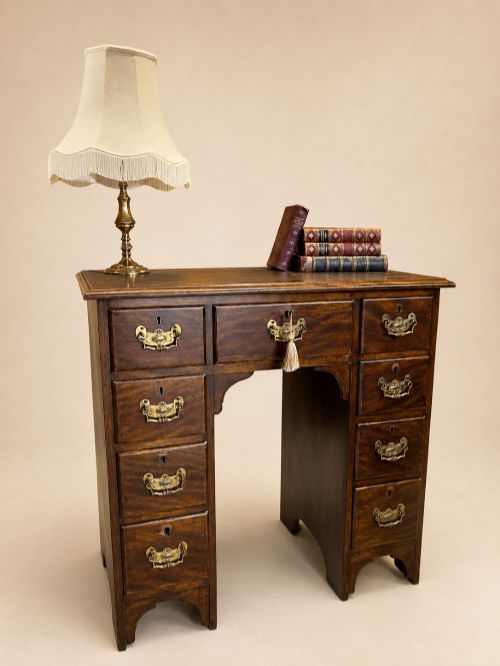
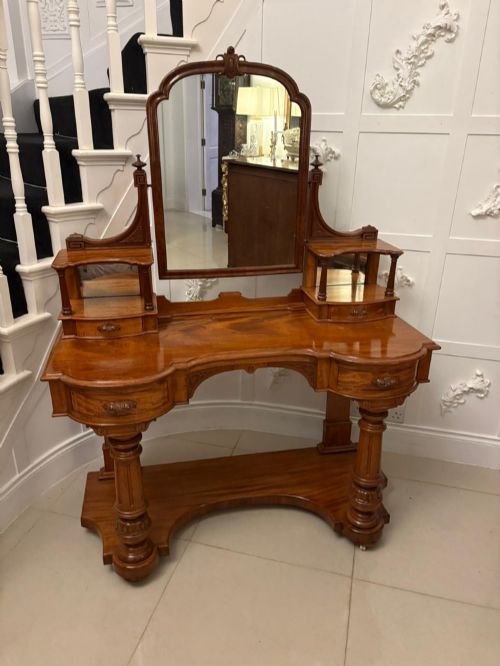
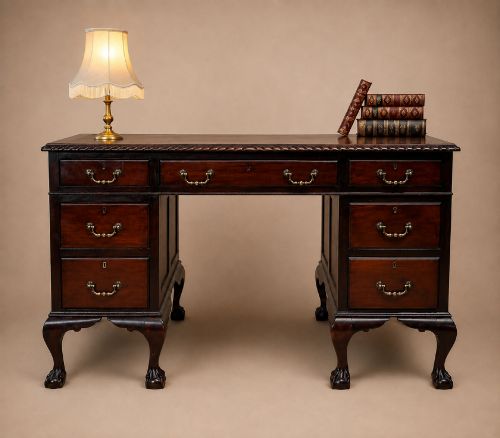
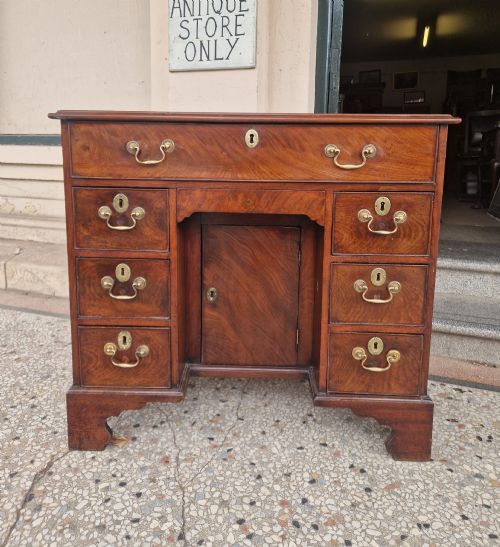
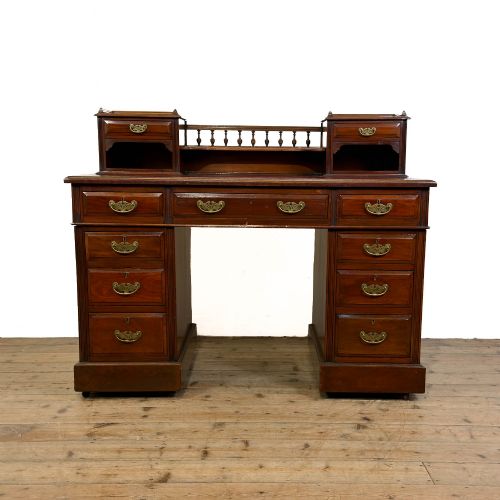
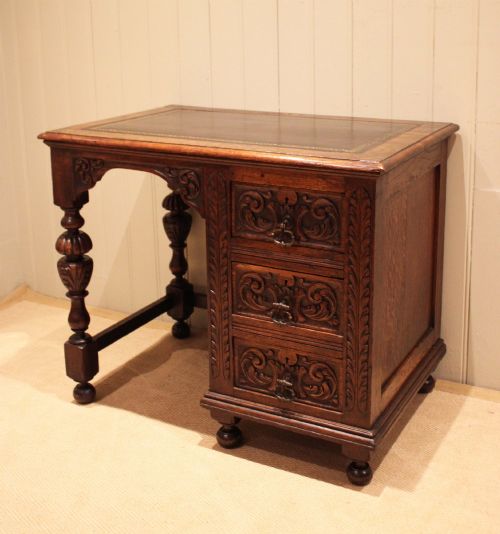
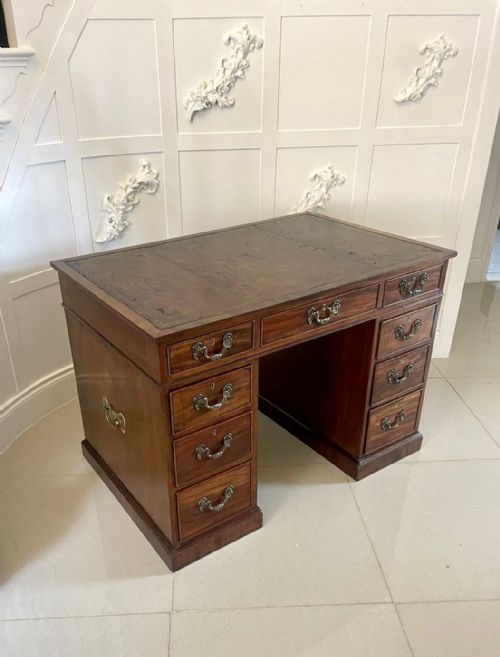
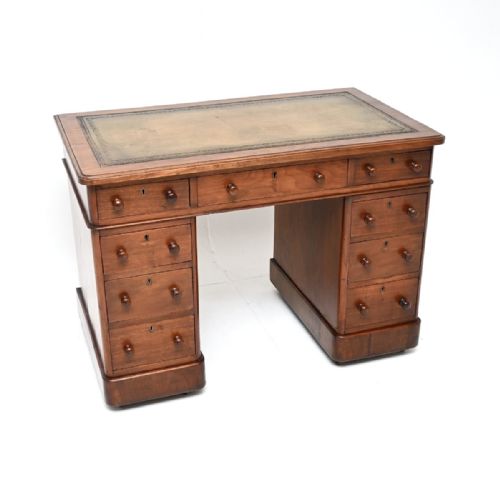
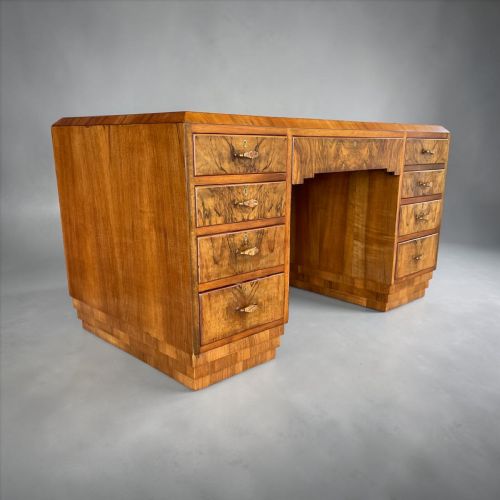
These brown wood pedestal desk pieces offer substantial workspaces finished in rich timbers like mahogany, walnut, and burr oak for traditional studies.
Identifying your brown wood pedestal desk
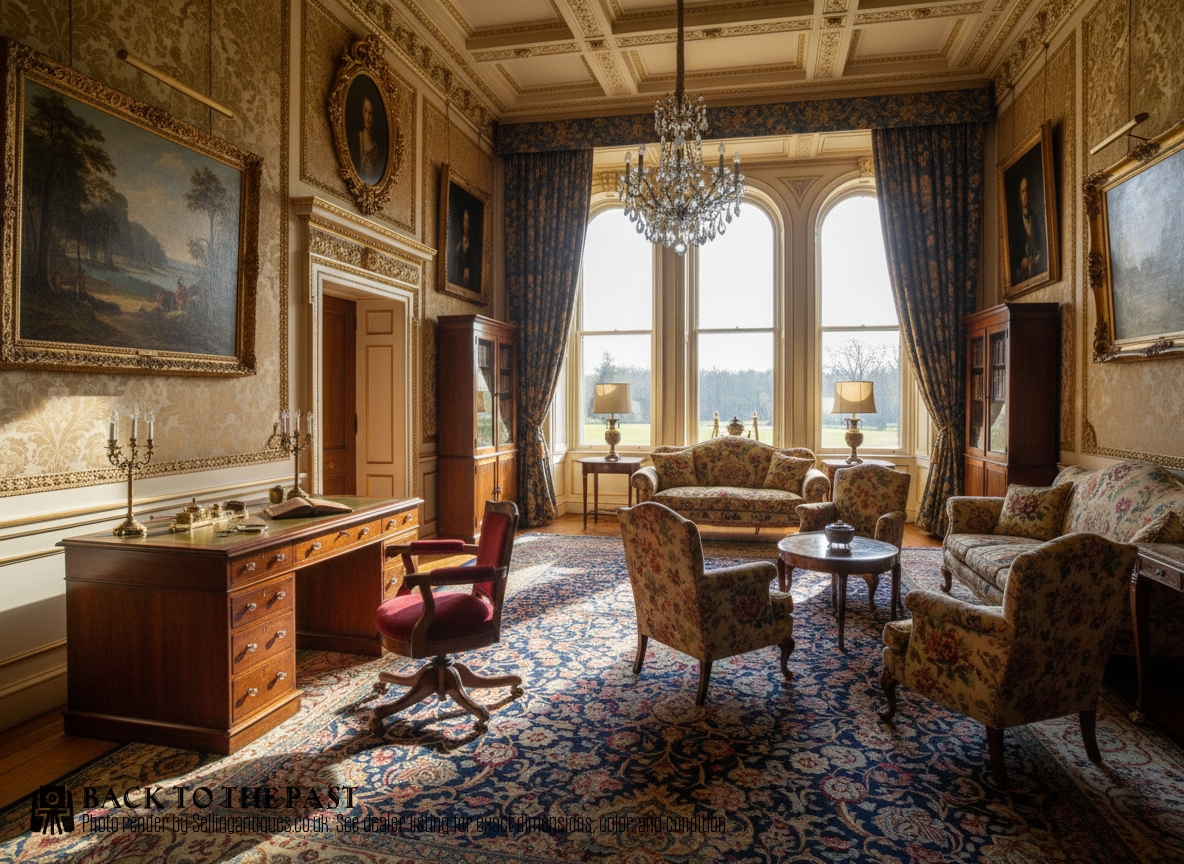
A brown wood pedestal desk provides a stable, twin-pedestal workspace designed for heavy administrative tasks. These items emerge from various periods including Georgian, Victorian, Edwardian, and the early twentieth century.
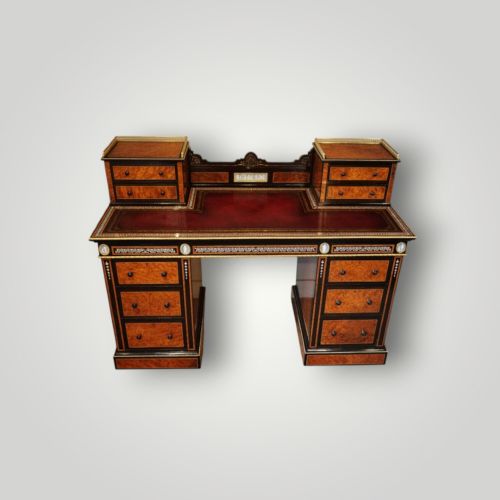
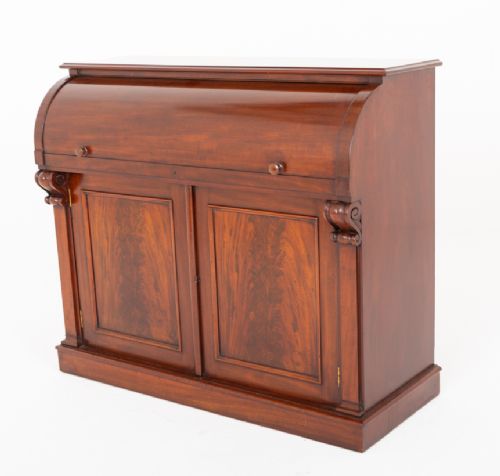
The format typically involves two banks of drawers supporting a large writing surface, though specific variations incorporate cylinder fronts or tambour tops. Mahogany and walnut remain the predominant timbers encountered across these forms.
Examples span from compact proportions to large configurations, sometimes incorporating contrasting wood selections such as satinwood or burr oak detailing. Each piece reflects the cabinet-making standards of its respective era.
Construction and materials
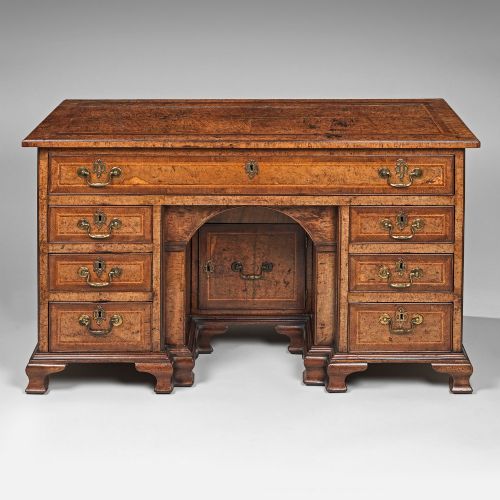
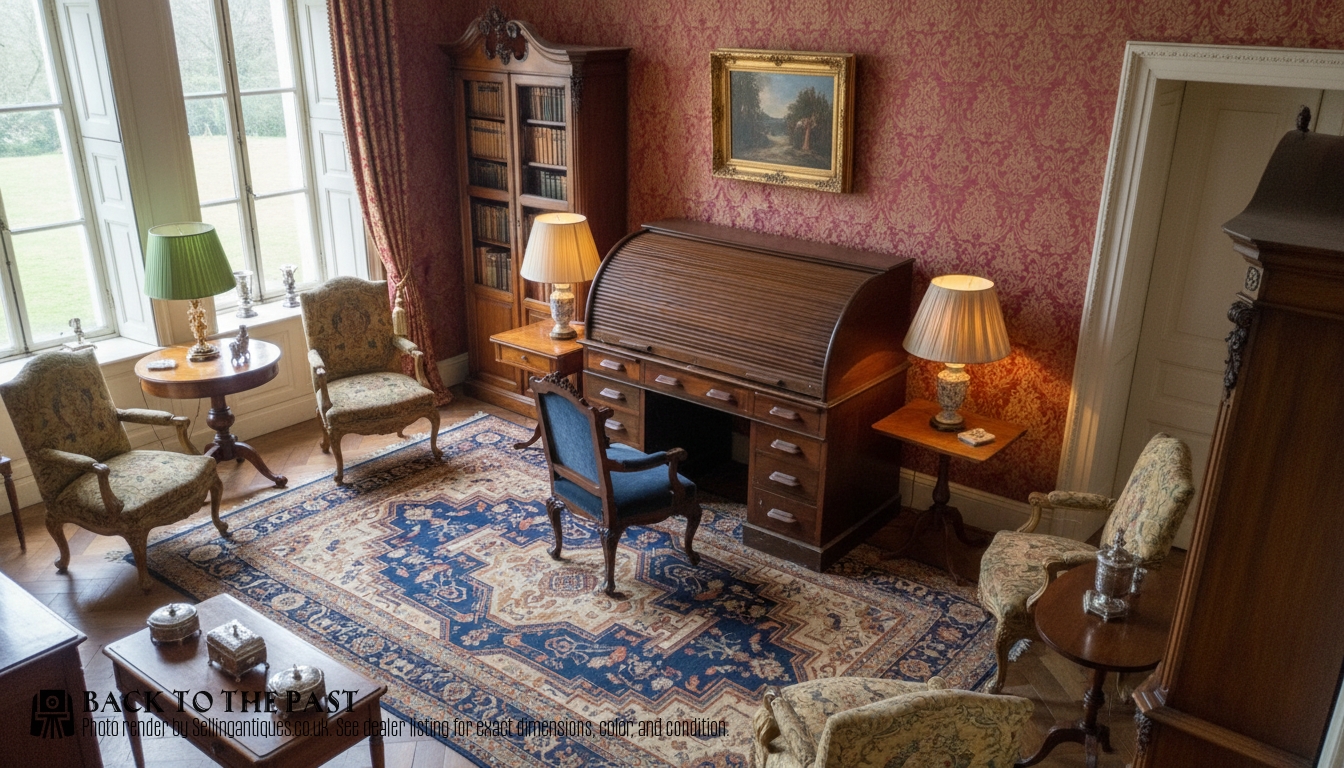
Construction relies heavily on dense hardwoods such as mahogany and walnut, frequently accented with burr oak or satinwood veneers. These timbers provide both structural integrity and deep natural grain patterns.
Hardware details typically incorporate brass for handles, key escutcheons, and structural mounts. Writing surfaces are frequently inset with leather to create a durable, traditional writing plane.
Retail Price Guide 2026
Typical UK retail prices for brown wood pedestal desk, calculated from the Sellingantiques database of over a million retail prices indexed since 2003. This retail price guide relies exclusively on Sellingantiques data; no external sources or auction records are used, so the figures do not describe the wider market.
Current listings feature pieces spanning the Georgian, Victorian, and Edwardian periods, constructed from mahogany, walnut, burr oak, and satinwood.
Assessing quality
Quality manifests in the selection of timber figures, particularly when burr walnut or burr oak veneers are utilised across large surfaces. Superior cabinet work shows seamless matching of grain patterns and precise joinery throughout the pedestals.
The refinement of internal drawer construction and the integration of specialised mechanisms, such as cylinder rolls or tambour shutters, separate standard iterations from more ambitious workshop output.
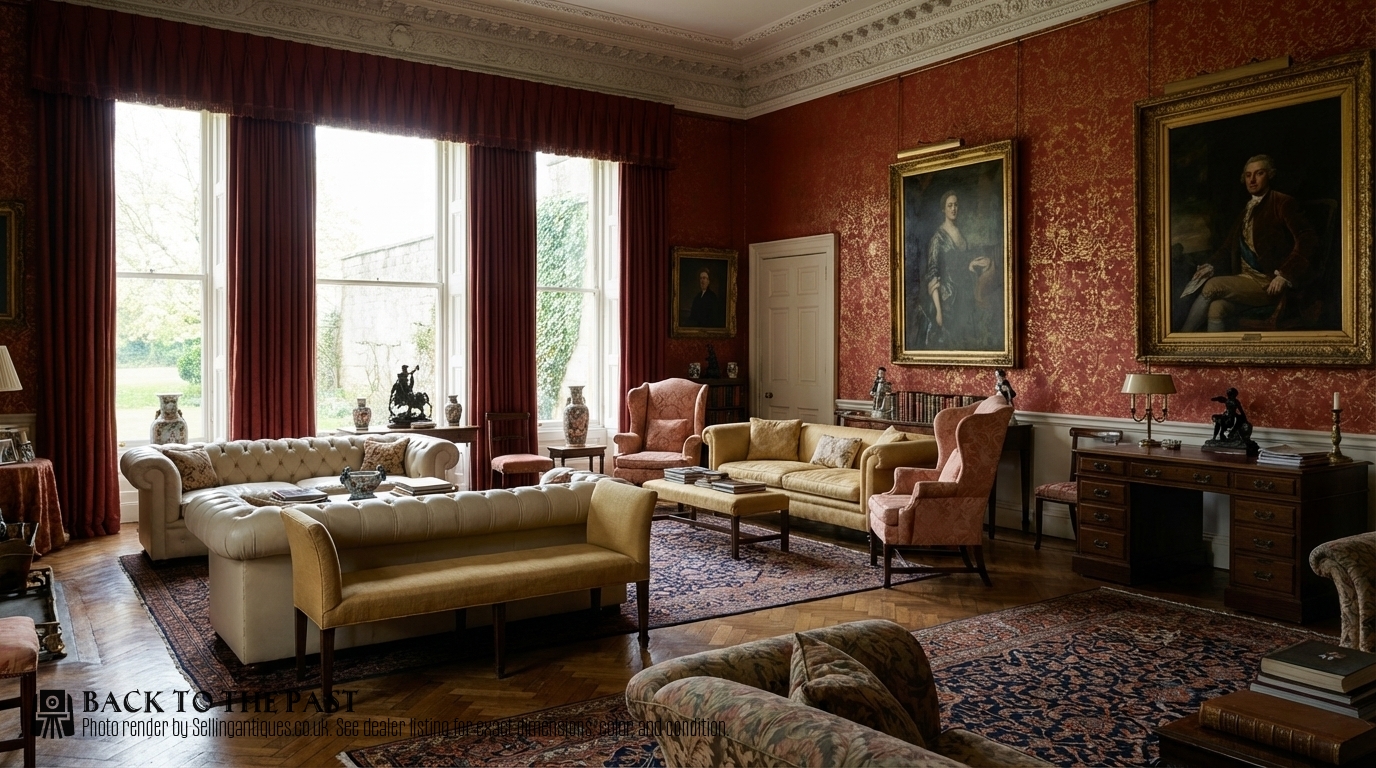
The Brown Wood Pedestal Desk Glossary
- Pedestal desk
- A heavy writing table supported by two separate banks of drawers forming the pedestals on either side.
- Tambour
- A series of narrow wooden strips glued to a canvas backing, allowing a desktop cover to slide smoothly around a curve.
- Cylinder desk
- A writing desk featuring a quarter-circle rotating wooden cylinder that encloses the upper desk fittings when closed.
- Burr walnut
- Timber taken from a tree growth abnormality, producing complex, swirling grain patterns highly valued for decorative veneer work.
- Kneehole
- The central recessed space between the two pedestals designed to accommodate the user's legs.
Frequently Asked Questions
What is a pedestal desk?
A pedestal desk is a large freestanding writing table featuring two supporting columns of drawers beneath the main top. This configuration provides substantial storage capacity alongside a fixed writing surface.
Such furniture historically served private studies and administrative offices where paperwork required organisation close at hand.
How do cylinder desks work?
Cylinder desks enclose the writing surface and pigeonholes behind a curving wooden shell that rotates on tracks. Pulling out the main writing drawer automatically retracts this cylinder to reveal the interior compartment.
This mechanism kept confidential documents secure and out of sight when not in active use.
Which timbers are common on these desks?
Mahogany and walnut form the structural core of the majority of these pieces, often enriched with decorative burr walnut or burr oak veneers. Secondary timbers and brass hardware support the internal framing and operational elements.
Leather insets frequently provide the writing surface atop the main structure.
How do I date a pedestal desk?
Dating relies on observing stylistic markers, construction techniques, and timber selections associated with periods from the seventeenth century through to the Edwardian era. Details like drawer dovetailing and brass hardware styling offer clear chronological clues.
Comparing the overall proportions against known period designs helps narrow the manufacturing window.
How should I care for leather desk tops?
Leather surfaces benefit from periodic cleaning with a damp cloth followed by a specialist leather cream to prevent drying and cracking. Avoiding direct sunlight and excessive heat preserves both the leather and the surrounding timber.
Gentle maintenance ensures the writing plane remains supple and protected during daily use.