
Twin Pedestal Writing Desk
A twin pedestal writing desk provides a substantial working surface supported by two banks of drawers.

Understanding the form
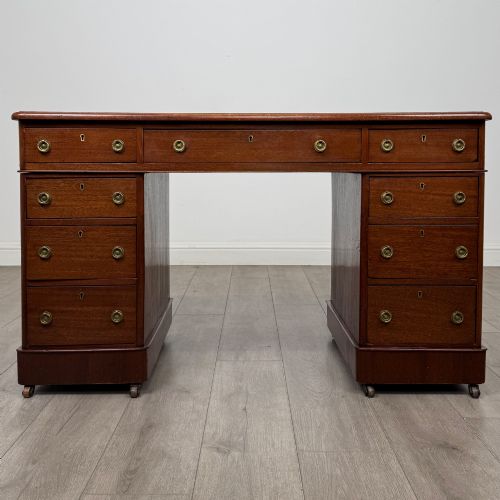
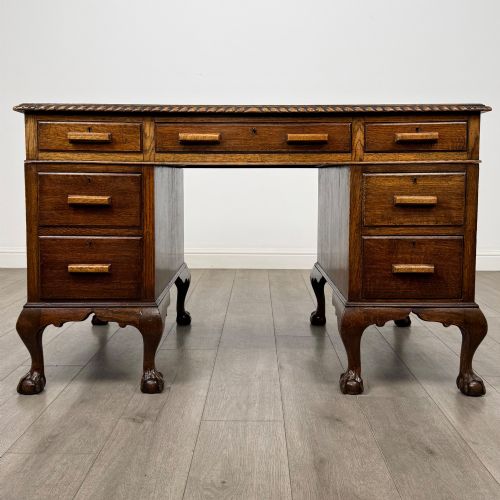
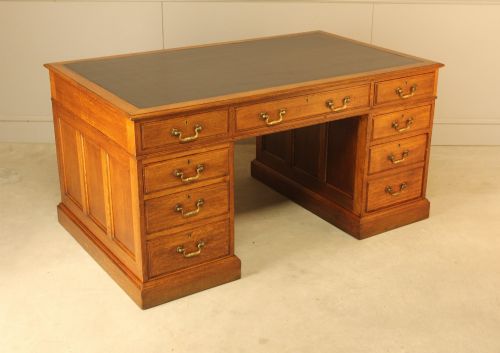
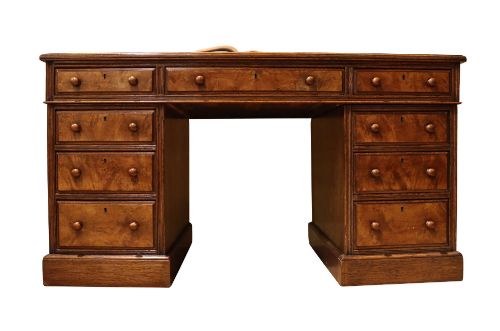
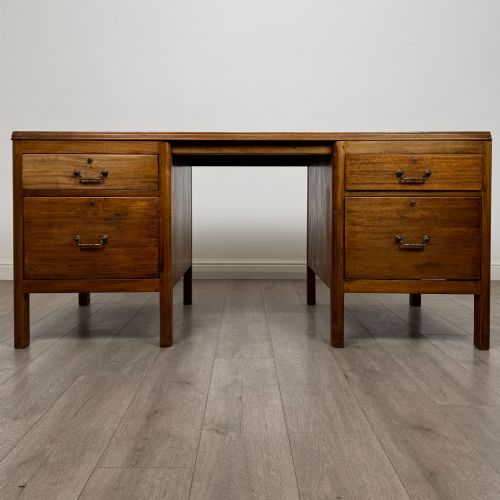
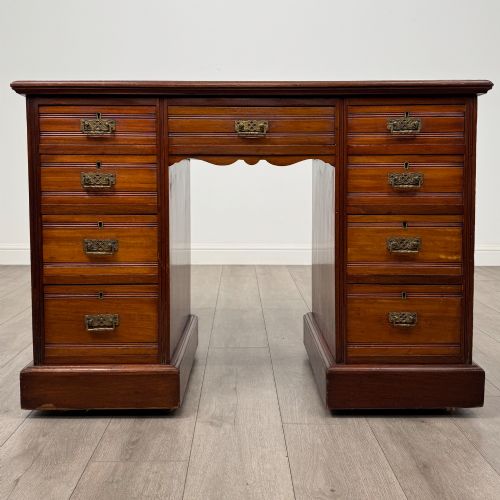
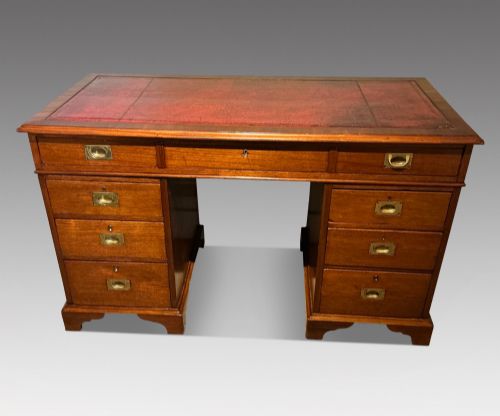
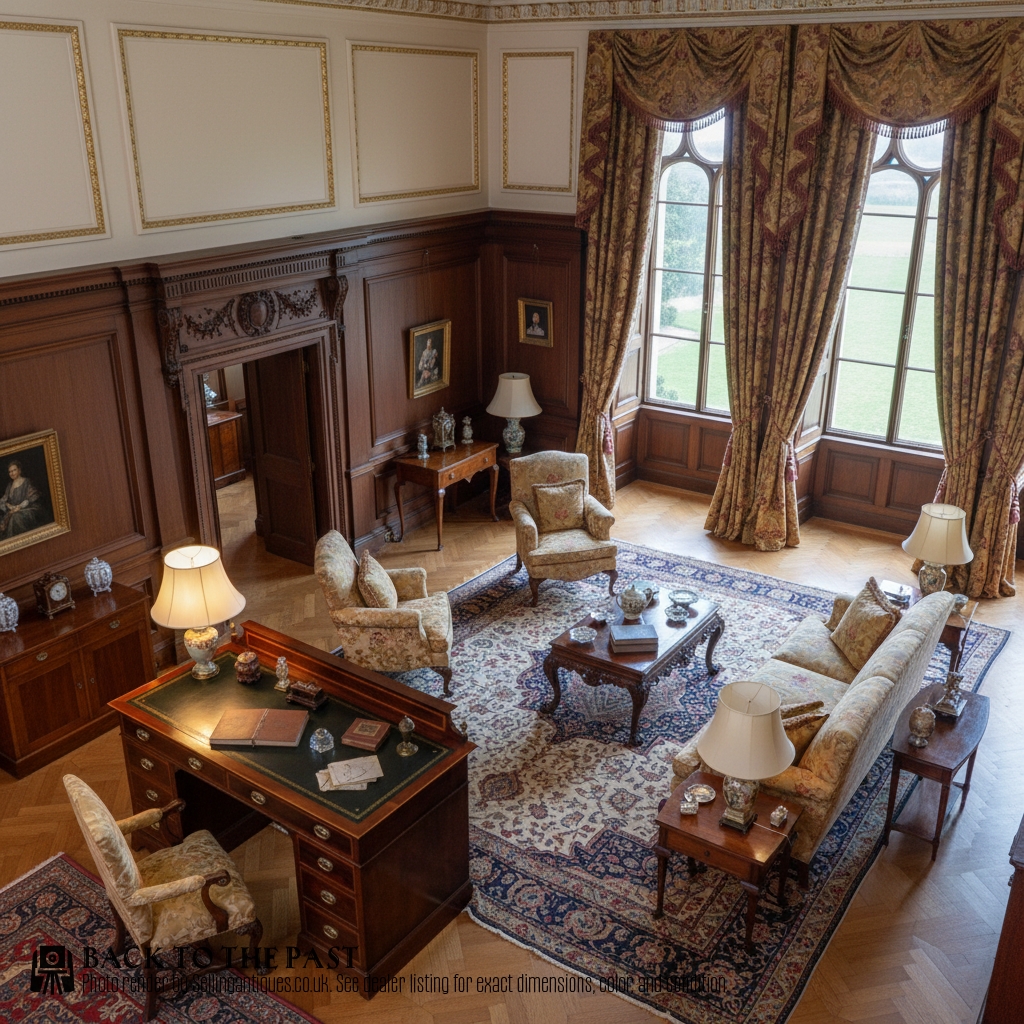
A twin pedestal writing desk is a heavy study piece built with two distinct columns of drawers beneath a wide top. These pieces appear frequently from the Victorian, Edwardian, and Regency periods, constructed for domestic libraries and studies.
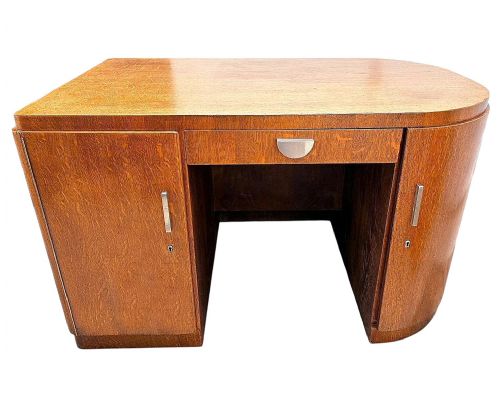
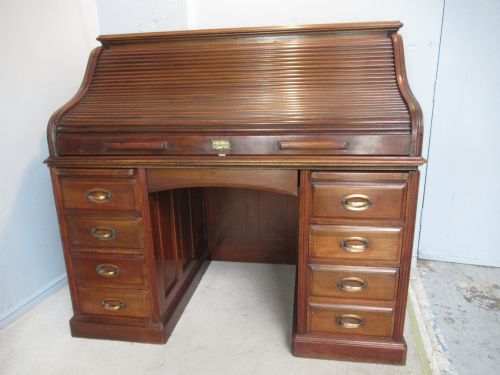
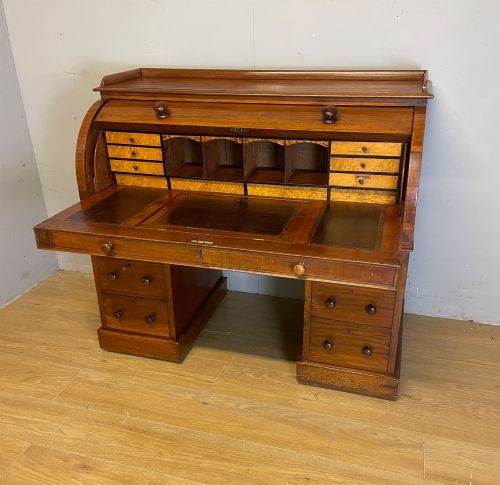
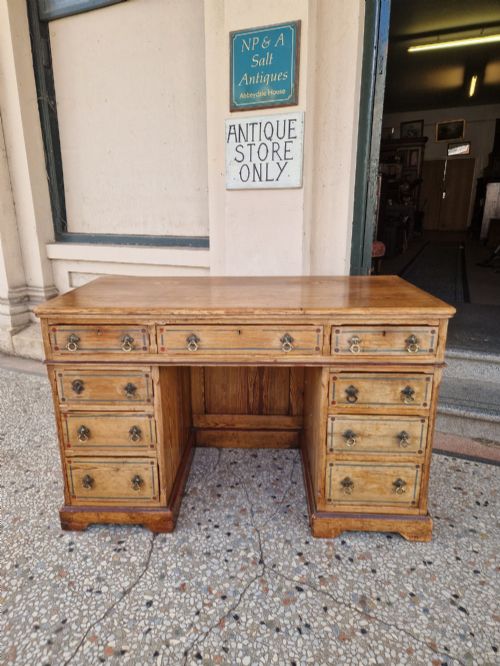
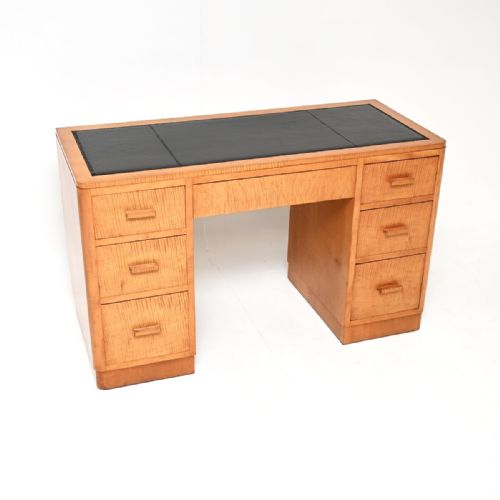
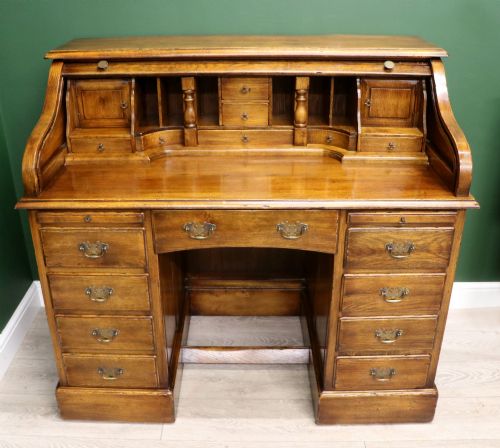
The standard configuration relies on a nine-drawer arrangement or a kneehole layout flanked by pedestals. Variations include tambour roll tops, curved fronts, and kidney shapes.
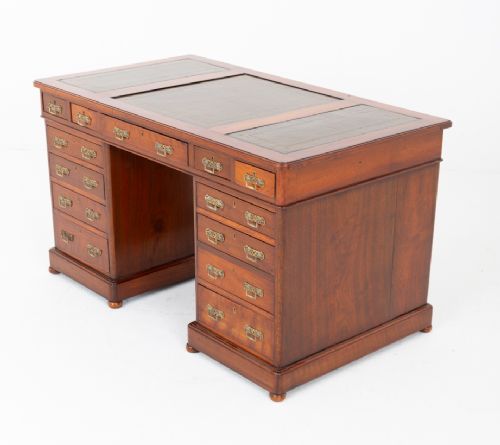
Makers utilised timbers such as mahogany, oak, walnut, pitch pine, and maple. Many examples feature inset leather writing surfaces and brass hardware.
Materials and construction
Cabinet makers built these desks using solid hardwoods like mahogany and oak, frequently applying flame mahogany or burr walnut veneers. Satinwood inlay often decorates the drawer fronts and borders of the top surface.
Writing surfaces incorporated tooled leather inserts bordered by gilt tooling. Pedestals were constructed in separate sections for transportation, supporting the central desk top and drawer units.
Retail Price Guide 2026
Typical UK retail prices for twin pedestal writing desk, calculated from the Sellingantiques database of over a million retail prices indexed since 2003. This retail price guide relies exclusively on Sellingantiques data; no external sources or auction records are used, so the figures do not describe the wider market.
Several Victorian desks preserve their original working keys, turning stubborn drawer locks after more than a century.
Distinctions in craftsmanship
The grade of timber and the precision of the veneer selection separate standard items from finer productions. Figured woods and intricate satinwood inlay demonstrate superior workshop output.
Hardware details such as brass locks, keys, and drawer pulls indicate the original status of the piece. Well-executed secondary timbers inside the drawer boxes reflect higher standards of construction.
JAS Shoolbred·Smith & Co
The Twin Pedestal Writing Desk Glossary
- Twin pedestal
- A desk design featuring two separate drawer units supporting a single top. This layout creates a central kneehole for the seated writer.
- Tambour
- A flexible covering made from narrow strips of wood glued to canvas, allowing a desk top to roll open. This mechanism conceals the pigeonholes and writing compartments.
- Kneehole
- The central space beneath the desk top between the two pedestals. It allows room for the chair and the user.
- Inlay
- A decorative technique where contrasting woods or metals are fitted flush into the surface timber. Satinwood is commonly utilised for this purpose on mahogany carcases.
Frequently Asked Questions
How do I care for the leather top?
Clean the leather surface gently with a dry or slightly damp cloth to remove dust. Avoid harsh chemical cleaners that can damage the antique surface and gilt tooling.
Nourish the leather periodically with a suitable conservation wax or cream to keep the hide supple. This prevents cracking and preserves the tooled detail over time.
What periods do these desks date from?
The available pieces span the nineteenth and early twentieth centuries, encompassing Regency, Victorian, and Edwardian eras. Victorian examples frequently date from the eighteen-eighties.
Edwardian pieces often display lighter timbers and simpler lines compared to heavier Victorian golden oak or mahogany models. Construction details and wood choices help confirm the period.
How were these desks used originally?
These pieces served as functional writing and study tables in domestic libraries, offices, and private homes. The numerous drawers provided ample storage for correspondence, documents, and writing implements.
Partners desks allowed two people to work opposite one another, featuring drawers on both sides. Standard single-sided desks faced a wall or sat free in the room.
Are the pedestals fixed in place?
Many twin pedestal desks are constructed in three parts for ease of movement. The top lifts off the two independent drawer pedestals.
Heavier Victorian and Regency models rely on the weight of the timber and top to keep the sections stable. Care must be taken when lifting or relocating these heavy pieces.