




Mahogany Tambour Desk
A mahogany tambour desk combines sliding slat shutters with fitted writing compartments, offering a clever way to conceal correspondence and paperwork.
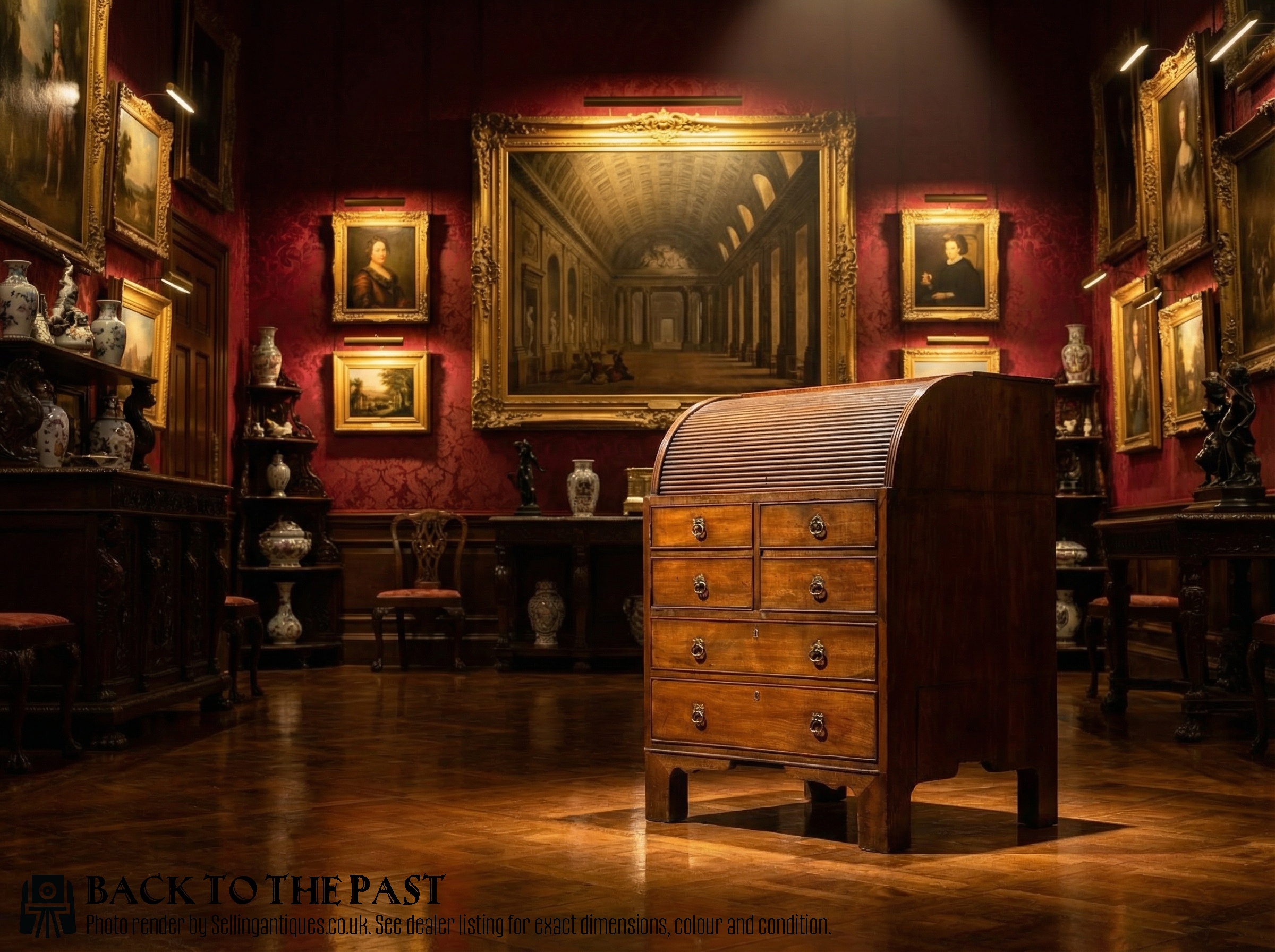
Mahogany Tambour Desk
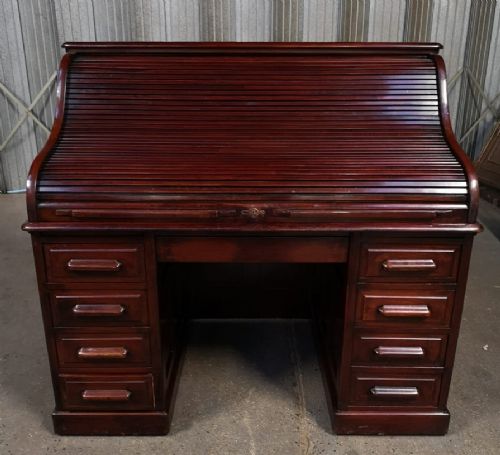
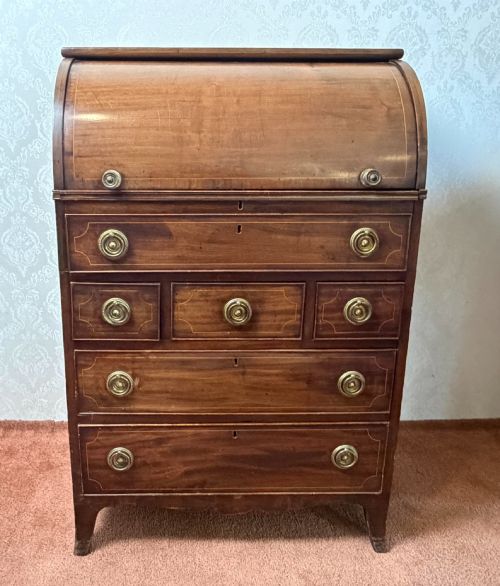
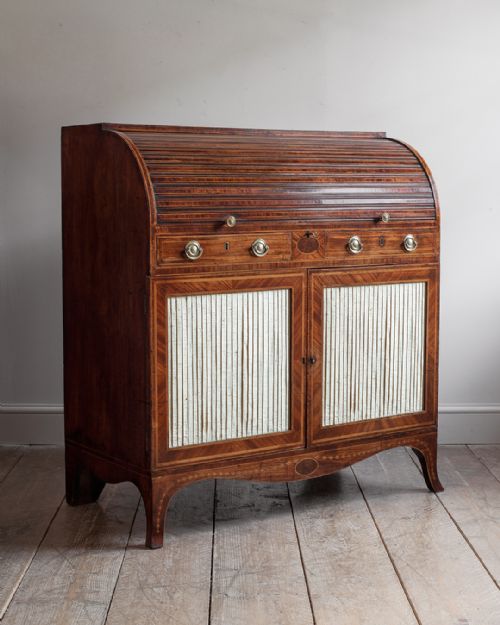
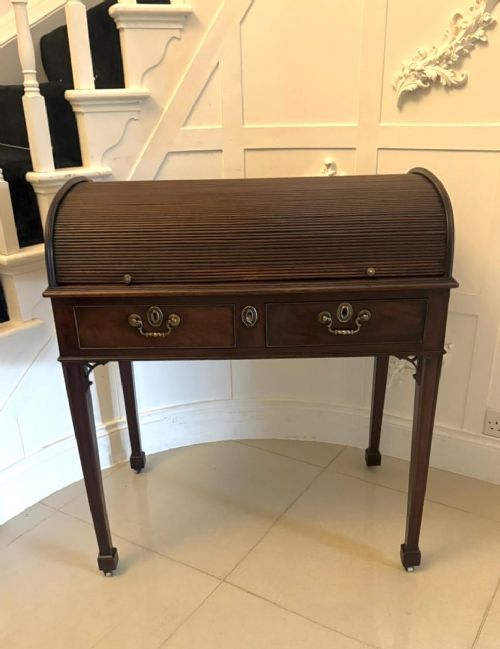
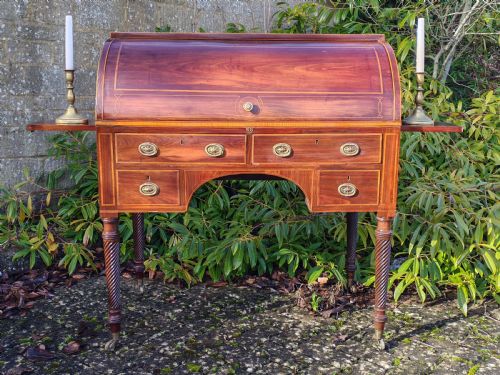
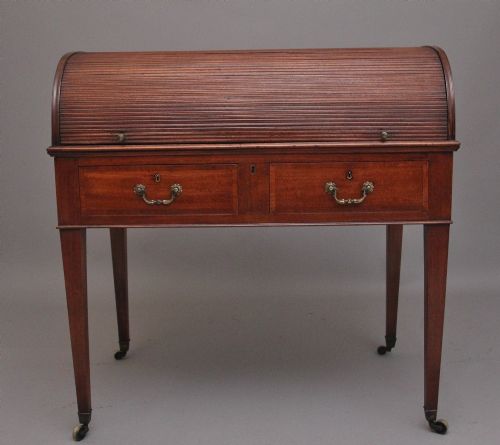
When you search for a mahogany tambour desk, you encounter writing furniture defined by flexible slatted shutters that slide back into the body of the piece. These items span periods from the late eighteenth century through the Georgian, Regency, and Victorian eras into the Edwardian period, appearing in forms such as compact writing tables, cylinder desks, and large pedestal desks.
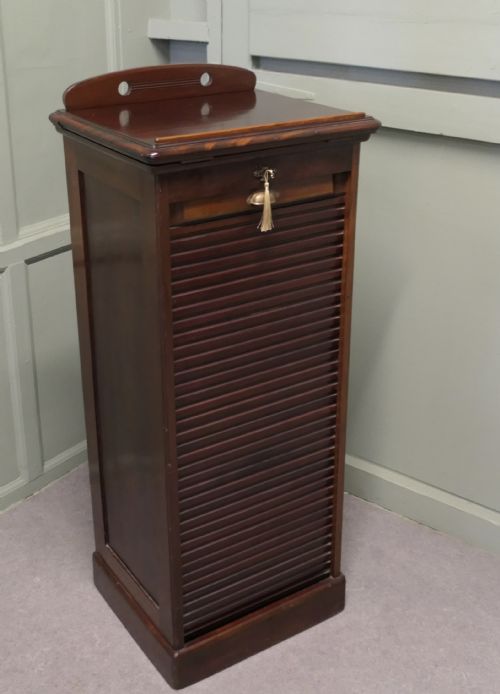
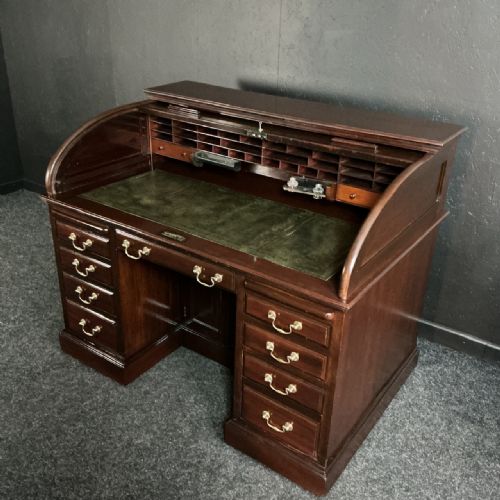
The versions most commonly met on this page range from late eighteenth-century George III examples with satinwood inlay to Victorian roll-top desks and Edwardian office variations. Alongside standard writing desks, you encounter related forms like cylinder bureaux, correspondence boxes, and occasional cabinets sharing the characteristic slatted mechanism.
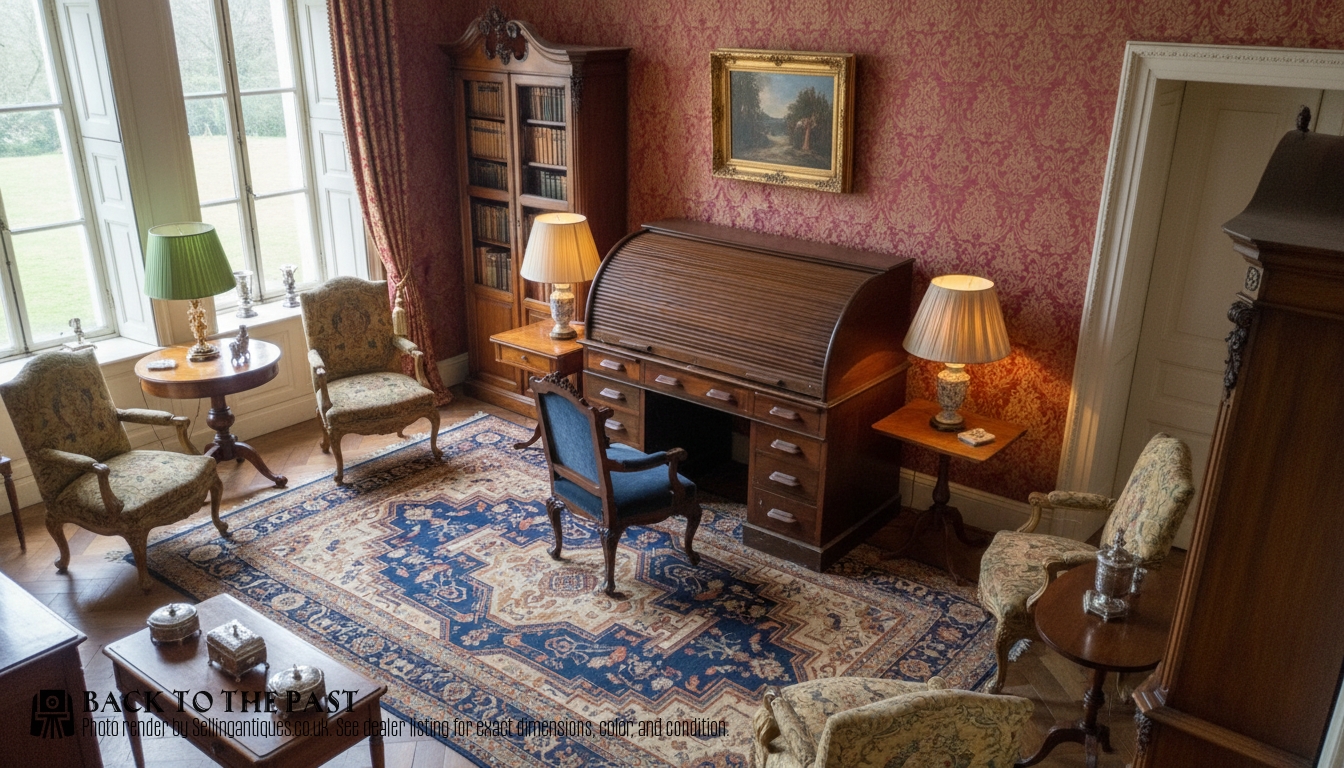
Distinguishing quality across the range
The standard of a tambour desk rests heavily on the precision of the slatted shutter mechanism and how smoothly the strips travel along their tracks. Superior examples maintain tight alignment without binding, while lesser pieces suffer from warped slats or stiff movement caused by humidity changes over time.
Fine execution shows in the choice of figured mahogany timbers, delicate stringing, and interior joinery such as secret compartments and dovetailed drawer linings. Plain utility models from later periods rely on heavier construction with less attention to secondary wood selection and decorative detail.
Mahogany Tambour Desk Retail Price Guide 2026
Typical asking prices for mahogany tambour desk among the pieces listed under this phrase on Sellingantiques today, from the lower quarter to the upper quarter. They describe what is for sale here now, not the wider market.
Original keys remain surprisingly eager to lock up centuries of old stationery.
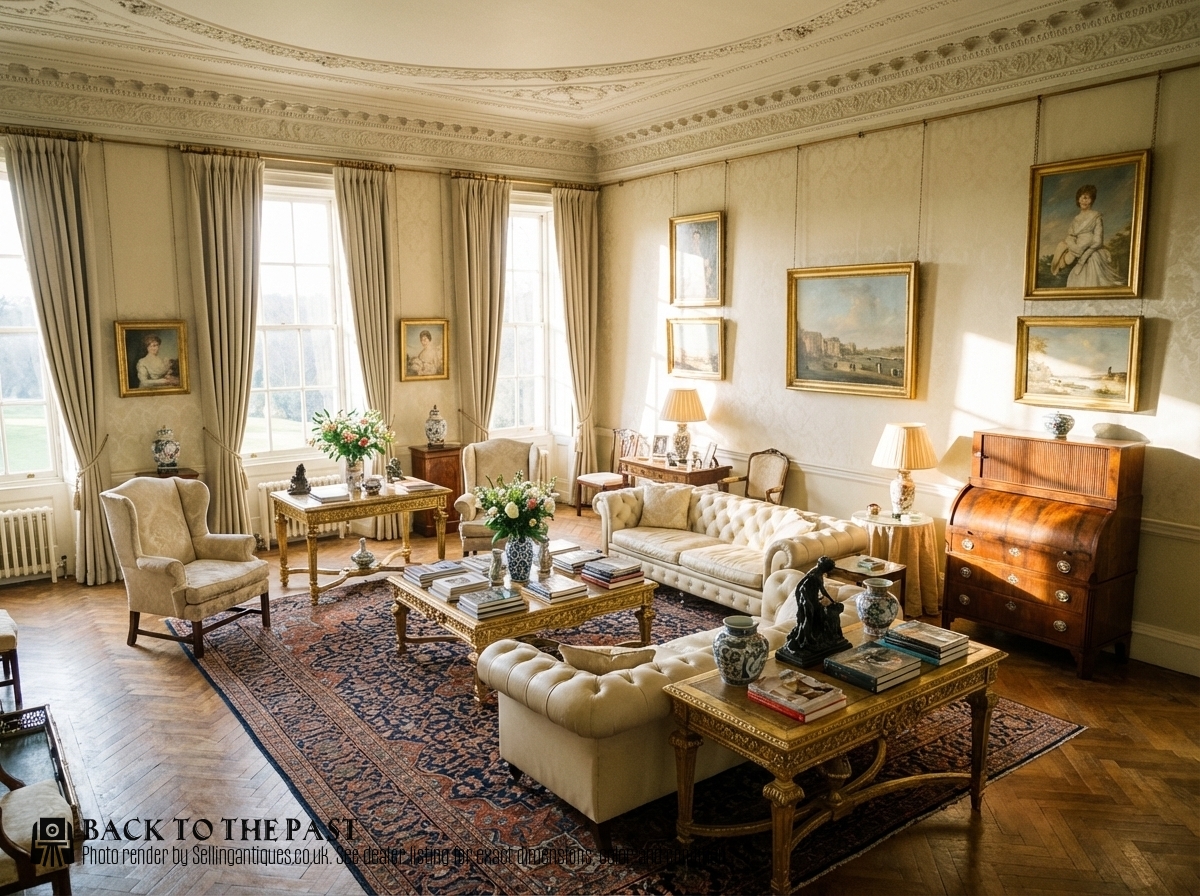
Maple and Co
The Mahogany Tambour Desk Glossary
- Tambour
- A flexible shutter made of narrow vertical strips of wood glued to a canvas backing. This construction allows the surface to curve around a cylinder or recess into the body of a desk.
- Cylinder desk
- A writing desk featuring a quarter-cylinder or half-cylinder wooden lid that rolls back to reveal the writing surface and interior fittings.
- Pedestal desk
- A heavy freestanding desk supported by two pedestals containing banks of drawers, often paired with a roll top or tambour enclosure.
- Satinwood
- A pale, lustrous exotic timber used extensively for contrasting inlay and banding on late eighteenth-century furniture.
- Stage-back
- A stepped superstructure rising at the rear of a desk or sideboard, fitted with small drawers and pigeonholes.
Mahogany Tambour Desk: Frequently Asked Questions
How do tambour shutters work?
The shutter is constructed from thin strips of wood glued side by side onto a strong canvas or textile backing. This allows the rigid timber to bend and follow a curved groove cut into the sides of the desk.
When pushed upward or backward, the slats slide out of sight into the interior cavity of the desk, exposing the pigeonholes and writing surface.
What is the difference between a tambour and a roll top?
A tambour desk uses many narrow, flexible wooden slats backed with fabric to form a sliding curtain that can follow curved or straight paths. A true cylinder desk uses a single solid curved piece of wood that rotates on a fixed pivot.
Later Victorian and Edwardian roll-top desks frequently adopted the tambour system because it proved simpler to construct across wider spans.
How do I date an antique mahogany desk?
Dating relies on combining the overall style, secondary woods, construction methods, and hardware. Georgian and George III examples often feature hand-cut dovetails, delicate satinwood inlay, and lighter proportions.
Victorian and Edwardian iterations tend to be heavier in scale, utilising machine-sawn elements, standardised brass locks, and more robust commercial framing.
Were these desks used for writing or business?
These pieces served both domestic correspondence and professional clerical work depending on their scale. Smaller Georgian and Regency writing tables were designed for ladies or gentlemen to write letters in a private drawing room or boudoir.
Larger pedestal and cylinder versions from the Victorian and Edwardian periods functioned as hardworking office desks for managing extensive paperwork and ledgers.