




Antique Rolltop Bureau
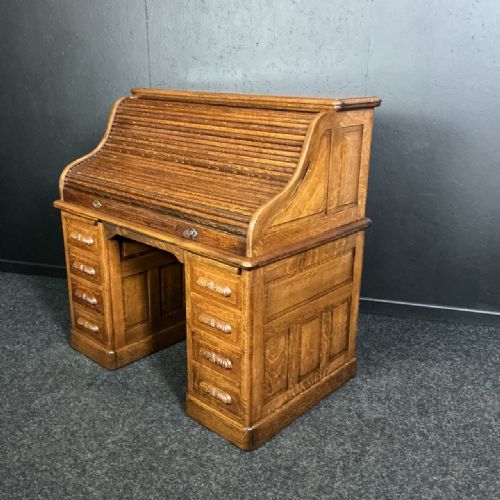
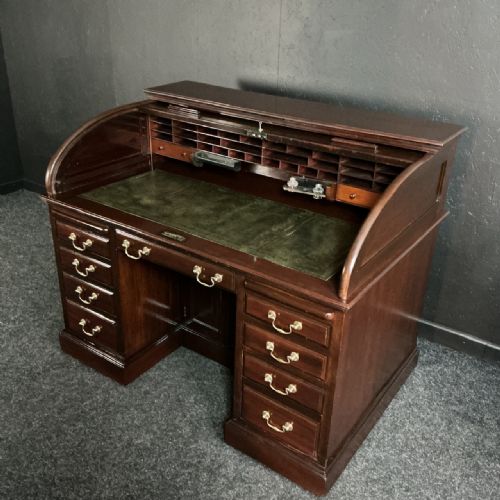
An antique rolltop bureau conceals papers beneath a slatted or cylindrical cover, offering both a generous writing surface and complete privacy.
Antique Rolltop Bureau
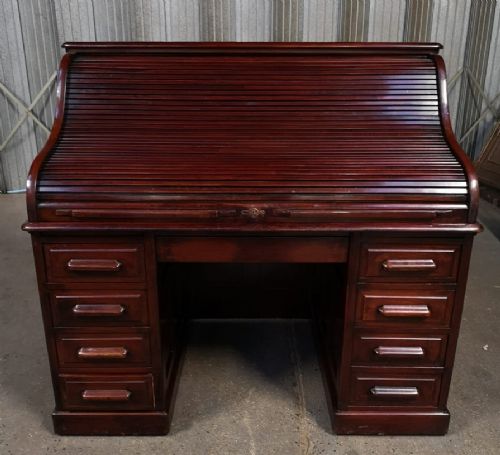
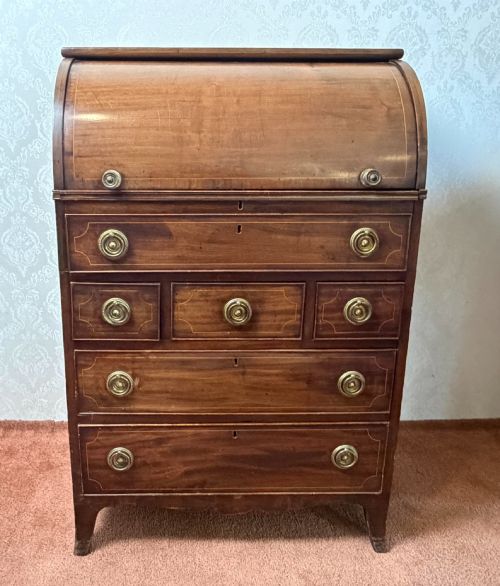
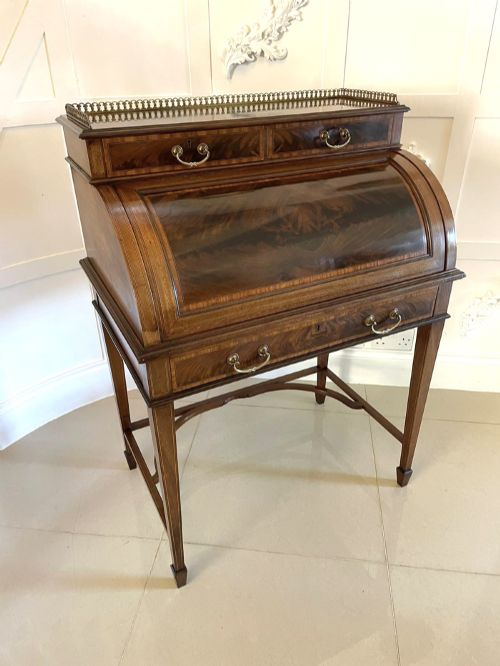
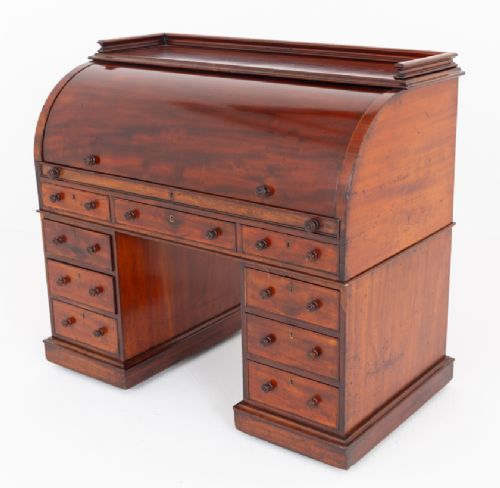
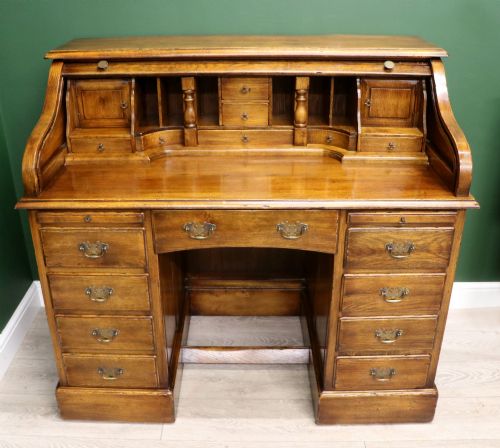
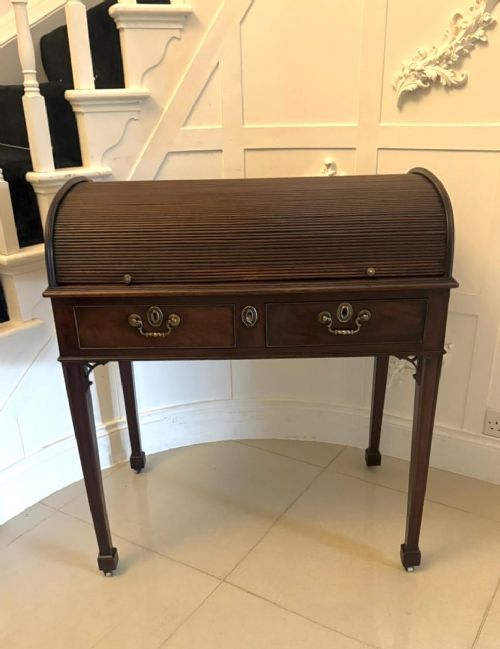
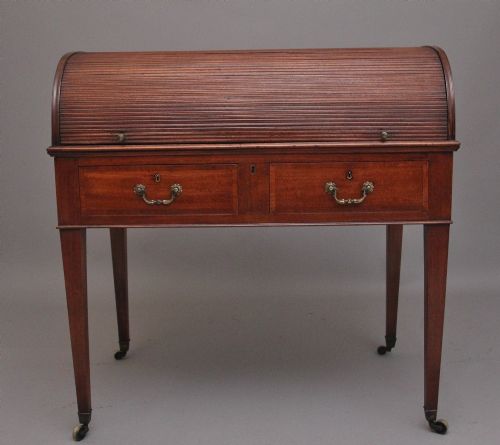
An antique rolltop bureau is a dedicated writing piece designed to keep correspondence and documents secure behind a flexible tambour or a solid revolving cylinder. These desks appear in multiple forms across this selection, including freestanding pedestal desks, compact writing tables, and tall bureau bookcases.
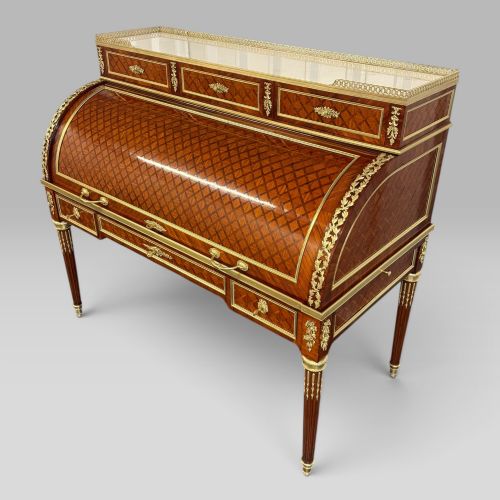
The pieces span several centuries, with examples originating from the Georgian, Victorian, and Edwardian eras alongside Continental and French revival styles. Mahogany and oak dominate the timber choices, frequently enhanced by decorative marquetry, parquetry, and fine brass mounts.
Materials and construction
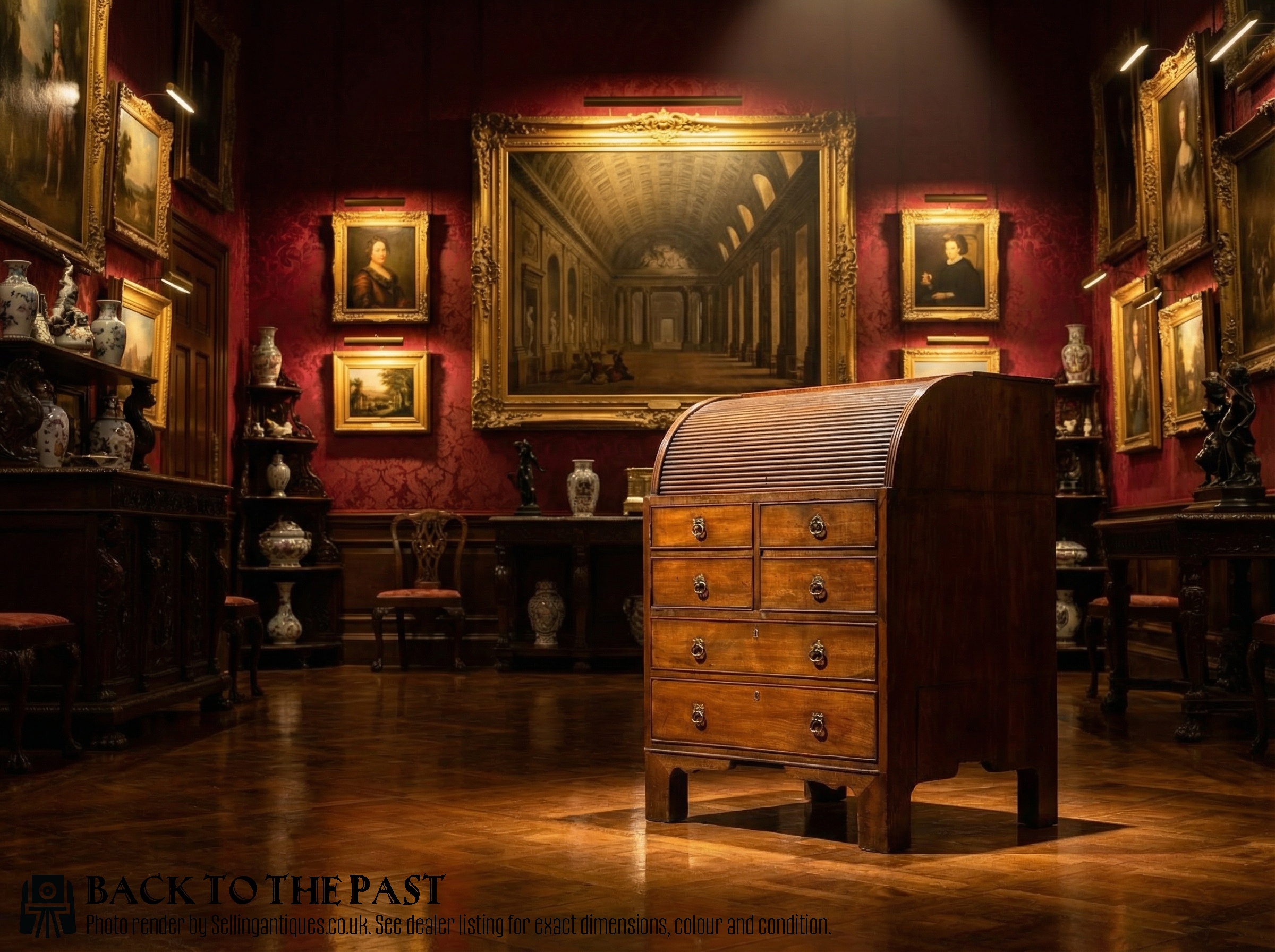
Cabinet makers utilised dense hardwoods such as mahogany, oak, and walnut to build the foundational carcasses and writing surfaces of these desks. Satinwood and figured yew wood appear in finer panels, providing contrasting grain patterns and lighter tones.
The defining mechanism relies on closely fitted slats of wood glued to canvas backing to form the flexible tambour, or a curved solid wood cylinder operating on hidden tracks. Ormolu mounts, brass hardware, and fitted leather writing inserts complete the interior compartments and drawers.
Antique Rolltop Bureau Retail Price Guide 2026
Typical asking prices for rolltop bureau among the pieces listed under this phrase on Sellingantiques today, from the lower quarter to the upper quarter. They describe what is for sale here now, not the wider market.
Periods represented range from Georgian and Victorian times through the Edwardian era into the early twentieth century.
Factors determining quality
The smoothness of the rolling mechanism distinguishes a superior desk from an ordinary one, as a well-aligned tambour glides without catching or binding in its tracks. The precision of the internal pigeonholes, small drawers, and secret compartments also indicates the maker's level of skill.
Timber selection and decorative technique elevate the standing of a piece, particularly when cabinet makers employ matched flame mahogany, intricate floral marquetry, or detailed parquetry patterns. Structural integrity in the legs and pedestal bases ensures the desk withstands daily use.
Maple & Co. London·Globe Wernicke·Boston Chair Company·Maples of London and Paris
The Antique Rolltop Bureau Glossary
- Tambour
- A sliding shutter formed of narrow vertical wooden strips glued to a flexible fabric backing. This allows the cover to curve smoothly around the mechanism of the desk.
- Cylinder desk
- A writing desk featuring a quarter-circle solid wooden barrel that rotates backwards into the desk body to reveal the writing surface and interior fittings.
- Marquetry
- Decorative veneer work arranged in pictorial or geometric patterns using various coloured woods. Craftsmen cut contrasting veneers to fit precisely within a prepared ground.
- Parquetry
- A geometric mosaic of wood pieces used for surface decoration on tabletops and drawer fronts. It creates repeating patterns such as cubes, chequered squares, and herringbone.
- Ormolu
- Gilded bronze ornamentation applied to furniture mounts and corners during the eighteenth and nineteenth centuries. It adds metallic contrast and rich detail to French revival pieces.
Antique Rolltop Bureau: Frequently Asked Questions
How does a tambour differ from a cylinder top?
A tambour utilises multiple narrow slats attached to canvas, allowing the flexible cover to bend around a curved track. A cylinder top relies on a single solid curved piece of wood that rotates entirely on a fixed axis.
Both designs serve the same purpose of enclosing the writing desk, but the tambour requires precise jointing across every individual slat to ensure smooth operation.
Where were these desks placed in a home?
These desks functioned primarily in libraries, studies, and private drawing rooms as private workstations for household accounts and correspondence. Many Edwardian and Victorian versions served domestic home office needs.
Freestanding pedestal variants allowed placement in the centre of a room, while smaller writing desks stood flush against walls or windows.
How do I care for the leather writing surface?
Leather inserts require gentle cleaning with a slightly damp cloth and occasional treatment with appropriate leather dressings to prevent cracking. Avoid harsh chemical cleaners or excessive moisture that can stain the surrounding wood.
Keeping the writing slide clean preserves the gold tooling and maintains the smooth texture needed for daily writing tasks.
Can I use an antique rolltop bureau daily?
These desks suit regular daily use provided the sliding mechanism receives careful handling and the timber is protected from extreme temperature shifts. The internal compartments provide ample modern storage for stationery and laptops.
Routine maintenance of the tracks and hinges ensures the rolltop mechanism continues to operate smoothly through decades of use.