
Solid Oak Desk
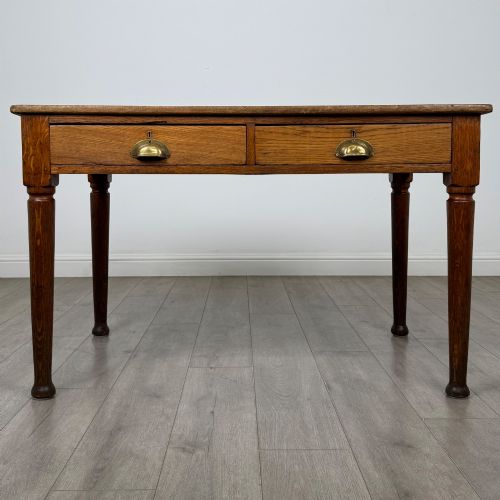
A solid oak desk brings substantial grain and honest joinery into a study, offering a heavy workspace built to endure centuries of daily writing.
Understanding the solid oak desk
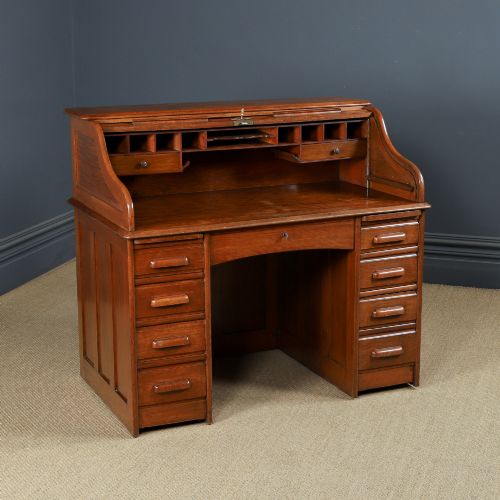
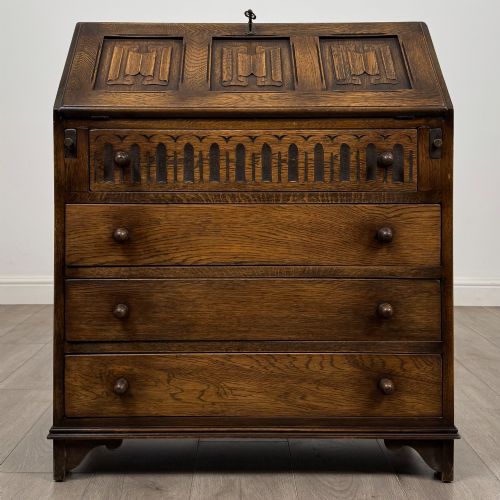
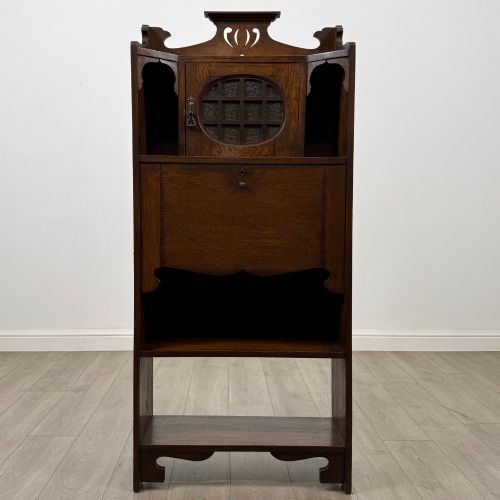
When searching for a solid oak desk, buyers encounter heavy timber furniture designed for serious administration, letters and daily paperwork. These work surfaces appear in several distinct formats, including pedestal configurations, kneehole models and architectural roll-top versions with tambour slats.
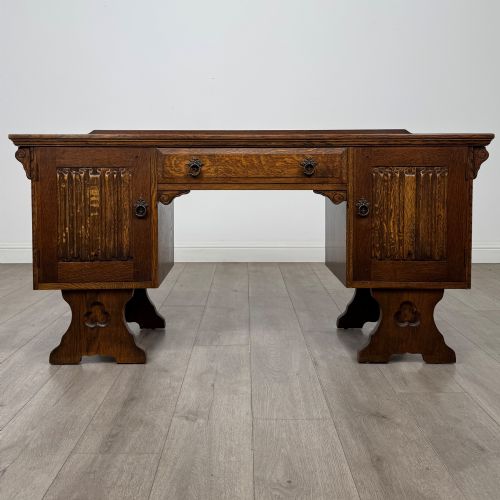
The Edwardian era and the early twentieth century dominate the available pieces, bringing substantial proportions and practical drawers. English country revival and Gothic revival pieces also surface, showing carved detailing like linenfold panels or green man motifs alongside simpler office layouts.
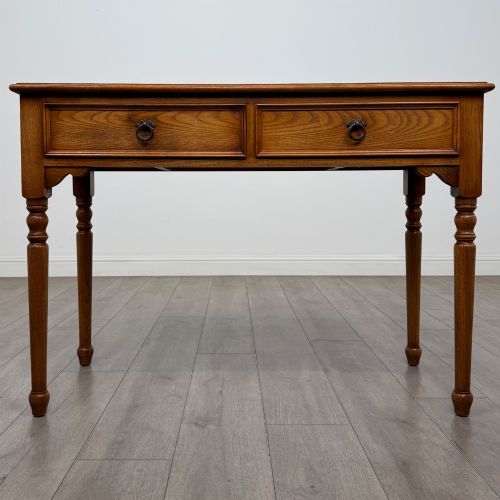
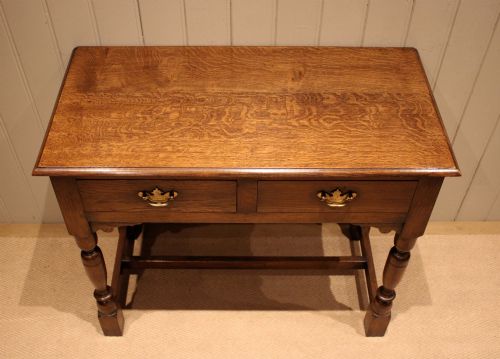
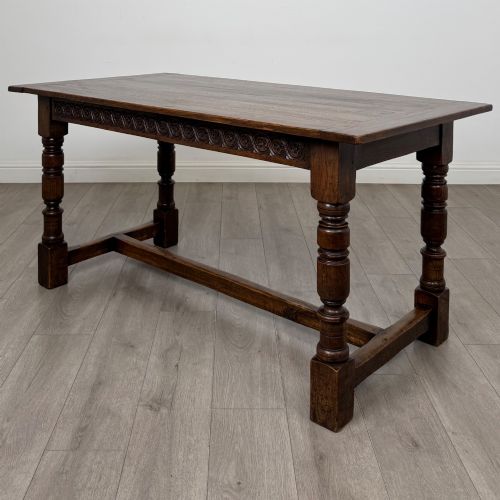
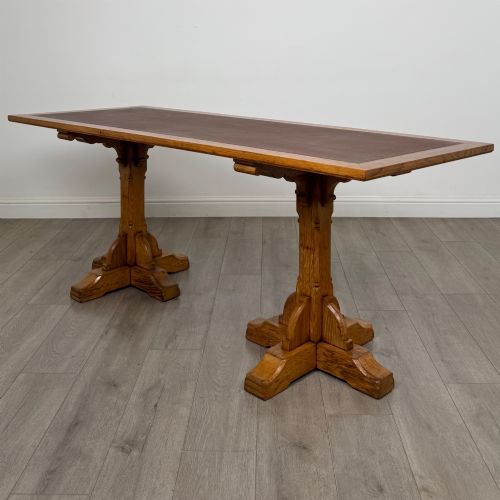
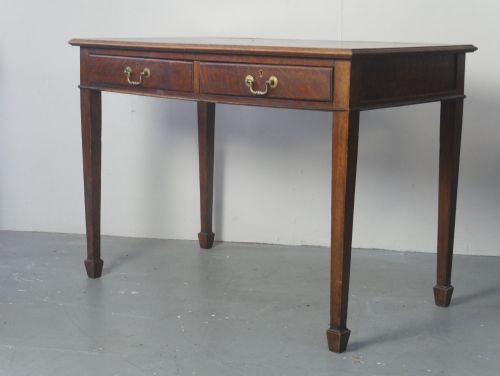
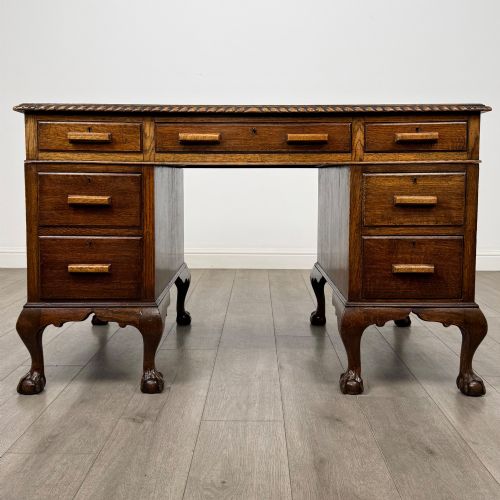
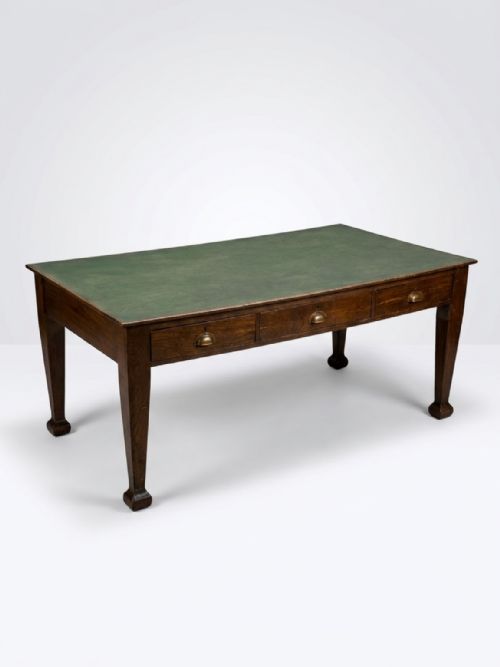
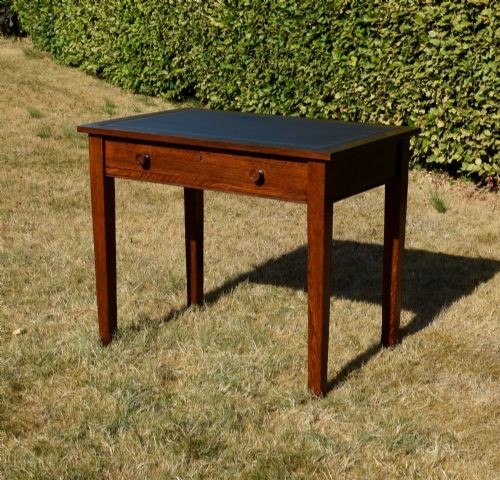
Pedestal variants organise storage into two vertical stacks of drawers flanking a central kneehole, while writing tables offer an open apron beneath the top board. Many examples incorporate leather inserts on the writing surface, providing a smooth contrasting texture for pen and ink work.
Materials and construction methods
Makers built these pieces using dense domestic timber, selecting oak for its prominent medullary rays and structural strength. Brass hardware, iron brackets and metal fittings reinforced the heavy frames and drawer runners against daily pulling and sliding.
Joinery relied on traditional panelled construction, dovetail joints for drawer boxes and framed tambour tracks that allowed wooden shutters to curve smoothly around cylinders. Carvers worked directly into the solid timber to create linenfold patterns and figurative details.
Retail Price Guide 2026
Typical UK retail prices for solid oak desk, calculated from the Sellingantiques database of over a million retail prices indexed since 2003. This retail price guide relies exclusively on Sellingantiques data; no external sources or auction records are used, so the figures do not describe the wider market.
Several vintage office chairs sold here feature ingenious revolving and tilting mechanisms designed to keep Victorian clerks spinning.
Judging the standard of execution
Quality rests upon the selection of timber and the precision of the joinery rather than surface ornamentation alone. Superior examples display carefully matched oak grain across large panels and drawer fronts, ensuring stability and visual harmony.
The mechanics of the piece dictate its standing, particularly in roll-top and tambour designs where the wooden slats must glide evenly without binding in their tracks. Hand-cut dovetails on drawer interiors and substantial brass or iron hardware further separate utilitarian workshop pieces from finer output.
Stanley Webb Davies·Maples London·Angus London
The Solid Oak Desk Glossary
- Tambour top
- A flexible desktop cover constructed from narrow wooden slats glued to a canvas backing. This mechanism slides along routed grooves to conceal the pigeonholes and writing surface.
- Pedestal desk
- A heavy freestanding writing table supported by two vertical columns of drawers. The user sits in the central kneehole space between them.
- Linenfold
- A style of relief carving depicting folded fabric that resembles vertical parchment or linen. Craftsmen applied this decorative linenfold motif to cabinet doors and modesty panels.
- Partners desk
- A large double-sided desk designed for two people to work opposite one another. Drawers and cupboards are duplicated on both long faces of the base.
- Kneehole desk
- A compact writing desk featuring a central recessed space for the legs. A single shallow drawer often sits directly above this opening.
Frequently Asked Questions
How do I identify an Edwardian desk?
Edwardian desks usually date from the period around nineteen hundred to nineteen ten, showing brighter oak tones and simpler functional lines than heavy Victorian furniture. They often combine traditional pedestal layouts with practical office innovations like swivel chairs and tambour rolls.
Look for machine-sawn timber components alongside hand-finished details, which mark this transitional manufacturing era. Stamp marks from London retailers on the drawer timbers can also confirm this timeframe.
How do I care for an oak desk?
Maintain solid oak surfaces by applying traditional beeswax rather than modern silicone sprays, which build up a hazy film over the grain. Keep the timber away from direct heat sources and radiators to prevent the wood from splitting.
Leather writing inserts benefit from occasional neutral leather balm to keep the hide supple. Ensure brass handles and iron fittings remain clean using dry cloths.
Are these desks suitable for daily work?
These pieces were originally built for heavy administrative duties, making them robust enough for contemporary computer equipment and paperwork. Their generous drawer capacities offer practical storage for modern home offices.
Consider checking the kneehole height and overall depth before purchase to ensure comfortable legroom. Many examples provide ample surface area for modern monitors and laptops without altering the historic timber.